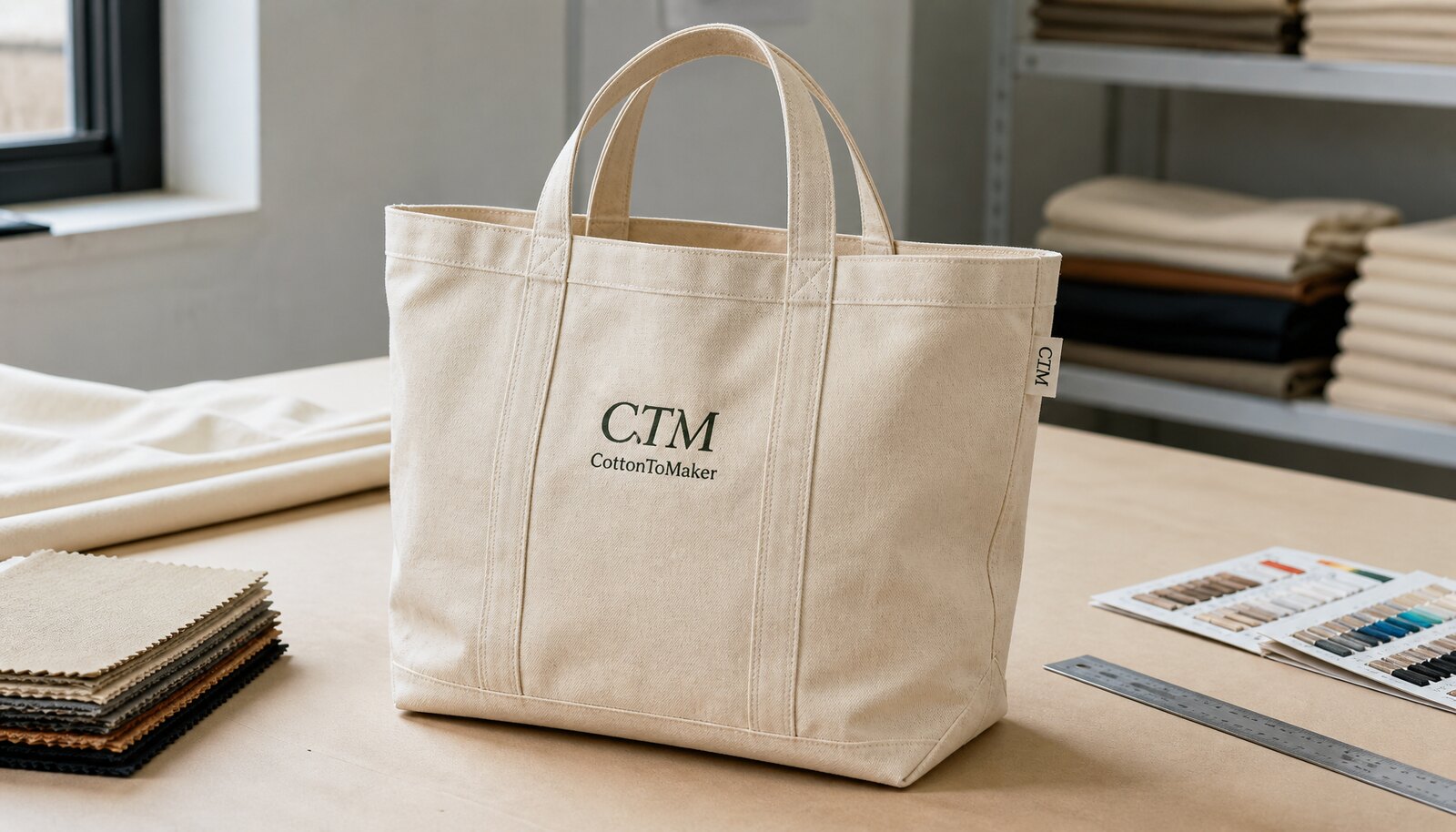
Start With the Reorder Problem, Not the Bag
Wellness brands usually use canvas conference bags as the container for a much bigger kit: brochures, product samples, wellness literature, a water bottle, maybe a voucher or post-event insert. The first order often gets approved on appearance alone, but the repeat order gets judged on whether it arrives on time, matches the previous run, and fits the same packing sequence. That is the real buying problem. A reorder memo should be built around continuity, not creativity. If the bag will sit on a registration table or move through a distributor's warehouse, the cost of drift is higher than the cost of a slightly more conservative spec.
The fastest way to lose control is to treat every repeat order like a new sourcing exercise. Instead, freeze the current order as the reference point and define what can change and what cannot. If the logo size, body dimensions, fabric weight, or handle construction can shift without approval, the factory will quote against a moving target and the buyer will compare numbers that are not actually comparable. The memo should name one approved sample, one production spec sheet, and one list of permitted deviations. Anything outside that list is a revision, not a reorder.
- Use one signed sample and one written spec sheet as the reorder baseline.
- Separate true repeat orders from campaigns that change size, print, or packaging.
- Tie the reorder memo to the event date, not just to the annual forecast.
Freeze the Core Spec Before You Ask for Quotes
The base spec matters more on a reorder than on a concept order because the buyer already knows what did and did not work. For conference use, 12 oz canvas is often the practical baseline for a standard handout bag, while 14 oz or 16 oz makes more sense when the kit is heavy, the brand wants a firmer hand, or the bag will be reused after the event. In GSM terms, that often means roughly 407 gsm for 12 oz and higher for heavier grades, but the key is consistency. If your previous order was a soft 10 oz body, do not assume the same stitch tension, drape, or print look will survive a move to a heavier cloth.
Dimensions should be written as a finished measurement, not just a product name. Handle length, drop length, gusset depth, top hem, pocket layout, and closure type all affect cost and usability. Wellness brands tend to move from a simple open tote to a slightly more structured body with a reinforced base, because the bag needs to carry literature, sample jars, or a compact retail set. If that is the use case, say so in the memo. A factory can build a durable open tote or a premium event bag, but it cannot quote both accurately if the use case is vague.
- State the finished dimensions, not only the style name.
- Lock the canvas weight, lining status, closure type, and pocket count.
- Define the expected load, such as brochures only, mixed kits, or heavier retail bundles.
- Keep one approved logo size and one print placement diagram on file.
Choose the Right Canvas Weight and Build for Conference Use
Canvas weight should be selected based on how the bag will be used after the event, not just how it looks in a sample room. A 10 oz body can work for light handouts and short-run promotion, but it tends to feel softer and may show more wrinkling or slouching. A 12 oz body is the common middle ground for conference bags because it balances cost, structure, and print performance. Once the bag needs to carry bottles, boxed samples, or resale merchandise, many buyers move to 14 oz or 16 oz for a more stable shape and better perceived value. Heavier fabric also changes sewing load and can extend lead time, so the decision should be commercial, not cosmetic.
The build should match the weight. A heavier canvas body without reinforcement at the handles, bottom corners, or stress points can still fail early. If the bag is going to a wellness summit where attendees keep using it after the event, consider cross stitching, bar-tacks, a reinforced base, or a simple lining. If the order is only for one-time registration use, overbuilding can add unnecessary cost and slow the line. The practical rule is to spend the money where the bag takes load, not where it only looks premium.
- 10 oz: useful for short-life giveaways and lighter kits.
- 12 oz: practical default for most conference programs.
- 14 oz to 16 oz: better for reuse, heavier contents, and stronger shelf appeal.
- Reinforce handle joins and base seams before adding decorative extras.
Compare Supplier Routes and MOQ Logic
A reorder memo should compare sourcing routes, not just bag specifications. A direct factory reorder is usually the best path when the prior sample is approved, the artwork is fixed, and the schedule is stable. A trading company can help when the program includes multiple trims or multiple SKUs, but the buyer should expect another layer of markup and less direct visibility into production details. Local blank stock with domestic decoration is the fastest emergency route, but it is a different product economics model and can shift the perceived quality. Split sourcing can protect capacity, yet it creates control issues if the two factories do not match on weave, stitch density, or color tone.
MOQ is not a single number; it changes with every variable that increases setup or sewing time. Fabric weight, bag size, number of print colors, lining, closure hardware, woven labels, and packaging all influence the minimum. If the reorder keeps the same body and the same decoration method, the MOQ should usually stay close to the prior order. If the buyer changes the artwork, adds a zipper, or asks for retail-ready packaging, the factory should reprice both the MOQ and the lead time. The right question is not just what is your MOQ, but what part of the spec is driving it.
- Use the same factory when the spec is stable and only the event message changes.
- Use local decoration when speed matters more than perfect continuity.
- Use a trading company only if the coordination value exceeds the extra margin.
- Treat a packaging change as a real production change, not an afterthought.
What a Reorder Quote Must Show Line by Line
A useful factory quote must separate the bag body from the extras. The buyer needs to see the unit price, the sample fee, any print setup charge, any mold or tool charge, the cost of woven labels or hangtags, the packaging cost, and the shipping term. If the supplier only sends one all-in number, the buyer cannot tell whether the price is strong because the factory is efficient or because it quietly removed something important from the spec. For wellness brands that reorder across seasons, quote transparency matters because the true comparison is not just unit price; it is the total landed cost for the same approved outcome.
Ask the factory to quote against a numbered spec sheet and the exact artwork file used for the last approved order. Then request quantity breaks at the forecast level and one lower backup level. That lets procurement see whether the price curve is sensible or whether a small drop in volume creates a disproportionate surcharge. Also confirm quote validity. A quote with no validity date is not really a quote; it is a placeholder. If the event calendar is fixed, the supplier should be able to explain what could move the price, such as cotton cost, freight mode, or packaging revision.
- Require separate lines for bag body, decoration, packaging, and freight terms.
- Ask for three quantity levels so the cost curve is visible.
- Confirm whether sample fees are refundable or credited on bulk.
- Make the supplier quote against the approved spec sheet, not a verbal description.
Sample Approval: The Checks That Catch Drift
The sample stage is where repeat orders are won or lost. A photo approval is not enough if the bag will be used in a real conference environment, because a tote that looks correct on screen can still fail on handle length, seam finish, or print placement. Measure the body and compare it against the sealed sample, not against memory. Check the handle drop with a real load, because a bag that feels fine empty can sit too low or too high once it is filled with catalogs or product boxes. If the reorder includes a gusset, zipper, or lining, inspect how the interior construction changes the bag's opening and fold behavior.
Keep one physical reference sample and one signed approval sheet in the buyer's file. If the supplier proposes any change, even a small one, require a fresh preproduction sample before bulk starts. On repeat orders, the risk is usually not that the factory cannot make the bag; it is that the factory believes a minor substitution is acceptable because the first run passed. The buyer should set a hard line on what counts as equivalent and what counts as a deviation. That clarity prevents a shipment from becoming a discussion after it has already left the factory.
- Measure finished size, handle drop, and print placement against the gold sample.
- Test the bag with a realistic load before approving bulk.
- Reject any unapproved change in fabric shade, label type, or seam construction.
- Confirm the packed sample mirrors the final packing method.
Print, Branding, and Decoration Choices That Hold Up
For most wellness brands, screen print remains the most practical decoration method on canvas because it handles solid logos well, scales cleanly for medium and larger quantities, and gives a predictable cost structure. Water-based ink can deliver a softer hand on natural canvas, while plastisol can offer more opacity if the fabric is darker or the logo needs a stronger color block. Embroidery can work when the brand wants a premium feel, but it adds sewing time and can distort thin canvas if the area is small or heavily detailed. Heat transfer is useful for short runs or multicolor artwork, but it should be tested for rub resistance and edge lift before a reorder goes into bulk.
Brand placement should be planned around the construction of the bag. The logo should not sit across heavy seams, zipper ends, or high-stress handle joins unless the factory has already proven that placement. Large art can look impressive in a mockup and then fail on the actual tote because the print area is interrupted by stitching or gussets. Wellness brands often choose a restrained front print with a side label or interior label, which keeps the bag usable after the event and reduces visual clutter. The practical test is simple: if a printed bag still looks credible as a retail tote after the conference, the decoration plan is probably right.
- Use screen print for the most stable repeat-order cost structure.
- Use embroidery only when the added premium justifies the sewing time.
- Keep artwork clear of seams, zippers, and fold lines.
- Test any heat transfer or specialty print for rub, flex, and edge lift.
Packing, Cartons, and Retail Handling for Wellness Programs
Many reorder issues are actually packing issues in disguise. If the buyer expects bags to arrive folded a certain way, packed in polybags, tagged, barcoded, and carton-marked for a distribution center, that needs to be written into the quote and the spec. Loose bulk is cheaper, but retail-ready or distributor-ready packing changes labor, carton counts, and damage risk. For wellness brands that ship to several event venues or clinic locations, the packing spec should be simple enough for the warehouse team to receive without rework. The more you leave to interpretation, the more likely the cartons are to arrive with inconsistent count or unclear labeling.
Carton size and weight should fit the receiving flow, not just the factory's convenience. If the bags are going into a retail chain or a 3PL, ask for carton dimensions, net and gross weight, and the carton pack count before bulk starts. If moisture or long transit is a risk, add a sensible protection layer rather than overcomplicating the pack. The goal is not to create premium packaging for its own sake; it is to make sure the bags stay clean, countable, and easy to distribute when they land. That matters more on a reorder because the shipment is expected to behave exactly like the last one.
- Specify fold method, polybag use, barcode format, and carton marks.
- Keep carton weight within the handling limit of the receiving warehouse.
- Align pack count with the store, event, or 3PL receiving process.
- State whether cartons need moisture protection or palletization.
Lead Time, Landed Cost, and the Reorder Trigger Memo
The best reorder memo is written backward from the event date. Start with the ship deadline, then subtract production time, inspection time, sample approval time, artwork sign-off, and a buffer for transit. If the event calendar is compressed, the buyer should define a safety stock level before the next order is needed, not after the warehouse starts running low. Wellness brands often have clustered activity in spring and autumn, so a single delayed shipment can affect several conferences at once. A reorder trigger should therefore be tied to usage rate and confirmed demand, not to a rough feeling that the stock looks low.
Landed cost should be compared by sourcing route, not by unit price alone. Direct factory pricing can look best until packaging, inspection, inland freight, and ocean or air freight are added. Domestic decoration can win on speed but lose on body quality or decoration cost. The right memo records the total cost of the repeat order under each route, then highlights where the risk sits: fabric substitution, freight volatility, repacking labor, or lost time. If the business is serious about repeats, the memo should also record what would trigger a change in route next cycle, such as a tighter event date, a new artwork version, or a different contents kit.
- Work backward from the event date and include buffer time.
- Set the reorder trigger from usage rate plus safety stock.
- Compare landed cost across at least two sourcing routes.
- Record the reason to keep or change the route on the next cycle.
Specification comparison for buyers
| Spec decision | Recommended option | When it fits | Buyer risk to check |
|---|---|---|---|
| Direct factory reorder on a frozen spec | Lowest unit cost and best repeatability | Same bag, same artwork, same packing, same ship lane | Old spec sheets or loose tolerances can let the product drift |
| Direct factory reorder with a small art refresh | Keep the same body and update only logo, date, or campaign copy | Annual conferences, seasonal wellness events, or refreshed brand messaging | A minor change can still trigger a new sample and a longer lead time |
| Trading-company-managed reorder | Use one buyer-facing contact to coordinate bag, trim, and packaging | Teams that need one point of contact across several SKUs or factories | Extra margin and weaker visibility into the real factory process |
| Local blank stock plus domestic decoration | Fastest route for urgent event calendars | Short deadlines, test programs, or emergency replenishment | Blank body quality, color, and hand feel may not match the approved import sample |
| Direct factory with bundled packaging | Best when inserts, hangtags, barcodes, and carton marks matter | Retail-ready shipments or distributor programs | Packaging cost can disappear inside the quote unless it is broken out line by line |
| Split order across two factories | Keep a backup source for large or recurring programs | High-volume calendars or regional event coverage | Bag-to-bag variation and duplicated approvals create control risk |
| Premium lined or zippered upgrade from the same supplier | Add structure without changing vendor | Higher-ticket wellness brands, client gifts, or resale programs | MOQ rises quickly when sewing time, lining, or hardware are added |
| Stock program with fixed body and changing event label | Reuse the same tote while changing only the label or insert | Brands that run many events but keep the main look consistent | Brand area can shrink and the stock body may not fit every campaign |
Buyer checklist before sampling
- Lock the approved bag dimensions, canvas GSM, handle length, gusset depth, and artwork placement before requesting repeat pricing.
- Keep one sealed sample, one measurement sheet, and one photo record from the approved order.
- Confirm whether the reorder keeps the same fabric lot, print method, label type, and carton count.
- Ask for separate pricing on bag body, print setup, packaging, inserts, and freight terms.
- Set the event date backward from sample approval, bulk production, inspection, and ship date.
- Define the reorder trigger using on-hand inventory plus a safety buffer, not a guess.
- Verify that the factory can hold the same stitching, reinforcement, and finishing standard on repeat production.
- Make sure the warehouse or 3PL agrees with carton count, barcode format, and pallet or loose-load handling.
Factory quote questions to send
- What exact canvas weight in GSM will you use for the reorder, and is it the same fabric construction as the approved sample?
- Which parts of the price are included in the unit cost: print, woven label, zipper, lining, polybag, and carton marks?
- What is the MOQ by color, print method, and packaging variation if we keep the same body but change the event artwork?
- How long will sampling take, and will the sample fee be credited against bulk once we approve the reorder?
- Can you quote three quantity breaks so we can compare landed cost at our forecast volume and at a lower backup level?
- What tolerance do you hold on finished size, handle length, print placement, and stitch quality?
- Will the reorder use the same production line and the same material source, or will any component be substituted?
- What are the lead time, shipping terms, and quote validity date, and what could change those numbers after PO placement?
Quality-control points to confirm
- Finished body size should stay within the agreed tolerance on width, height, and gusset depth.
- Canvas weight and hand feel should match the approved standard, with no obvious shift to a lighter or looser weave.
- Handle reinforcement, bar-tacks, and side seams must hold under a practical load test without popping or puckering.
- Print placement should stay aligned to the spec, with clean edges and no visible registration drift.
- Artwork should not crack, flake, bleed, or rub off after basic flex and abrasion handling.
- Labels, zippers, snaps, and pocket placements must match the approved sample and not interfere with bag opening or stacking.
- Carton count, barcode, and carton marks must match the packing list and the buyer's warehouse instructions.
- Random inspection should confirm no loose threads, broken needles, stains, oil marks, or fabric shade variation across the order.