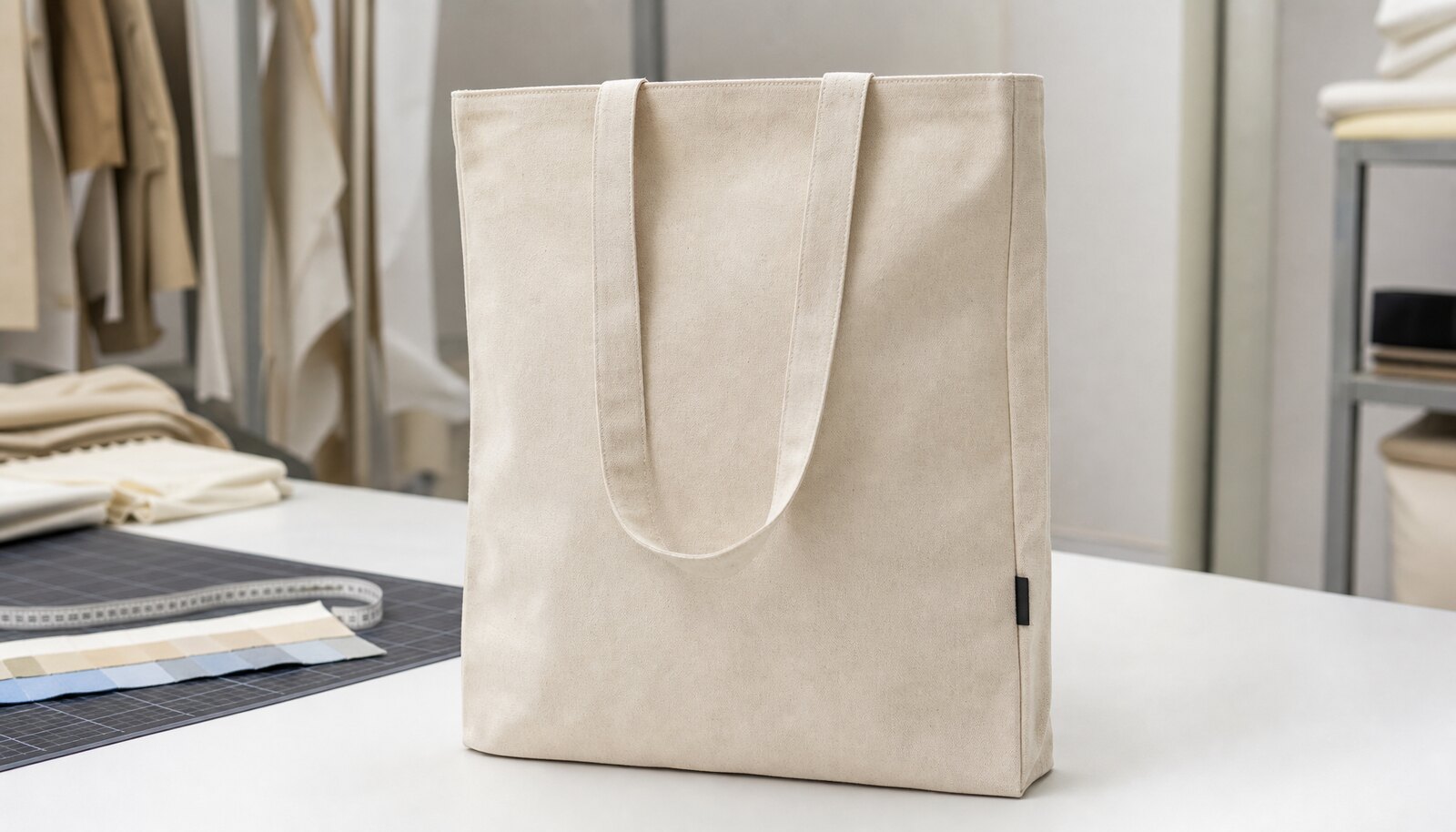
1. Reorders fail for different reasons than first-time buys
A first order for canvas conference bags is usually won on the sample. A reorder is won on repeatability. For trade shows, the bag often becomes part of your event identity: staff carry it, visitors reuse it, and buyers compare it with the version they received last year. If the second shipment changes in fabric handfeel, print clarity, or handle length, the inconsistency is obvious even when the bag is still technically usable.
The right reorder memo starts with the last approved sample and the last shipped carton spec, not with a fresh design conversation. Procurement teams should treat the bag as a controlled item: lock the construction, note what can change without buyer approval, and define the exact trigger for a new sample round. That approach prevents the most common problem in repeat tote orders, which is a supplier assuming “close enough” is acceptable.
- Use the last received production sample as the reference, not the sales photo.
- Lock the fabric weight, handle construction, logo position, and packing count before PO release.
- Treat any substitution in canvas source, thread, zipper, or closure as a formal deviation.
2. Start with the bag’s real job at the show
Canvas conference bags for trade shows are not all doing the same work. Some hold a folded brochure and a pen. Others carry product sheets, sample jars, catalogs, and registration material all day. That difference determines the right fabric weight, seam reinforcement, and closure choice. A lightweight promotional tote may pass a low-value giveaway program, but it is the wrong spec if attendees are expected to carry it for several hours through the venue and hotel.
For most event buyers, the practical range sits between 8 oz and 12 oz canvas. Eight-ounce canvas is easier to price and ship, and it suits soft goods or lower-cost handout kits. Ten-ounce canvas is the safest default for repeated trade show use because it balances body, print surface, and cost. Twelve-ounce canvas fits premium conferences, retail-branded events, or programs where the bag itself must reflect a stronger brand presentation.
- 8 oz: lighter, lower cost, better for simple handouts.
- 10 oz: common default for event totes that need structure and repeat use.
- 12 oz: premium feel, better body, higher freight and material cost.
- If the bag carries hard objects, specify seam reinforcement and test loaded weight, not just empty bag appearance.
3. The spec sheet should protect you from cheap substitutions
A weak reorder spec is one of the main reasons tote quotes look similar but perform differently in production. A supplier can price two “canvas bags” very differently if one uses a lighter loom count, a narrower seam allowance, or a looser handle stitch. Procurement should write the spec in a way that makes substitution visible. That means fabric weight in oz or GSM, bag dimensions, handle length, handle drop, stitch density, and print placement all need to be named in the RFQ.
If the order is for a repeat program, also include what cannot change without written approval. For example: natural canvas shade, pre-washed versus standard finish, handle tape width, internal overlock color, or whether the print area can shift by more than a few millimeters. These details matter because buyers often notice a “different bag” even when the supplier claims it still meets the general description.
- Specify fabric weight in oz or GSM, plus whether it is bleached, natural, dyed, or pre-shrunk.
- Give finished dimensions and tolerance, not only cutting size.
- State handle width, handle drop, and stitch reinforcement style.
- Define logo placement from seam or top edge, not “centered by eye.”
4. Print method affects reorder stability more than buyers expect
For canvas conference bags, screen print is usually the most stable option for reorders. It holds up well, keeps setup cost sensible, and reproduces logos consistently when the artwork stays simple. A one- or two-color print is ideal for trade show bags because it reduces registration risk and keeps the bag looking clean. If the artwork is highly detailed, a gradient, or a multi-color sponsor layout, the buyer should expect a different process and a higher defect risk.
Heat transfer and digital print can be useful, but they should be chosen with eyes open. They make sense for short runs, variable names, or artwork that changes often. The downside is that the printed surface can react differently when the bag is folded, stacked, or rubbed during event distribution. If a brand wants the same tote reordered for several shows, screen print with a sealed strike-off is usually the more predictable route.
- Screen print: better for stable repeat orders and simple logos.
- Heat transfer: useful for small quantities or variable artwork.
- Digital print: good for complex graphics, but confirm wash and rub resistance if reuse matters.
- Require a strike-off on the actual canvas before bulk approval.
5. MOQ logic should reflect print setup, not just factory preference
A meaningful MOQ is not just a number pulled from a price sheet. It usually reflects fabric cutting efficiency, printing setup, and carton planning. For standard canvas conference bags, a reorder MOQ often makes sense in the 1,000 to 3,000 piece range when the same print plate or screen can be reused. Lower quantities can be possible, but the unit cost typically rises because setup time is spread across fewer pieces and the supplier may be tempted to use in-stock materials with less control over consistency.
When comparing quotes, separate true MOQ from economic MOQ. A factory might accept 500 pieces, but the price can jump enough that the landed cost no longer fits the event budget. Another supplier may offer 2,000 pieces at a cleaner unit rate because the line can run efficiently and the packing plan is easier. For repeat trade show programs, the better question is not “what is your minimum?” but “what quantity gives us a stable production cost without forcing unnecessary inventory.”
- Ask for MOQ by artwork version, not only by style.
- Compare unit price at 1,000 / 2,000 / 3,000 pcs if the reorder volume is uncertain.
- Watch for low MOQ quotes that hide higher setup charges or fabric substitutions.
- For annual programs, consolidate volume when artwork and spec remain unchanged.
6. Quote comparison should separate real cost drivers from noise
Two supplier quotes for the same-looking canvas bag can diverge for legitimate reasons. Fabric weight, print process, handle tape, stitching labor, inner finishing, carton packing, and testing all affect the number. Procurement teams often over-focus on the bag unit price and underweight the items that change the landed result: carton count, gross weight, freight class, and defect handling. A quote that looks cheaper ex-factory can become more expensive once you add rework, freight, and slower delivery.
The most useful comparison is a landed-cost view. If one supplier quotes a slightly heavier canvas but packs more cleanly and reduces damage during transit, the true cost can be better. If another supplier offers a cheaper fabric but needs extra QC, more spare pieces, or rush shipping, that apparent savings often disappears. For trade show programs, the cost of a missed event is usually much higher than the difference between two tote quotes.
- Compare fabric weight, print method, packing count, and lead time together.
- Ask whether the quote includes pre-production sample, strike-off, and carton marks.
- Convert any freight estimate to the same shipping term before making a decision.
- Reserve a small contingency for overruns, replacements, or rework.
7. What a buyer should see in sample approval
A reorder sample is not a design exercise. It is a control document. The bag should be approved only after the buyer confirms the dimensions, fabric handfeel, logo placement, print opacity, stitch quality, and packing method. A photo alone is not enough because canvas changes appearance when it is filled, stacked, or folded into carton packs. The sample must show the same structure the event team will receive in bulk.
The best practice is to keep a golden sample and a small set of signed material references: fabric swatch, print strike-off, thread color if visible, and any label or side tag. If the supplier changes a material source later, the difference should be obvious against those references. This is especially important for conference bags because they often move through multiple channels: sales teams, exhibition contractors, and event staff all handle them before the attendee sees the bag.
- Measure finished dimensions and handle drop on the physical sample.
- Inspect print edges for fuzzing, pinholes, and color density.
- Load the sample with intended contents to test seam behavior and stand-up shape.
- Approve the packing count and carton presentation, not only the bag itself.
8. QC thresholds should be written in practical numbers
Procurement teams avoid dispute when the acceptance criteria are measurable. For canvas conference bags, the most useful thresholds are size tolerance, stitch consistency, print placement, and defect rate by carton. The goal is not to create a perfect product standard; it is to define what the factory must hit before shipment. If the spec says the logo can shift by a small tolerance and the handles must be reinforced at the stress points, then the QC team can sort defects quickly and the buyer can focus on units that truly miss the mark.
Random inspection should look for the defects that affect event use, not only visual neatness. A small stain, an uneven seam, or a weak handle may seem minor on the line but becomes a problem once the bag is filled and carried across a convention hall. For that reason, the buyer should require a simple inspection sheet that records defect type, count, and whether the issue is cosmetic or functional.
- Size tolerance should be agreed before bulk production begins.
- Handle reinforcement and seam integrity are functional defects, not cosmetic issues.
- Print misalignment becomes more visible on large logo blocks than on small marks.
- Record carton-level defect counts so repeat issues can be traced to one production batch.
9. Packing and carton planning protect both cost and presentation
Packing is often treated as a small detail, but it directly affects freight cost, bag shape, and receipt quality. Bulk packing is usually the best route for conference bags because it reduces labor and keeps unit cost in check. However, the supplier must pack in a way that does not crush handles or crease the print area too aggressively. If the bags are going to exhibitors or retail buyers, a neat stacked pack with correct count per carton matters more than it does for a simple giveaway run.
Carton size and loading density should be planned with freight in mind. Overfilling cartons can flatten the tote body and make the bags harder to present on arrival. Underfilling cartons wastes freight space and can lead to a poor pallet pattern. The right balance depends on the bag structure, but buyers should always ask for an export packing example or at least a clear packing diagram before the order is released.
- Choose bulk pack when the event team will redistribute bags onsite.
- Use individual polybag only if the bags must arrive clean and retail-presentable.
- Confirm carton count, gross weight, and carton mark format before production starts.
- Require a packing sample if the bag has print on both sides or a fragile closure.
10. Lead time risk is usually scheduling risk, not sewing risk
For repeat conference bags, the actual sewing time is rarely the only issue. Delay usually comes from slow sample approval, artwork confusion, fabric re-confirmation, or a missed booking window for freight. A realistic reorder schedule needs enough time for sample confirmation, production, inspection, packing, and shipment. If the event date is fixed, the buyer should build a buffer rather than assume the first factory promise is enough.
As a working planning range, many repeat canvas tote orders need 25–40 days after sample and PO confirmation, with extra time if the order includes new print colors, closures, or special packing. That range can be shorter or longer depending on season and factory load, but it is a sensible baseline for procurement planning. The moment the order is connected to a trade show date, the buyer should treat freight availability and customs timing as part of the same schedule, not as a separate logistics issue.
- Start reorder planning before the event calendar gets tight.
- Build time for strike-off approval and one round of corrections.
- Add freight and customs time to the factory lead time before committing to attendees.
- Avoid changing artwork after production slots are booked.
Specification comparison for buyers
| Spec decision | Recommended option | When it fits | Buyer risk to check |
|---|---|---|---|
| Fabric weight | 8 oz to 10 oz canvas for standard conference use; 12 oz if the bag carries catalogs or hardbound samples | Choose 8 oz when price sensitivity matters and contents are light; step up to 10–12 oz when the bag must feel premium or stand up in retail reuse | Light fabric may wrinkle, collapse, or show print ghosting; heavy fabric can raise unit cost and carton weight |
| Print method | 1–2 color screen print for repeat orders; heat transfer or digital only for short runs or complex artwork | Screen print works best for event logos, sponsor marks, and consistent reorders; transfer suits variable names or multi-color art | Weak white underbase, poor registration, or transfer peeling after folding and transport |
| Closure style | Open top for giveaway use; zipper or snap only when contents are high value or must not spill | Open tops are faster and cheaper for standard trade show handouts; closures fit premium kits, product samples, or confidential materials | Added closure hardware changes lead time, labor, and repair risk if zipper tape or snaps are inconsistent |
| Handle length and construction | 28–30 cm drop handles for hand carry; reinforced cross-stitch at stress points | Best for booth staff handoff and short walking routes between hall and hotel | Under-stitched handles fail after repeated catalog loads; overly long handles snag in carton packs |
| MOQ logic | 1,000–3,000 pcs for custom reorders; higher MOQ may be justified only when the print setup is repeated and freight is consolidated | Good for annual conferences and brand programs with stable artwork | Very low MOQ can hide higher unit cost, weak fabric substitutions, or unstable color matching |
| Packing method | Bulk polybag in fixed count per carton for efficiency; individual polybag only if distribution requires clean presentation | Bulk pack suits internal event distribution and lower labor cost | Loose packing can scuff print; over-packed cartons can crush gussets and affect carton count accuracy |
| Supplier route | Direct factory reorder for stable specs; trader or local stockholder only when speed beats cost control | Direct factory works best when you need repeatability, proof of production, and better control over fabric and print | Trading routes can hide fabric substitutions and delay root-cause analysis when defects appear |
| Sample approval depth | Golden sample plus sealed material swatches and print strike-off for reorders | Use when the product has already sold through and you need matching repeat quality | Approving only a photo or flat sample can miss handle length, stitch density, and print opacity issues |
| Lead time planning | Allow 25–40 days for repeat production after sample and PO confirmation, plus freight and customs time | Works for annual trade shows if the reorder is placed before peak season | Late reorders can force rush freight, partial shipment, or untested substitutions |
Buyer checklist before sampling
- Approved golden sample or last-order reference bag with measured dimensions, fabric weight, handle length, and print placement
- Confirmed fabric spec in oz or GSM, including whether canvas is bleached, natural, dyed, or pre-shrunk
- Print file locked with PMS reference or artwork tolerance, plus number of colors and print side
- Packing spec stated: bulk pack count, polybag requirement, carton size target, and carton mark format
- Target lead time and ship window aligned to event date, with buffer for sample approval, production, and freight
- Inspection standard defined for stitches, fabric flaws, print defects, size tolerance, and carton count
Factory quote questions to send
- Is your quote based on actual fabric weight/GSM and does it include pre-shrunk or standard canvas?
- What print method is included, how many colors are priced, and what is the setup fee for reorder versus new artwork?
- Can you reproduce the last order exactly, and will you keep the same fabric mill, thread, and handle construction?
- What is the MOQ by color and by print version, and can you combine artwork variants in one production run?
- What packing method is included per carton, and what carton loading limit do you recommend to avoid handle crushing?
- What are your standard QC tolerances for size, stitch density, print alignment, and defect rate?
- What lead time applies after sample approval, and what part of the schedule changes if we add closures, inserts, or special packing?
- Can you share photos of the current production sample, carton marks, and one recent export packing example for a similar tote?
Quality-control points to confirm
- Fabric weight must match the approved spec within the supplier’s stated tolerance; any lighter substitution needs written approval before bulk starts
- Panel size, gusset depth, and handle drop should stay within agreed tolerance so the bag does not look different at event distribution
- Print registration should stay aligned and opaque enough that the logo reads cleanly from typical trade show hand-carry distance
- Top stitching, handle reinforcement, and side seams must be even with no skipped stitches, broken threads, or loose knot ends
- Carton counts should be verified by random open-box inspection; overpack and underpack errors should both be recorded
- No odor, oil stain, needle mark, or heavy lint contamination should be visible on finished bags before sealing cartons