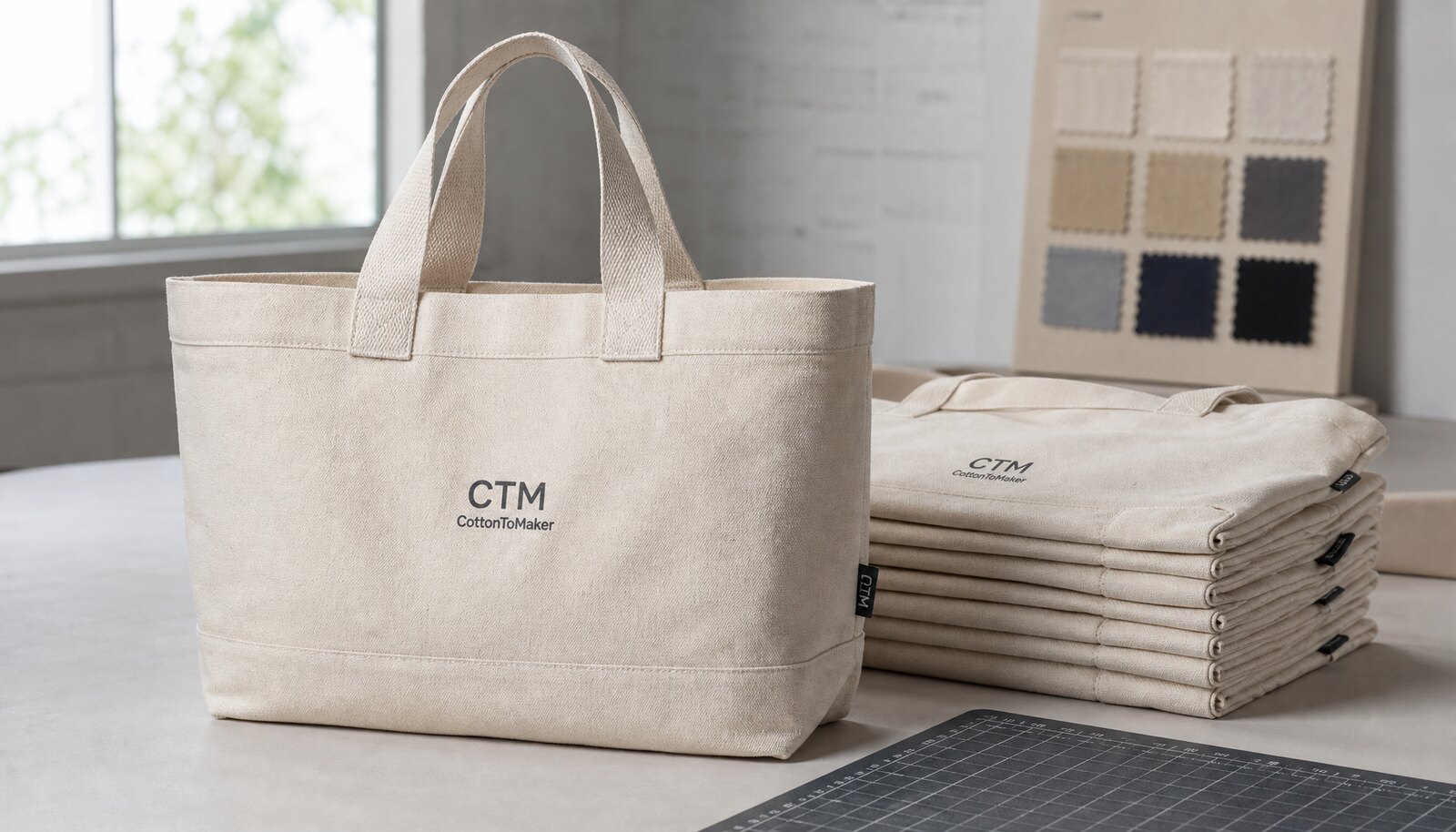
Why carton planning matters more than the bag alone
For subscription box programs, the main sourcing mistake is treating the canvas conference bag as a standalone promotional item. In practice, the bag has to survive a second system: the box program. That means the buyer is not only evaluating fabric, print, and sewing. You are also deciding whether the packed bag will fit the fulfillment line, the internal box dimensions, and the freight profile you want to carry through the season.
This is where canvas conference bags for subscription boxes shipping carton planning becomes a real procurement issue. A bag that looks good as a sample can still be expensive in the carton because it folds poorly, traps air, or needs extra protective packing. For replenishment programs, the difference between a flat-pack tote and a bulky one can change carton count, pallet count, and the amount of hand work in kitting.
- The bag spec must support the box spec, not just the other way around.
- A few millimeters of folded thickness can change carton count materially.
- The best quote is the one that works in production, packing, and shipping.
Start with the end use, not the logo
The first sourcing decision is the end use after unboxing. If the bag is a reusable subscription insert, it should feel durable enough to keep. That usually points to 12 oz to 14 oz canvas, roughly 340-475 GSM, with a clean top hem and a handle length that feels normal in retail use. If the bag is only meant to hold a few sample products inside the box, a lighter construction may be acceptable, but the buyer should accept the tradeoff in body structure and perceived value.
The bag dimensions should be chosen against the box interior, not against a generic tote spec. If the bag is too tall, the top edge can deform the lid. If it is too wide, the fold becomes irregular and the pack-out gets slow. A small bottom gusset often gives enough capacity without creating a thick block in the carton. For subscription programs, flatness usually matters more than carrying capacity.
- Good starting range: 32 x 38 cm to 38 x 42 cm for many insert programs, then adjust to box size.
- Use 12 oz canvas for a balanced durability-to-weight ratio.
- Use 14 oz canvas when the bag must feel premium or be reused often.
- Avoid oversized gussets unless the box has generous headroom.
Fabric weight, weave, and finish: what changes the quote
Canvas pricing is not driven by size alone. Fabric weight, weave tightness, surface finish, and dye method all affect cost and performance. A buyer who asks for 'canvas' without GSM is likely to get quotes that cannot be compared. One supplier may quote a loose 300 GSM fabric, another a denser 14 oz body, and both will look similar on paper until the packed bag fails to meet box limits or the logo shows through the weave.
For subscription box use, the safer choice is usually a medium-heavy plain weave with consistent surface density. That supports cleaner printing and reduces wrinkling after folding. If the bag is unbleached natural canvas, confirm the color variation tolerance and any visible cotton flecking rules. If the design uses dark ink on light canvas, ask for a wash test or at least a rub test on the print so the buyer is not surprised by scuffing after kitting.
- Ask for canvas weight in GSM and oz, not one or the other alone.
- Confirm whether the fabric is bleached, natural, dyed, or washed.
- Check if the canvas has been calendered or softened, since that changes fold behavior.
- If the canvas is very loose, screen print edges can spread more than expected.
Print method choices for boxed programs
For a subscription box insert, the print method should be selected for repeatability and pack-out durability. Screen print is the most practical route when the logo is simple, the color count is low, and the buyer wants stable repeat production. Heat transfer can work for short runs or more detailed artwork, but it needs strong control on temperature, pressure, and peel behavior. Woven labels or side labels can supplement the main print when the brand wants a cleaner front panel.
The packaging environment matters here. A print that looks fine on a hangtag sample may crack, mark, or take on a pressed look once the bag is folded and shipped in a tight carton. If the subscription box line uses automated or semi-automated kitting, keep the print area away from hard fold lines. For a reusable bag, a heavier ink deposit is acceptable only if the folded face still stays clean and does not stick to adjacent bags in the carton.
- Screen print: best for simple artwork, lower setup risk, and repeat orders.
- Heat transfer: useful for more detail, but needs tighter process control.
- Embroidery: premium look, but usually adds thickness and carton bulk.
- Woven or sewn labels: good when the front panel must stay simple.
MOQ logic and how it affects carton economics
MOQ should be judged by both factory efficiency and the commercial plan of the subscription box. A supplier may give a low per-unit price at 5,000 pcs, but if the box program only needs staged monthly drops, that lot size can create unnecessary inventory risk. On the other hand, a very small MOQ can hide higher setup charges, more labor, and less stable QC control. The buyer needs to know whether the real saving comes from the factory run or from shipping and fulfillment efficiency.
When comparing quotes, ask the supplier to show what changes at each quantity tier. Some factories will keep the same construction but reduce carton pack count, which raises freight. Others will optimize pack count but require a larger production run to stay profitable. In a subscription model, the best MOQ is often the smallest quantity that still lets the factory run a stable line and pack the cartons efficiently.
- Compare unit price at the same fabric, same print method, and same carton plan.
- Do not accept a low quote that excludes carton packing detail.
- If the order is split by subscription month, confirm whether each split changes setup cost.
- Ask whether the factory can hold buffer stock for repeat drops.
Comparison of sourcing routes for this kind of program
Not every sourcing route is equally good for a box-driven program. A direct factory is usually strongest when carton planning, repeat orders, and minor spec tuning matter. A trading company can help if the buyer needs multiple product types in one shipment, but the carton and packing details can become less transparent. A local converter may be useful for very small domestic runs, though the fabric cost may be higher and the bag construction choices narrower.
The right route depends on how sensitive the program is to box size and fulfillment labor. If the bag must fit a strict retail carton format, a supplier that understands folded dimensions, pack counts, and pallet stackability usually beats a supplier that only sells finished tote bags. The buying team should ask for carton data before comparing sample aesthetics.
Supplier route comparison table
Use the comparison below to judge which sourcing route fits the program. The point is not to pick the cheapest supplier on paper. The point is to identify who can actually execute the bag, the fold, and the carton plan without hidden cost later in the process.
Packing rules should cover fold method, inner bundle, carton count, carton mark, moisture protection, SKU separation, and warehouse receiving needs. These details affect cost, damage rate, receiving speed, and whether the goods can move directly into retail or distribution.
- Write decisions in measurable language, not only descriptive wording.
- Ask for sample photos plus one physical approval sample for important orders.
- Keep quotation, sample approval, and inspection notes tied to the same spec version.
Packing format and carton plan
Packing is where most subscription-box tote mistakes show up. The supplier should tell you how the bag is folded, whether the handle is tucked in or laid flat, and how many pieces fit per carton at the target carton dimensions. A neat retail fold is not always the most efficient shipping fold. For boxed subscription programs, the most efficient fold is often a flatter, simpler fold that reduces trapped air and keeps the carton stable.
Carton planning should include more than counts. Ask for carton size, gross weight, and whether the stacked carton will exceed the limits of your fulfillment line or forwarder. If the carton is too tall or too heavy, it slows picking and palletizing. If the cartons are too loose, the bags can shift and arrive creased. The right answer usually sits between presentation and density, with the exact balance driven by the box dimensions and the downstream labor model.
- Request a packed sample carton before bulk approval if the carton is tight.
- Keep carton gross weight aligned with manual handling limits.
- Use standard carton sizes where possible to simplify pallet planning.
- Agree the fold direction before production starts.
Sample approval should test the folded bag, not only the bag itself
A useful pre-production sample for this project must represent the final production method. That means the buyer needs the final fabric, final print method, final label treatment, and final fold. A loose sample bag on the table can hide problems that appear only after packing. For example, a print may look perfect flat, but once folded it may crease in a way that exposes edges or gives the face a used look. The carton sample should also show the actual number of pieces per carton and the final carton dimensions.
Approval should be based on acceptance criteria, not general approval language. Define acceptable variation in body size, handle length, logo placement, and seam allowance. If the bag is meant for an insert program, also check the folded thickness and whether the packed carton closes without compression. The sample stage is the cheapest time to discover that a design needs a small gusset reduction or a lower stack count per carton.
- Approve the production fold, not a display fold.
- Measure the packed thickness with the handle tucked the same way each time.
- Use the same artwork file and same print location that will go to bulk.
- Confirm carton marks, carton count, and labeling during sample approval.
Quality control points that prevent fulfillment problems
For canvas conference bags in subscription box programs, QC should focus on the failure modes that create real downstream cost. Print registration, stain control, loose threads, and top-hem symmetry matter because they affect how the bag looks at first touch. But the more expensive failures are usually dimensional: a bag that is technically within a sewing tolerance but too bulky to fit the planned box, or a carton that passes basic inspection but fails under stack pressure.
A practical QC plan uses a mix of measurement, visual review, and pack-out testing. Set clear thresholds for seam strength, print clarity, and size tolerances. Then test a small number of packed cartons under normal handling. If the bags are going into repeated subscription drops, keep a record of the approved fold and carton count so the factory does not drift on the second or third order.
- Check top opening width, body height, handle drop, and folded thickness.
- Inspect print for pinholes, ghosting, and ink edge softness.
- Reject cartons that cannot be sealed without over-compression.
- Keep one approved packed master carton as a reference for repeat orders.
Specification comparison for buyers
| Spec decision | Recommended option | When it fits | Buyer risk to check |
|---|---|---|---|
| Fabric weight | 12 oz to 14 oz canvas, usually about 340-475 GSM | Most subscription box inserts that need shape, print clarity, and reuse value | Too light can wrinkle and show through; too heavy increases cost and carton weight |
| Bag body format | Flat tote with limited gusset or small bottom gusset | When the bag ships folded inside a box and does not need rigid standing shape | A deep gusset can waste carton space and increase dimensional weight |
| Print method | Screen print for simple logos, heat transfer for short runs, woven label for subtle branding | When the artwork is limited and the buyer wants clean repeatability | Complex art, gradients, or small text may blur or crack if the method is mismatched |
| Supplier route | Direct factory with packing experience | When carton fill rate, in-box presentation, and repeat orders matter | Factories that only quote bag production may ignore final pack-out efficiency |
| Carton pack count | Set by folded bag thickness and box conversion target, often 50 to 200 pcs per carton | When you need to balance labor speed with carton weight limits | Overpacking can crush print or create carton failure during transit |
| In-box packing | Flat-folded with tissue or OPP only if presentation requires it | When the bag is a subscription insert and unboxing matters | Extra inserts raise labor and may slow kitting without adding buyer value |
| Carton quality | 5-ply or stronger for export lanes, with burst and compression suitable for stacked pallets | When bags move through multiple touches or ocean freight | Weak cartons can collapse even if the bag itself is well made |
| Closure detail | Open tote or simple snap/button depending on box size and end use | When the bag is reused after unboxing and product protection is secondary | Closures add parts, sewing time, and defect points |
| Sampling route | Pre-production sample using final fabric, print, fold method, and carton size | When carton planning affects fulfillment and not just the bag appearance | A logo-only sample can pass while the packed carton still fails on volume or weight |
Buyer checklist before sampling
- Confirm target bag size, folded thickness, and whether the bag must sit flat inside the subscription box without bulging the lid.
- Lock fabric weight in GSM or oz, not just canvas type, so suppliers quote the same construction.
- Define the print method, print area, ink color count, and any side-label or woven-label branding before asking for pricing.
- Specify the shipping carton target: max gross weight, preferred carton dimensions, and whether pallets are required.
- Ask for a pre-production sample that uses the final fabric, final print method, and final fold/pack plan.
- Request carton packing detail in the quote, including units per carton, carton size, carton weight, and carton mark format.
- Require a defect standard for print clarity, seam strength, measurement tolerance, and stain control.
- Compare quotes on landed cost, not unit price only, because carton size and pack count change freight and fulfillment labor.
Factory quote questions to send
- What exact canvas construction are you quoting, including GSM, yarn count if known, and any wash or enzyme finish?
- What are the final bag dimensions before folding, and what packed thickness do you assume for carton planning?
- Which print method are you pricing, and what is the setup cost, color count limit, and repeat-order cost?
- How many pieces per carton do you recommend, and what carton size and gross weight does that produce?
- Can you quote the bag with and without side label, woven label, zipper, or snap closure so we can compare cost impact?
- What is your MOQ by color and by print method, and what changes if we split the order across multiple box programs?
- What sample type will you provide before production, and will it match the final carton packing structure?
- What is your standard lead time after sample approval, and what parts of the schedule are the longest risk items?
Quality-control points to confirm
- Fabric weight tolerance should be agreed in advance, with a practical range rather than a vague canvas description.
- Seam strength should hold under normal filled use, especially at the top hem and handle join.
- Logo placement must stay within a defined centerline and height tolerance so the bag looks consistent in boxed presentation.
- Print must be evaluated under packing conditions, not only on a flat sample, because folding can stress the ink or transfer layer.
- Fold size should be measured against the subscription box internal dimensions before bulk approval.
- Carton compression should be checked after packing, because a perfect bag can still fail if the carton bows or crushes during stacking.
- AQL or equivalent defect rules should cover staining, skipped stitches, print misregister, and dimensional failure.
- Pack-out accuracy should be verified on a pilot carton count to avoid shortage or overfill at the fulfillment stage.