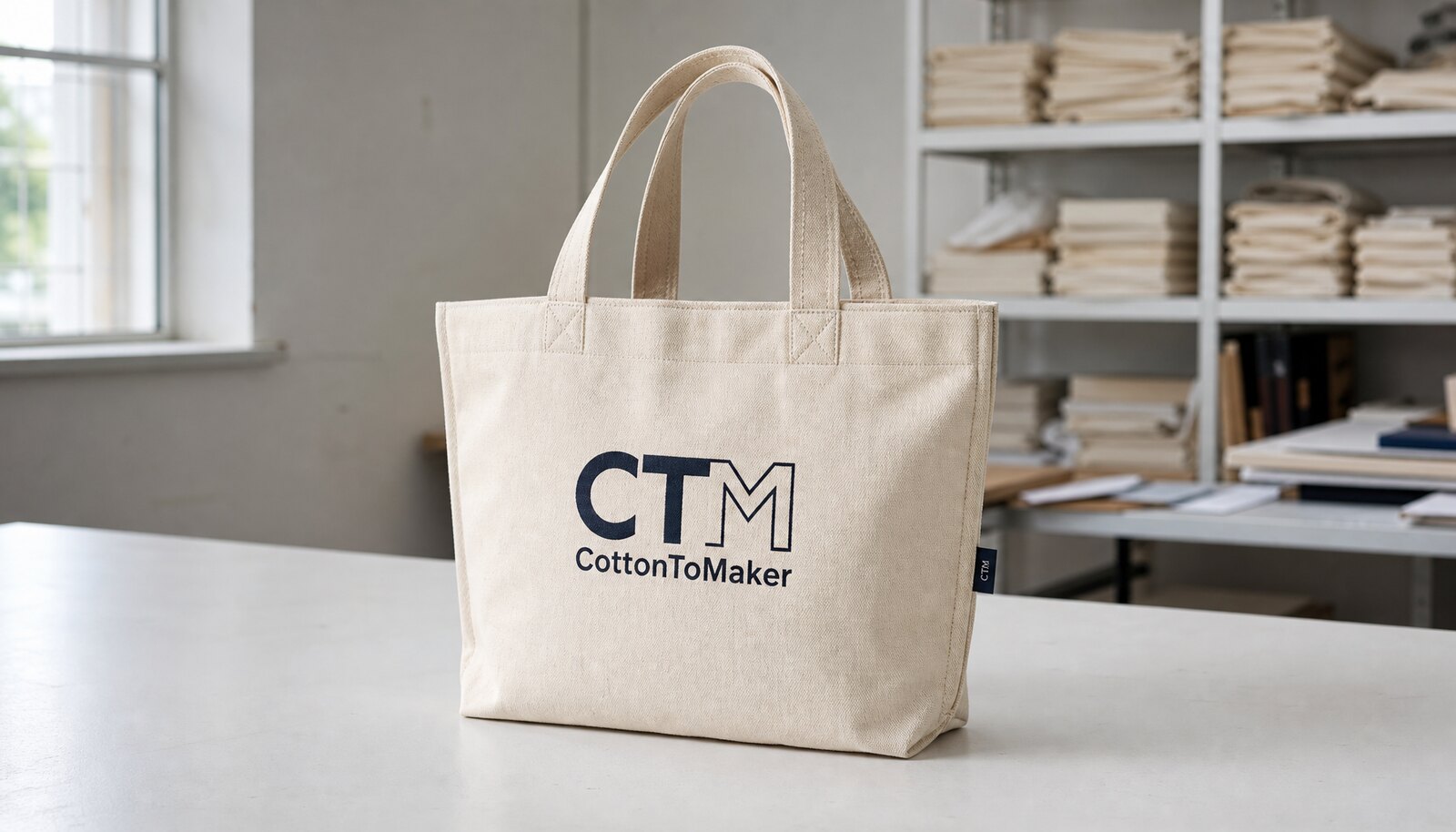
What schools actually need from a conference bag
A school conference bag is not a generic tote with a logo on it. It has a job to do. It has to hold event schedules, brochures, notebooks, pens, and sometimes a tablet or a small take-home pack, then still look neat enough to hand out at a parent night, teacher conference, alumni event, or student orientation. If the bag looks good empty but collapses once it is filled, the buyer still gets complaints from the event team. That is why the specification should start with use, not decoration.
For procurement, the first decision is whether the bag is meant for one event or repeated use. A single-event handout bag can be lighter and cheaper if the contents are mostly paper. A reusable campus or conference tote needs better seam control, a more stable body, and handles that can survive repeated carrying. The school may call both items a conference bag, but the buying logic is different.
Buyers also need to think about distribution. If volunteers will stuff bags in a gym or auditorium, a wider opening and a bag that stands upright can save a lot of labor. If the bag is being mailed, the flat packed size matters. These are not styling details; they affect freight, handling time, and whether the bag works in the real event flow.
- Use case should be written first: one-time handout, seasonal event tote, or reusable campus bag.
- List the actual contents the bag must carry, not just a rough description like brochures and gifts.
- Define distribution method early: handout table, classroom delivery, courier shipment, or mail pack.
- If the bag must look premium, prioritize neat stitch quality and print clarity before extra features.
Choose the canvas weight with a use-case lens, not a slogan
Canvas weight is one of the biggest cost drivers, but it should never be selected as a slogan like 'heavy-duty is better.' For school programs, a practical range is often around 10 oz to 14 oz canvas, roughly 280 to 420 GSM depending on weave density, finish, and how the supplier measures fabric. That range is useful only as a starting point. A tightly woven 10 oz fabric can feel more substantial than a loose 12 oz fabric, so weight alone does not tell the full story.
For most conference use, 12 oz is often the most balanced option because it usually offers a decent hand-feel, workable print performance, and acceptable cost. But it is not a universal answer. If the bag is expected to hold a stack of booklets and a folder without bowing at the bottom, a gusset or a slightly heavier fabric may matter more than an extra ounce on paper. If the bag is mostly for paper inserts and the order is very large, a lighter canvas may be commercially smarter.
What buyers should ask the factory for is a full fabric description: weight, weave style, finish, and whether the cloth has any wash or shrink treatment. If the supplier can only say 'good quality canvas,' the quote is too vague to compare. When the bag will be printed, the weave also matters because a rough weave can make fine text look broken and can show more ink spread than a smoother cloth.
- 10–11 oz: suitable for light handouts, low-cost outreach, and shorter carry distances.
- 12 oz: usually the most workable middle ground for school conference orders.
- 14 oz and above: useful for repeat-use or more premium bags, but price and sewing time increase.
- Ask whether the fabric is measured before or after finishing, because that can affect how the quoted weight is interpreted.
A true price comparison needs apples-to-apples spec data
Many buyers ask for quotes before they fix the bag spec. That creates false savings. One supplier prices a 10 oz flat tote, another prices a 12 oz gusseted tote, and a third includes reinforcement plus individual packing. The spreadsheet looks like a normal price comparison, but the items are not equivalent. For canvas conference bags for schools, the right planning method is to compare the exact same finished size, fabric weight, print method, and packing format before talking about unit price.
A useful procurement table should show the relationship between spec and price, not just the buying route. For example, a 10 oz flat bag with one-color screen print may land around $0.95–$1.45 at 3,000 pcs, while the same bag in 12 oz canvas may land around $1.05–$1.75. Add a gusset and reinforced handles, and the range may move to roughly $1.25–$2.10. If the order needs two-color print or individual polybagging, it can move further. These are not universal market quotes; they are practical planning ranges that help schools budget before RFQ responses arrive.
The best comparison table is one the buyer can use to plan the budget, not one that merely describes sourcing routes. When the school has a target per-piece budget, map the route, fabric weight, print method, and packing choice to that budget. Then request quotes against that aligned spec. This prevents the common mistake of picking the lowest headline price and discovering later that the actual delivered bag is lighter, smaller, or less durable than the event needs.
- Do not compare quotes until the finished size, fabric weight, print method, and packing format are fixed.
- Ask suppliers to quote the same spec in at least two versions: economy and upgraded.
- Use unit-price planning ranges to set budget expectations before RFQs go out.
- If a quote is much lower than the others, check for missing reinforcement, packing, or setup charges.
Compare supplier routes before you compare prices
Not every sourcing route is trying to solve the same problem. A direct factory is usually strongest when the order is large enough to justify setup, when artwork will repeat, and when the buyer wants clear control over quality. A trading company or agent can help when your team needs coordination, technical follow-up, or multiple categories in one shipment. A local printer on imported blanks can be the fastest path for a rushed event, but it usually limits size control and consistency. Stock wholesalers are useful when the timeline is tighter than the customization needs.
For serious procurement, the best route depends on what risk you want to reduce. If schedule risk is the biggest concern, local decoration on stock bags may be the safest. If quality consistency across multiple school sites matters more, direct factory production is usually better. If the project involves several stakeholders, a trading company may simplify communication, but the buyer should inspect the markup and the quality ownership carefully. Too often, the real problem is not price; it is unclear responsibility when something goes wrong.
There is also a decision hierarchy that helps buyers avoid false comparisons. First, confirm whether the bag is stock or custom. Second, decide whether the print is simple or multi-color. Third, decide whether the bag is expected to be repeated later. Once those three questions are answered, MOQ, lead time, and price begin to make sense. Without that order of thinking, the buyer compares unrelated offers.
- Best for repeat programs: direct factory or strong contract manufacturer.
- Best for urgent events: local printer on stock blanks or warehouse stock bag route.
- Best for complex coordination: trading company, but only if responsibilities are written clearly.
- Best for short pilots: low-MOQ stock bag route, then re-spec the winning version for scale.
How bulk pricing is actually built
A bulk price on canvas conference bags for schools is a bundle of several costs, not a single number. The most obvious part is the body fabric and sewing labor, but the quote also includes cutting waste, handle reinforcement, print setup, carton packing, and export handling. If the supplier quotes only a unit price and leaves the rest vague, the number is not yet procurement-ready. It may be a teaser price that becomes higher once details are finalized.
The main pricing levers are easy to remember. Bigger bags use more material and more sewing time. Heavier fabric adds cost and can slow the line. Longer handles and reinforced stress points add labor. One-color screen print is usually cheaper than multi-color work because setup and registration are simpler. Individual polybags, barcodes, insert cards, or retail folding can add meaningful cost even though they sound minor. For school orders, these 'small' extras often become expensive because of the quantity.
A useful landed-cost check is to calculate beyond ex-factory. Example: if the factory price is $1.18, packing adds $0.06, inland movement adds $0.04, and ocean freight plus duty plus local handling adds another $0.22, the true landed cost is $1.50 before warehouse labor. That is the number that matters. A competing quote at $1.25 ex-factory could easily land higher if it uses heavier cartons, slower packing, or a less efficient freight route.
- Ask for a full cost breakdown: blank bag, decoration, packing, cartons, and shipment terms.
- Compare quotes only after all suppliers are aligned to the same finished size and fabric weight.
- Use landed cost, not unit cost, when the order crosses borders or needs warehouse handling.
- Request carton dimensions and packed weight early so freight does not surprise you later.
Printing decisions should be driven by artwork and durability, not habit
For most school conference bags, the decoration goal is legibility and durability. That is why simple screen print remains the default option for many bulk orders. A one-color or two-color logo usually prints cleanly on canvas, holds up well to handling, and avoids the cost spikes that come with complex art. If the artwork has thin lines, tiny text, gradients, or photo detail, the buyer should pause and ask whether the design can be simplified for the material rather than forcing a high-risk print method.
Transfer printing and other decoration methods have a place, but they should be quoted as deliberate upgrades. They can help when the art is complex or when the order is small, but the buyer should verify edge quality and long-term adhesion on canvas. Embroidery can look premium and hold up well for a small emblem, but it is rarely the best answer for large logos or full text. A woven label can be a clean branding element if the school wants a quieter, more subtle look.
The best way to write this into the RFQ is to ask the supplier to quote at least two versions: the lowest-risk method for the given artwork and the premium option if the design needs it. That gives the buyer a real tradeoff. It also reveals whether the artwork itself is the problem. Often a simpler logo, larger safe area, and fewer colors produce a better bag at a lower total cost than trying to force a complicated design onto canvas.
- Screen print: best for simple artwork, larger quantities, and repeatable school branding.
- Heat transfer or digital transfer: useful for short runs or multi-color art, but test adhesion and edge quality.
- Embroidery: premium for small logos or crests, not usually efficient for large text blocks.
- Woven label: good when the bag itself should stay understated and the brand mark can be subtle.
- Ask for a minimum line thickness and minimum text height so the logo remains readable on canvas.
MOQ, sampling, and lead time: the timeline is a system
MOQ should not be treated as a random factory whim. It usually reflects how much setup is needed to run the order efficiently. A standard blank tote with one print color can often be produced at a lower minimum than a custom-sized bag with a gusset change, inside pocket, or unusual handle structure. Once the factory has to change cutting patterns or dedicate a sewing setup, the minimum order quantity rises because the line needs to recover setup time. This is why two apparently similar bags can have very different MOQ thresholds.
Sampling lead time is another area where buyers often underestimate the calendar. If the material is in stock and the print is simple, a physical sample may take about 5–10 days. If the order needs new fabric sourcing, custom dyeing, or a more complex decoration method, the sample can take longer. Production after approval commonly runs around 20–35 days for standard school tote programs, but that assumes the factory has a clean approval cycle and no last-minute changes. If the buyer keeps revising artwork or packing details, the schedule extends quickly.
The practical lesson is to separate sample time from production time in your internal plan. Also separate critical-path items from optional ones. For example, if the bag body is standard but the insert card is still under review, the factory may not need to wait on that card to start sewing. Good buyers tell the supplier what must be approved before production and what can be finalized later without affecting the line.
- Standard construction plus simple print usually gives the lowest MOQ.
- Custom size, pocket, gusset, or closure details usually raise MOQ.
- Sample lead time is often 5–10 days for simple orders, longer if materials or artwork are still changing.
- Production lead time is commonly 20–35 days after approval for standard runs, but confirm the supplier’s actual capacity before assuming it.
- Write a calendar with sample approval, bulk start, QC window, and ship date rather than relying on one all-in estimate.
Build an RFQ that forces like-for-like quotes
A good RFQ does not ask suppliers to 'quote canvas bags' and hope the responses are comparable. It specifies the finished size, fabric weight, handle build, print method, packing standard, and shipment term. That way, every supplier prices the same item. Without this discipline, one supplier may quote a lighter bag, another may exclude setup, and a third may fold the bags differently or omit carton labels. The numbers become hard to trust because they do not describe the same product.
The RFQ should also request the exact line items you plan to compare internally. Those line items should include blank bag cost, decoration cost, sample fee, carton cost, polybag cost if used, and freight or destination terms. Ask suppliers to identify what is included and what is excluded. If they do not break out the quote, ask for a revised version rather than trying to reverse engineer it. This is not paperwork for its own sake; it is the only way to protect landed cost and avoid later scope disputes.
For school buyers, it helps to include the actual use scenario in the RFQ. Say whether the bag needs to hold folders, catalogs, a tablet, or giveaway packs. State whether it will be distributed at one venue or split among multiple schools. That context helps the factory recommend the right handle length, opening width, and carton pack count. A supplier that understands the use case will usually quote a more realistic product.
- Put finished size, fabric weight, and print area at the top of the RFQ.
- Require separate pricing for sample, production, packing, and freight terms.
- Ask suppliers to confirm whether setup costs are one-time or repeated per order.
- Include distribution context so the factory can recommend better packing and carton segmentation.
Sampling should test function, not only appearance
A visual sample approval is not enough for a school order. The sample must be handled the way the bag will actually be used. Put in the same kind of books, notebooks, brochure stack, pen set, or tablet sleeve that the event team expects to distribute. Then check whether the bag stands, folds, carries, and closes the way you need. A tote that looks sharp empty but distorts badly under load is still a failure.
The sample review should include dimensions, handle symmetry, seam finish, print placement, and opening stiffness. If the logo is small, confirm whether it stays readable across the canvas texture. If the artwork sits near a seam or gusset, inspect how it lands on the curve of the sewn structure. This is especially important for school bags because logos often need to remain centered and legible after the bag is filled and picked up repeatedly by different people.
Buyers should also keep one approved sample as a reference and note the sample date, factory version, and artwork file name. This small discipline prevents a lot of confusion later. When bulk cartons arrive, the team can compare them against the approved reference instead of debating memory. If the supplier is making the first production run, ask for a top-of-production sample from the line before the order is fully packed. That catches drift early and gives you one last quality checkpoint.
- Measure the sample against the tech sheet, not by eye.
- Test the sample with realistic school contents and carry it more than once.
- Approve the logo only after checking it filled, flattened, and viewed in normal light.
- Keep one approved sample and the final artwork file together in the project record.
Packing, carton planning, and school distribution details
Packing can quietly change the commercial outcome of a bag order. If the school wants every tote individually polybagged, folded the same way, and tagged by program or school, the labor and material cost rises. That may be the right choice for hygiene, counting, or polished presentation. But if the bags are going straight from warehouse to an event table, loose bulk packing may be enough. The point is to choose packing based on distribution, not habit.
Canvas bags are bulky relative to their value, so carton planning deserves attention early. The shipment may hit volume limits before it hits weight limits, which means freight can move the economics more than the factory price. Ask for carton dimensions, units per carton, gross weight, and whether the bags are packed flat or folded to a specific format. If the bags are going to multiple schools or multiple event sites, request carton labels that match the receiving plan. That saves staff time and reduces repacking at destination.
For buyers handling several schools in one order, carton segmentation is a real procurement feature. A shipment packed in the order it will be distributed can save hours of manual sorting. If the factory can pack by school code, event code, or delivery batch, ask for that option during quoting. It may cost a little more, but it often pays back in labor savings and fewer distribution errors.
- Loose bulk packing lowers cost but increases handling risk.
- Individual polybags help with counting, cleanliness, and retail-style presentation.
- Ask for carton marks that match the school or event receiving plan.
- Confirm units per carton and packed weight before you estimate freight or warehouse space.
Specification comparison for buyers
| Buying route | Example spec and unit price | Typical MOQ range | Typical lead time range | Best fit for schools |
|---|---|---|---|---|
| Direct factory custom tote | 12 oz canvas, 1-color screen print, flat folded packing: about $1.05–$1.75 per bag at 1,000–3,000 pcs; lower at higher volume | 1,000–5,000 pcs depending on size and print complexity | Sample 5–10 days; production 20–35 days after approval | Repeat conference programs, stable artwork, and buyers who want tight control on spec and QC |
| Direct factory with upgraded spec | 14 oz canvas, 2-color screen print, reinforced handles, individual polybag: about $1.55–$2.65 per bag at 1,000–3,000 pcs | 1,000–5,000 pcs | Sample 7–12 days; production 25–40 days | Premium school events, parent nights, or reusable bags that must hold heavier inserts |
| Trading company or sourcing agent | Same bag spec usually lands about 8–20% above ex-factory, depending on coordination, QC, and logistics support | 500–3,000 pcs if capacity is aggregated | Sample 7–14 days; production 25–40 days | Teams that need communication support, mixed-product sourcing, or extra follow-up across suppliers |
| Local printer on imported blanks | 10 oz–12 oz blank tote, 1-color print: about $1.40–$3.20 per bag depending on blank stock and local labor | 50–500 pcs if blank stock is available | 1–7 days once blanks are in hand | Urgent school events, short runs, and simple logo work where speed matters more than spec control |
| Stock wholesaler with simple decoration | Pre-made canvas tote, logo applied after purchase: about $0.95–$2.20 per bag before decoration, then print cost added | 100–1,000 pcs depending on inventory | 1–10 days if stock is available | Generic conference handouts, donor events, and low-risk programs with minimal customization |
| Nearshore converter | 12 oz canvas, 1-color print, standard packing: about $1.35–$2.55 per bag at mid-volume | 300–2,000 pcs | Sample 5–12 days; production 15–30 days | Short transit windows, lower inventory risk, and smaller replenishment cycles |
| Custom cut-and-sew factory | 12 oz–14 oz canvas, custom size or pocket, 1–2 color print: about $1.45–$3.20 per bag at 1,000–5,000 pcs | 1,000–10,000 pcs depending on features | Sample 7–15 days; production 25–45 days | When the school needs a specific opening size, gusset, internal pocket, or a better carry shape |
| Low-MOQ sample-stock route | 10 oz–12 oz stock tote with simple logo: about $1.10–$2.80 per bag, but reorders may differ from pilot | 25–300 pcs for pilot orders | 1–5 days if sample stock exists | Pilot programs, donor tests, or first-time buys before a larger standardized order |
Buyer checklist before sampling
- Lock the finished bag size, not just flat width. Request length, height, gusset depth, opening width, and handle drop in both cm and inches, plus a simple sketch if the bag is custom.
- Specify canvas weight in GSM or oz and state whether the bag should feel soft, medium, or structured. Ask the supplier to identify the actual fabric construction, not just a generic quality description.
- Define handle length, handle width, stitch pattern, and reinforcement style. If the bag will be worn on the shoulder, ask for usable handle drop, not just cut length.
- State the print area, artwork colors, print location, and whether the school wants one-side or two-side branding. Include a placement tolerance, such as ±5 mm for standard logos and ±3 mm for centered marks.
- Ask for a quote that separates blank bag cost, decoration, sampling, packing, carton marks, and freight terms. If the supplier cannot split these, the landed-cost comparison is unreliable.
- Request a pre-production sample or strike-off before bulk production. The approval sample should use the same fabric, same print method, and same finishing method as the bulk order.
- Confirm packing in detail: polybag yes/no, units per inner pack, units per master carton, carton size, gross weight, and whether cartons need school or event code labels.
- Set tolerance limits before production starts: dimensions, seam allowance, print placement, color variation, thread trim, and acceptable minor defects. Put these in the PO or quality sheet, not just in email.
- Ask the supplier to state their substitution policy. If fabric, lining, or trim changes are possible, require written approval before any material substitution is made.
- If the bags will be distributed by school, classroom, or event site, ask for carton segmentation that matches the receiving plan so staff do not need to resort inventory on arrival.
Factory quote questions to send
- What exact canvas weight, weave density, and finished bag size are included in this quote? Please list the fabric spec in GSM or oz and the finished dimensions after sewing.
- Does the unit price include handle reinforcement, top stitching, side gussets, bottom gussets, inner pockets, or any binding? If not, please price each feature separately.
- Which print method is quoted, how many colors are included, and what are the setup charges? Please state whether there is a plate fee, screen fee, or digital setup fee.
- What is the MOQ for the quoted construction, and does the MOQ change if we change the size, handle length, print location, or packing format?
- Can you separate the costs for sample, production, packing, master carton, export documentation, and inland trucking to port or warehouse?
- What tolerance do you guarantee for dimensions, stitching, and print placement on bulk production? Please provide your standard acceptable range in mm or cm.
- How many production days are required after sample approval, and what part of the timeline is the critical path? Please separate material booking, printing, sewing, QC, and packing.
- Which Incoterm is quoted, and what is excluded from the price such as duty, local delivery, customs clearance, pallet fees, or destination handling?
- What is your policy for defect replacement or credit if the inspection finds stitching, print, or packing issues above the agreed limit?
- Can you share carton dimensions, packed weight, and units per carton so we can calculate freight and warehouse handling accurately?
Quality-control points to confirm
- Fabric weight verification: confirm the approved canvas weight at incoming inspection or pre-production stage. For bulk school orders, a small tolerance may be acceptable, but a lighter substitute should not be passed off as the approved spec.
- Finished dimensions: measure length, height, gusset, and handle drop on a sample from the first production lot. Set a practical tolerance, such as ±0.5 cm to ±1.0 cm depending on bag size and construction.
- Stitching standard: inspect top hem, side seams, handle attachment, and gusset junctions for even stitch length and no skipped stitches. For heavier bags, ask for visible reinforcement at stress points rather than decorative stitching only.
- Seam strength: load-test a filled bag with realistic school contents and check whether the handle anchoring or top seam distorts. The bag should not show seam pullout, edge fraying, or opening stretch after repeated lifts.
- Print quality: check registration, edge sharpness, ink coverage, and whether the logo remains readable on the canvas texture. Minor weave variation is normal, but bleeding, smudging, or weak color density is not acceptable.
- Color control: compare the bulk run to the approved sample under consistent daylight or neutral white light. If Pantone matching is required, record the target reference and the agreed tolerance before production.
- Defect rate target: ask the factory what internal rejection threshold they use before packing and what replacement allowance applies to visible defects. For serious procurement, define acceptable limits by defect type instead of saying 'reasonable quality' only.
- Carton packing: verify carton count, inner pack quantity, carton marks, and gross weight against the packing list and PO. Incorrect counts often create the biggest downstream issue during school distribution, even when the bags themselves are fine.
- Drop and transit resistance: confirm cartons are closed securely, stacked cleanly, and able to withstand normal handling from factory to warehouse. If the order ships long distance, ask whether cartons were packed to protect print faces and handles from crushing.
- Top-of-production sample: retain one approved reference sample from the first production output and compare it to later cartons before release. This is the fastest way to catch drift in color, print placement, or stitching before the whole shipment is accepted.