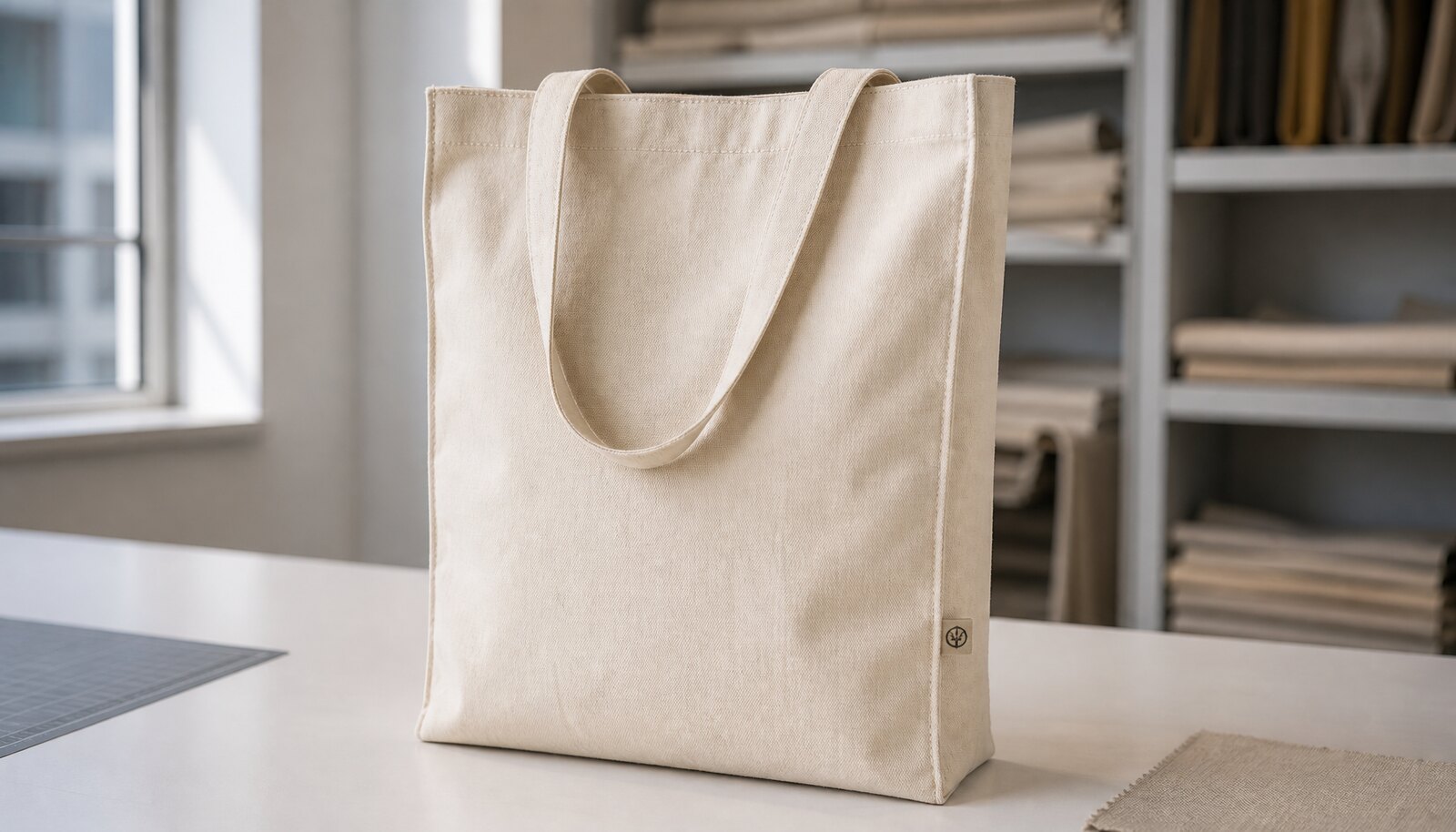
1. Start With the Retail Job, Not the Bag Name
Canvas conference bags for retail chains are easy to describe and hard to buy well. The same product label can cover a conference handout tote, a private label bag sold on shelf, a seasonal gift-with-purchase item, or a store-branded carry bag used for events and loyalty programs. Those uses do not have the same economics. A bag built for one-day event distribution can look acceptable in a conference hall but feel flimsy in a retail aisle. A bag meant to sit on shelf must also survive shopper handling, carton stacking, and inventory turns without looking tired before it sells.
The most useful sourcing question is not “what style is this?” but “what job does it need to do?” For retail chains, the answer should include the shopper-facing job and the distribution job. Shopper-facing requirements cover look, touch, handle comfort, and whether the bag feels worth keeping. Distribution requirements cover carton density, barcode placement, receiving rules, and whether the bag can ship with minimal crush or moisture damage. Once both are defined, suppliers can quote the right fabric weight, reinforcement, print method, and pack format instead of guessing what the buyer meant.
2. Write a Spec That Controls Cost Instead of Creating Debate
Loose product descriptions create expensive ambiguity. If the RFQ only says “canvas conference bag,” suppliers will quote different assumptions on fabric, reinforcement, print area, and packing. Some will build a light bag with narrow handles. Others will quote a heavier canvas with more sewing time and a larger print window. Those versions are not comparable, and the price spread tells you very little unless the spec is frozen first.
A buyer-ready spec should read like a working product definition, not marketing copy. State finished width, height, gusset depth, handle style, handle length, handle drop, fabric composition, and fabric weight. Add the load expectation in plain terms: for example, whether the bag needs to carry catalogs, notebooks, a tablet sleeve, or mixed event material. Then define decoration area and placement so the supplier knows how much of the panel is available for print. This is how you keep the quote tied to function rather than vague style language.
- Lock finished width, height, and gusset before decoration is discussed.
- Specify handle type, handle length, and handle drop in the brief.
- State whether the bag needs a flat bottom, reinforced base, or side gussets.
- Include artwork dimensions and safe print area, not just logo files.
- Ask the supplier to confirm seam allowance and reinforcement patch size in writing.
3. Choose Canvas Weight Around the Shelf, the Load, and the Print Method
Canvas weight is one of the main levers in both price and perception, but it should not be chosen in isolation. Light canvas can work for a true giveaway, yet it may wrinkle easily, distort after print, or feel too soft when the bag is picked up on shelf. Midweight canvas is often the best starting point for retail chain private label work because it balances body, sewing performance, and cost. Heavier canvas creates a more substantial feel, but it also raises material cost, sewing effort, and carton weight, which can push freight and handling costs higher than expected.
The better question is not “how heavy can we go?” but “what weight gives the required look and load at the lowest total cost?” A well-cut 10–12 oz bag can outperform a poorly controlled heavier bag if the print is clean, the handles are reinforced, and the pack method prevents crushing. Ask the supplier how the chosen cloth behaves under load, whether it sheds fibers, whether it creases permanently, and whether it takes the requested print without bleeding or excessive ink consumption. Those answers matter more than a simple thicker-is-better claim.
4. Compare Supplier Routes Using MOQ, Sample Speed, and Cost Tradeoffs
Source type matters as much as unit price. A direct factory gives you the best chance of matching the approved sample at bulk, especially when the bag has specific seam construction or a retail-ready pack method. A trading company can help when the order is small, the artwork changes often, or the program needs coordination across more than one factory. A stock supplier is useful when speed matters more than customization, but the buyer must accept the limits of the existing bag and the decoration method that fits it. A specialized bag workshop often sits between those options and can be strong on construction details if the volume is realistic for the site.
For procurement, the comparison should include more than the quoted price. Ask how many units are needed to hit the stated price point, how long the first sample takes, how many revisions are likely, and how much control the buyer has if the sample is approved but the bulk line shifts. That is the real commercial decision. A lower quote that depends on vague handoffs or a high MOQ can cost more in delays, rework, and hidden freight than a slightly higher quote from a better-fit source.
- Use a direct factory when repeatability and construction control matter most.
- Use a trading company when the program needs coordination or smaller launch quantities.
- Use stock inventory when speed matters more than customization.
- Use a hybrid sample-plus-bulk route when the design needs validation before scale.
5. Build the RFQ Around the Decisions That Change Price
A strong RFQ does more than ask for a unit price. It gives the supplier enough information to quote the same product across all bidders and enough structure for your team to compare the answers without chasing assumptions. Include the finished dimensions, fabric spec, decoration method, artwork count, pack method, sample deadline, bulk due date, and inspection standard. Without those points, suppliers will fill gaps differently and your comparison becomes a comparison of guesswork.
The RFQ should also force out hidden charges that frequently show up after the quote is selected. Ask separately for setup charges, screen or digital artwork costs, artwork revision fees, label application, hang tags, barcodes, retail polybags, and any packaging change fees. Retail chain buyers should also ask for carton counts and gross weight because those numbers affect freight, warehousing, and receiving labor. If the supplier cannot quote those items cleanly, the program is not ready for award.
- Ask for a quoted spec sheet, not only a unit price.
- Request all charges separately so hidden margin is visible.
- State whether the quote must include retail-ready labels or only the bag body.
- Require lead time measured from sample approval, not just from PO date.
- Ask for carton dimensions and units per case before comparing freight.
6. Turn Sampling Into a Real Production Gate
A sample is only useful if it proves the factory can repeat the result. A good sample review checks construction, measurement, artwork placement, and pack format. It also tests the bag under the intended load. If the bag is meant to carry brochures, notebooks, or a tablet sleeve, put that load into the sample and observe whether the handles stretch, the base collapses, or the seams start to open. Empty-hand inspection is not enough for this category because the bag can look right and still fail in use.
For branded retail programs, approve a strike-off or first article whenever print placement or color consistency matters. One approved photo is not enough. Ask for a physical reference sample, a packing sample, and a named approval owner. If the factory suggests a fabric swap, lining change, handle material change, or print-method change, treat it as a new approval decision rather than a minor update. That discipline reduces later disputes and keeps the bulk line aligned with the approved version.
- Approve one sealed golden sample for the buyer and one for the supplier.
- Measure width, height, gusset, handle drop, and print placement on the physical sample.
- Load test with the intended contents, not with empty handling only.
- Approve folding and packing before production starts.
- Record the exact sample date, sample version, and approver name in the file.
7. Quote the Hidden Costs That Decide Landed Cost
For canvas conference bags, the quoted factory price rarely tells the full story. Setup charges, screen costs, label work, folding labor, inner packing, cartons, and freight can move landed cost more than a modest fabric difference. A supplier with a low ex-works price can end up more expensive if the bag arrives loosely packed, needs relabeling, or requires repacking before it can move through the distribution center. Retail chain buyers should compare the total cost to sellable inventory, not only the sewing price.
The distribution center perspective matters here. If a bag arrives uncompressed and gets crushed in transit, the savings on simpler packing disappear in damage and receiving work. If the bag is overpacked to protect it, freight and handling may rise. The best commercial route is the one that lowers the total cost per acceptable unit on shelf or in store, even if the line-item sewing cost is not the lowest. That is especially true when the buyer has to manage multiple SKUs, store allocations, or frequent replenishment.
8. Put QC in Writing Before the First Bulk Meter Is Cut
Quality control for this category needs hard limits, not general statements about being careful. Start with the inspection method: AQL level, inspection standard, and defect classification. For a retail chain bag, major, minor, and critical defects should be defined before production starts. Then add the measurement tolerances. If the bag is too short, the shopper notices. If the handle drop drifts, the bag may still pass a casual check but feel wrong in use. Tolerances should be documented before the PO is released, not argued after the first shipment lands.
Performance testing should match the intended use. A load test should reflect the expected working load and confirm that the bag can hold it without seam opening, handle failure, or base collapse. Print quality also needs its own acceptance rule: color placement, bleed, edge sharpness, and rub resistance should be part of the plan. If the bag uses dyed canvas or saturated decoration, ask the supplier for the test method and pass threshold before production. That gives you a clearer basis for acceptance than a generic “looks fine” inspection.
- Use ISO 2859-1 or a comparable AQL system and define major/minor/critical defects.
- Set size tolerance bands for finished bag dimensions, handle drop, and print placement.
- Require a documented load test with pass/fail results for seams and handles.
- Check dry rub, wet rub, and color variation when the canvas is dyed or heavily printed.
- Keep the approved reference sample at both buyer and supplier locations.
9. Use a Defect Escalation Path That the Supplier Can Actually Follow
Retail chain programs need a simple defect workflow before shipment, not after rejection. If a batch arrives with repeated faults, the process should be straightforward: quarantine the cartons, document the issue with photos and counts, notify the supplier in writing, and hold the lot until a corrective action is agreed. The buyer should know in advance who decides whether the batch is reworked, replaced, discounted, or refused. Without that path, even small issues can slow store replenishment and create long email chains that do not improve the product.
The replacement policy should match the program risk. For a first private label launch, you may want rapid replacement or a debit note against the next order. For repeat programs, you may want a tighter root-cause response and proof that the process changed before the next PO is released. Either way, the workflow should be measurable: timelines, evidence, and named owners. Suppliers respond better when the rules are specific and the commercial consequence is clear.
- Issue a nonconformance notice within 48 hours of identifying the defect.
- Hold the lot with photo evidence, carton counts, and defect counts.
- Require a written root-cause response before replacement or rework moves forward.
- Tie repeat defects to corrective action review before the next order is released.
10. Use a Short Buyer Scorecard Before Awarding the Program
Before award, reduce the decision to a short scorecard so the same supplier is not being judged on price alone. For retail chain sourcing, the right scorecard should reflect the things that change the total cost of ownership: sample quality, repeatability, retail packing readiness, responsiveness, and the clarity of the quote. A supplier that replies quickly but cannot confirm carton counts or inspection logic is not automatically better than a slower supplier with a cleaner technical response.
This is also the stage where procurement and merchandising usually see the same program differently. Merchandising may prefer a more premium bag with stronger shelf presence. Procurement may push for lower landed cost. Operations may care most about carton efficiency and barcode accuracy. A short scorecard forces those tradeoffs into the open and makes the award decision easier to explain internally. It also creates a clearer benchmark for future replenishment orders.
Specification comparison for buyers
| Supplier option | What to verify | Commercial advantage | Buyer risk to control |
|---|---|---|---|
| Direct sewing factory | fabric swatch, approved sample, seam close-ups, logo test photos, packing pilot, and final inspection evidence | Better sample-to-bulk control and faster production feedback | May be weaker on export paperwork or branded packing unless checked early |
| Trading company | Factory name, production photos, trim-source proof, and who owns QC decisions | Can coordinate small mixed orders and extra services | Markup can hide real factory capability and slow defect decisions |
| Specialized bag workshop | bag size, gusset, handle drop, seam allowance, stitch density, reinforcement patch, and loading expectation | More practical for detailed construction, trims, and repeat programs | Capacity may be limited during peak seasons |
| Low-price general supplier | 8-12 oz cotton canvas, 120-220 gsm cotton, recycled cotton, or blended fabric selected by use case and target price | Useful for simple promotional runs with loose specs | Material downgrades, weak packing, and vague inspection scope can erase savings |
| Retail-ready supplier | fold method, inner bundle, carton count, carton mark, moisture protection, SKU separation, and warehouse receiving needs | Can handle labels, SKU separation, carton marks, and receiving rules | Higher unit cost must be compared against reduced warehouse work |
| Compliance-focused supplier | Fabric records, labeling review, test plan, and production traceability | Safer for retail programs and repeat brand orders | Documentation claims need evidence, not only sales language |
| Local sample room plus bulk factory | Signed sample, bulk factory handoff, first-piece photos, and deviation owner | Good for complex branding before large production | Sample room quality may not match bulk line unless handoff is controlled |
Buyer checklist before sampling
- Define the retail use case first: conference handout bag, sellable private label tote, loyalty gift, or store promotion item.
- Lock finished size, gusset depth, handle length, handle drop, and target load before requesting pricing.
- State fabric in both GSM and ounces if the supplier uses both, and specify natural, dyed, recycled, or blended canvas.
- Specify the decoration method, print size, print location, ink count, and whether you need a strike-off before bulk.
- Ask for a packing spec that includes fold method, inner pack count, master carton count, carton dimensions, and gross weight.
- Confirm whether labels, hang tags, barcode stickers, care labels, and retail polybags are included or quoted separately.
- Request MOQ by size, color, artwork version, and packing format instead of accepting one broad product MOQ.
- Ask for sample timeline, bulk timeline, and the handoff point from approval sample to production order.
- Require the inspection standard in writing, including AQL level, major/minor defect definitions, and who pays for rework or replacement.
- Compare landed cost per sellable unit, not just factory unit price, and include freight, duties, handling, and receiving labor where relevant.
Factory quote questions to send
- What exact fabric weight is in the base quote, and what changes the price if we move up or down in GSM?
- Is the quote based on one-side print, both-side print, one color, or multiple colors?
- What is the MOQ by fabric color, print color count, trim option, and carton pack configuration?
- Are woven labels, side labels, hang tags, care labels, barcode stickers, and retail polybags included or extra?
- What are the sample costs, strike-off costs, setup charges, remake charges, and artwork revision fees if the design changes?
- What is the bulk lead time after sample approval, and what part of the schedule is tied to fabric, trims, or decoration?
- What carton size, master carton count, and gross weight do you propose, and how many units fit a case without crushing the bag?
- Which inspection standard do you use, and how do you classify seam faults, print defects, measurement drift, and packing errors?
- What load test do you use for this bag, and do you test handles, side seams, base seams, or all three?
- If we reject a batch for a repeated defect, what is the replacement workflow and how quickly can you reship conforming goods?
Quality-control points to confirm
- Agree the final tech pack before sampling, including size tolerances, handle drop, fabric weight, print placement, label position, and pack method.
- Use ISO 2859-1 or an equivalent AQL plan at general inspection level II, with AQL 2.5 for major defects, AQL 4.0 for minor defects, and zero tolerance for critical defects unless your retail QA standard is stricter.
- Set measurement tolerances before bulk; a practical starting point is plus or minus 0.5 cm on small dimensions and plus or minus 1.0 cm on larger finished dimensions, with handle drop and print placement checked separately.
- Require a load test at the intended working load, or a defined margin above it if your retail standard calls for one; hold the loaded bag for 10 minutes, then inspect seams, handles, base shape, and print distortion.
- Test stitch density, seam strength, and reinforcement at the handle ends and gusset joins; specify no skipped stitches, no open seams, and no loose thread tails longer than 0.5 cm in visible areas.
- Approve print with a strike-off or first article, then check color placement, edge sharpness, ghosting, and bleed; define acceptable print shift in millimeters, not by eye alone.
- Run crocking or colorfastness checks when the bag uses dyed canvas or saturated print; require the supplier to state the test method used and the pass/fail threshold before production.
- Inspect for fabric shade variation, panel mismatch, oil marks, puckering, and crushed folds; hold the lot if shade or print differences are visible across cartons.
- Write a defect escalation path: quarantine suspect cartons, issue an NCR within 48 hours, request photos and count evidence, and require replacement, rework, or debit agreement before the next shipment moves.
- Keep one sealed golden sample and one approved packing sample at both buyer and supplier locations so disputes can be settled against the same reference.