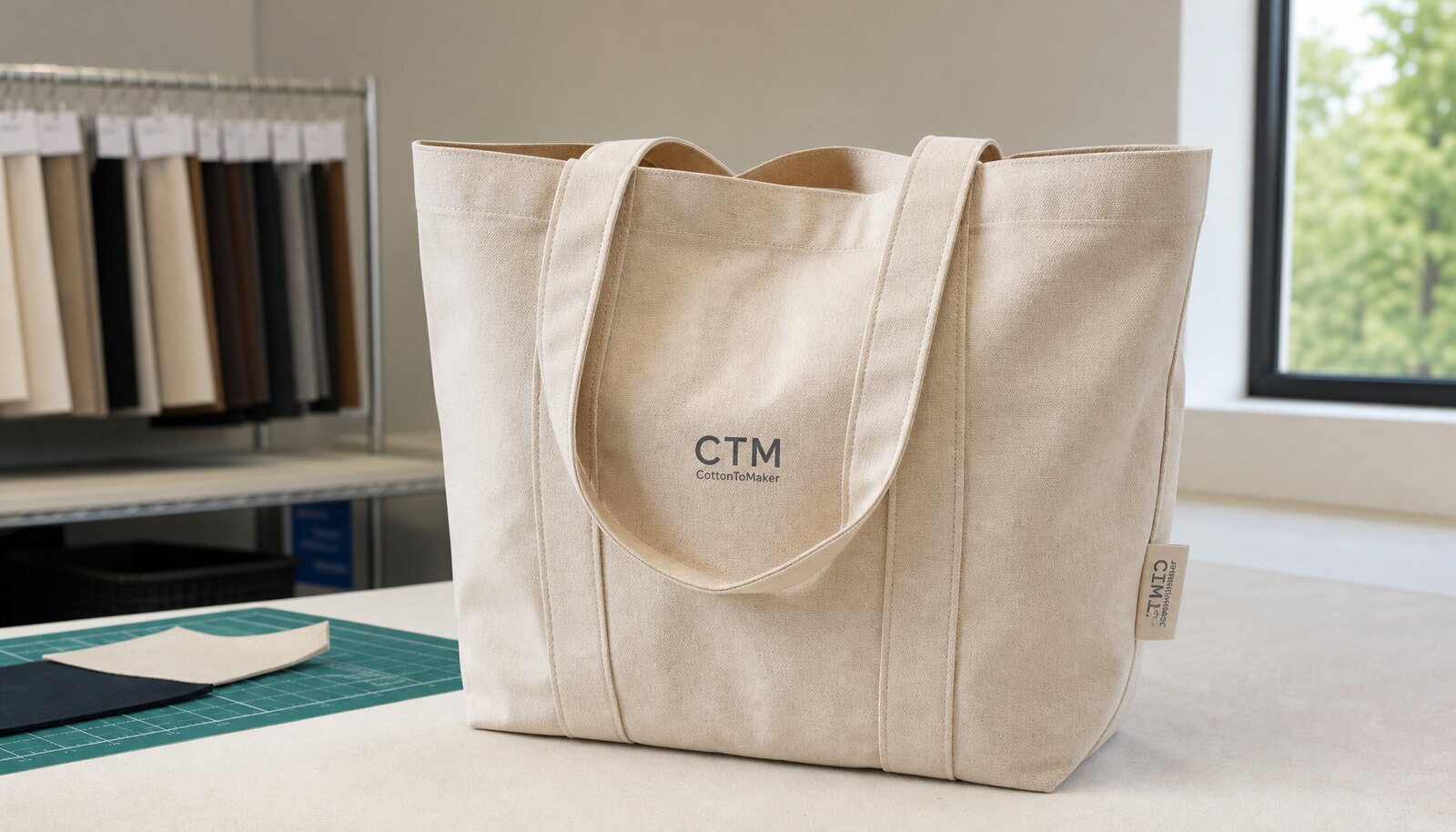
Why hotel conference bags need a stricter sample approval process
Canvas conference bags for hotels are simple enough to invite shortcuts, but that is exactly why they create avoidable procurement risk. A bag can look clean on a sample table and still fail the real job: holding conference folders, room keys, a brochure stack, a bottle, and a few loose items without sagging, tearing, or looking sloppy at reception. The issue is not only appearance. It is whether the sample proves the bag can survive the hotel use case that triggered the purchase in the first place.
For procurement buyers, the sample is the point where the commercial promise becomes a physical product. If the sample is made with one fabric, one print process, and one packing method while the bulk order uses another, then the approval is weak even if the sample looks good. That is where budget overruns and delivery disputes start. The practical standard is simple: approve only what the factory will actually produce, and document the approval in terms the buyer, operations team, and supplier can all follow.
- Use the sample to validate function, not only appearance.
- Treat the sample as the production reference, not a display piece.
- Require the same fabric, print method, and construction path for sample and bulk whenever possible.
Lock the spec before you ask for price, because vague specs create fake comparisons
If the request says only 'canvas tote bag with logo' the quotes will look comparable but will not be comparable at all. One supplier may assume a 10 oz natural canvas body with open top and self-fabric handles, while another prices a 12 oz bag with webbing handles, a reinforced bottom seam, and carton packing. Those two offers are not alternatives; they are different products. The hotel buyer who compares only the headline number usually ends up paying later through rework, re-approval, or an emergency re-order.
A usable RFQ should define the bag size in centimeters, the canvas weight, the finish, the handle build, the print method, and the packing format. For hotel conference programs, you also need to define the distribution context. A room-drop welcome kit, a ballroom registration handout, and a premium executive summit kit are all 'conference bags,' but the right bag for each one is different. The more specific the use case, the cleaner the quote and sample approval.
- Specify finished dimensions in centimeters and not only in inches.
- State the use case: handout, welcome kit, room-drop, or retail resale.
- Ask suppliers to quote the same construction and pack method, or the numbers will mislead you.
Choose canvas weight and finish for how the bag will actually be used
For most hotel conference orders, 10 oz to 12 oz canvas is the practical range. That usually maps to roughly 340 to 420 GSM, depending on weave density and finishing. Below that range, the bag may be acceptable for light paper inserts but tends to collapse when it is placed on a desk or filled with a bottle. Above that range, the bag becomes more structured and durable, but sewing slows down and the unit price rises. The sweet spot depends on the contents, the brand position, and whether the bag is intended for one-time handout or repeated guest use.
Finish matters as much as weight. Natural unfinished canvas is cost-efficient and fits casual events, but it may show fiber variation, flecks, and a more rustic look. Washed canvas feels softer and photographs well, but you should confirm shrinkage and dimensional stability. Bleached or tightly woven canvas presents a cleaner premium appearance and can be better for corporate conferences hosted at higher-end properties. The key is to match the visual tone to the hotel brand and the event format, not to chase the heaviest fabric by default.
- 10 oz is usually adequate for paper-led kits and light handouts.
- 12 oz is the safest general-purpose choice when the bag must stand up and survive reuse.
- Washed or finished canvas should be approved with shrinkage and handfeel checked, not assumed.
Select construction around load path, not around visual preference
A hotel conference bag fails at the stress points, not in the middle of the panel. That means the top corners, handle joins, side seams, and bottom seam matter more than the decorative face. If the construction is too light, the bag will look fine until it is packed and lifted. If it is overbuilt without need, the quote climbs quickly and production becomes less efficient. A good sample shows the buyer the real load path: where the tension moves when the bag is full and held by the handles.
For many hotel programs, a single-gusset or bottom-gusset tote with reinforced seams is enough. If the bag is expected to carry thicker items, a wider bottom gusset or stronger side seam reinforcement may be justified. Handle choice matters too. Self-fabric handles are economical and visually clean, while cotton webbing handles are often stronger and more comfortable for heavier loads. What matters is not the supplier's habit but the load the bag actually needs to carry.
- Check the top seam under load, because that is where many bags distort first.
- Ask for bar-tack or box-stitch reinforcement at the handle joins.
- Confirm whether the base should stand upright when loaded, if that matters at registration.
Match the print method to the artwork and to the expected reuse level
Screen print is still the most practical choice for many canvas conference bags for hotels because it handles bold logos, simple artwork, and repeated runs well. It gives stable coverage on natural canvas and usually keeps the cost under control for medium and larger volumes. If the artwork is just a logo and one line of text, screen print usually gives the cleanest commercial result. If the artwork is more complex, the buyer should still ask whether the extra detail is worth the added risk or cost.
Transfer methods can work for short runs or multi-color artwork, but they need more scrutiny. Fine type, gradients, and detailed graphics may look better initially, yet you should inspect edge lift, surface feel, and abrasion resistance. Embroidery or woven patches can be appropriate when the hotel wants a more premium identity, but they add cost and can affect the drape of lighter canvas. The approval rule should be straightforward: the sample must use the same decoration method the bulk order will use, or the sample does not count as a true production reference.
- Approve the sample in the same decoration method planned for production.
- Check logo opacity, edge sharpness, and placement before approving the strike-off.
- If the artwork is complex, ask the supplier to explain which elements may be simplified in production.
Use a structured sample approval checklist instead of a subjective sign-off
A good approval process turns taste into a controlled decision. Start with measurement: bag width, height, gusset depth, handle length, and handle drop. Then inspect the appearance under normal indoor light, because that is how most hotel staff and guests will see the bag. Finally, test the function by packing the actual intended contents. A bag that looks tidy empty but wrinkles, tips, or pulls awkwardly when filled is not a successful sample.
When the sample arrives, inspect more than one unit if the supplier provides multiples. One perfect bag can hide variation. Three units are enough to reveal basic consistency in size, stitching, and print placement. If the bag is intended for a hotel group or chain rollout, the buyer should also note whether the sample is stable across artwork versions. The real question is not 'Do I like this sample?' The real question is 'Can this sample become a repeatable production standard?'
- Measure at least three units if available and compare the results.
- Load-test with the real content mix, not with empty handling.
- Reject on the first sample if the seam quality, print alignment, or handle symmetry is off.
Compare supplier routes by control, not by label
Direct factories usually give better visibility into fabric sourcing, stitching decisions, and production schedule. That matters when you want the same bag re-ordered across hotel properties or event cycles. Trading companies can still be useful when you need to consolidate different items into one shipment, coordinate artwork across several SKUs, or access a broader supplier pool. The mistake is assuming the route itself determines quality. It does not. The spec and the supplier's control process determine quality.
For this category, the commercial risk often sits in what is left unsaid. A supplier may quote a lower number because the fabric is stock rather than custom, the bag is unlined, the print method is simpler, or carton packing is excluded. Another may offer a higher price but include a more stable spec and better inspection control. The correct comparison is not 'who is cheapest.' It is 'who is quoting the same product under the same assumptions with the clearest accountability.'
- Direct factory works best when the spec is fixed and repeat orders are likely.
- Trading route can be useful for multi-item kits, but ask where the real production happens.
- Local decorator is only efficient for urgent short runs, not for stable large-volume hotel programs.
Build quote questions that expose hidden gaps in MOQ and lead time
MOQ for canvas conference bags is usually driven by fabric availability, print setup, and cutting efficiency. That means the MOQ can change depending on whether the bag is natural canvas, dyed canvas, lined, printed in one color, or packed individually. Buyers should not accept a simple MOQ number without understanding the underlying driver. Two suppliers can quote the same style and show very different minimums because one is using stock fabric and another needs a custom run. The right question is not only 'What is your MOQ?' but 'What is your MOQ for this exact fabric, this exact print method, and this exact packing format?'
- Ask whether MOQ is per color, per logo version, or per total order.
- Ask if the quote assumes stock fabric or new material booking.
- Ask for reorder pricing so you can compare first-run and repeat-run economics.
Get the packing spec right so receiving does not turn into an admin problem
Packing is easy to ignore until the shipment lands and the warehouse team starts counting by hand. For hotel conference bags, bulk packed cartons are usually the most practical choice because they reduce waste, protect the fabric, and make inbound receiving simpler. If the bags are intended for room-drop presentation or retail resale, individual polybags or tissue may be justified, but that should be an explicit decision, not an afterthought. Every extra layer of packaging adds labor, carton volume, and cost.
Carton marks should identify the style, color, quantity, PO number, and destination if the order is split across hotels or distribution centers. That sounds basic, but it prevents a lot of avoidable confusion when multiple event runs are shipping in parallel. Ask the factory to confirm carton quantity and carton dimensions before production starts, because those details affect freight, warehouse stacking, and receiving accuracy. If the supplier cannot state how the bags will be folded and counted, they probably have not thought through the job in enough detail.
- Set carton quantity to match handling and counting at receiving.
- Confirm whether the bags are nested, folded flat, or separated with tissue.
- Protect the print surface from abrasion during transit and storage.
Use landed-cost logic, not headline unit price
A quote that looks cheaper at origin can become more expensive once freight, duty, inland handling, and repacking are included. For hotel buyers, that matters because a bag that is slightly heavier or packed more efficiently can change the total cost per delivered unit. The unit price alone does not show the whole picture. A thicker canvas may add a small cost at origin but reduce damage, rework, and presentation issues later. A lighter bag may save a little on paper but fail the actual use case and force a replacement order.
To compare offers properly, every supplier should be quoting against the same assumptions: same canvas weight, same handle spec, same print method, same pack format, same inspection standard. If one supplier is omitting lining, using a different closure, or assuming looser tolerances, the cheaper number is not evidence of better value. It is evidence of a different spec. Procurement teams should ask for a line-item view wherever possible so the true tradeoffs are visible before the PO is issued.
- Compare offers on the same spec, not on supplier interpretation.
- Include freight and handling impact from carton size and pack density.
- Treat omitted features as a cost difference, not as a bonus.
Specification comparison for buyers
| Spec decision | Recommended target | Acceptance threshold or test method | Buyer risk to check |
|---|---|---|---|
| Fabric weight | 10 oz to 12 oz canvas, about 340 to 420 GSM for most hotel conference use | Ask the supplier to state the measured GSM and tolerance, then verify with a cut swatch or lab report if available. Accept only if the approved sample matches the quoted weight class within the agreed tolerance. | If the supplier quotes only 'canvas' with no GSM, bulk bags may arrive softer than the sample and sag under brochures or bottles. |
| Fabric construction | Tightly woven plain canvas with consistent yarn appearance and no obvious thin spots | Inspect the sample under bright light and compare front and back panels for weave consistency. Reject if the fabric shows uneven density, weak corners, or visible slubs in load-bearing areas. | Loose weave looks acceptable in photos but usually creates a weaker structure and a lower perceived value at reception desks. |
| Bag size | Finished size in centimeters with usable inner width and depth | Measure three sample units and check the average against the PO. Typical tolerance should be set before production; a practical starting point is +/- 0.5 cm on small dimensions and +/- 1.0 cm on larger body measurements, if the factory agrees. | If only nominal inches are quoted, the bag may be too shallow for inserts, or too wide for the hotel's welcome-kit pack-out. |
| Handle spec | Cotton webbing or self-fabric handles with reinforcement at the top edge | Pull-test the handles by loading the bag with real conference items and holding it at normal carry position. Inspect for stitch stretch, bar-tack security, and even handle length. | Short or narrow handles feel cheap and fail sooner at the seam; inconsistent handle length also makes the bag look poorly controlled on the line. |
| Stitching | Straight seam lines, secure bar-tacks, and no skipped stitches at stress points | Inspect the sample under good light and count visible needle damage, skipped stitches, and loose thread tails. Reject if bar-tacks are incomplete or the top corners distort when the bag is filled. | Weak stitching is the most common hidden failure mode because the bag can look correct until the first real load test. |
| Print method | 1-color or 2-color screen print for stable artwork; transfer only for short runs or complex art | Approve a strike-off in the same decoration method that will be used in bulk. Check logo placement, ink opacity, edge sharpness, and rub resistance after light abrasion. | A sample made with a different print process than bulk production gives false confidence and often leads to color shift or edge bleed. |
| Logo placement | Centered and dimensioned against the finished bag, not the cut panel | Measure the logo position from top edge and side seam on the finished sample. Require a placement reference drawing before approval if the logo has multiple panels or a wrap layout. | If placement is judged only by eye, the bulk run can drift and create inconsistency across hotel properties or event batches. |
| Closure | Open top for fast handout; zipper or snap only if the insert contents require it | Check closure hardware operation 20 to 30 times on the sample and confirm it does not interfere with pack speed or handle placement. | Extra hardware adds cost, lead time, and more failure points; it only makes sense when the bag will carry premium or sensitive contents. |
| Packing format | Bulk packed in export cartons with clear count sheets and carton marks unless retail presentation is required | Open carton samples if possible and verify fold method, print protection, and count accuracy. Confirm carton quantity, gross weight, and carton dimensions before shipment. | Loose or inconsistent folding can cause print rub, count errors, and receiving delays at the hotel or distributor warehouse. |
Buyer checklist before sampling
- Confirm finished bag size in centimeters, and write usable internal dimensions if the bag must hold folders, bottles, or a welcome kit.
- Lock canvas weight in GSM or oz, plus finish type: natural, washed, bleached, bio-polished, or heavy structure canvas.
- Approve one physical reference sample for color, print placement, seam build, and handle spec before bulk cutting starts.
- Define handle length, handle width, and reinforcement method at the top seam, including bar-tack or box-stitch requirements.
- Set acceptable tolerance for size, stitch density, print registration, and color variance before the factory begins production.
- Request the exact production method for the sample and confirm it matches the bulk method, not a hand-finished approximation.
- Require packing instructions, carton marks, and carton count rules so warehouse receiving does not become a manual guess.
- Ask for stage-by-stage timing: sample, revision, approval, material booking, production, inspection, and shipment readiness.
- If the order is for multiple hotels, lock which elements can change by property and which elements must remain common.
- State whether the bags are for conference handouts, welcome kits, retail resale, or room-drop delivery, because the use case changes the spec.
Factory quote questions to send
- What exact canvas weight, weave density, and shrinkage allowance are included in the quoted price?
- Is the quote based on stock fabric, mill-dyed fabric, or custom weaving, and what is the MOQ for each route?
- Which print method is included for my artwork, and what setup cost applies per color, placement, or screen?
- What handle width, handle length, seam allowance, and reinforcement method are standard in this quote?
- Are lining, inner pocket, zipper, snap closure, or woven label included, excluded, or priced as options?
- Will the sample use the same fabric source and print process as bulk production, or only a visual approximation?
- What inspection points do you check before shipment: measurements, print defects, stitch quality, contamination, carton count, or all of these?
- How are the bags folded, packed, and labeled for export, and what carton size and quantity are assumed in the price?
- What is the lead time by stage, not just total lead time: sample, approval, bulk production, packing, and dispatch?
- If I reorder the same hotel bag with new artwork, which elements can stay unchanged so the reorder price is stable?
Quality-control points to confirm
- Fabric matches the approved GSM or oz target, and the sample does not show thin spots, loose weave, or irregular shading in critical areas.
- Finished dimensions stay within the agreed tolerance across multiple sample units, not just the best-looking piece.
- Logo color, placement, and edge definition match the approved strike-off under normal indoor light, without obvious bleed or misregistration.
- Seams are straight, thread tension is consistent, and bar-tacks or reinforcement points do not loosen when the bag is filled.
- Handles are even in length and sit symmetrically on the body, with no twisting, stretching, or stitch pull at the top edge.
- No loose threads, oil marks, broken-needle damage, fabric contamination, or fold creases appear on visible surfaces.
- Load test passes with real conference contents such as brochures, notebook, bottle, pen kit, and badge holder without seam distortion.
- Carton marks, quantity labels, PO references, and destination details match the packing list and purchase order.
- Sample construction matches the quoted production method, with no hidden substitution in fabric, thread, print process, or trim.
- If the order includes multiple hotels or artwork versions, the approved pre-production sample clearly shows each version and its control points.