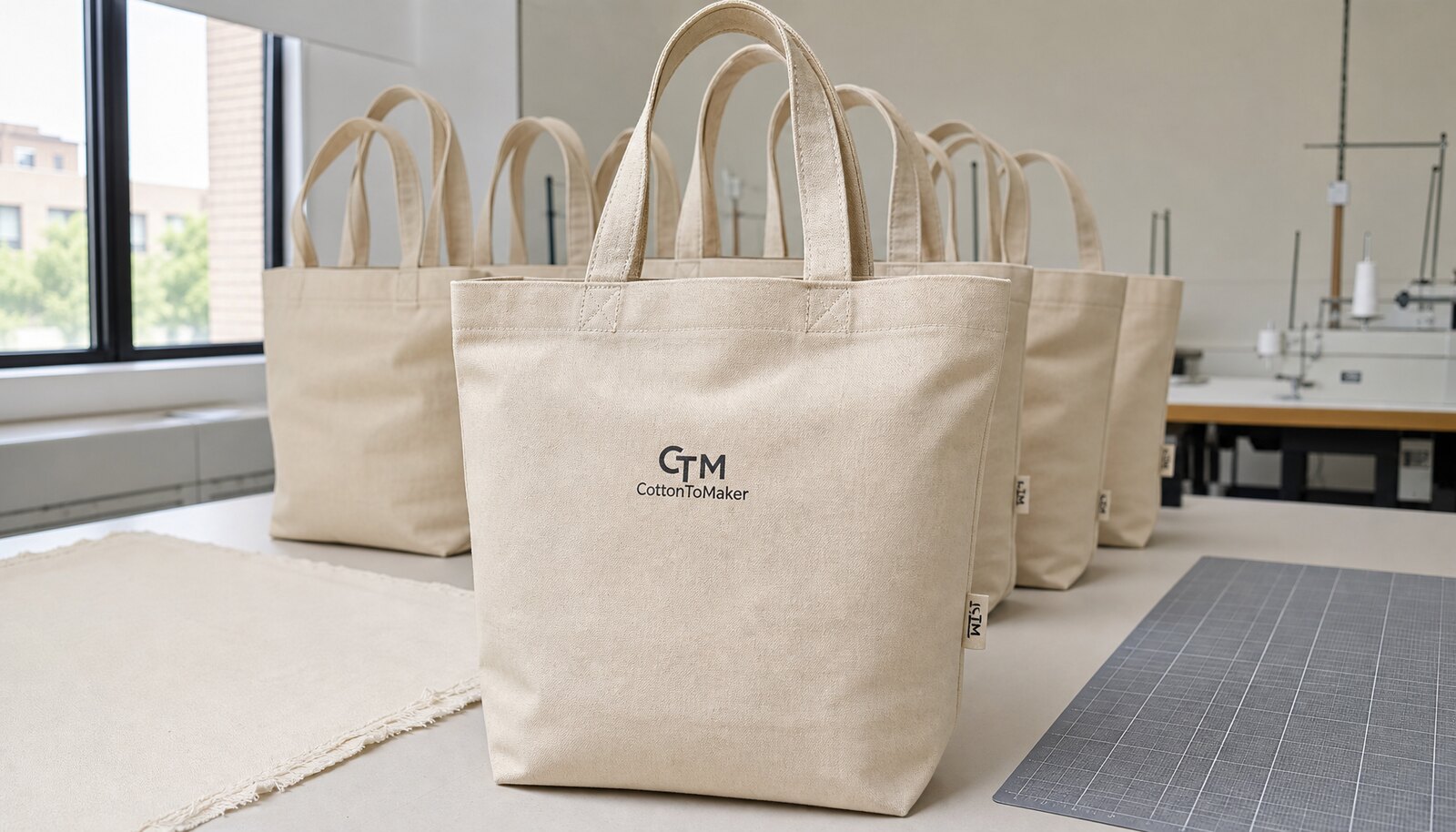
Why hotel buyers should compare print methods before comparing prices
Hotels rarely buy canvas conference bags as a one-off merchandise item. The same bag may be used for delegate registration, VIP welcome packs, property launches, sponsor events, or hotel retail shelves. That means the decoration choice affects more than appearance. It affects unit cost, how the bag feels in hand, how well it survives folding and transport, and whether reorders stay consistent across different events or properties.
The most common procurement mistake is to look only at a unit price and assume the cheapest print route is the smartest buy. A low-cost transfer can look fine in a digital proof but crack after aggressive folding. A premium embroidered mark may look elegant but push the bag into the wrong budget tier for a conference giveaway. For B2B buyers, the real question is: which print method gives the best balance of brand presentation, production risk, and repeatability for this specific hotel use case?
A useful way to frame the decision is by program type. For a high-volume conference handout, a clean one-color screen print may be the most economical and easiest to reorder. For a design-led hotel event or VIP package, a transfer print or woven label can improve visual impact. For a gift-shop SKU, the buyer may care more about perceived value and shelf appeal than about the lowest first-order cost. Choosing well starts with clarifying what success looks like after delivery, not just at the quote stage.
- Conference use usually favors consistency, speed, and controllable cost.
- Guest-facing or retail-facing use usually justifies more emphasis on feel and finish.
- The right method depends on the bag’s role, not only on the logo artwork.
Start with the bag specification, not the decoration method
Print performance on canvas is inseparable from the base bag. Before comparing screen print, transfer, embroidery, or woven labels, fix the product spec. For many hotel conference programs, 10oz to 12oz canvas, roughly 340-410 GSM, is the practical starting point. It offers enough structure for brochures, room collateral, or lightweight amenities without making the bag too heavy for large event quantities. If the bag is intended for resale, executive gifting, or long-term reuse, 12oz to 14oz canvas, around 410-470 GSM, often gives a better hand feel and a more premium silhouette.
Not all canvas behaves the same. Natural unbleached canvas absorbs ink differently from bleached or dyed fabric, and recycled canvas can vary more from batch to batch. A rougher weave may make simple screen prints look slightly textured, while transfer layers can sit more on top of the fabric. That does not make one fabric better than another, but it does change what buyers should expect from the final look. A factory quote that ignores fabric finish is incomplete because the print result will change with the textile.
Construction details matter too. A flat front panel with a clean print zone is easier to decorate than a highly gusseted bag with seams running through the logo area. Handle length, handle attachment style, top hem width, and side seam position all affect where the artwork can sit. If the logo lands too close to a seam, the print may warp or the stitch line may cut through a letter. In procurement terms, the decoration method should be selected after the bag dimensions are approved, not before.
- 10oz-12oz canvas is a practical range for most conference handout programs.
- 12oz-14oz canvas is usually better when the bag must feel substantial or premium.
- A flat, uninterrupted print zone reduces distortion and rework risk.
How to compare the main print methods on hotel canvas bags
Screen print remains the default choice for many hotel programs because it is straightforward, repeatable, and economical for simple logos. It works especially well for one-color or limited-color artwork with bold shapes. The main advantage is stability: once the screen and ink formula are set, reorders can be consistent. The tradeoff is that fine detail can soften on textured canvas, and multiple colors increase setup complexity. Screen print is usually best when the artwork is simple and the order is large enough to justify setup.
Transfer printing, including DTF-style approaches, is more flexible for multicolor art, gradients, or smaller text. It can reproduce detail that screen print struggles with on rough fabric. This is useful when a hotel brand mark includes a thin script, a complex emblem, or several colors. The buyer should still test how the transfer behaves on folded canvas and whether edges stay bonded after packing. A transfer that looks sharp at unboxing can still crack or lift if the bag is compressed tightly in cartons.
Embroidery and woven labels play a different role. They are not always direct substitutes for print, but they can lift the perceived quality of a bag. Embroidery gives a tactile, premium feel, though it can pull or distort lighter canvas and may not be the best choice for large filled areas. Woven labels or sewn badges can complement a print, especially when the hotel wants a retail-style finish. For procurement, the key is to treat these as separate cost and lead-time drivers rather than decorative extras.
The best comparison happens on the actual bag, not a digital mockup. Canvas texture changes line clarity, color saturation, and how sharp the logo looks at normal viewing distance. Ask the supplier for a production-like sample, and fold it the way it will be packed. That step often reveals whether the chosen method is truly suitable for the hotel’s operational reality.
- Screen print: strongest for simple logos and repeat orders.
- Transfer print: better for detail, gradients, and smaller runs.
- Embroidery or woven labels: best when perceived value matters more than lowest cost.
Print method comparison table: durability, feel, MOQ, and best-fit scenarios
A useful procurement table should do more than name methods. It should show how each route behaves across the buying criteria that matter in hotels: durability under folding, the feel in hand, setup burden, reorder consistency, and the type of artwork it handles best. In practice, two suppliers may quote the same unit price while offering completely different spec assumptions. The table below helps normalize the decision before price comparison.
When reading any quote, look for the hidden tradeoff behind the decoration method. A cheaper screen print may be sensible if the art is simple and the hotel needs volume. A transfer may be more appropriate when the logo has gradients or very small copy. Embroidery may be worth the extra labor if the bag is part of a premium welcome package. There is no universal best method; there is only the best method for a specific program and spec.
- Normalize the fabric, artwork, and packing spec before comparing prices.
- Ask suppliers to quote the same print area and the same side of the bag.
- Check whether the method changes MOQ, setup fee, or reorder lead time.
How MOQ and cost really behave by print method
MOQ on canvas conference bags is driven more by decoration setup than by the bag shell itself. If a supplier is screen printing, the cost includes screen prep, color matching, and alignment time. That is why screen print often favors medium-to-large quantities and repeat programs. The setup can be economical if the hotel expects reorders, but it is less attractive if the order is only a small one-time event. Buyers should ask whether setup is a one-time charge that can be reused later, because that can significantly change the true cost of the second order.
Transfer-based decoration can support lower MOQ, but it is not automatically cheaper. The per-piece transfer material and application labor may rise quickly if the design is large or if each bag needs individual handling. Embroidery can also be viable at smaller volumes, yet the labor and machine time make it expensive when compared with simple screen print. If a quote seems unusually low, verify whether the supplier has reduced the print area, changed the fabric weight, simplified the handle, or substituted a less robust packing method to reach the price.
For hotels, the right decision is often budget tier driven. A conference giveaway may only need clean branding and acceptable durability, so a single-color screen print on 10oz-12oz canvas may be the most commercially sensible. A luxury property’s welcome bag may justify a heavier fabric, refined decoration, and better packing because guest perception matters more. A resale or gift-shop bag needs a stronger visual and physical impression, which can justify a higher landed cost if sell-through or brand perception is the goal. The procurement team should define which cost bucket matters most: first-order savings, repeatability, or premium positioning.
- Screen print usually wins on unit cost when quantity is high enough.
- Transfer methods may reduce setup pain but can raise per-piece cost.
- Embroidery is often a premium choice, not a price-led one.
Sampling: the step that proves whether the method works on the real bag
A sample is not just a sign-off tool. For hotel buyers, it is the only reliable way to verify whether the fabric, sewing, and decoration all work together. The sample should be made from the same canvas weight, same handle material, same seam construction, and same print method planned for production. A PDF proof can confirm layout, but it cannot show weave texture, ink absorption, stiffness, or how the bag folds when packed into cartons.
The sample approval process should include more than a visual check. Measure bag width, height, and gusset depth against the approved spec. Check handle drop and symmetry. Inspect logo placement from a normal viewing distance. Fold the sample into the exact packing method the factory will use and see whether the print creases, cracks, or becomes distorted. For transfer methods, this fold test is especially important because edge lift often appears only after compression.
For color-sensitive brands, compare the sample under consistent lighting and against a physical brand reference if available. If the hotel logo has thin lines or small text, verify legibility on the actual weave. If the sample arrives looking better than expected, do not assume the bulk order will match automatically; ask the supplier what changed between the sample and production line. The safest approval is one that locks material, method, sewing, and packing together in writing.
- Approve the sample on the same canvas weight and same construction as bulk production.
- Fold the sample exactly as it will be packed before signing off.
- Keep a retained sample for future reorder checks and dispute resolution.
Supplier capability checks that reduce sourcing risk
Hotel buyers should verify supplier capability before relying on a quote. A low price means little if the factory outsources printing, lacks stable sewing capacity, or cannot reproduce the same result on reorder. The best question is not simply, “Can you make this?” but “Can you make this consistently, in-house or through a controlled production chain, at the volume and deadline we need?” If a supplier claims factory-direct service, ask for recent production photos or a short video showing the actual printing and sewing line used for canvas bags.
Capability verification should also cover material sourcing. Ask whether the fabric is stocked, custom woven, or purchased per order. If the supplier uses multiple canvas sources, color and texture variation can become a reorder problem. In the same way, handle tape or webbing should be from a controlled spec, not a loose substitute. Hotels that buy for multiple properties benefit from suppliers who retain fabric lots, print records, and approved samples so future orders can be matched more reliably.
One practical verification step is to ask for a line-by-line quote and a production note. The note should identify bag size, canvas weight, print method, print area, handle construction, packing style, and carton count. If the quote omits these details, the buyer risks comparing different products as if they were the same. For procurement teams, supplier capability is not only about machines; it is about discipline in specification control.
- Ask for photos or video of the actual production line, not only marketing images.
- Confirm whether the canvas is stocked, woven to order, or sourced from multiple mills.
- Request a line-by-line quote that matches one exact spec version.
QC standards: what to inspect, what to reject, and where tolerance matters
Quality control for canvas conference bags should be framed around visible, measurable criteria. A practical commercial approach is to define critical, major, and minor defects before production starts. Critical defects are the issues that make a bag unusable or unfit for delivery, such as wrong size, missing pieces, severe print misplacement, open seams, or the wrong logo. Major defects are problems that affect appearance or function enough to trigger complaints, such as obvious color variation, distorted printing, or uneven handles. Minor defects may include small thread ends or slight natural variation in canvas texture, but only if the buyer agrees those are acceptable.
Tolerances should be written into the PO or approval note. For example, buyers may allow a small dimension tolerance for handmade or sewn items, but the logo placement window should be tighter because branding is the point of the purchase. The same logic applies to stitching: a little variation is normal, but skipped stitches at stress points are not. If the supplier cannot state tolerances, the buyer should ask for their standard inspection basis and align that with the hotel’s acceptance expectations before mass production begins.
A strong QC plan includes three stages. First, review the pre-production sample and confirm all dimensions, artwork, and packing. Second, inspect the first production output or an early lot if the order size justifies it, because that is where machine-setting problems often surface. Third, conduct final random inspection on packed cartons before dispatch. Count verification matters because missing pieces and over/under packing can be expensive to correct after the goods leave the factory. For transfer or print-heavy bags, the QC team should also inspect fold lines and rub marks inside cartons, since packaging damage can mimic print failure.
If the hotel is brand-sensitive, set a rejection line before shipment. For example, reject any lot with the wrong color reference, visible logo drift, or print that cracks on the sample fold test. That kind of clarity helps avoid disputes and keeps the supplier focused on the right standards.
- Define critical, major, and minor defects before production starts.
- Use dimensional and placement tolerances, not vague quality language.
- Inspect sample approval, early production, and final packed cartons separately.
Packing, carton design, and logistics for hotel distribution
Packing is often underestimated because canvas bags are light, but they are bulky. For hotel distribution, the packing method should match the way the bags will be used after arrival. If bags go from carton to conference registration table, bulk packing may be fine. If they are going into guest rooms or a retail display, a cleaner fold, inner protection, and better label control may be worth the added cost. Transfer prints in particular can suffer if cartons are over-compressed, so the supplier should show how the bag will be folded and protected before dispatch.
A practical packing spec should state pieces per carton, whether there is an inner polybag or tissue, how the logo faces when the carton opens, and whether barcode or property labels are required. If the hotel has multiple venues or properties, bundle straps or sub-pack counts may simplify distribution. For export shipments, the buyer should also confirm carton dimensions because freight cost is driven by volume as much as weight. A slightly flatter fold or different packing count may reduce landed cost without changing the bag itself.
When asking for packing photos, do not settle for one neat sample on a table. Ask for a photo of the bag in its actual packed state and, if possible, a carton open image showing count and orientation. This helps the buyer verify whether the logo will present correctly at unpacking and whether the carton arrangement could crease a transfer or deform the handle line. Packing is part of product quality, not just a shipping task.
- Specify fold direction so the logo is visible when cartons are opened.
- State carton count and inner packing method in the PO, not only in email.
- Check that the packed bag can survive transport without print creasing or handle distortion.
Lead time planning and reorder strategy for hotel programs
A realistic lead time for custom canvas conference bags is often 30-45 days after sample approval for the first order, but that number should be treated as a planning baseline, not a promise. Lead time depends on whether the fabric is in stock, how many colors or print locations are involved, whether embroidery digitizing is needed, and how complex the packing spec is. If a supplier is promising something much shorter, the buyer should ask what has been simplified. The answer may be stock fabric, fewer QC steps, or a different packing method.
For hotels, reorder strategy is just as important as first-order timing. If the bag will become a recurring event item, keep the approved sample, artwork file, and full spec sheet on record so the second order does not need to start from scratch. Ask the supplier whether they retain screens, digital files, or stitch data, and for how long. Retained production records reduce the chance of color drift or logo repositioning on reorder. That matters when different properties or events expect the same branded item across seasons.
Schedule risk usually comes from late artwork changes and delayed sample approval. Even a small logo adjustment can affect screen setup or transfer preparation. For buyers working against a fixed event date, the safest approach is to freeze the artwork early, sign off the PP sample quickly, and keep a buffer for freight and customs if the order is shipping internationally. If the deadline is immovable, tell the supplier which parts of the timeline are non-negotiable so they can plan the production slot correctly.
- Treat 30-45 days after sample approval as a planning baseline for first orders.
- Keep approved samples and spec records for reorder consistency.
- Freeze artwork early if the conference date cannot move.
Specification comparison for buyers
| Decision area | Screen print | Transfer / DTF-style print | Embroidery / woven-label option | Buyer note |
|---|---|---|---|---|
| Best fit | Simple hotel logos, repeat programs, 1-3 colors | Small text, gradients, multicolor artwork, shorter runs | Premium guest gifts, VIP kits, or resale-ready bags | Match the method to the use case, not just the artwork |
| Visual feel | Flat, crisp, familiar promotional look | Sharper detail, smoother gradients, more photographic ability | More elevated, textured, and premium-looking | Ask for a physical sample on the actual canvas weight |
| Durability on canvas | Good if ink system and cure are correct; can last well in normal use | Can be durable, but edge lift and cracking risk rises if folding is severe | Very durable if stitch quality is strong, but can distort lighter fabric | Durability depends on fabric, folding, and handling, not only method |
| Best logo type | Bold shapes, solid fills, limited copy | Fine lines, small type, multiple colors, complex marks | Minimal mark, monogram, badge-style logo | Avoid methods that overcomplicate a simple brand mark |
| Unit cost behavior | Usually lowest at medium and higher volume | Often higher per piece, especially for multiple colors or small runs | Typically highest labor cost per piece | Compare setup fee + unit price + packing cost together |
| Setup burden | Screens, alignment, and color matching setup | Artwork prep and transfer setup; less screen tooling | Digitizing, stitch-path approval, and machine time | Ask whether setup is one-time or repeated on every reorder |
| MOQ tendency | Usually higher MOQ to spread setup cost | Can support lower MOQ, but price per piece may rise | Often practical for smaller volumes, but labor makes it less economical | Volume and decoration complexity drive MOQ more than bag size |
| Handle on texture | Works well on flat front panels; heavy texture may show weave through ink | Good for detail, but folding and rough texture can stress the print layer | Handles texture indirectly; stitch density can pull fabric slightly | Check how the bag folds in carton, not only how it looks hung up |
| Feel in hand | Light, flexible, standard promo feel | Slight film feel depending on transfer system | Heavier, more structured, premium hand feel | If guest comfort matters, ask for a bag-in-hand sample |
Buyer checklist before sampling
- Confirm the end use first: conference handout, guest welcome gift, premium event kit, or retail resale item.
- Freeze the bag size, gusset depth, handle drop, and front print zone before approving artwork placement.
- State canvas weight in GSM or oz and specify whether the fabric is natural, bleached, dyed, or recycled.
- Ask the supplier to quote the same spec across all methods: bag body, print, packing, and freight basis.
- Request a true pre-production sample made from the same canvas weight, same handle material, and same sewing construction.
- For color-sensitive hotel branding, provide Pantone references and a physical brand sample if available.
- Set acceptable tolerances for bag dimensions, print position, logo size, and stitch appearance before production.
- Confirm folding direction, carton count, and whether the print face must be protected with tissue or a polybag.
- Define reorder expectations early: is this a one-off event order or a repeatable hotel standard item?
- Ask for inspection photos and a retained sample after approval so future reorders can be checked against the original.
Factory quote questions to send
- What canvas GSM are you quoting, and is that the finished fabric weight or the base fabric weight before sewing loss?
- Which print method is included in the unit price, and what setup fees apply for screens, digitizing, plates, or transfer preparation?
- Can you make the sample on the same fabric weight, same handles, and same seam construction as the bulk order?
- What is the MOQ by print method, and how does MOQ change if we add a second logo location or a second color?
- What tolerance do you hold for print placement, logo size, and final bag dimensions?
- What ink or transfer system will you use, and how does it perform on folded canvas during packing?
- Can you share in-house production photos or a short video showing the printing, sewing, and packing line actually used for this item?
- What is the packing spec by carton, and do you include inner polybags, tissue, or barcode labels if requested?
- What is the realistic lead time after sample approval, and which step usually creates delays on this product?
- Will you retain a production sample for reorders and QC reference, and for how long do you keep it?
Quality-control points to confirm
- Fabric weight should match the approved spec within an agreed tolerance; if the supplier offers a substitution, require written approval before shipment.
- Inspect 5-10 pieces from the PP sample lot for stitch quality, handle symmetry, seam straightness, and top-hem finish before bulk approval.
- Print placement should remain within a defined position window, such as center alignment within the agreed artwork area; reject obvious drift toward seams or gussets.
- For simple brand marks, small text must remain readable at normal viewing distance; if the copy looks soft on sample, it will usually look worse in bulk.
- Color should be checked against the approved physical reference under daylight or a standard light source; do not rely only on screen color.
- Print edges should not show excessive feathering, bleeding, or pinholes; for transfer methods, check for lift at corners and along fold lines.
- Seams at handle joins and side gussets should show no skipped stitches, open seams, or obvious puckering that affects bag shape.
- Carton packing should not crush the printed face; fold one sample to the exact pack method and inspect for crease marks, cracking, or distortion.
- Inspection should include random count verification by carton, plus an open-carton check for fold consistency and label accuracy.
- Set a practical defect threshold before production, such as zero critical defects, no more than a small agreed rate of minor cosmetic issues, and full replacement for count shortages.