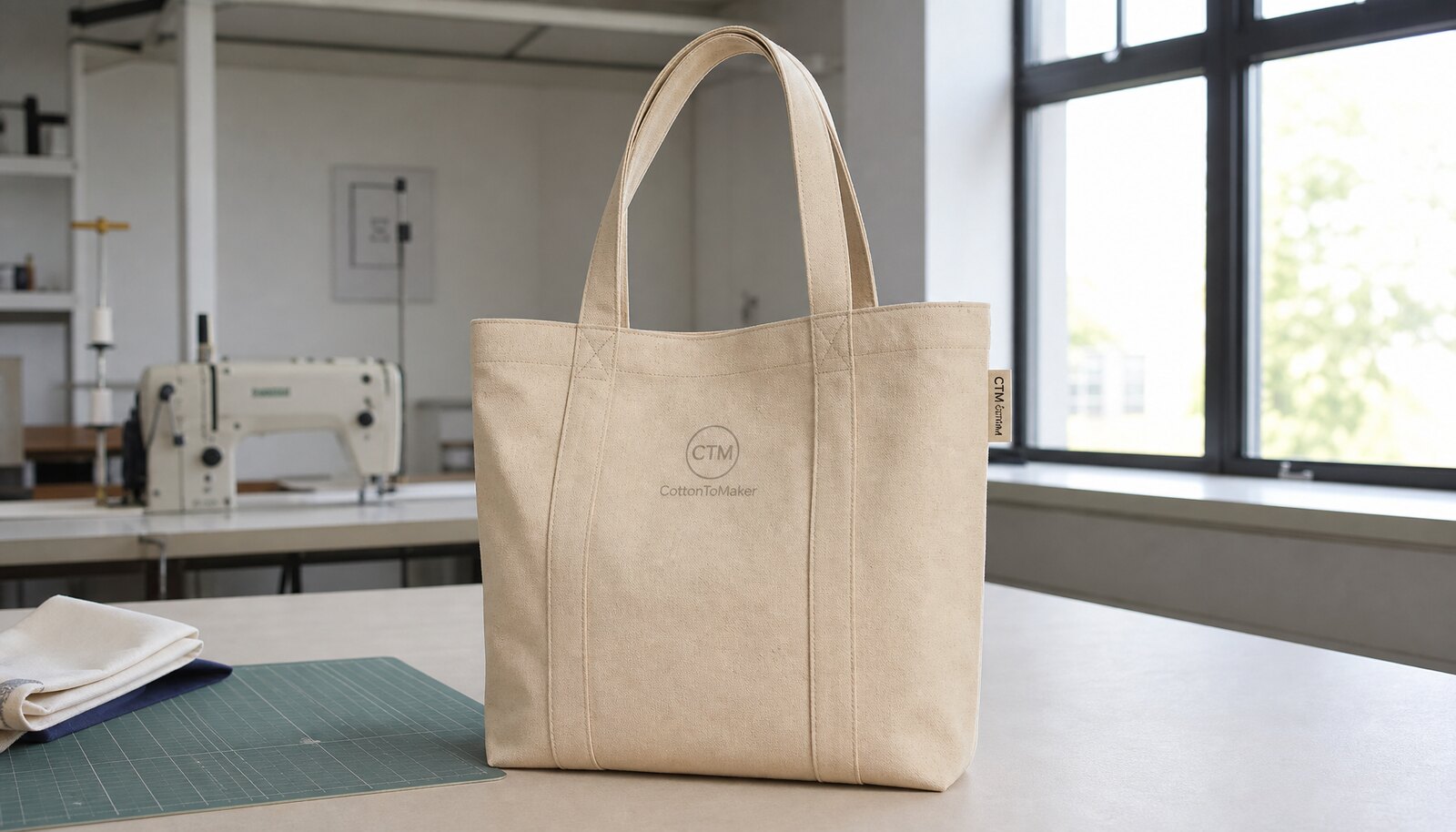
What a Cosmetic Brand Needs from a Conference Bag
Canvas conference bags for cosmetic brands are judged on more than appearance. The bag has to carry brochures, sample sachets, small jars, cards, and sometimes a boxed set without collapsing, twisting, or looking cheap after the first handoff. In procurement terms, the tote is a packaging component that also carries the brand. The buying spec should start with the load inside the bag, the expected handling pattern, and how the logo needs to read in a crowded event hall.
That is why the best order guide for a cosmetic event tote does not begin with a generic bag size. It begins with use case. A bag handed out empty at a registration desk has a different spec from a bag pre-packed with samples, and both are different from a tote meant to be reused after the show. If the bag will hold liquids, the canvas does not need to be waterproof by default, but the order should address secondary packaging so leaks do not soak through the tote or stain the print.
- Start from the kit contents, not from a random tote dimension.
- Treat the bag as part of the event presentation, not just a giveaway item.
- If the kit contains liquids or fragile items, define the inner packaging separately from the canvas bag.
Choose Fabric Weight and Finish by End Use
Fabric weight is one of the clearest cost-versus-performance decisions in the order. In practice, 10 oz canvas works for light paper kits and a few small sample packets, 12 oz is the safest default for most cosmetic conference programs, and 14 oz makes sense when the bag must carry heavier boxed sets or be reused after the event. In metric terms, the standard buying window is often around 340-410 gsm for the middle option. The heavier the fabric, the better the structure, but the higher the fabric cost and sewing effort.
Finish changes the buying outcome just as much as weight. Natural ecru is usually the easiest option to quote, easiest to restock, and easiest to print on because the base shade is predictable. Bleached canvas can give a cleaner white background but may show lint, weave variation, or shade drift more clearly. Washed canvas feels softer and more premium, but it can introduce more dimensional variation and less crisp alignment. Dyed canvas can work well when the tote itself needs to match the brand palette, but it usually raises MOQ, adds lab-dip work, and makes reorder consistency more sensitive.
- 10 oz: light kits, paper inserts, low-cost conference distribution.
- 12 oz: the best all-around option for cosmetic event bags.
- 14 oz: heavy kits, boxed items, or bags expected to be reused.
- Natural canvas is the lowest-risk choice for most first-time buys.
Size, Gusset, and Handle Specs Should Follow the Load
Bag size should be chosen from the contents outward. A brochure-only kit can live in a flatter tote, but most cosmetic event bags are better served by a gusset once sample packs, cartons, and inserts are added. For many buyers, a body somewhere around 30-35 cm wide and 35-40 cm high with an 8-12 cm gusset is a practical starting point, but the right answer is the size that fits the actual load with a little clearance, not the size that only looks balanced on a mockup. If the bag must stand on a registration table, a boxed bottom or a firmer gusset usually pays off.
Handles are the next point where good-looking samples fail in the field. A 2.5-3 cm self-fabric handle is acceptable for light kits, but a heavier event tote often needs a broader webbing handle or a doubled self-fabric build with bar-tacks at both ends. Handle length matters too: long enough to carry on the shoulder if needed, but not so long that the bag looks sloppy when handed over. If the bag will be picked up repeatedly by staff during an event, reinforcement at the top seam and handle base should be part of the spec, not a later complaint.
- Use a gusset when the bag must carry sample packs, cartons, or boxed items.
- Keep handles wide enough to spread the load and avoid hand fatigue.
- Ask for reinforcement at the handle base and top seam if the bag will be reused.
- Write the dimensions around the real kit, not around the logo placement mockup.
Lock the Branding Method Before You Ask for Pricing
Logo choice changes both the quote and the final look, so it should be fixed before suppliers start pricing. For most canvas conference bags, one-color screen print remains the cleanest cost-to-quality option because it scales well, holds a clear edge on natural canvas, and keeps production simple. If the art is more complex, heat transfer can carry more detail, but it needs a real sample review because fold lines, rub resistance, and edge sharpness matter once the bag is handled. Embroidery and woven labels create a more premium retail feel, but they need enough space and usually make the bag feel more like a branded accessory than a simple event carrier.
Placement is as important as the method. A print that sits too close to a seam or fold edge can distort after the bag is packed, even if it looked perfect on the flat sample. A useful rule is to leave a clear margin from seams and folds, especially on the front panel where attendees and staff will see the logo first. For buyer control, specify print size, placement, ink or thread color, and whether the logo is centered or intentionally offset. If you are using a small side label or woven tag, keep it simple and readable so the supplier is not pricing a decorative detail you do not actually want to approve.
- Screen print is usually the best answer for simple logos and repeat orders.
- Heat transfer only makes sense if the sample passes fold and rub checks.
- Woven labels and embroidery work best when the design has room to breathe.
- Specify a seam clearance so the logo does not distort when the tote is filled.
Build the Quote So Suppliers Price the Same Bag
A useful RFQ makes suppliers quote the same object, not similar-looking alternatives. The brief should state fabric weight, finish, construction type, handle build, logo file, print method, logo size, packing method, quantity by colorway, and the delivery term. It should also say what the bag is carrying, because that tells the factory whether a flat tote is enough or whether the gusset, handle reinforcement, and bottom seam need to be upgraded. If the buyer wants quotes that can actually be compared, every supplier needs the same assumptions.
The quote should also separate costs that move independently. Sample fees, screen or plate charges, packing labor, carton specification, and freight terms should be visible instead of hidden inside one unit price. If one quote includes ex-works pricing and another includes local delivery or freight, the numbers do not mean the same thing. Ask for the landed cost to the same destination, or ask suppliers to quote on the same incoterm. That avoids the common problem where the cheapest quote turns out to be the most expensive once packing and transport are added back in.
- Use one RFQ format for every supplier.
- Force the same assumptions for fabric, print, packing, and delivery term.
- Ask for sample fees and setup charges separately from the unit price.
- Compare landed cost, not just ex-factory unit cost.
MOQ and Tier Pricing Are Driven by Setup, Not Guesswork
MOQ on a custom canvas tote is usually tied to fabric roll use, cutting yield, print setup, and sewing changeover. A simple natural canvas bag with one-color print can often be ordered at a lower threshold than a dyed bag with multiple print areas or a lined bag with extra packaging steps. That is why a low MOQ should not be read as a universal answer. Sometimes the supplier is offering a stock tote with a small logo area, which may be fine for a giveaway but is not the same as a true custom conference bag.
The practical buying move is to ask for price breaks at several quantity levels and compare the total landed cost of each spec, not only the first-tier unit price. In many cases, the jump from 500 to 1,000 pieces buys more efficient sewing and print setup without changing the bag design. Beyond that, the price shift may come more from the finish, packing, or logo complexity than from the fabric itself. If the brand is planning repeat events, a slightly higher minimum can still be the better commercial choice because it protects consistency and makes the reorder process cleaner.
- Treat low MOQ offers as a different product unless the spec is truly custom.
- Ask for price breaks at multiple quantity tiers, not only the entry tier.
- Note which changes cost the most: extra print colors, lining, kitting, and custom-dyed fabric.
- Plan quantity by colorway and print version so the factory can set up efficiently.
Sampling and Approval Need Clear Gates, Not Just a Pretty Photo
A photo is not a sample approval. For a conference bag that has to carry cosmetic kits, the buyer should approve a physical proto sample or pre-production sample made with the actual canvas, actual print method, actual handle build, and actual packing method. If the final order includes inserts or product samples, the sample should be tested with those items inside. Many bags look fine empty and then fail when the kit is added because the gusset is too shallow, the handle angle is wrong, or the logo sits too close to a seam that stretches under load.
A practical sample process uses three gates: dimensions, appearance, and function. Dimensions cover body size, gusset depth, handle length, and logo position. Appearance covers print density, edge clarity, label placement, and thread color. Function covers handle pull, seam stability, and whether the bag closes and stacks cleanly after packing. Keep a sealed golden sample and mark it with the revision number that matches the order sheet. If the supplier changes any visible detail after that point, the buyer should treat it as a new approval, not a casual variation.
- Approve the real canvas and the real print method, not a similar substitute.
- Test the sample with the actual event contents inside the bag.
- Keep a sealed golden sample with the matching revision number.
- Do not let artwork, packing, or fabric changes bypass re-approval.
Packing, Kitting, and Delivery Are Part of the Product
Packing is not a minor detail when the bags are being shipped to an event. Bulk flat packing is usually the most efficient option because it lowers freight volume and keeps receiving simple. It also makes sense when the buyer wants to add inserts on site rather than at the factory. If the supplier is expected to do final kitting, the order should say exactly where the kit assembly happens, how counts are verified, and which party owns the final check. Those details change labor, carton size, and the risk of missing pieces.
Cosmetic programs tend to be more sensitive to presentation and cleanliness than ordinary utility tote orders. That means the buyer may need to specify folding direction, polybag use, carton labeling, and odor control. If the order goes directly to a conference venue or distributor event, ask the supplier to keep cartons manageable for manual handling. A carton that is too heavy, too mixed, or too loosely packed slows the event team down and creates avoidable receiving issues. If the bags will be pre-packed with product samples, say so early; otherwise the quoted carton size and freight estimate will not match the real shipment.
- Bulk flat packing is usually the default unless presentation requires otherwise.
- If the factory does kitting, define who counts, where it happens, and how it is verified.
- Keep carton weights reasonable for manual handling.
- Specify folding, polybag use, and carton marks when the bags go straight to an event.
Use QC Rules That Tell You What to Reject
Quality control should be written in a way that the factory and the buyer can both use. The easiest way to remove disputes is to define critical, major, and minor defects before production starts. Critical defects are the ones that make the bag unusable or wrong for the event: wrong logo version, missing handle, open seam at a stress point, mold, oil stain, or carton count mismatch. Those should be zero tolerance. Major defects are the ones that affect look or function enough that the buyer would not willingly hand the bag out: size outside tolerance, logo placement outside the approved zone, print smear, handle asymmetry, or mixed fabric lots. Minor defects are the small surface issues that do not change use, but they should still be tied to your internal AQL or acceptance rule.
A practical inspection routine is simple: sample bags from the start, middle, and end of the run; compare them to the sealed approval sample; then test the bag with the actual event load. A dry rub check with a white cloth, a repeated lift test, and a visual seam check will catch more problems than a glance at the front panel. The key is to stop the lot if it no longer matches the sample. Cosmetic buyers lose time when they try to negotiate a clearly different bulk run into acceptance because the event date feels urgent. If the lot is off-spec, isolate it early and decide on rework or replacement before shipment leaves the factory.
- Set zero tolerance for critical defects.
- Use a simple major/minor rule instead of vague language.
- Compare bulk goods against the sealed sample, not against memory.
- Inspect the first cartons, middle cartons, and last cartons so variation is visible.
Choose the Supplier Model That Fits the Order
Direct factory sourcing is usually the best fit when the buyer wants repeatability, stronger control over fabric and stitching, and a clear line of responsibility for the production floor. That matters when the same canvas conference bag will be reordered for multiple events or regional launches. Trading companies can help when the order includes several SKUs or mixed packaging from different factories, but the buyer should ask who actually owns print, sewing, and QC. A local decorator or print shop can be useful for urgent small runs or logo-only work, but it is usually weaker on full custom construction and fabric consistency.
The right decision is not only about unit price. A direct factory may cost slightly more on paper but reduce risk through fewer handoffs and a cleaner approval process. A trading company may save the buyer coordination time but can blur accountability if the bulk lot misses the sample. A local finisher may turn jobs quickly, but that speed only helps if the bag is already the right base product. For procurement buyers, the goal is the lowest landed cost for a tote that actually makes the event look organized and on brand. If the supplier cannot quote the same assumptions, the route is not the issue; the spec is.
- Direct factory: best for repeat orders and tighter control over construction.
- Trading company: useful when you need bundled SKUs or consolidated sourcing.
- Local finisher: useful for urgent logo application, not always for true custom builds.
- Judge the route by landed cost, accountability, and lead-time reliability.
Specification comparison for buyers
| Spec decision | Recommended option | When it fits | Buyer risk to check |
|---|---|---|---|
| Fabric weight | 10 oz for light brochure kits, 12 oz as the default, 14 oz only for heavier reuse or boxed sets | 12 oz canvas, roughly 340-410 gsm, is the most balanced starting point for cosmetic conference bags because it holds shape without adding unnecessary cost | Going lighter can save only a little but increases seam stress, panel collapse, and logo distortion once the kit is inside |
| Canvas finish | Natural ecru first; washed or bleached only if the brand wants a specific visual effect | Natural canvas is easiest to quote, easiest to restock, and usually gives the cleanest print contrast | Bleached, washed, or dyed canvas can change shade, hand feel, shrinkage, and reorder consistency |
| Bag structure | Flat tote for paper-only kits; 8-12 cm gusset or boxed bottom for sample sets and heavier loads | A gusseted body works better when the bag must stand up at a registration desk or carry jars, cartons, and inserts | A flat body may look tidy in a sample photo but fail once the event load is packed |
| Handle build | 2.5-3 cm self-fabric handles for light loads; 3 cm webbing or doubled fabric for heavier kits | Webbing or reinforced self-fabric handles are better when the bag will be carried more than once or hold a full cosmetic kit | Narrow handles twist, dig into the hand, and are the first failure point under weight |
| Logo method | One-color screen print for scale; woven label or small embroidery for premium presentation; heat transfer only for complex art | Screen print is usually the best cost-to-quality choice for repeat orders and simple logos | More colors and larger coverage raise setup cost and make registration, cracking, and rub issues more likely |
| Print placement | Front-center with at least 15-20 mm clearance from seams and fold edges | A centered placement keeps the logo readable after packing and handoff | Artwork too close to a seam can warp when the bag is filled and folded |
| MOQ planning | Plan 500-1,000 pcs per spec and colorway for true custom work | That range usually matches standard cut-sew and print setup on a custom conference tote | Very low MOQ often means a stock bag with a small logo, not a fully custom build |
| Packing format | Bulk flat pack in master cartons; individual polybags only when presentation or dust control requires it | Bulk packing keeps freight lean and is usually the best option for event distribution | Extra polybagging adds labor, carton volume, and receiving time |
| QC standard | Use a sample-based inspection plan with 0 critical defects and defined major/minor limits | A buyer who fixes the accept/reject rule before production gets fewer disputes at shipment | Without thresholds, 'looks fine' becomes subjective and hard to enforce |
Buyer checklist before sampling
- The bag spec names what the tote actually carries, including the kit contents and the approximate loaded weight.
- Fabric is specified in oz and gsm, plus finish: natural, bleached, washed, dyed, or coated if relevant.
- Final dimensions include width, height, gusset depth, handle length, and the acceptable tolerance for each.
- The logo file is vector-based, with Pantone or CMYK references, print size, placement, and seam clearance clearly stated.
- The quote states the print method, number of colors, and any screen, plate, or tooling charge.
- Sample stages are defined in writing: proto sample, pre-production sample, and the sealed approval sample used for bulk comparison.
- Packing instructions cover folding direction, polybag yes/no, inner pack count, carton count, and maximum carton weight.
- The RFQ states incoterm, delivery site, required ship date, and which party pays freight and local handling.
- The quote includes MOQ, unit price breaks, overrun and underrun policy, and defect handling terms.
- A buyer-side QC rule is written before production starts, including reject criteria for size, print, seams, odor, and count.
Factory quote questions to send
- What exact fabric weight, weave, and finish are included in the quoted price, and what shrinkage allowance do you build in?
- Is this quoted as a flat tote, gusseted tote, or boxed-bottom construction, and what seam reinforcement is included at the handle base and corners?
- Which print method is included, how many colors are covered, and what changes in cost if we increase logo size or coverage?
- What MOQ applies per colorway, logo version, and packing method, and does the MOQ change if we switch from natural to dyed canvas?
- What are the unit price breaks at 500, 1,000, 3,000, and 5,000 pieces, and what changes between tiers?
- What sample fee, screen charge, plate charge, or tooling charge applies, and is any of it refundable after order confirmation?
- What is the production schedule from artwork approval to goods ready for inspection, and which step is usually the longest?
- What packing format is included in the quote, and can you price the same bag both bulk-packed and individually polybagged?
- What is your policy for overruns, underruns, and defects that miss the approved sample, and how are replacements handled?
- If we change finish from natural to bleached, washed, or dyed canvas, which part of the quote changes first: fabric, print yield, MOQ, or lead time?
Quality-control points to confirm
- Use the approved physical sample as the control reference, not a photo, and keep its revision number on the order sheet.
- Critical defects should be zero tolerance: wrong logo version, missing handle, open stress seam, mold, oil stain, or carton count mismatch.
- Set body size tolerance around +/-1 cm and handle length tolerance around +/-1 cm unless your internal standard is tighter.
- Set logo placement tolerance around +/-5 mm from the approved position, and reject any print that overlaps the seam allowance.
- Use a simple rub check on the first cartons: dry white cloth, repeated back-and-forth strokes, no visible transfer or cracking.
- Reject mixed fabric lots, obvious shade drift, or a weave that is visibly different from the approved sample.
- Treat handle bar-tacks, corner seams, and gusset joints as major checkpoints because they usually fail first in use.
- Minor cosmetic issues such as loose threads, slight wrinkling, or small carton-mark defects can only pass if they stay within your AQL or internal limit and do not show on the front face.
- Open cartons from the start, middle, and end of the run so you can see whether the lot is consistent, not just the first carton.
- If the bag will be kitted with samples, test the real insert weight and confirm the tote still closes, stacks, and presents cleanly.