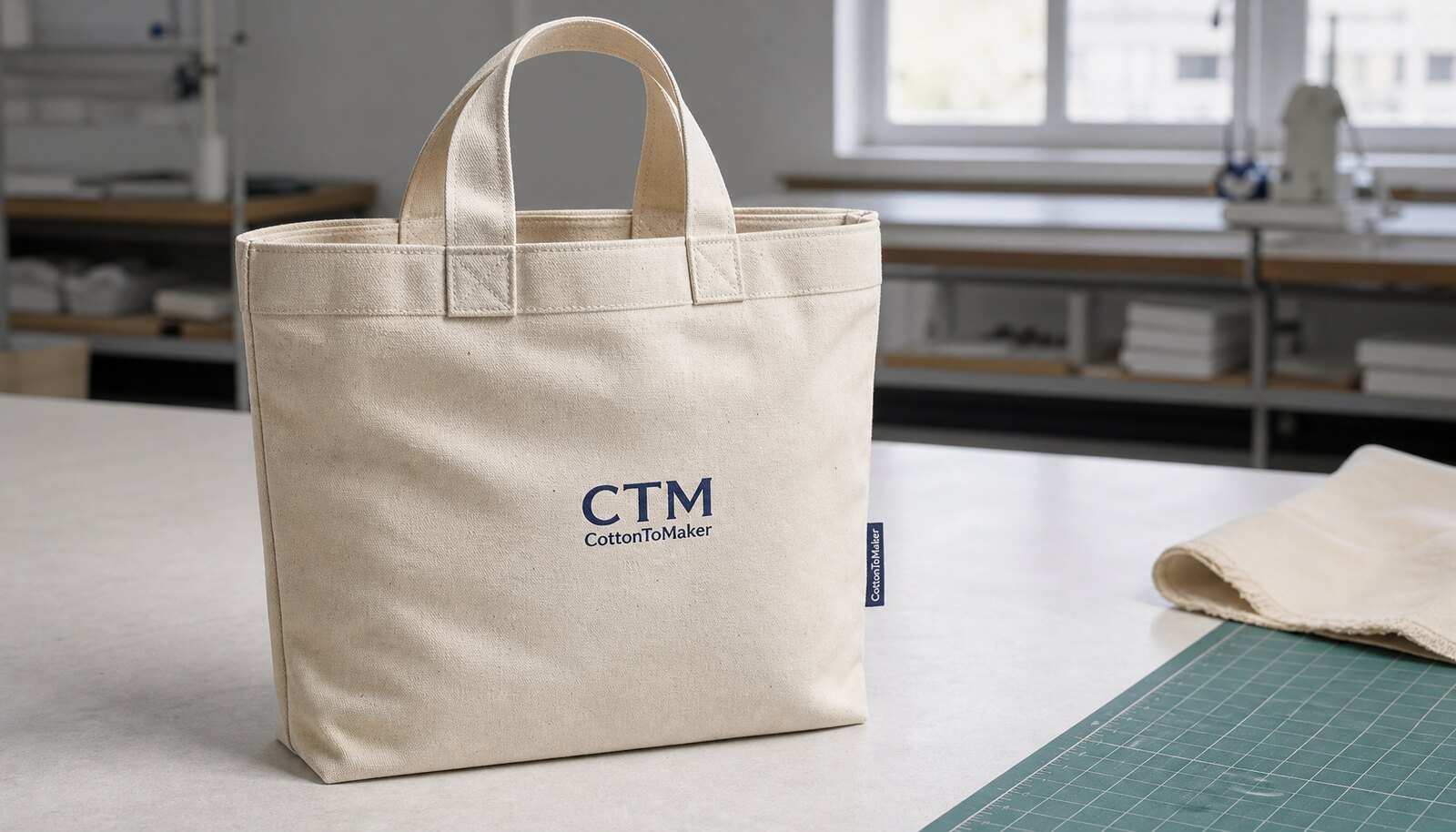
Start With the Use Case, Not the Print Technique
For corporate events, the print method is not a design decision first. It is a supply chain decision that affects decoration cost, lead time, artwork limits, and the chance that the bag arrives looking right on the day it is handed out. A conference tote is usually judged in three seconds: the logo must be clear, the canvas must feel substantial, and the print must survive packing, folding, and repeated handling. If those three things are not aligned, the lowest quote can still become the most expensive bag to fix.
The practical question is not which print method sounds modern. It is which method matches the use case. A one-color summit bag, a sponsor handout bag, and a premium executive kit do not need the same decoration. Procurement teams should define the event format first, then choose the print method that fits the artwork, volume, and schedule. That order prevents the common mistake of approving a decoration style before the bag construction is even settled.
- Use screen print when the logo is simple and the order is large enough to absorb setup cost.
- Use transfer or digital decoration when the art changes often or has multiple colors and fine detail.
- Use embroidery or a sewn label when the bag should feel more premium than promotional.
- Use local printing after import when the design varies by city, language, or event sponsor.
Set the Bag Spec Before Comparing Quotes
Canvas weight changes everything. A 6 oz promotional tote, a 10 oz conference bag, and a 12 to 16 oz premium utility bag will not print or sew the same way. Lighter canvas can distort during printing, especially if the bag is unlined and the logo sits close to a seam. Heavier canvas holds ink and embroidery better, but it also raises fabric cost, sewing time, and shipping weight. For most corporate events, 10 oz to 12 oz canvas is the practical middle ground unless the bag must carry catalogs, bottles, or demo samples.
Ask the supplier to quote the finished bag size, not just the open panel size, and make the print area part of the spec. A logo that looks safe on a flat art board can run into a side seam, a gusset fold, or a handle stitch once the bag is sewn. Handle length matters too, because shoulder carry changes how the bag is used and how the print is seen. If the event kit includes inserts, brochures, or a laptop sleeve, the bag spec should be written around the load, not around a generic tote template.
- For most conference use, target 10 oz to 12 oz canvas unless load weight pushes higher.
- Define finished dimensions, gusset depth, and handle drop before talking about decoration.
- State whether the canvas is raw, washed, or pre-shrunk, because shrinkage affects logo placement.
- Keep the print zone away from seams, top hems, and handle anchors unless the factory confirms the tolerance.
Compare the Print Methods by Artwork, Not by Habit
Screen print is still the default for many conference bags because it is straightforward, durable, and stable on plain canvas. It works best when the art is bold, the colors are limited, and the logo needs to sit cleanly on a large front panel. The tradeoff is setup. Every color can add a screen, a registration step, and a point of failure. If the logo has very fine type or tight spacing, a screen print can look strong on screen and weak on woven canvas unless the mesh and ink are chosen carefully.
Transfer decoration, digital print, embroidery, and sewn labels each solve a different problem. Transfer methods handle more complex artwork and smaller orders, but they need testing for edge lift and rubbing. Embroidery gives a premium tactile effect, but it is not suited to tiny text or thin lines. A woven label or patch can be the better answer when the buyer wants brand presence without covering the whole bag front. The smart buyer compares the art file against the method, not the method against habit.
- Screen print: strongest fit for simple corporate logos, internal events, and repeat orders.
- Transfer or digital print: better for gradients, variable artwork, and short-run launches.
- Embroidery: better for heavy canvas and premium presentation, weaker for small lettering.
- Woven label or patch: useful when the brand wants a durable mark with a cleaner retail feel.
Build the MOQ and Quote Logic Correctly
MOQ is usually driven by the decoration setup, not only by the bag itself. A supplier may be comfortable sewing a low number of blank canvas bags, but the print method can reset the economics. Screen print needs setup time, alignment, and ink curing. Embroidery needs digitizing and stitch programming. Transfer methods may have lower setup but can raise unit cost on large runs. That is why two quotes that show the same unit price can still be very different in total landed cost once tooling, sample charges, and packing are included.
For buyer planning, treat the quote as a stack of cost elements. A realistic quotation should separate the bag body, decoration setup, decoration unit cost, sample cost, carton cost, and any special packing. If the supplier only gives one flat number, it is hard to tell whether the quote assumes 500 pieces, 2,000 pieces, one print position, or a simplified sample process. The more specific the quote structure, the easier it is to compare suppliers and to protect the margin on a retail or event budget.
- Ask for bag cost, print setup, sample charge, carton cost, and freight assumption separately.
- Expect the MOQ to change if the logo moves from one color to multiple colors or from print to embroidery.
- Do not compare a decorated bag quote with a blank bag quote unless the full finishing cost is shown.
- If the event is recurring, price both the first run and the reorder run because setup amortization changes the economics.
Supplier Evidence That Actually Predicts Quality
A good quote is not enough. You need evidence that the supplier can actually execute the print method on canvas, not just on a brochure. Ask for photos of the exact bag construction, close-ups of past print work on similar fabric weight, and a clear explanation of where the printing happens in the workflow. In-house decoration is often more predictable than a split process where the bag body comes from one site and decoration comes from another. If the supplier outsources printing, ask how they control color, curing, and rework before the bags are packed.
The other evidence that matters is how the supplier talks about limitations. Strong suppliers will tell you when a design is too small for screen print, when embroidery will pucker on a thin panel, or when a transfer is risky on rough canvas. That is useful. It means the factory is selling a controlled result, not just saying yes to win the order. For procurement, the best vendor is not the one with the widest menu. It is the one that can explain which decoration route fits the artwork and why.
- Request photos or video of the same bag weight and print method, not just generic product shots.
- Ask whether printing is in-house or outsourced, and how rework is handled if the first run fails.
- Look for a supplier who can explain limits on line thickness, stitch density, and placement tolerance.
- If the artwork is complex, require a physical strike-off or sample print before bulk approval.
Sample Approval and QC Thresholds
The sample stage should do more than confirm that the logo exists on the bag. It should answer whether the artwork survives the chosen print method and whether the bag still looks balanced once sewn, folded, and packed. For canvas conference bags, a pre-production sample is more useful than a pretty digital proof because the real issue is how ink, thread, or transfer behaves on the actual fabric weight. The approved sample becomes the control point for the bulk lot, so keep one clean signed sample and one set of artwork notes attached to the order file.
Write acceptance criteria that the factory can actually measure. Placement should stay within a defined tolerance, color should match the approved reference, and the print should remain clean at the edges. For embroidery, check puckering, density, and loose ends. For transfers, check cracking, rubbing, and edge lift. If the bag is used for heavy inserts, also test seam pull and handle attachment because a perfect logo is useless if the bag body fails under event loading.
- Approve placement with a measured tolerance, not just a visual yes.
- Check the sample under daylight and indoor light because canvas can change how color reads.
- Inspect the back side of embroidery or transfer for bleed-through, backing marks, or stiffness.
- Test one loaded bag by hand to confirm the seams and handles still sit flat after decoration.
Packing and Kitting for Corporate Events
Packing is part of the product. A canvas conference bag that leaves the factory folded too tightly can develop crease marks across the print. Embroidery can snag if the carton is overfilled, and a transfer can scuff if the surface rubs against raw cardboard. If the bags will be handed out at an event, the packaging method should match the final distribution route. Some buyers want flat-packed cartons for warehouse efficiency. Others want individual polybags or tissue protection because the bags will go straight from carton to registration desk.
If the order includes inserts, brochures, notebooks, bottles, or USB kits, define the kitting sequence before production starts. A supplier that prints and packs in one workflow can often reduce damage and save handling time, but only if the packing spec is clear. Barcodes, carton marks, and piece counts should be written into the PO so the event team can receive, count, and distribute without opening every case. For large events, the packing format can matter as much as the decoration itself.
- Specify whether bags should be folded flat, rolled, or stuffed with tissue before carton packing.
- State the piece count per carton and the target carton weight for warehouse handling.
- Use outer carton marks and barcode labels if the bags will be stored before event-day distribution.
- If inserts are included, confirm whether the factory or the freight forwarder will manage kitting.
Lead Time and Schedule Risk
Corporate event timing is less forgiving than retail replenishment. The usual lead time stack is sample approval, material booking, decoration setup, sewing, curing or finishing, packing, and export handling. If the artwork is late, the event date does not move. That means the buyer has to protect time at the front end, especially when the logo is not finalized or when multiple stakeholders need to sign off on color, placement, and artwork. The most common schedule failure is not production speed. It is late approval that compresses an otherwise normal factory plan.
Build the schedule backward from the handout date, then add buffer for sample revision and freight variability. A simple one-color screen print on a standard canvas bag can move quickly if the fabric is already available. A premium bag with embroidery, custom lining, and kitting needs a wider window. If the order is tied to an event launch, avoid mixing urgent final art with a new vendor at the same time. One change is manageable. Three changes at once usually turn into schedule risk.
- Start artwork approval before asking for final delivery dates.
- Treat sample revision as a schedule risk, not as a routine step.
- Leave room for curing, carton packing, and export document preparation.
- If the event date is fixed, avoid changing print method after the quote stage.
Landed Cost Comparison and RFQ Workflow
The cleanest way to compare suppliers is to compare landed cost by sourcing route, not just ex-works price. A factory-direct screen print quote may look stronger on unit price because decoration happens in the same building as sewing. A blank-bag-plus-local-print route may look more expensive on paper but reduce risk if artwork changes late or if the event is regional. The real comparison should include decoration, cartons, freight, import handling, and the cost of any rework. Once those are included, the cheapest quote on paper is often not the cheapest quote to receive.
For RFQs, send one package that is impossible to misunderstand: bag size, canvas weight, handle length, print size, art file, color target, packing count, destination, and event date. Then ask each supplier to quote the same assumptions. If one quote comes back with a different fabric weight, a smaller print size, or a simplified pack plan, treat it as a different product, not a lower price. That discipline is what lets procurement compare apples to apples and avoid the production mistakes that usually appear only after the goods are on the water.
- Compare factory-direct decoration, local decoration, and hybrid sourcing on the same landed-cost basis.
- Keep the RFQ fixed so suppliers cannot quote a different bag and call it equivalent.
- Track rework risk, freight weight, and packing density as part of the price comparison.
- Use the same golden sample reference for all suppliers if you are benchmarking multiple quotes.
Specification comparison for buyers
| Spec decision | Recommended option | When it fits | Buyer risk to check |
|---|---|---|---|
| One-color screen print at the bag factory | Best for simple logos on 10 to 12 oz canvas with stable artwork and large volume | Corporate events, internal conferences, sponsor bags, and repeat orders with the same brand mark | Confirm ink opacity, print placement tolerance, cure temperature, and whether the quote includes one screen or multiple screens |
| Two- to four-color screen print | Use when the logo has solid color blocks and clean vector art | Mid- to large-run orders where color separation stays consistent across all bags | Check registration tolerance, exact Pantone matching, and whether each color adds setup cost |
| Heat transfer or DTF decoration | Choose for gradients, small type, or multi-color logos with short lead times | Smaller event runs or designs that change often by region or campaign | Ask for wash and rub testing, edge lift risk, and whether the transfer can crack on thick canvas folds |
| Embroidery on heavy canvas | Use for premium conference kits or small logo marks on thicker bags | When the brand wants a textured, durable look and the logo is not too detailed | Verify stitch count, backing, puckering risk, and whether the bag body can support dense embroidery |
| Woven label or sewn patch plus minimal print | Best when the logo is too detailed for clean printing or when the buyer wants a premium finish | Executive gifts, premium retail, and bags that need a softer brand presence | Check label color accuracy, edge fray control, and whether the patch placement interferes with seams or handles |
| Blank bag from factory, print locally | Useful when art changes late or when each market needs local language or event data | Distributed events across several cities or when the buyer wants last-mile decoration control | Compare total landed cost, local print capacity, and the risk of color drift between different decorators |
| Digital print for sample approval or low MOQ | Use for development runs, media kits, or very small event quantities | Artwork validation before bulk production or short-run launches | Confirm print resolution on coarse canvas, color shift after curing, and whether the factory can repeat the result at scale |
| Combined print plus woven label or side tab | Good for branded utility bags where the logo needs presence but not oversized coverage | Corporate events that need a cleaner, more retail-like finish | Make sure the label and print do not compete visually, and keep both details inside the same approval sample |
Buyer checklist before sampling
- Lock the bag spec first: canvas weight, finished size, handle length, gusset depth, and whether the body is lined or unlined.
- Share vector artwork and state the required logo size, Pantone target, and approved print position on front, back, or side panel.
- Tell the supplier the event date, destination port or warehouse, and whether bags must arrive pre-packed or kitted with inserts.
- Ask for a pre-production sample or strike-off before bulk approval, especially if the logo has small text or fine lines.
- Compare quotes only after the same bag spec, same print size, same packing method, and same shipping assumption are aligned.
- Confirm whether setup fees, screen charges, embroidery digitizing, and sample costs are included or billed separately.
- Request the factory's normal QC standard for print registration, color tolerance, stitch quality, and carton quantity per case.
- Check whether the bag must pass a drop, rub, or load test if the event will use it for catalogs, bottles, or heavier inserts.
- Ask how the bags are folded, packed, and protected from scuffing during export, warehousing, and event distribution.
- Keep one signed golden sample and one approved artwork file so reorders do not drift from the first production run.
Factory quote questions to send
- What canvas weight do you recommend for this bag size, and is the fabric raw, pre-shrunk, or bio-washed?
- Which print method is most stable for this artwork, and what is the exact limitation for thin lines, gradients, or small type?
- How many setup charges are included, and does each color, screen, transfer, or embroidery step add a separate fee?
- What is your MOQ by print method, and does the minimum change if we move from one-color art to multi-color art?
- Can you quote the bag body, decoration, packing, and export carton separately so we can compare suppliers line by line?
- What is your sample process: digital proof, blank bag sample, strike-off, pre-production sample, or full golden sample?
- How do you control print placement, color variation, and seam distortion during bulk production?
- What is your standard lead time for sample approval, bulk production, and packing after the final artwork is signed off?
- How are the bags packed per carton, and can you pack them flat, folded, or with tissue protection if the print is delicate?
- If we repeat this order, what part of the cost stays stable and what part changes with the print method or quantity?
Quality-control points to confirm
- Print placement should stay within the approved tolerance on every bag, with no obvious drift across the carton.
- Color should match the approved reference under normal daylight and not appear washed out, muddy, or over-saturated.
- Screen print should cover evenly without pinholes, streaks, or ink buildup at the edges of letters and logos.
- Embroidery should lie flat, without puckering, skipped stitches, loose thread ends, or backing showing through the face fabric.
- Transfers should bond cleanly, with no peeling corners, cracking at folds, or ghosting from excess heat.
- Canvas should be cut and sewn square, with handle attachment points aligned and reinforced consistently across the lot.
- Cartons should contain the correct piece count, fold direction, and protection method so decoration is not scuffed in transit.
- Approved sample, artwork file, and final production reference should match before shipment release.