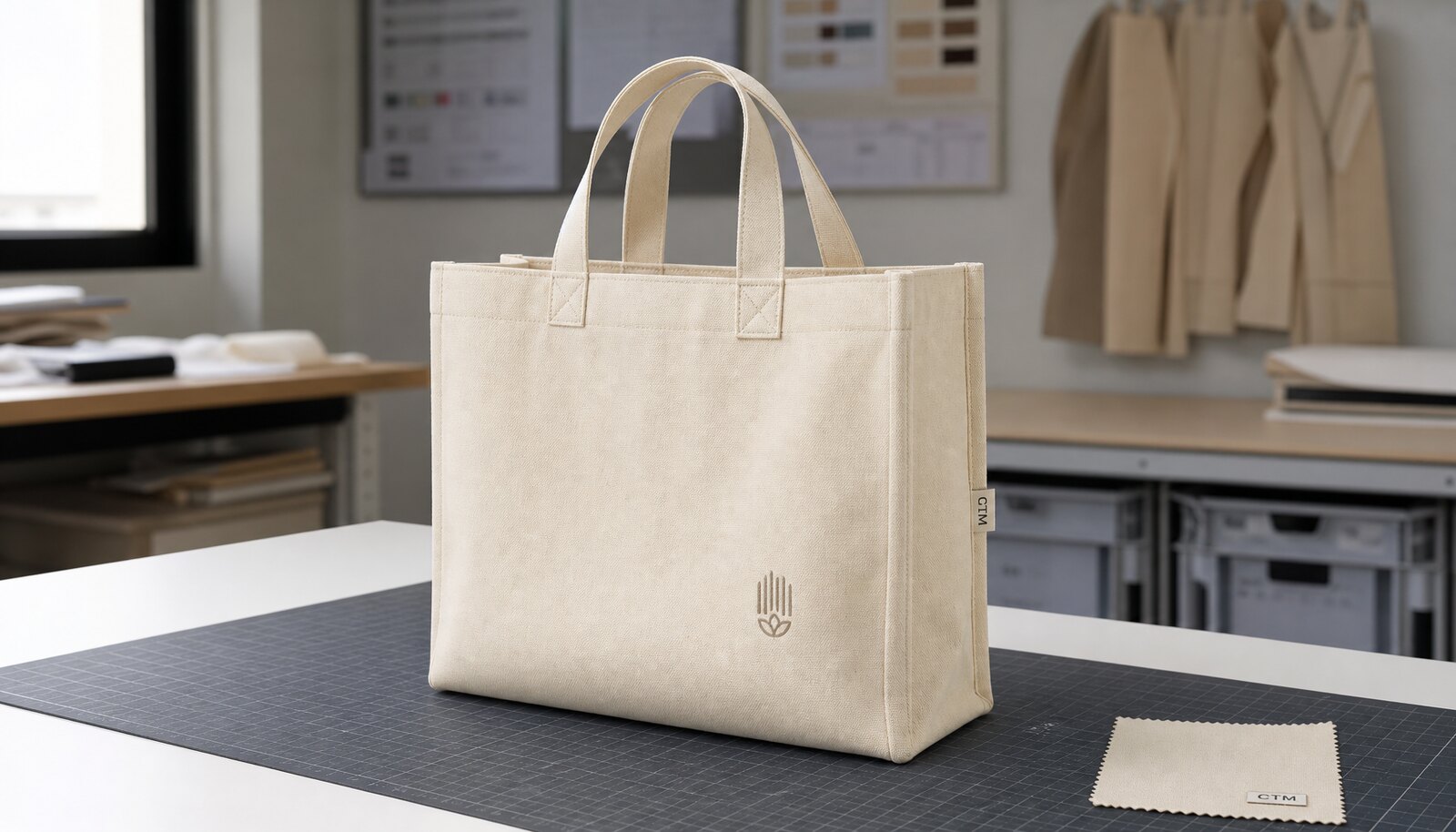
Start With the Use Case, Not the Artwork
For coffee brands, the bag usually has to do more than hold a logo. It may carry sample pouches, brochures, a notebook, a tasting cup, or a small retail item, and that load changes the spec. If the conference team only defines the artwork, the factory will quote a generic tote, then the buyer discovers too late that the handles are too short, the gusset is too shallow, or the bag collapses under a sample kit. The right starting point is the event scenario, the typical contents, and the way the bag will be handed out or reused after the show.
That use case should drive every later decision. A press kit bag for a buyer meeting can be lighter and cleaner than a trade-show bag that has to survive a full day on the floor. A premium coffee roaster may want a stronger fabric face and a more restrained print, while a distributor may care more about carton efficiency and price. Once the bag role is clear, the rest of the checklist becomes practical instead of theoretical.
- Define the contents first: brochure-only, sample-heavy, or mixed retail handout.
- Set a target load rather than assuming every tote should carry the same weight.
- Match bag proportions to the contents, not to a generic catalog size.
- Decide whether the bag is a free giveaway, a brand statement, or a reusable retail piece.
Choose the Fabric Weight That Matches the Load
Canvas weight is the first place a quote can look similar while the real product is very different. For most coffee-brand conference bags, 12 oz canvas is the practical baseline because it balances hand feel, print quality, and sewing efficiency. In many mills that sits roughly in the 340 to 400 gsm range depending on weave and finishing. If the bag is carrying heavier sample packs or needs a more premium feel, 16 oz canvas can be the better spec, but it changes sewing speed, unit cost, and carton weight. Buyers should ask for the finished fabric weight, not a loose description like 'thick canvas'.
The same rule applies to weave and finish. Natural canvas is usually the easiest to quote, but it can vary in tone and absorbency, which matters for print color. Bleached or dyed canvas may present a cleaner look for premium coffee brands, but color consistency must be monitored, especially if the bag is being reordered later in the season. If the bag is washed, steamed, or heat-set, the buyer should also confirm shrinkage tolerance and whether the factory allows extra panel allowance to protect final dimensions.
- Use 12 oz canvas for standard event bags and lighter sample kits.
- Use 16 oz canvas when the bag must feel substantial or carry heavier items.
- Ask for finished fabric weight, not only raw material spec.
- Confirm shrinkage tolerance and panel allowance before cutting starts.
Pick the Print and Branding Method Before Quoting
Coffee-brand artwork usually looks best when the decoration is simple, intentional, and easy to repeat. A one-color or two-color screen print is the most reliable choice for most canvas conference bags because it gives a stable cost base, clear logo edges, and a familiar premium hand. It also keeps the factory from hiding setup charges inside a vague 'custom printing' line. If the logo has multiple tones, gradients, or fine type, a transfer or patch can work better, but then the buyer should inspect edge quality, adhesion, and fold resistance more carefully.
Decoration placement matters as much as method. A front-center print is common, but many coffee brands get a cleaner result with a smaller mark, a woven side label, or a sewn patch that feels more like a retail product than a giveaway. The buyer should lock the print area, color standard, and curing method before sample approval. On textured canvas, a logo can drift visually if it is too close to a seam or too large for the panel. The sample should prove that the logo still reads cleanly after the bag is folded, packed, and opened again.
- Use screen print for simple logos and higher repeat volumes.
- Use transfer or patch work only when the artwork really needs detail.
- Specify the print area in centimeters or inches, not just 'front logo'.
- Require a rub test and a fold test on the decorated area.
Compare the Sourcing Route, Not Only the Unit Price
The same bag can land very differently depending on who is making it. A direct factory quote often gives the cleanest control over fabric, stitching, and print, but only if the factory genuinely runs the sewing line and not just the sales desk. A trading company can be useful when the program has multiple bag sizes or mixed branding elements, yet the buyer needs proof that they can hold the same spec across reorders. A stock blank plus local printing can make sense for launch events, but the base bag usually controls the final look more than the brand expects.
The right comparison is not just who is cheapest on paper. It is who can reproduce the approved sample, keep the same fabric lots where possible, and explain where each charge comes from. Ask each supplier to break out the bag body, handles, print setup, sample charge, packaging, and delivery term. When a quote arrives as a single number, hidden costs usually show up later as 'extra' screens, carton changes, or artwork revisions. The buyer should force every supplier to describe the same build and the same commercial assumptions.
- Compare the same fabric weight, print method, and packing spec across all suppliers.
- Ask who actually owns the sewing and printing process, not only who issued the quote.
- Watch for hidden charges inside setup, sample, and carton lines.
- Use the approved sample as the comparison reference, not the sales sheet.
Approve the Sample in Three Stages
For this kind of bag, one sample is rarely enough. The first step is the pre-production sample, which should prove the construction, size, print placement, and general hand feel. The second step is the top sample or sealed reference, which both sides can hold as the standard for mass production. If the artwork is complex, a strike-off or print proof may be needed before the sewn sample is accepted. Coffee-brand buyers often lose time by approving only a photo, then discovering that the actual fabric tone or print density is wrong when the carton arrives.
A good sample review is physical and measurable. Check the opening width, gusset depth, handle drop, and panel symmetry. Pull on the handle attachment points, inspect the inside seams, and compare the logo against the approved artwork file in good light. If the bag will be given to customers or retail buyers, pack it once, refold it, and reopen it to see whether the decoration creases or the bag loses shape. The sample should show what the product will actually do on show day, not just what it looks like on a table.
- Measure every sample against the same ruler and the same art file.
- Keep one sealed top sample as the production reference.
- Check the bag after folding and reopening, not only when it is flat.
- Reject any sample that hides a construction issue behind good-looking print.
Set Inspection Thresholds the Factory Can Follow
A quality checklist works only when the factory can inspect against it without guessing. Critical defects should be obvious: broken seams, missing bar-tacks, major print misalignment, wrong size, severe stains, or damaged fabric near the logo area. Major defects are the ones that change how the bag looks or performs, such as crooked handles, weak stitching, print bleeding, or visible panel mismatch. Minor defects are small cosmetic issues that may be acceptable in small numbers, but they still need a limit. If your team uses AQL, write that into the PO, but do not rely on AQL alone to define what matters for the bag.
For conference bags, the stress points matter more than the center panel. The handle attachment should be treated as a control point, and the bottom seam should be checked for even stitching and no needle damage. If the bag is meant to carry sample packs, build a simple load test around the actual use case rather than a generic tote test. A bag that looks fine empty can still fail when the handles are loaded repeatedly or when the bottom seam takes uneven weight. The inspection plan should expose that risk before carton sealing.
- Treat seam failure, wrong size, and print misplacement as critical defects.
- Inspect handle attachment and bottom seam as separate control points.
- Use a load test that matches the contents the bag will actually carry.
- Write the defect rule into the purchase order, not only into email notes.
Treat Packing as Part of Product Quality
Packing is not a back-end detail on a canvas conference bag. If the print surface rubs against the carton wall, the bag can arrive with scuffing that looks like a print problem but started in packing. If bags are folded too tightly, the handle creases become permanent and the retail presentation suffers. If cartons are overfilled, the bottom bag takes the compression load and seams can distort before the shipment even leaves the warehouse. The buyer should specify the fold method, the orientation of the print, and whether each bag is polybagged or tissue-separated.
Carton data also matters because it affects freight and handling. A quote should include the pack count per carton, carton dimensions, gross weight, and whether palletizing is included. For sea freight, a slightly larger carton can sometimes reduce crushing risk without hurting the landed cost too much, while for air freight every kilogram matters. If the program ships to multiple distributors or regions, the carton mark format should be standardized now rather than after the first shipment. Packing defects are expensive because they create both damage and rework on the receiving side.
- Confirm the fold line so the logo does not crease at the wrong point.
- Use interleaving or tissue where print scuffing is a risk.
- Lock the carton count and carton dimensions before freight booking.
- Standardize carton marks if the order will be split across multiple destinations.
Build the Schedule Around Artwork, Approval, and Peak Season
Lead time is usually longer than the buyer first hears because canvas bags have several gates: artwork confirmation, fabric reservation, sample approval, production, packing, and shipment booking. A simple 1-color bag can move quickly once the sample is signed off, but any change to artwork size, print color, fabric tone, or packing method can reset part of the schedule. Coffee brands often place bag orders near campaign dates, then discover that the true risk is not sewing time but the lag between design sign-off and the first approved sample.
The safest approach is to treat the calendar as part of the spec. Reserve more time if the order uses new artwork, a new fabric lot, or a higher GSM canvas that slows sewing. If the event date is fixed, the buyer should force the supplier to split the timeline into sample lead time, materials lead time, production time, and outbound time. That makes delays visible early. It also prevents the common mistake of giving the factory a hard event date without a buffer for corrections.
- Split lead time into sample, materials, production, and shipment stages.
- Add buffer for new artwork, color matching, or heavier canvas construction.
- Do not release mass production until the top sample is signed off.
- Plan around holiday, peak freight periods, and busy event seasons.
Use the Quote to Expose Hidden Cost and Landed Cost
A real buyer quote should tell you how the bag is built, what is included, and what still sits outside the line item. For canvas conference bags, hidden cost usually appears in extra screens, color changes, custom hangtags, carton marks, individual polybags, or a more expensive fabric lot than the supplier first assumed. A clean quote separates the bag body, handles, decoration, packaging, sample, and freight term. That makes supplier comparison possible and helps the buyer see where a low unit price is being offset by loose assumptions.
The landed-cost view matters because coffee brands often buy these bags for distribution, not for private use. If the bag is moving through a distributor or into retail, packaging efficiency, carton weight, and damage rate can change the real cost far more than a small unit-price difference. A cheaper bag that arrives crushed, faded, or inconsistently packed is not cheaper. The buyer should compare the full landed number and the risk profile together, especially when the order will be repeated through a season or across multiple markets.
- Request separate lines for sample, tooling, packing, and freight.
- Compare landed cost, not only ex-factory unit price.
- Watch for assumptions around print colors, carton marks, and polybagging.
- Ask the supplier to state any excluded item in writing.
Specification comparison for buyers
| Spec decision | Recommended option | When it fits | Buyer risk to check |
|---|---|---|---|
| Sourcing route | Direct canvas factory with in-house cutting, sewing, and print control | Best for repeat programs, tighter spec control, and lower risk on custom dimensions or branding | Confirm the factory actually controls the sewing line, not only the sales team; ask for real production photos and line capacity |
| Sourcing route | Trading company that manages multiple audited factories | Useful when you need one contact for complex artwork, mixed materials, or tight coordination | Check whether they can hold the same fabric and print standard across reorders, not just the first shipment |
| Sourcing route | Stock blank bag plus local branding | Works for fast campaigns, test launches, or low-MOQ regional events | Risk is inconsistent bag size, weaker handle reinforcement, and branding that looks detached from the base bag |
| Fabric weight | 12 oz natural canvas as the default conference spec | Fits brochures, coffee sample packs, notebooks, and light retail handouts without overpricing the bag | Verify the finished fabric weight and shrinkage after washing or steam; do not accept a vague 'heavy canvas' description |
| Fabric weight | 16 oz reinforced canvas for heavier kits | Fits sample boxes, catalog sets, or premium event kits where the bag must feel substantial | Higher material cost and sewing difficulty can cause uneven seams if the factory is not experienced with thick canvas |
| Print method | 1-color or 2-color screen print with controlled Pantone matching | Best for coffee branding with strong logos, simple marks, and large repeat quantities | Watch for ink cracking, poor curing, and registration drift on textured canvas |
| Print method | Woven label, embroidery patch, or transfer for detailed artwork | Fits premium programs, complex logos, or short runs where sharp detail matters more than raw unit cost | Check edge finish, adhesive durability, and whether the decoration survives folding and carton compression |
| Packing route | Bulk packed with tissue or interleaving, then master cartons | Good for sea freight and large distributor orders where carton efficiency matters | Make sure print faces are protected and carton counts are exact; scuffing often starts in packing, not sewing |
| Sample stage | Pre-production sample plus a sealed top sample | Necessary when the artwork, color, or handle construction is new | If the factory skips a sealed reference, every shipment becomes harder to judge and disputes are harder to settle |
Buyer checklist before sampling
- Define the bag use case in one sentence: conference handout bag, coffee sample carrier, premium brand giveaway, or retail event bag.
- Lock the finished size, gusset depth, handle length, and target load before asking for prices.
- Specify fabric weight in oz and gsm, plus whether the canvas is natural, bleached, dyed, or recycled.
- Choose the branding method early: screen print, transfer, woven label, embroidery patch, or mixed decoration.
- Confirm the stitch standard for handles, corners, and stress points, including bar-tack placement.
- Request a pre-production sample and approve one physical reference before mass production starts.
- Set packaging details: fold method, individual polybag yes or no, carton count, carton mark, and master carton size.
- Ask for lead time split by sample, material prep, production, and outbound booking, not just one total number.
- Require a quote that separates unit price, tooling, sample charge, packaging charge, and freight term.
- Define the inspection rule for critical defects, major defects, and color variance before the PO is issued.
Factory quote questions to send
- What is the exact finished size, fabric weight, handle length, and gusset depth priced in this quote?
- Is the canvas weight based on finished fabric after treatment, or only raw yardage before sewing shrinkage?
- How many print colors are included, and what is the charge for extra screens, plates, or setup?
- What stitch count, seam allowance, and bar-tack detail do you use on handles and bottom seams?
- Can you provide a pre-production sample, a production sample photo, and a sealed top sample for reference?
- What is the MOQ by color and by artwork version, and how does the price change at lower or higher quantities?
- Which packing method is included, and what is the carton count and carton dimension for shipping?
- What is the lead time after sample approval and deposit, and what events can delay it?
- Which inspection standard do you follow, and can you share your defect classification for this bag?
- What Incoterm is included in the quote, and what charges are excluded such as local trucking, export docs, or palletizing?
Quality-control points to confirm
- Finished dimensions match the approved sample within the agreed tolerance for width, height, and gusset depth.
- Fabric weight matches the specified oz or gsm and does not vary sharply between panels on the same bag.
- Handle length, handle alignment, and handle reinforcement are consistent across the batch, with bar-tacks seated cleanly.
- Main seams are straight, even, and free of skipped stitches, puckering, loose thread ends, or open holes.
- Print placement, logo size, and color match the approved artwork and remain centered after folding and packing.
- Ink coverage is even, fully cured, and does not crack, peel, or transfer when rubbed under normal handling.
- No visible stains, oil marks, fabric holes, broken needles, or miscut panels appear in the logo zone or front face.
- The bag stands and carries its intended load without seam failure, handle tearing, or excessive distortion.
- Cartons are packed to the agreed count, labeled correctly, and protect the printed surface from scuffing during transit.