Start With the Campaign Calendar, Not the Bag
For charity campaigns, the reorder problem starts with timing. The first shipment usually supports an event date, a donor mailing, a volunteer pack-out, or a retail fundraising window. The next order is rarely identical. Usage data from the first release, sponsor additions, and last-minute destination changes all affect the second run. If the buyer only copies the old PO, the supplier may repeat the wrong carton count, the wrong delivery split, or the wrong print position.
A better memo begins with the campaign calendar and the consumption pattern. Separate the first fill, the forecast replenishment, and the reserve stock that protects against a second event or a delayed donation release. For canvas conference bags, that usually means deciding whether the tote is a one-time giveaway or a repeat-use item that should survive multiple distribution cycles. The answer changes the fabric weight, the print method, and the amount of safety stock you should hold.
- Record the event date, ship-to date, and any warehouse receiving cutoffs.
- List the expected issue rate by destination, not just the total quantity.
- Define the reorder trigger before stock runs low, not after the last carton leaves the dock.
Lock the Tote Spec Before You Ask for Price
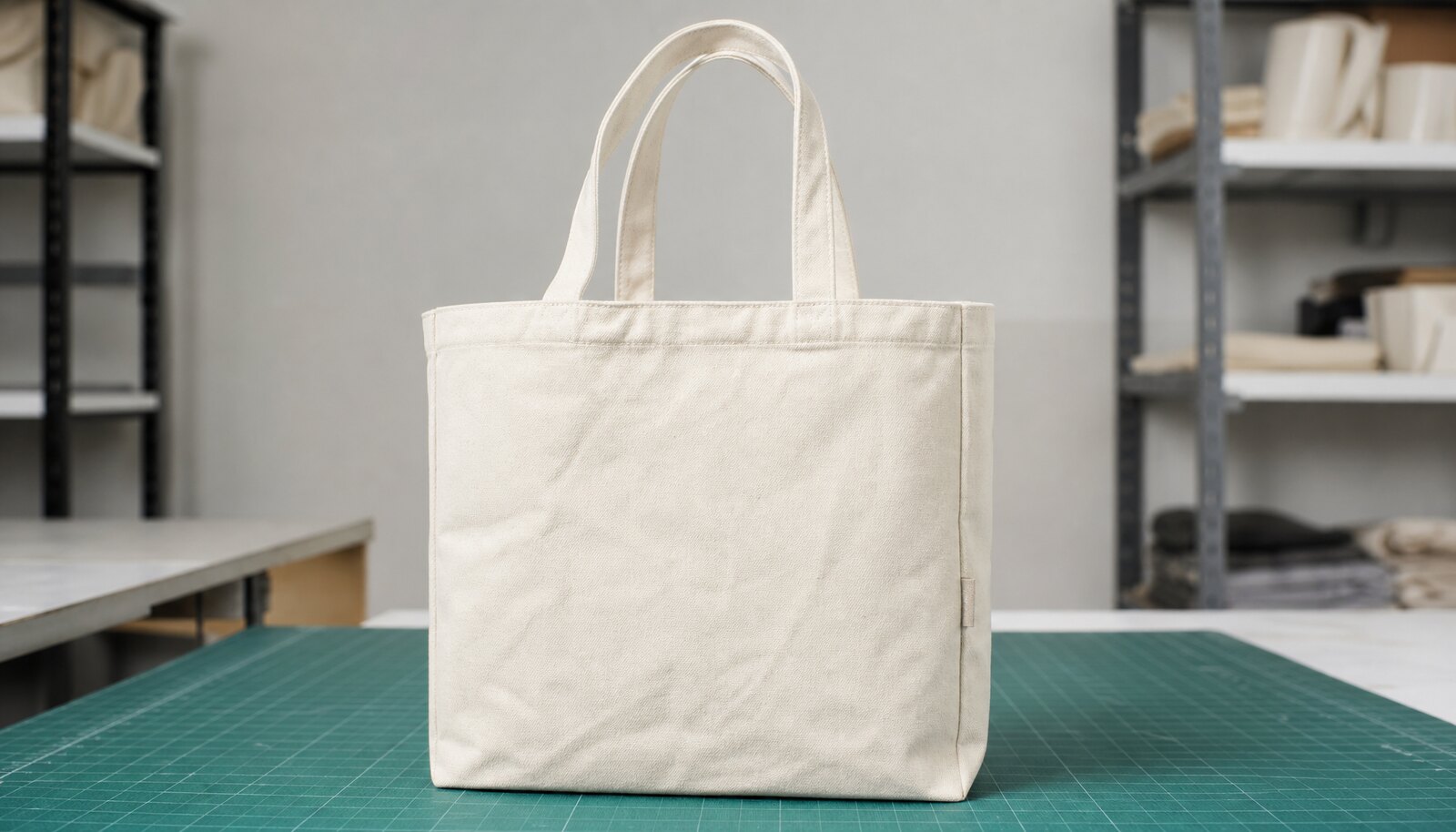
Canvas conference bags can look similar on a screen and behave very differently in production. Fabric weight is the first decision that changes the quote. An 8 oz canvas is typically around 270 GSM and works for light promotional use. A 10 oz bag is roughly 340 GSM and is a common middle ground for charity campaigns that want a sturdier feel without a big cost jump. A 12 oz canvas is around 410 GSM and gives a more premium hand. Heavier constructions move the bag into a more durable, retail-like profile.
Once the weight is set, the rest of the spec needs to be locked in one page. Size, gusset depth, handle length, handle drop, seam reinforcement, closure style, and any inside pocket should all be fixed before quoting. Even small changes affect cutting yield and sewing time. If one buyer asks for a wider gusset, longer handles, and a pocket in the same run, the factory may quote a different line entirely. That is normal, but it only helps if the RFQ shows each option separately.
- Use one approved dimension set for the bulk quote, then price any variants separately.
- State whether the bag should stand upright, fold flat, or carry a rigid insert.
- If the campaign uses heavy inserts, choose stronger handles and corner reinforcement.
Choose the Print Method for Readability and Reorder Stability
For most charity campaigns, the safest print choice is a simple one-color screen print on a stable canvas body. It gives good opacity, works well on larger runs, and is easier to repeat on a reorder if the art stays unchanged. Two-color screen print can still work, but every extra color adds setup cost and registration risk. If the logo has small type, thin lines, or multiple fine elements, the buyer should test whether the art survives the screen count without filling in or dropping detail.
Other decoration methods solve different problems. Heat transfer helps when names, event numbers, or variable sponsor lines change often, but the finish may not age as well as screen print. Embroidery and sewn woven patches can look strong on premium charity programs, though they add cost and can distort light canvas if the artwork is too dense. The key is to match the decoration to the bag's role. If the tote is a disposable giveaway, overbuilding the decoration wastes money. If it is a donor keepsake, cheap print is the wrong savings.
- Send vector artwork, not a flattened image, and specify exact print size in millimeters or inches.
- State whether the logo must match a Pantone target or only stay within a close visual range.
- If the bag will be reused, ask for a wash or rub test on the approved print method.
Build MOQ Logic Into the RFQ, Not After the Quote Arrives
MOQ on canvas bags is not one number. It changes with fabric color, print color count, whether the factory has stock cloth, and whether the factory must open a new cutting layout. A standard natural canvas bag with one-color printing can often support a lower MOQ than a dyed body with matching thread and custom woven label. If the buyer wants several campaign names on the same body, the supplier may keep the bag MOQ stable but raise the print setup cost across versions.
The useful quote is the one that shows the breakpoints. Ask for the price at the intended order size, the next lower tier, and the next higher tier so procurement can see where the unit cost moves. Include separate lines for bag body, print setup, sample fee, packaging, carton cost, and any export handling. That structure makes it easier to compare one direct factory quote against a trading company or a domestic decorator. Without the line-item split, the buyer sees a low headline number that is hard to validate.
- Request tiered pricing at the actual forecast quantity and one or two nearby breakpoints.
- Separate one-time setup charges from recurring per-unit charges.
- Ask whether the factory can hold blank stock for a repeat run if the campaign becomes annual.
Treat Samples as a Production Tool, Not a Color Swatch
A useful sample should prove the construction, not just the artwork. The first sample confirms fabric weight, seam strength, handle attachment, print placement, and overall proportion. The pre-production sample should be made from the same fabric family, the same print method, and the same trim plan that will be used in bulk. A mockup on a lighter fabric or a digitally printed sample on unrelated cloth can hide the exact problems that show up in sewing and load testing.
When the sample arrives, measure it flat and check it under daylight or a standardized light source. Confirm that the body hangs straight, the handles do not twist, and the print edges remain clean after light rubbing. If the bag includes a side label, pocket, or closure, inspect each attachment point separately. For charity campaigns, sample approval should include a practical test: fill the tote with the heaviest expected contents and see whether the handles, corners, and side seams hold shape. That is where the real failures show up.
- Approve one golden sample and keep it sealed for bulk comparison.
- Mark the approved print position, handle drop, and finished size on the sample record.
- If the campaign uses multiple destinations, test one packed carton for weight and cube efficiency.
Write QC Thresholds That a Factory Can Actually Follow
If the purchase order does not define acceptability, the factory will use its own standard. That can be fine for commodity goods, but charity campaign bags often sit closer to brand merchandise than to generic giveaways. Buyers should define the acceptable tolerance for size, stitch density, print shift, and carton counts before bulk production begins. If the artwork includes small text, build a stricter rule for fill-in, edge fuzz, and color bleed, because those defects are usually what donors and event staff notice first.
Use the inspection standard that fits the order size and the commercial risk. Many teams apply a normal factory inspection level for routine goods and a tighter review for first production or campaign-critical deliveries. The important part is not the label but the response plan. If a carton shows a print issue, does the factory reprint, replace, or sort? If the handle stitching is weak, will the lot be repaired or rejected? The quote should show that the supplier understands the buyer's stop points before shipping.
- Define allowable dimensional variance in writing.
- Set the print defect threshold for smudges, registration errors, and color shift.
- Require carton count verification and photo evidence before final dispatch.
Packing Affects Reorder Cost More Than Most Buyers Expect
For canvas conference bags, packing is not just a shipping detail. It affects labor time, carton cube, damage risk, and how fast a warehouse can receive the goods. Bulk packing in a master carton is the cheapest option when the campaign team will repack the bags later. Individual polybags help retail presentation and keep the bags clean in transit, but they add cost and waste space. Tissue, insert cards, and barcode labels make sense only when the receiving process needs them. Otherwise they are extra handling steps with no real return.
Charity programs also need clearer destination control than many standard promotional orders. If the bags go to multiple event sites, schools, or retail distribution points, the cartons should be marked by destination and item version. A buyer who skips this step usually pays for it twice: once in warehouse labor and again in wrong-site deliveries. Ask the factory for a packing plan that shows units per carton, carton dimensions, gross weight, and the exact outer marking format. That is the information your freight forwarder and warehouse need to move the order without friction.
- Match the pack count to the receiving workflow, not to the factory's default carton size.
- Use moisture protection if the route includes long transit, sea freight, or humid storage.
- If you need barcode labels, specify the code format and label position before production starts.
Compare Supplier Routes by Control, Not by Headline Unit Price
The cheapest quote on paper is often not the cheapest landed result. A direct factory usually gives the best control over fabric, stitch quality, and long-run repeatability, but it may need a larger MOQ and a longer development cycle. A trading company can simplify communication and source from multiple plants, which helps when the charity program has mixed SKUs, but the buyer must be sure the same sample standard is used across all factories. A domestic printer with imported blanks can win on speed, yet the blank bag spec may be locked to whatever stock the printer can source.
Use the supplier route that matches the campaign horizon. If the order is a one-off event with a fixed deadline, speed may matter more than the lowest per-unit cost. If the program repeats every quarter or every year, a direct factory with stable documentation usually wins because the reorder is cleaner. The comparison table below shows the practical tradeoffs. The main rule is simple: choose the route that reduces total risk for the campaign, not the route that wins on one quote line alone.
- Use direct factory sourcing when repeatability and spec control matter more than speed.
- Use a domestic decorator when the campaign is small and the artwork may still change.
- Use a trading company only if they can prove the same plant, same spec, and same QC standard every time.
Reorder Planning Should Include Landed Cost and Schedule Risk
For import buyers, landed cost is where the real comparison happens. The supplier quote may cover only the bag and decoration, while the final invoice also includes export packing, inland pickup, ocean or air freight, customs brokerage, duties, and warehouse receiving charges. A bag with a slightly higher factory price can still land cheaper if it packs better, ships in fewer cartons, or avoids rework. The same logic applies to schedule risk. A low quote that misses the event date is not a savings; it is a replacement problem.
The reorder memo should therefore track two numbers: the true landed cost per unit and the realistic replenishment window. If the first order sells or distributes faster than planned, the buyer can use the same spec and request a shorter production slot for the next run. If the lead time is too long, a more expensive nearshore replenishment order may protect the campaign better than waiting for the original source. This is the point where procurement, marketing, and operations need one common view of the program.
- Ask for a quote that separates product cost, packing cost, and freight terms.
- Compare not just unit price but carton count, cube, and destination delivery cost.
- Build a reorder trigger before inventory falls below the next production lead time.
Turn the First Order Into a Better Reorder Memo
The second order should not start from memory. It should start from the first shipment record. Capture which fabric weight worked, which handle length customers preferred, which print size stayed readable, and which carton count moved through the warehouse fastest. If there were complaints, record them in a way the supplier can action. A vague note like "quality issue" is not useful. "Left handle seam opened on three cartons after loading with 8 kg contents" is useful because it tells the factory where to inspect.
For a charity program, the best reorder memo also captures demand shape. Did the campaign finish faster than planned? Did another donor group extend the run? Did the bags need more protection in transit than expected? Those answers determine whether the next order should stay the same, move to a heavier canvas, or shift to a different supplier route. If the buyer keeps those notes clean, the next RFQ becomes shorter, the sample process becomes faster, and the quote comparison becomes more accurate.
- Save the approved tech pack, golden sample notes, and final carton plan with the PO record.
- Log delivery issues by carton location, not just by total quantity.
- Update the reorder trigger after the first campaign instead of repeating the original guess.
Specification comparison for buyers
| Spec decision | Recommended option | When it fits | Buyer risk to check |
|---|---|---|---|
| Direct factory with in-house sewing and print | Best when the campaign needs one spec, one colorway, and repeatability on the next reorder | Use for annual charity programs that will reorder the same tote after the first run | Verify the factory actually controls cutting, stitching, and decoration instead of subcontracting the print |
| Trading company sourcing across multiple bag plants | Useful when you need mixed sizes, mixed fabrics, or backup capacity | Fits distributors managing several charity clients or multi-destination programs | Check whether the quote hides different factories with different quality levels and lead times |
| Domestic printer using imported blank canvas bags | Good for very small runs and late artwork changes | Use when the event date is close and you can accept a higher unit cost | Confirm the blank bag size, fabric weight, and handle build are consistent across lots |
| Nearshore supplier for replenishment orders | Best for emergency restocks after the first event proves demand | Fits campaigns with a short reorder window and fewer decoration options | Watch for limited color selection and less aggressive pricing on larger quantities |
| Stock bag wholesaler with logo add-on | Works for simple one-color branding on standard bodies | Use when the buyer wants quick delivery and can accept fixed bag specs | Make sure the stock body matches the original spec closely enough to avoid brand inconsistency |
| Fully custom factory with new fabric and trim development | Best when the tote is part of a long-running donor or retail program | Fits brand owners who need a unique size, pocket, zipper, or closure | Expect a longer sampling cycle and a higher first-order MOQ |
| Split route: body from one supplier, print and packing from another | Can reduce cost if the local decorator is stronger than the bag maker | Use only when the program has stable artwork and a clear transfer plan | Manage color drift, transit damage, and finger-pointing between suppliers |
| Single-source factory with export packing included | Best for teams that want one accountable supplier and cleaner PO control | Fits procurement teams that need fewer handoffs and simpler claims management | Make sure the quote separates bag cost, print cost, carton cost, and freight terms |
Buyer checklist before sampling
- Final tech pack with size, gusset, handle length, handle drop, fabric weight, color, print area, and packaging instructions
- Approved artwork in vector format with Pantone targets and a clear note on print placement, print size, and number of colors
- Target order quantity, expected reorder window, and any safety stock requirement for the next campaign
- Approved sample that matches the intended production fabric, not just a visual mockup
- Carton count, carton dimensions, and ship-to split by destination if the campaign uses multiple delivery points
- Labeling and barcode requirements for retail, donation, or warehouse intake
- Inspection level, defect tolerance, and action plan for overrun, underrun, or rework
- Landed-cost assumptions including inland freight, export packing, duties, and final-mile delivery
Factory quote questions to send
- What fabric weight are you quoting, and is the canvas greige, pre-shrunk, or finished after dyeing?
- Is the print setup charged per color, per placement, or per side, and does the quote include screen or plate fees?
- What is the MOQ for the bag body, for each print color, and for the chosen packaging format?
- Can you quote the same bag in stock fabric versus dyed-to-order fabric so we can compare lead time and cost?
- What sample stages are included before bulk production, and what is the fee for each stage if changes are needed?
- What shrinkage allowance, stitch specification, and handle reinforcement are built into the production version?
- What carton count, carton size, and outer marking will you use for export packing?
- What is your policy for overrun, underrun, and replacement if cartons arrive with print or sewing defects?
Quality-control points to confirm
- Finished dimensions must stay within the agreed tolerance on width, height, and gusset depth.
- Fabric weight must match the approved sample and should not feel significantly lighter than the quoted GSM.
- Handles need even length, secure bartacks or box stitching, and no loose threads at the stress points.
- Print placement must stay centered and within the allowed shift tolerance, with no obvious bleeding or pinholes.
- Color on the body fabric and print must stay within the agreed shade target under daylight inspection.
- Seams, corners, and bottom panels must hold load without popping stitches during a practical weight test.
- Cartons must contain the correct count, correct size mix, and correct destination label before shipment.
- No odor, staining, needle damage, or foreign fibers should appear on the finished goods or in the packed cartons.