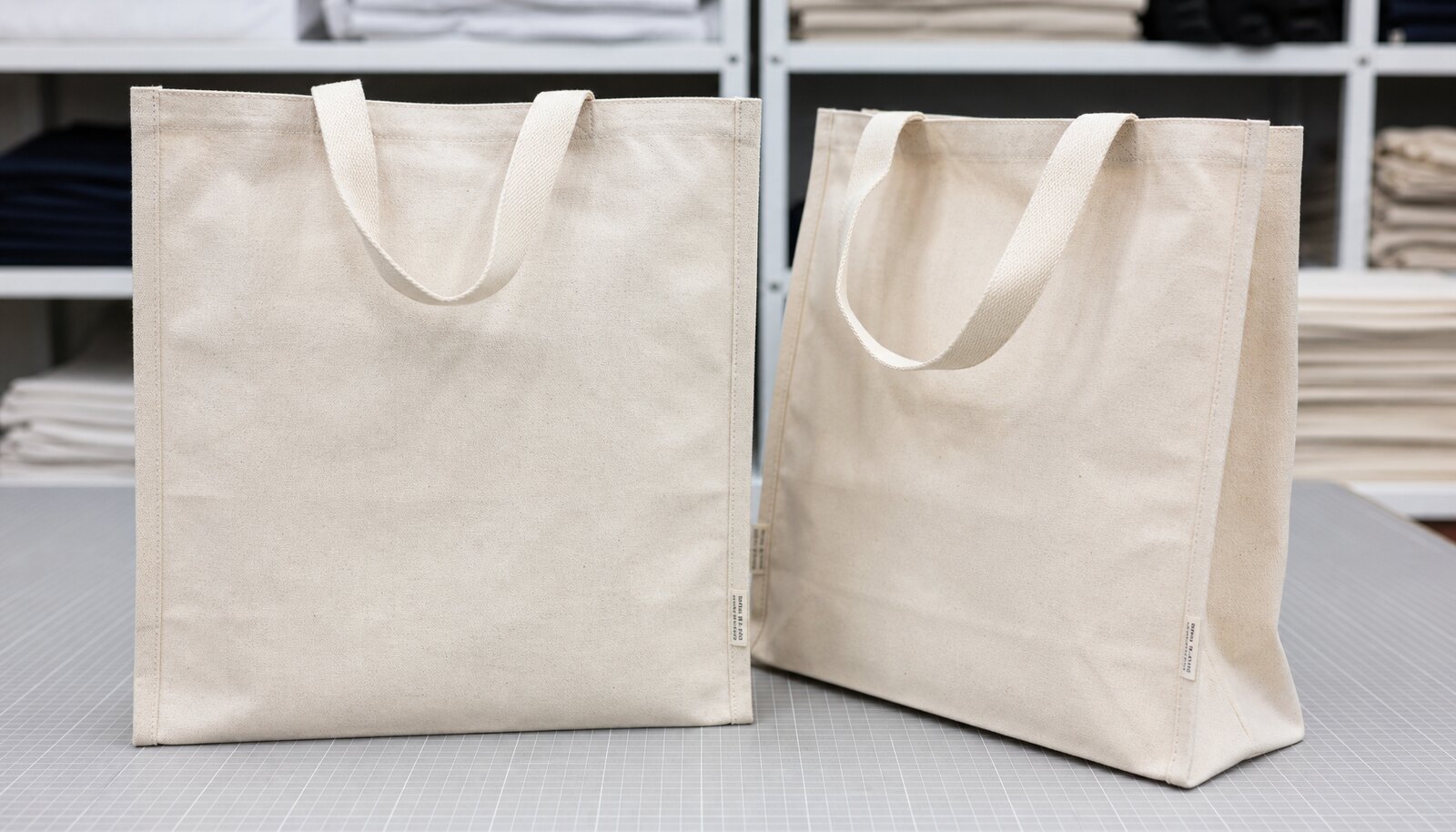
Start With The Last Approved Run
A useful reorder memo for canvas conference bags for boutiques starts with the last successful order, not with a blank procurement template. The first question is simple: what exactly sold, and what should not change? If the prior run moved because the bag looked clean on shelf, held its shape, and carried comfortably, those are the features that need to be protected. If it sold because it folded neatly into event kits, the pack-out matters as much as the bag itself. If it sold because the print was crisp and understated, the artwork and placement tolerance should be treated as fixed inputs, not loose preferences.
That is where a reorder differs from a first buy. A first buy can tolerate more exploration. A reorder should mostly eliminate uncertainty. Pull together the approved sample, the actual receiving notes, any customer complaints, and any returns or damage reports. If the earlier order had no issues, say so in the memo and preserve the spec. If there were problems, isolate them. Do not ask the supplier to quote a new version unless the change is intentional and measured. The goal is to re-buy the proven bag with fewer surprises, not to reopen every design choice.
- Use the last approved sample as the baseline, not a showroom sample.
- Capture what sold: structure, hand feel, print quality, fold, and carry comfort.
- Separate intentional changes from corrections so the next quote does not drift.
Choose The Sourcing Path Before You Compare Prices
The cheapest quote is rarely the best quote if the sourcing route is wrong for the reorder. A direct factory order gives the most control over fabric, construction, and repeatability, which is useful when the bag needs to come back exactly the same. A trading company can simplify communication when a buyer is managing multiple items or markets, but the real factory and the real margin need to be visible. Domestic decorators can be the fastest option when the buyer already has a blank bag and only needs logo application, but that path depends on blank availability and may not reproduce the original look. For some programs, the answer is a split model: the bag is made overseas, then branded or finished locally when timing or compliance requires more flexibility.
This is where the comparison table earns its keep. It forces every vendor to answer the same questions about spec, lead time, and responsibility. If one quote assumes a custom-sewn bag and another assumes a stock blank, those are not alternatives; they are different products. Boutique buyers usually care about repeatability, shelf presentation, and a controlled landed cost. That means the sourcing path should be chosen around the actual risk in the reorder, not around whichever supplier replied first.
- Direct factory suits stable specs and repeat reorders.
- Trading companies help with coordination but can obscure the source.
- Local decoration is fast, but only if the blank bag is truly repeatable.
Freeze The Build Before You Price The Logo
For canvas conference bags for boutiques, the body spec usually drives the customer experience more than the decoration does. Ask for the exact fabric weight in GSM or ounces, the weave, and any finish such as washed, pre-shrunk, or softened. Midweight canvas is often the starting point for a conference or retail tote, but the real decision should follow the load, the desired shape, and how the bag needs to sit on a shelf. A bag meant for handouts and a notebook can be lighter than one meant to hold merchandise or remain upright in display.
The same logic applies to the dimensions and build. Quote the finished width, height, gusset depth, seam allowance, handle width, handle length, handle drop, and whether the bag is lined or unlined. If the bag has a zipper, snap, pocket, or interior divider, price those separately because they change both labor and lead time. Handle attachment and reinforcement deserve special attention. On a tote, the stress point is where quality and failures show up first. A slightly heavier canvas will not fix weak stitching or poor reinforcement, and an attractive logo cannot compensate for a bag that feels flimsy when loaded.
- Specify finished dimensions, not pattern size or cutting size.
- Tie fabric weight to the actual carry load and shelf presentation.
- Lock handle build and reinforcement before you ask for the final price.
Branding Should Be Chosen For Repeatability
Many reorder issues begin when the decoration choice was made for the sample, not for the production line. Screen printing is still the most practical choice for a simple logo on canvas when the buyer wants repeatability and a clean bulk run. It is usually easier to reproduce on a reorder, especially when the artwork is one or two colors and the placement is fixed. If the design is more complex, transfer methods can work, but they introduce another set of controls: film quality, heat settings, edge definition, and surface feel. Embroidery can signal a higher-end build, but it adds cost and can affect drape if the fabric is too light or if the backing is not tuned properly.
Woven labels and side labels are useful when the buyer wants a stable brand marker without relying on print registration. They are often a better fit for a repeat order when the bag needs to look premium but the art itself is not the main selling point. The right method is the one the factory can repeat at the same visual standard next season or next month. Ask the supplier how the art will be proofed, how many colors are included, whether the file needs simplification, and what setup charges will repeat on the next reorder. If the answer is vague, the quote is not ready for comparison.
- Use screen print for simple, repeatable artwork.
- Use transfer only when the complexity justifies the extra control points.
- Use woven or side labels when repeatability matters more than decorative effect.
Compare Quotes On The Same Basis
A quote only helps if every supplier is pricing the same product. In practice, that means the same fabric, the same dimensions, the same branding method, the same packing unit, and the same delivery basis. One vendor may quote EXW, another FOB, and a third may quietly include labels or carton marks. If you compare those numbers directly, you are comparing different scopes. The buyer should normalize every quote to the same basis before deciding whether a lower piece price is actually lower.
Ask for a line-item quote that separates the core bag, decoration setup, packaging, sample cost, and any tooling or file charges. If the buyer wants to keep reorders clean, it also helps to know who owns the pattern, the screens, the carton spec, and the approved artwork file. That avoids the situation where a supplier controls the only usable production files and the next reorder becomes hostage to rework. For boutique buyers, the best quote is not the cheapest line item; it is the one that can be repeated without renegotiating the basics.
- Normalize every offer to the same incoterm and packing scope.
- Separate sample cost, setup cost, and bulk unit cost.
- Confirm who owns the artwork files, patterns, and production tools.
Use Lead Time By Stage, Not As One Number
A single lead-time number hides the real schedule risk. For a canvas reorder, the buyer needs the supplier to break the process into stages: spec lock, preproduction sample, sample review, revision if needed, material booking, bulk sewing, branding, final QC, and freight handoff. That stage-by-stage view shows where delay will actually come from. The bag is rarely late because sewing itself is slow. It is late because a sample was revised too late, a canvas lot was not booked in time, or the freight booking was treated as an afterthought.
For planning, many buyers work backward from the in-store or event date and give each stage its own window. If materials are already in stock and the art is simple, a sample can move quickly. If the fabric must be dyed or the artwork needs new screens or embroidery digitizing, add time before production begins. A practical planning example, for context only, is to allow a few business days for spec lock, about a week for a first sample if materials are available, a short review window, then multiple weeks for bulk production and packing. The exact timing should come from the factory, but the buyer should insist on dated milestones rather than a single promise.
- Ask for dated milestones by stage, not one total number.
- Add time if fabric, screens, or embroidery setup still need to be booked.
- Work backward from the shelf date to the last safe ship date.
Build Landed Cost Around Sellable Units
The number that matters is landed cost per sellable bag. Factory price alone can be misleading, especially on boutique runs where packing and freight are a larger share of the total. A quote that looks inexpensive at the source may become the most expensive option after origin charges, duty, brokerage, destination freight, receiving labor, and any repacking or relabeling are added. If the quote uses a different incoterm from the others, that difference needs to be converted before the buyer makes a decision. Comparing EXW to FOB, or FOB to DDP, without adjustment is a common way to misread value.
An illustrative example helps. Suppose a 500-unit reorder is quoted at 4.15 dollars per bag FOB. If origin handling and export freight add 0.72 dollars, duty and brokerage add 0.28 dollars, and receiving or light repacking adds 0.31 dollars, the landed cost becomes 5.46 dollars per sellable bag. That is the number the buyer should compare against the next quote. This is not a benchmark for every market or bag; it is only a method note showing how hidden cost lines change the answer. If a second supplier is 0.20 dollars cheaper at the factory but adds 0.40 dollars in packing labor or freight, the lower quote is not actually lower.
- Compare like with like: EXW to EXW, FOB to FOB, or DDP to DDP.
- Add freight, duty, brokerage, and receiving labor before deciding the winner.
- Judge the reorder by landed cost per sellable unit, not factory piece price.
Treat Quality Control As A Written Contract
The best QC plans for canvas conference bags are simple, specific, and written before bulk production starts. Start by classifying defects. Critical defects are the ones that make the bag unsellable or unusable: wrong artwork, wrong dimensions beyond tolerance, open seams, missing reinforcement, broken handle stitching, or a missing required label. Major defects are the ones that create customer complaints or weaken retail acceptance: crooked print, visible shade mismatch, snagging hardware, or loose construction in a visible area. Minor defects are small cosmetic issues, but they still need a limit so the factory does not normalize them over time.
Use the approved sample as the control and write numeric tolerances around the pieces that matter. A common buyer starting point is plus or minus 5 mm on finished body size and handle drop, with print placement held within 3 mm of the approved position. Those figures are controls, not universal standards, and they should be adjusted if the fabric stretches or the build is more rigid than usual. Ask for photos of the preproduction sample with a ruler in frame, plus close-ups of handle attachment, inside seams, logo placement, and carton labeling. If the supplier says they inspect to AQL, make sure the sampling plan and defect thresholds are written clearly enough to hold shipment if the lot misses the agreed level.
- Write critical, major, and minor defects before production begins.
- Require ruler-in-frame photos of the preproduction sample.
- Hold the shipment if the inspection result does not meet the written threshold.
Packing Is Part Of The Product
For boutique tote programs, the pack-out is not a back-office detail. It changes how the bag sells, how it arrives, and how much it costs to move. A canvas conference bag that is folded too tightly may hold creases that make the shelf presentation look tired. A bag packed too loosely may waste carton space or scuff in transit. The right fold method depends on the receiving workflow. If the bags go straight to a store shelf or event table, presentation matters more. If they go into warehouse storage first, carton efficiency and protection matter more. Either way, packing should be treated as part of the product specification, not as an afterthought added to the quote.
Ask the supplier to confirm the exact folding method, inner pack count, master carton count, carton dimensions, and label location. If there is a barcode or insert card, check that it sits flat and does not mark the canvas surface. If the bag is retail-ready, ask for a folded presentation photo before bulk packing starts. If the bag is being shipped for events, make sure it opens cleanly and regains its shape without extra ironing or steaming. The buyer should not accept packing that improves freight numbers while making the bag harder to sell.
- Specify fold method, inner pack count, and master carton count.
- Check that labels, inserts, and barcodes do not mark the canvas.
- Avoid over-compression that creates permanent creases or a poor shelf look.
Use A One-Page Reorder Memo To Decide Go Or No-Go
The strongest reorder memo is the one a supplier can quote from without guessing. Keep it to one page of controlled inputs and attach the supporting files separately. At minimum, the memo should name the style or SKU, approved sample date, finished dimensions, canvas spec, handle build, branding method, pack-out, destination, incoterm, target landed cost, reorder quantity by variant, and the latest safe ship date. Add the defect thresholds and the approval chain so the factory knows what will stop the shipment. If the order sold through, note the one or two reasons it worked. If there were complaints, say exactly what must change and what must stay fixed.
Use the memo as the go/no-go gate. Hold the order if the supplier cannot confirm the same production source, cannot repeat the approved sample, or changes the quote basis without a clear explanation. Requote if the packing scope, delivery basis, or artwork setup changes. Switch suppliers if the factory cannot show ownership of the pattern, screens, or production files, or if the QC trail is too weak to support a repeat order. For boutique buyers, the goal is not to create the cheapest possible tote. It is to keep one good tote available, on time, with the same look and feel the customer already accepted.
- Keep the memo to one page of controlled inputs plus attachments.
- Hold the order if the supplier cannot repeat the approved sample or explain every change.
- Switch suppliers when file ownership, QC trail, or production source is unclear.
Specification comparison for buyers
| Sourcing scenario | Best fit for | What to quote | Main risk to manage |
|---|---|---|---|
| Direct factory custom run | Reorders that need repeatability, controlled specs, and a stable pattern file. | Exact fabric spec, finished size, handle build, branding method, packing, MOQ, and incoterm. | Spec drift if the factory substitutes fabric, trim, or packing without written approval. |
| Trading company or sourcing agent | Programs that need mixed SKUs, bundled communication, or help coordinating several vendors. | Factory identity, service fee, production source, and whether the quote includes packaging and freight handling. | Hidden margin and unclear responsibility if quality or timing slips. |
| Domestic decorator on imported blanks | Short lead times, small runs, or simple logo application on a known blank bag. | Blank bag spec, decoration method, local labor, and whether the blank lot is repeatable. | Blank availability can change, so the same bag may not be available on the next reorder. |
| Stock canvas bag plus local branding | Fast replenishment, event giveaways, or retail tests where speed matters more than exact construction. | Bag dimensions, canvas weight, print method, and the cost of moving from blank to sellable unit. | The blank may not match the premium look, hand feel, or shelf presence of the original. |
| Split production: bags overseas, decoration locally | Programs that need flexibility on timing or last-mile customization. | Component cost, transfer point, rework allowance, and who owns the final QC signoff. | Two production steps create more touchpoints, which increases the chance of mismatch or delay. |
| Material | 8-12 oz cotton canvas, 120-220 gsm cotton, recycled cotton, or blended fabric selected by use case and target price | Before price comparison | Different cloth weights, backing, or certification claims make quotes hard to compare |
| Construction | bag size, gusset, handle drop, seam allowance, stitch density, reinforcement patch, and loading expectation | Before sampling | Weak stress points create returns and failed inspections |
| Decoration | screen print, heat transfer, embroidery, woven label, or hangtag matched to fabric texture and brand durability needs | Before artwork approval | The wrong method can crack, bleed, pucker, or fail on the chosen fabric |
Buyer checklist before sampling
- Last approved sample photos with a ruler in frame, front, back, side, inside, and folded-pack views.
- Finished dimensions, gusset depth, handle width, handle drop, and seam allowance from the last successful run.
- Exact canvas spec in GSM or oz, plus weave type and any wash, shrink, or softening treatment.
- Branding file, Pantone targets if relevant, print placement, color count, and placement tolerance.
- Packing instruction for each sellable unit: fold method, polybag, tissue, insert card, barcode, and carton count.
- Destination, incoterm, delivery point, and whether the quote includes origin handling, duty, or destination freight.
- Target landed cost per sellable bag, not just the factory piece price.
- Target in-store or event date and the last safe ship date calculated backward from transit time.
- Acceptance thresholds for size, print registration, shade variation, stitches, and carton count.
- Reorder quantity by color or size, plus a fallback supplier path if the first source misses the schedule.
Factory quote questions to send
- What is the exact canvas spec, including GSM or oz, weave, and any washing or shrink treatment?
- What are the finished dimensions, handle drop, gusset depth, and tolerance you will hold in bulk?
- Which branding method is included, how many colors are priced, and what setup charges apply?
- What is included in the quote: sample, screens or plates, labels, inserts, carton marks, and packaging?
- What is the MOQ by color, by artwork version, and by packaging format?
- What is the lead time for each stage: sample, sample approval, material booking, bulk production, QC, and freight handoff?
- What is your overrun or underrun policy, and how do you handle replacement for verified defects?
- Who owns the pattern, print screens, carton spec, and artwork file for future reorders?
- Can you share the inspection method you use before shipment and the defect categories you track?
- What photos or measurements will you send with the preproduction sample so I can approve the right build?
Quality-control points to confirm
- Approve one golden sample and use it as the control for bulk production.
- Set written dimensional tolerances before production starts; a common buyer starting point is plus or minus 5 mm on finished body size and handle drop, with both handles matching within 3 mm.
- Require handle reinforcement and bartack checks at both attachment points, not just a visual pass from the outside.
- Set print placement tolerance in writing, such as within 3 mm of the approved position, and define what counts as acceptable color variation.
- Treat wrong artwork, open seams, missing reinforcement, and broken handle stitching as critical defects that fail inspection.
- Check dye lot or shade consistency carton by carton so visibly different canvas lots do not mix in one shipment.
- Inspect for loose threads, oil marks, needle holes, puckering, odor, and stain transfer before packing is sealed.
- If the supplier works to AQL, ask for the exact sampling plan and inspection level in writing so the test matches your risk profile.
- Open at least one carton per lot to confirm fold memory, presentation, barcode readability, and unit count.
- Write the replacement rule for verified critical defects before shipment so the factory knows what triggers rework or reshipment.