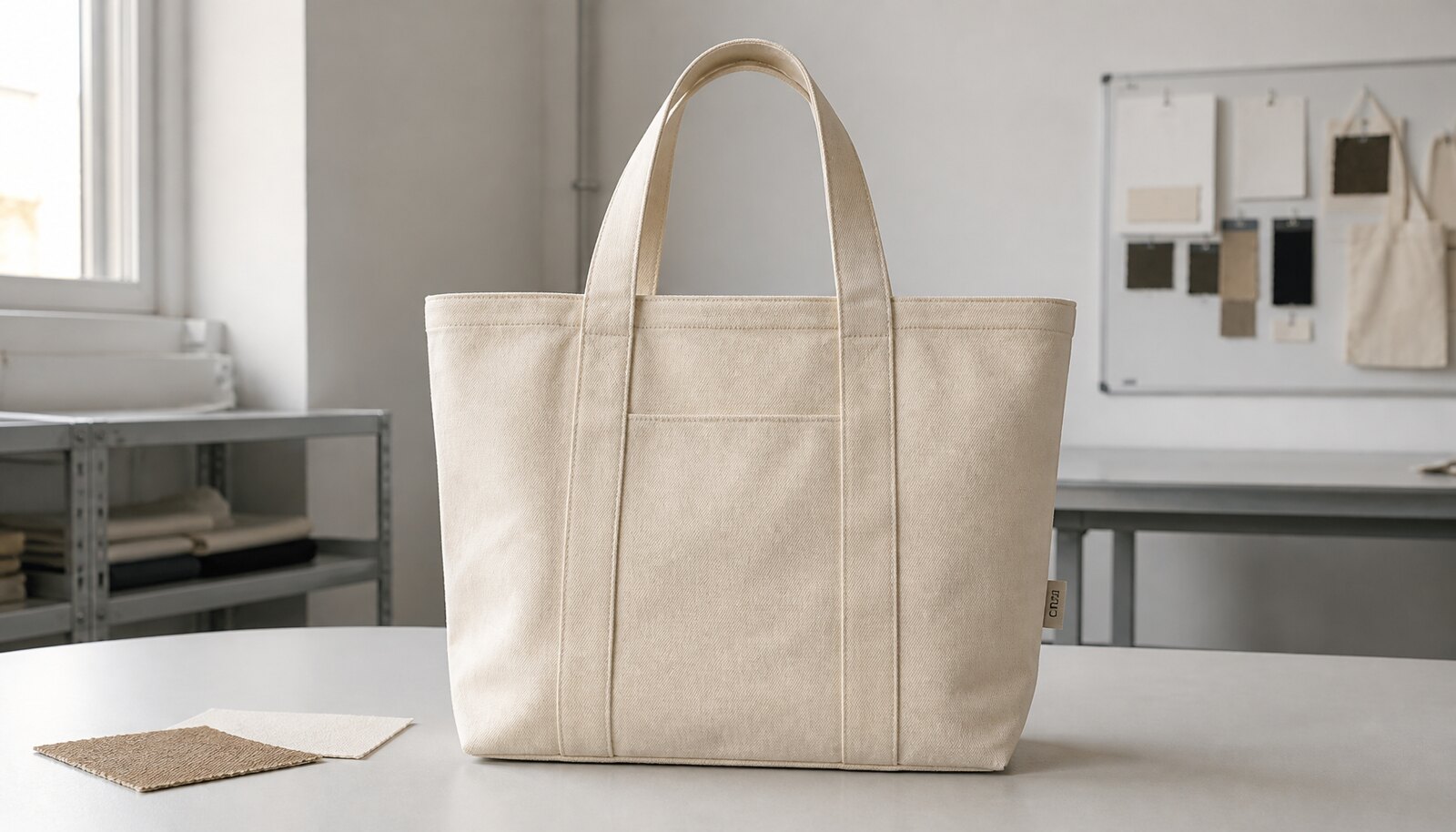
Start With the Use Case, Not the Fabric
Most quoting problems on canvas conference bags start with the wrong product definition. A boutique buyer may say "conference bag" but actually need a document carrier for lookbooks, a welcome kit for a trade event, or a retail giveaway bag that must survive reuse after the show. Each use case changes the material decision. If the bag is only handing out brochures, a lighter canvas can work. If it will hold catalogues, samples, or a tablet, the bottom, handles, and seam reinforcement become part of the material spec, not an afterthought.
Before you request prices, write the bag job in business terms. State what the user will carry, how many times the bag should be reused, whether it needs to stand upright, and whether the brand wants a premium retail feel or a simple event handout. That gives the factory a basis for recommending fabric weight, lining, closure, and print method instead of guessing from a photo. A good RFQ should describe the load and the presentation target, because those two points drive most of the cost difference.
- Separate event handout bags from premium boutique kits.
- Name the expected contents and approximate fill weight.
- State whether the bag must hold shape on a retail shelf or in transit.
- Decide early if the bag is disposable, reusable, or a long-life branded item.
Choose the Canvas Weight That Matches the Load
Canvas weight is the first number buyers should pin down because it affects hand feel, structure, print appearance, and freight weight. For many boutique conference bags, 10 to 12 oz cotton canvas is the practical starting point. It gives enough body for a clean retail look without pushing cost too far. If the bag will carry heavy samples, hardback books, or repeated daily use, 14 to 16 oz canvas is the safer option. That heavier fabric usually holds a print better and resists bottom sag, but it can also make sewing slower and the finished bag stiffer than expected.
Do not buy by ounce alone. Ask for the finished fabric construction, not just a marketing label. Two fabrics both called 12 oz can behave differently if one is loosely woven and the other is compacted. The dense version will usually look cleaner, handle sharp printing better, and keep the bag more consistent after filling. If your artwork needs crisp edges or the bag carries a premium logo, a tighter weave is worth more than a nominal ounce number. If price is tight, compare a 10 oz and a 12 oz sample side by side rather than assuming the heavier sample is automatically the better buy.
- Use 10 to 12 oz for standard boutique conference bags.
- Use 14 to 16 oz when the bag must carry heavier content or hold shape.
- Ask for the actual fabric construction and finished width, not only the marketing weight.
- Compare physical samples for drape, body, and print sharpness before approving the spec.
Decide on Weave, Finish, and Lining Before You Quote
The weave and finish matter as much as the weight. A medium-tight plain weave usually gives the best balance for boutique bags because it prints cleanly and still feels like a real cotton product, not a stiff board. A brushed or lightly singed finish can improve the surface for logo work and reduce stray fibers on the outside face. If the surface is too open, small print details blur and the bag can look rough even when the sewing is acceptable. If the finish is too heavily treated, the bag may lose the natural canvas character that many boutique buyers want.
Lining should be a deliberate decision, not a default upgrade. Unlined canvas is usually enough for simple event use and keeps the quote tight. A lining makes sense when the bag must protect delicate contents, support a darker interior color, or present a more finished retail impression. It also changes the sewing flow and adds inspection points at the seams, pockets, and corners. For buyers, the practical question is whether the extra material cost delivers a measurable improvement in look, utility, or perceived value. If not, the lining can become a hidden margin sink.
- Prefer a medium-tight weave for cleaner print and better shape retention.
- Use a light finish only if it improves surface quality without making the bag feel plastic-like.
- Add lining only when the contents or brand position justify the extra sewing steps.
- Call out seam allowances if the lining is part of the approved build.
Match the Print Method to the Artwork and Order Size
Print method drives both appearance and quote structure. Screen print is still the most useful option for many boutique conference bags because it gives strong color, good repeatability, and sensible unit economics when the design is simple. It works best for bold logos, solid text, and one to three colors. If the artwork has many tones, gradients, or small fine lines, a transfer method may reduce setup trouble, especially on shorter runs. The tradeoff is that transfer prints can feel less integrated with the fabric, so they need approval on rub, flex, and visual finish before you place the order.
Buyers often lose money by changing the print method after the sample stage. A logo that looks acceptable on a flat proof can become too weak or too busy on canvas if the method is wrong. Ask the factory to quote the same bag with two decoration paths if you are uncertain: one version with screen print and one with transfer or embroidery if the design supports it. That comparison shows whether the final price difference comes from real production work or just from a setup assumption. For boutique retail programs, a small woven patch or side label can also be a cleaner solution than trying to force a large, detailed print onto a coarse surface.
- Use screen print for simple logos and repeat orders.
- Use transfer or digital transfer for complex art, small runs, or many SKU variants.
- Approve the decoration on the actual canvas, not only on digital artwork.
- Compare a printed front logo with a woven label if the brand wants a softer retail look.
Build the Bag for Daily Handling, Not Just the Sample Table
Handle and seam design are where many low-cost canvas bags fail. A clean-looking sample can still be weak if the handle attachment points are underbuilt. For bags meant to be reused, request box-X or reinforced bar-tack construction at the stress points, and make sure the handle width matches the expected load. If the bag will carry documents and samples, the top edge should also be finished cleanly so it does not distort after repeated opening and closing. These details are not cosmetic. They are part of whether the bag survives one event or several months of use.
Closures should follow the real contents. Open top bags are enough when the bag only needs to move brochures and lightweight materials. Once the contents become higher value, a zipper or snap may be worth the added cost because it reduces spill risk and improves the buyer's perception of quality. The same logic applies to inner pockets and gussets. A bag with no pocket can still be acceptable if the content is simple. But if the event kit includes small items, a shallow pocket often prevents the bag from feeling messy. The right build is the one that matches handling behavior, not the one with the most features.
- Require reinforced handle anchors for reusable bags.
- Match handle width and length to the intended carrying load.
- Use a closure only when the contents justify the added sewing cost.
- Specify gusset depth if the bag must stand or hold folded materials neatly.
Compare Supplier Routes and MOQ Logic Before You Award
Supplier type changes the economics of a canvas conference bag order. A direct factory usually gives the best control over fabric, trim, and custom packing, which matters when the bag is part of a boutique brand program. A trading company can be useful if you are buying several product types in one shipment or need a flexible commercial contact. A stock program can move faster, but the spec is less flexible and the fabric, label, or carton format may not match your ideal build. Buyers should choose the route that fits the degree of control they actually need, not the route with the first low number on the email.
MOQ logic should be tied to how many variables you are changing. The more you change in one order, the more setup the factory must absorb. New fabric, new print, new label, new closure, and new carton size can all raise the effective MOQ even if the bag itself looks simple. To compare suppliers properly, ask each one to price the same bag in a stable base version and then show the delta for each upgrade. That lets procurement see which items really cost money and which ones are being used to hide margin in the quote.
- Use direct factory sourcing when spec control matters.
- Use trading or mixed-source routes when the program has many different products and formats.
- Treat each added customization as a cost and MOQ driver.
- Request base price plus upgrade deltas so quotes are comparable.
Approve the Sample Like a Production Buyer, Not a Designer
A sample is not approved because it looks close. It is approved because it gives the factory a clear production target. Measure the sample against agreed dimensions, handle drop, print placement, seam finish, and fabric hand feel. Then load it with the intended contents and see how the bag behaves when carried. If the base twists, the handles dig in, or the top edge deforms, the material spec still needs work. For canvas conference bags, the first sample often exposes whether the selected weight is right or whether the build needs reinforcement at the bottom and stress points.
The sample process should also expose risk in branding and finishing. Check if the logo sits flat, whether the print bleeds into the weave, and whether any label or patch is secure enough to survive transit and retail handling. If the bag includes a zipper or snap, operate it repeatedly and inspect the stitching after use. A practical approval note should tell the factory exactly what must remain unchanged in production and what can still vary within tolerance. Without that, the sample becomes a reference image rather than a manufacturing control point.
- Measure the sample before you approve the artwork layout.
- Load the bag with the intended contents and test the carry feel.
- Record any acceptable tolerance on dimensions, print placement, and stitching.
- Keep one signed sample as the production reference.
Specify Packing So Freight Does Not Eat the Margin
Packing is part of the product economics. A bag that packs flat in a controlled carton count will usually land at a better freight cost than a loosely packed version that expands carton volume. For importers, the right packing format depends on whether the destination needs shelf-ready presentation or simple warehouse receiving. Individual polybags can protect the surface and improve retail readiness, but they add material and handling cost. If the bags are purely for event distribution, a simple bulk pack may be enough. If they go through distribution centers or boutiques, a cleaner individual pack can save downstream labor.
Carton data should be in the quote, not added later. Ask for carton dimensions, gross weight, and the number of bags per carton at the agreed spec. That lets you estimate freight exposure before the order is placed and prevents surprises when the forwarder quotes cube weight. Also define shipping marks, carton labels, and inner counts so destination staff can receive the order without opening every carton. A small mistake in packing assumptions can erase the savings from a better fabric price, so treat the pack plan as part of the commercial offer.
- Lock the carton count and carton size in the quote.
- Use individual polybags only when the channel needs them.
- Include shipping marks and item counts on the packing list.
- Watch carton volume as closely as unit price.
Protect the Schedule With the Right Quote Data
Lead time is usually longer than buyers expect because canvas bags still move through several real production steps: fabric confirmation, printing setup, sewing, finishing, inspection, and packing. If the artwork is not final, the schedule slips even if the factory is otherwise ready. The fastest way to protect the date is to send complete quote data from the start. That means size, fabric target, print method, label requirements, pack format, and the shipping term you want quoted. When those assumptions are missing, the factory fills the gaps with its own defaults, and the quote is no longer comparable.
The most useful quote response is one that separates setup work from repeat production. If a factory can tell you the sample lead time, the mass production lead time, and the gate that starts each stage, you can manage the purchase order instead of reacting to delays. Ask for the earliest date that production can start after sample approval and whether any material is imported or stock-dependent. That matters because a short sewing schedule can still miss the ship date if a certain canvas color or trim is not on hand. Production risk lives in the materials, not only in the sewing floor.
- Send complete spec data in the first RFQ.
- Separate sample timing from mass production timing.
- Ask which materials are stock and which must be sourced.
- Tie the ship date to artwork and sample approval milestones.
Compare Landed Cost, Not Just Piece Price
Piece price is only one line in the decision. A slightly cheaper bag can cost more once you add sampling, print setup, packing, freight cube, and quality fallout. For boutique conference bags, the biggest hidden costs usually come from under-specified fabric, expensive decoration changes, and poor carton efficiency. A buyer who compares landed cost can see whether a higher unit price is justified by lower freight volume, better print durability, or fewer inspection rejects. That is the right way to compare suppliers when the bag is part of a brand presentation, not a commodity giveaway.
A useful award note should show the base bag cost, decoration cost, packaging cost, and any one-time setup charges separately. If one supplier quotes a low piece price but charges heavily for screens, labels, or custom polybags, that supplier may still be the wrong choice for a small or mid-size program. Conversely, a factory with a slightly higher unit price may be easier to manage if the sample matches production and the packing is stable. The right award decision is not the lowest visible number. It is the lowest total cost for the spec you actually need.
- Compare total landed cost, not unit price alone.
- Separate one-time setup charges from recurring production cost.
- Include freight cube and packing efficiency in the comparison.
- Award the supplier whose sample, schedule, and quote assumptions are most stable.
Specification comparison for buyers
| Spec decision | Recommended option | When it fits | Buyer risk to check |
|---|---|---|---|
| Fabric weight | 10 to 12 oz cotton canvas for most boutique conference bags; move to 14 to 16 oz if the bag must carry catalogs, tablets, or sample sets | Best for buyers who want a structured look without overbuilding the bag | Too-light canvas can sag at the bottom and make print registration look uneven |
| Weave and finish | Medium-tight plain weave with a clean, lightly singed or brushed finish | Works when the bag needs a polished retail feel and consistent print surface | Loose weave can telegraph slub, bleed ink, and create a rougher hand feel than the sample |
| Lining | Unlined for low-cost event use; cotton or polycotton lining for premium retail programs | Choose lining when the bag carries small items, needs better structure, or uses dark inner colors | A lining changes cost, lead time, and inspection points; make sure seam allowances are called out |
| Handle construction | Same fabric or webbing handles with box-X reinforcement at the attachment points | Use for bags expected to be reused many times and loaded with heavier contents | Thin handles or weak bar-tacks fail early and create chargebacks or complaints |
| Print method | Screen print for bold logos and repeat orders; heat transfer or digital transfer for small runs and multicolor art | Screen print fits simpler artwork and larger volumes; transfer methods fit shorter runs or many SKUs | The wrong method can crack, misregister, or inflate setup cost on every color |
| Closure type | Open top for handout bags; zipper or snap for premium boutique kits | Choose closure when the contents are higher value or need privacy | Closures add cost and can slow sewing if the factory does not build them every week |
| Branding method | Woven side label, printed neck label, or small woven patch for a clean retail look | Best when the boutique wants subtle branding instead of large front graphics | Labels can fray, shift placement, or raise minimums if they need special looms or trims |
| Packing format | Flat packed with polybag and carton counts fixed by size | Best for importers who want stable freight cost and fast receiving | Loose packing increases carton volume and makes count verification slower at destination |
| Sourcing route | Direct factory for stable specs and repeat orders; trading company for mixed product baskets; stock program for urgent dates | Choose based on how much control you need over fabric, trim, and lead time | A low first quote can hide sampling fees, smaller carton counts, or less control over substitutions |
Buyer checklist before sampling
- Lock the bag size, handle drop, and usable opening before requesting quotes.
- State the canvas target in oz or GSM and allow a tolerance range in the spec.
- Name the print method, number of colors, print size, and print placement.
- Define whether the bag is unlined, partially lined, or fully lined.
- Set the closure requirement now: open top, zipper, snap, or internal pocket only.
- Request the sample build with the same fabric, trim, and logo placement planned for production.
- Confirm packing counts, carton size, and whether each bag is individually polybagged.
- Ask for the lead time split between material sourcing, sample approval, production, and booking.
Factory quote questions to send
- What exact canvas construction, GSM, and finished width are you quoting?
- What is the unit price at MOQ, at 2x MOQ, and at 5x MOQ with the same spec?
- Which print method are you pricing, and what setup or screen charges apply?
- How many colors and print areas are included in the quote, and what costs extra?
- What is the sample charge for a pre-production sample, and is it deductible after order?
- What handle reinforcement, seam allowance, and stitch count are included in the quote?
- What packing format, carton dimensions, and carton quantity per carton are assumed?
- What delivery timeline do you quote after artwork approval and sample sign-off, and what can delay it?
Quality-control points to confirm
- Fabric weight and weave match the approved sample and stay within the agreed tolerance.
- Handle attachment points are reinforced evenly, with no loose stitches or puckering.
- Print position, color density, and registration match the approved artwork sample.
- Bag dimensions, handle drop, and gusset depth stay within the agreed measurement tolerance.
- No open seams, broken stitches, oil stains, severe slubs, or visible needle damage on the finished bag.
- Zippers, snaps, or other closures open and close smoothly across a random carton pull.
- Labels, side tags, and any woven branding are centered, secure, and not frayed at the edges.
- Carton counts, inner pack counts, and shipping marks match the packing list and purchase order.