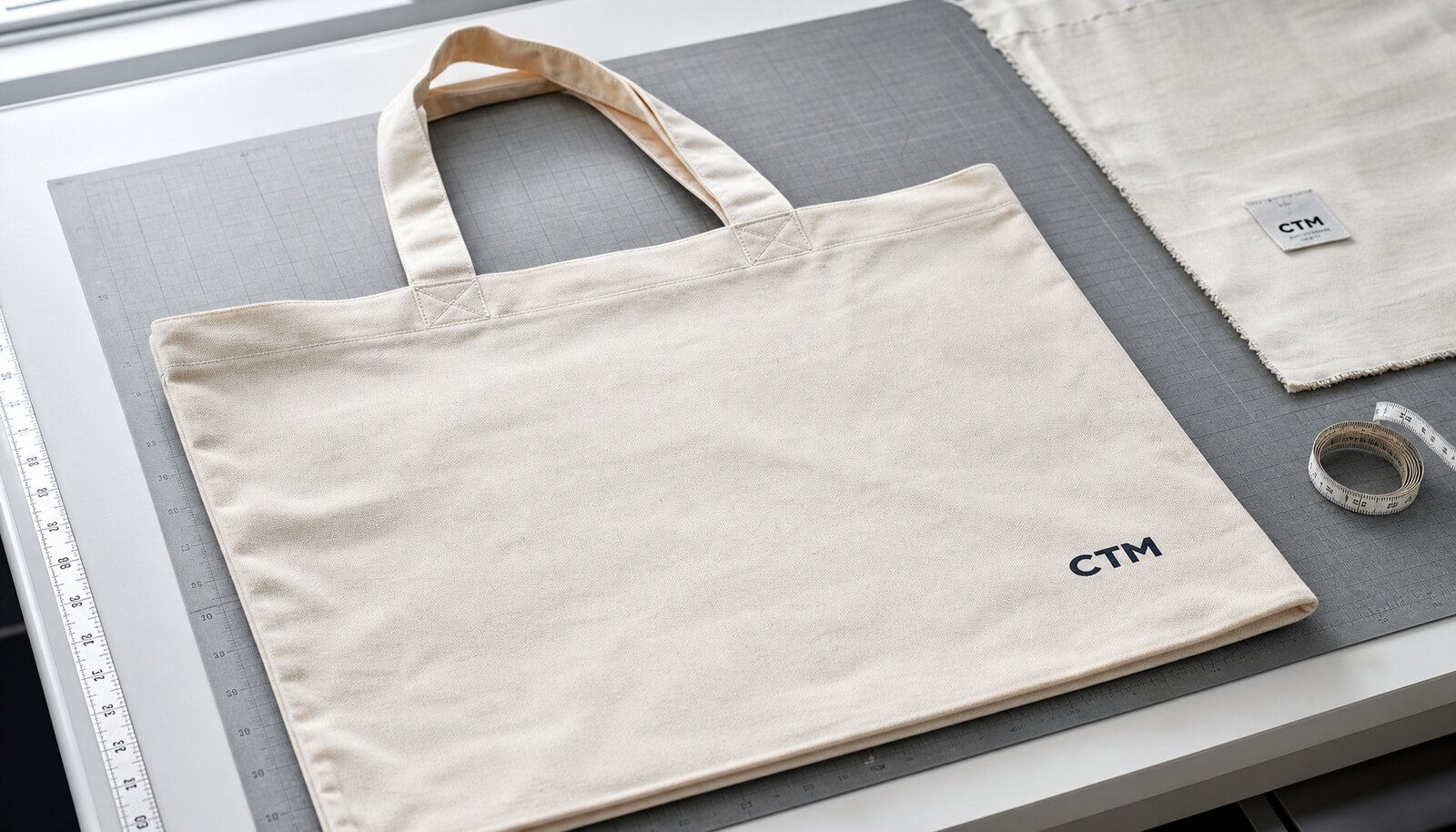
Why boutique buyers need a tighter brief
A boutique conference bag is not a generic giveaway tote. It has to support retail presentation, event carry, and brand visibility in one piece, so the brief needs to cover more than a logo file and a size target. Boutique buyers usually care about how the bag sits on a display table, whether it feels premium enough next to apparel or accessories, and whether the print still looks sharp after a customer loads brochures, catalogs, or a light product order into it. That means the bag spec should define the fabric body, reinforcement, and presentation standard before price comparisons start.
The fastest way to create quote noise is to describe the product as a simple cotton bag and leave the factory to guess the rest. Suppliers will price different canvas weights, different handle builds, different closure options, and different packing methods as if they are the same item. They are not. A clean buying brief should say whether the bag is meant for event distribution, point-of-sale resale, or brand partnership kits. Those three uses push the factory toward different fabric weights, print coverage, and carton packing density.
- Use the end use to define the build, not the other way around.
- Boutique presentation usually needs better stitch finish and cleaner print registration than a standard promo tote.
- If the bag will be sold, not just handed out, treat the sample as a retail quality gate.
Start with the bag structure before the logo
For most boutique programs, canvas weight is the first commercial decision. A 10-12 oz bag around 340-400 GSM gives a lighter hand and a lower landed cost, but it can feel too soft if the bag needs to stand on a shelf. A 14-16 oz bag around 475-540 GSM gives more body and a stronger retail signal. That extra weight also changes the way the seams behave, how much the bag costs to sew, and how much space it takes in a carton. If the bag needs to hold catalogs or boxed product, the heavier build is usually easier to sell and less likely to sag in use.
Construction details matter just as much as weight. The bottom seam should be reinforced for real load, not just visual symmetry. Handle width should match the carrying load and the expected comfort level. A self-fabric handle keeps the bag visually coherent, while cotton webbing can improve comfort and reduce edge curling. If the bag uses a gusset, the gusset width should be wide enough for the intended contents but not so wide that the bag collapses when empty. These choices affect quote price, durability, and the final retail impression.
- Use 10-12 oz canvas for lighter event bags and 14-16 oz for premium retail-facing bags.
- Specify whether the bag must stand upright empty or only when filled.
- Tie handle width and seam reinforcement to the real load, not to a generic template.
Choose the sourcing route that matches your volume
The right supplier setup depends on how much control you need, how much coordination your team can manage, and whether the bag is a one-off promotion or a repeat program. A direct factory is usually the cleanest route when the bag must be cut, sewn, printed, and packed in one controlled line. That route makes it easier to lock tolerances, reduce handoff errors, and keep the sampling path close to production. It is also the better route when you expect reorders and want the same pattern and print setup retained for the next run.
A trading company or sourcing agent can still make sense when the order includes multiple SKUs, several packaging variants, or suppliers in different regions. The tradeoff is that QC responsibility becomes less transparent unless the contract is clear. Domestic decorators on imported blanks can work for very small drops, but they introduce blank inconsistency and can make repeat color matching harder. If your order is split across regions or factories, the quote must show which party owns the blank, the print, and the final packout. Otherwise the lowest number can hide the most expensive operational risk.
- Direct factory: best for stable specs and repeat purchase programs.
- Trading company: best for coordination, but only if QC ownership is written down.
- Local decorator on blanks: best for short runs, not for long-term repeat consistency.
Use the right logo method for the artwork and margin
Screen print is still the default for many canvas conference bags because it gives strong opacity, reasonable durability, and a clean cost structure on 1-2 color artwork. It is the safest method when the logo has solid shapes, good negative space, and enough size to hold its edges on textured fabric. The factory should tell you whether the print is heat-cured or air-dried, what mesh count is used, and how they control registration. If the ink looks washed out on the sample or cracks when the bag is flexed, the method is not ready for a production approval.
Woven labels, sewn patches, and embroidery are more about brand texture than flat color fill. They are useful when the boutique wants a softer, more premium cue or when the logo should not sit as a large printed block on the front panel. The tradeoff is that stitched branding adds thickness and can create a hard point that shows through lighter canvas. It also changes sewing time and can affect packing flatness. For conference bags sold at retail, the logo method should be chosen for the shelf and the customer hand feel, not only for the artwork file.
- Screen print works well for bold logos and repeatable runs.
- Sewn patches and woven labels suit premium positioning and lower ink coverage.
- Avoid choosing a method that looks good in proof but distorts on textured canvas.
Build the RFQ so the factory can price it correctly
A useful RFQ gives the factory less room to guess. It should include finished dimensions, fabric weight, handle specification, logo placement, print dimensions, packing method, and target market use. A good RFQ also states what is not acceptable, such as loose threads, thin ink coverage, or visible size variation from sample to bulk. If you leave out the packing instruction, the supplier may quote a simple bulk pack while your warehouse expects individual polybags and barcode labels. That is where quote comparisons get misleading.
The cleanest way to request pricing is to ask for the same bag in two or three exact versions: for example, 12 oz with screen print, 14 oz with screen print, and 14 oz with woven label. This shows how much of the cost is fabric and how much is decoration or handling. It also exposes whether the supplier is pricing by habit or by actual process. If a quote changes a lot when you only move from self-fabric handles to webbing handles, that is not a problem by itself. It just means the quote is revealing the build cost instead of hiding it.
- State finished size, not cut size.
- Separate decoration, packing, and export carton requirements in the RFQ.
- Request alternate builds so you can see what really moves the price.
Read the quote like a production document
The best quote is not the lowest one. It is the one that matches the same fabric, same print method, same trim, and same packing that you actually want to approve. If one supplier is far below the others, the most common causes are thinner canvas, fewer sewing operations, simpler packing, or a different assumption about the logo method. That does not mean the quote is wrong, but it does mean the buyer should ask what was excluded. A quote that hides packaging is not comparable to a quote that includes polybags, labels, and carton marks.
You also want to see evidence that the supplier has priced for the real workflow. A good factory quote will separate sample cost from production cost, show MOQ by color or print version, and tell you whether the first run has setup charges. If a supplier cannot explain why the setup fee exists, that is usually a signal that the print screen, label, or cutting pattern has not been disciplined enough for repeat work. For boutiques, that matters because the second order should be easier than the first, not a fresh negotiation.
- Compare like for like: same fabric, same print, same packing.
- Treat missing packing detail as a red flag, not a minor omission.
- Ask the supplier to explain any setup fees in process terms.
Sample approval should test fit, finish, and brand impression
A sample is not only for visual approval. It is the chance to see whether the bag behaves correctly when loaded, carried, folded, and packed. Measure the finished bag, then check whether the opening sits square, the handle length feels correct on the shoulder or in hand, and the print lands where the layout drawing said it would. A sample that looks good but collapses at the bottom corner or twists at the handle attachment is not ready for bulk. The buyer should care about stress points first and decorative details second.
Pre-production sample approval should cover color, print opacity, seam clean-up, and packing method. If the line uses a darker canvas shade than the reference, the logo may read differently in retail lighting. If the stitching leaves long thread tails or uneven corner tension, the bag will look cheap even if the logo is perfect. For boutique work, that finish standard matters. The sample should be evaluated under normal store lighting and with the actual insert or load the customer will use, not just as a flat photo on a desk.
- Measure finished size and compare it against the approved tolerance band.
- Load the sample with real product weight before final sign-off.
- Reject loose thread tails, skewed seams, and weak print coverage even if the bag photographs well.
Packing choices change your landed cost and your damage rate
Packing looks secondary until cartons arrive crushed or bags show crease lines across the front panel. Flat bulk packing is usually the best choice when your own warehouse or 3PL will rework the goods, because it keeps freight efficient and avoids unnecessary handling. But if the bags are going directly to retail, event kits, or distributor channels, the pack spec needs to include polybags, inserts, barcode labels, and carton marks. The factory should show how each bag is folded so the print area is protected and the bag can recover its shape quickly after unpacking.
Carton rules should be written early, not after the sample passes. State the carton quantity, gross weight target, and whether mixed SKUs are allowed per carton. If the bag is a premium boutique item, the carton should be strong enough for stacking without crushing the handles or the top fold. Add destination marks and item codes that match your receiving system. If the supplier says carton packing is optional, it usually means the price assumes loose handling. That is rarely acceptable for export retail programs.
- Flat pack reduces freight but must protect the print and panel shape.
- Define polybag, barcode, and carton marking requirements before bulk starts.
- Keep carton weight realistic for warehouse handling and export stacking.
Lead time and MOQ should be tied to the build, not just the quantity
MOQ for canvas conference bags is usually driven by three things: fabric procurement, print setup, and sewing efficiency. A simple one-color logo on a standard canvas body can often move at a lower minimum than a bag with multiple trims or custom labels. Once you add lining, pockets, embroidery, or special packing, the MOQ usually rises because the line needs more changeovers and more material coordination. A supplier that quotes the same MOQ for every version is probably smoothing over the real production difference, not simplifying it.
Lead time should be counted from sample approval, not from the first email. That timeline usually includes material booking, cutting, print setup, sewing, finishing, inspection, and final carton release. The biggest risk is not the nominal lead time but the point where the factory pauses for artwork correction, fabric shortage, or packing clarification. For boutique buyers, a reorder plan is useful because it tells the supplier what can stay fixed. When the same canvas weight and print screen are reused, the second order should be smoother, but only if the sample and spec record were clean.
- MOQ rises when trims, lining, and packing complexity rise.
- Count lead time from approved sample, not from initial inquiry.
- Plan reorders around the exact retained spec so the factory can reuse tools and settings.
Compare quotes on landed value, not just unit price
For importers and distributors, the real decision is landed value. A slightly more expensive bag can be cheaper overall if it reduces defect risk, freight cube, or repack labor. A heavier canvas may cost more at source, but it can also reduce customer complaints and return issues in retail channels. On the other hand, a premium stitched label or extra lining may create brand value that a plain printed bag cannot. The right comparison is not only the ex-factory number; it is the cost to receive, sell, and reorder the bag with minimal friction.
When quotes are close, the deciding factor should be the supplier's control over production details. Look for a factory that can show similar bag work, clear QC language, and a straightforward answer on what happens if the bulk print is off by a few millimeters or the handle length drifts. If the supplier can describe the process with confidence, the risk of a weak bulk run is lower. If the response is vague, the buyer is likely paying less for the bag and more for the uncertainty.
- Compare landed cost, not just ex-factory price.
- Weigh freight cube, repack labor, and defect exposure against the quote.
- Choose the quote that gives the cleanest path to repeatable reorders.
Specification comparison for buyers
| Spec decision | Recommended option | When it fits | Buyer risk to check |
|---|---|---|---|
| Sourcing route: direct factory | Best when one supplier must manage cut-and-sew, print, and packing | Custom boutique programs, repeat orders, and tighter spec control | Verify the plant owns the sewing line and does not quietly outsource production |
| Sourcing route: trading company or agent | Useful when you need multi-factory sourcing or coordinated documentation | Smaller teams, mixed product lines, or buyers new to import work | Confirm who controls QC, who answers defects, and where the margin sits |
| Sourcing route: local decorator on imported blanks | Good for very small drops or fast regional fulfillment | Low MOQ launches and short-term events | Blank quality and print consistency often vary by batch; inspect blank shrinkage and seam strength |
| Fabric weight: 10-12 oz / 340-400 GSM | Light but structured enough for handouts and soft goods | Boutique events, catalogs, and lower-cost retail packs | Thin canvas can show print strike-through and distort at the seam if the bag is overloaded |
| Fabric weight: 14-16 oz / 475-540 GSM | More body, better drape, and stronger retail perception | Premium boutiques, heavier inserts, and long-life retail resale | Higher weight changes cut cost, sewing time, and shipping cube; confirm handle reinforcement |
| Logo method: screen print | Best balance of cost, durability, and clean branding on canvas | 1-2 color artwork, medium to large runs, and repeat orders | Check ink opacity, cure method, and whether print cracks after flex testing |
| Logo method: woven label or sewn patch | Useful when the logo must look premium without large ink coverage | Heritage branding, muted palettes, or textured canvas finishes | Inspect stitch density, edge fray, and whether the label creates an awkward hard point |
| Packing route: flat bulk pack with carton marks | Lowest freight cost and easiest warehouse receiving | Importers and distributors handling their own fulfillment | Require carton count, per-carton quantity, and bag stacking method to avoid bent panels and corner crush |
Buyer checklist before sampling
- Confirm final bag size in finished dimensions, not cut size.
- Lock canvas weight in GSM or oz and state whether pre-shrunk fabric is required.
- Define logo placement, print size, color count, and acceptable shade variation.
- State handle length, handle width, and whether handles are self-fabric or webbing.
- Specify closure type, lining, pocket count, and any reinforcement patches.
- Set packing method, barcode label position, and master carton spec before sampling.
- Request a production sample or pre-production sample for logo and sewing approval.
- Ask for the factory's standard lead time after sample sign-off, not just sample lead time.
- Compare quotes on the same spec sheet, not on rough email descriptions.
- Require overage, defect handling, and reorder terms to be written into the quote.
Factory quote questions to send
- What exact fabric construction and GSM will you use, and is there a tolerance range?
- Is the logo screen printed, heat transferred, embroidered, woven, or sewn, and what setup cost is tied to each method?
- What is the MOQ per color and per logo version, and does mixed artwork change the minimum?
- What does the quoted price include: sample, hang tag, polybag, barcode label, carton marks, and export packing?
- What is your standard production lead time after sample approval, and what steps can delay it?
- Which sewing details are subcontracted, if any, and how do you inspect that outside work?
- What defect standard do you use for print misalignment, skipped stitches, loose threads, and measurement variance?
- Can you show a similar bag spec with production photos, carton data, and a recent inspection report template?
Quality-control points to confirm
- Fabric weight matches the approved spec within an agreed tolerance.
- Bag width, height, and gusset stay within the approved measurement band after finishing.
- Handles are anchored with consistent stitch density and no loose thread tails.
- Print sits in the approved position with clean edges, proper cure, and no visible cracking on flex.
- Seams are even at the bottom corners and stress points are reinforced where the bag carries weight.
- No staining, oil marks, broken yarns, or shade inconsistency across the production lot.
- Cartons are strong enough for export stacking and show the correct item code, quantity, and destination mark.
- Polybags, inserts, and labels match the packing instruction and do not shift during transit.