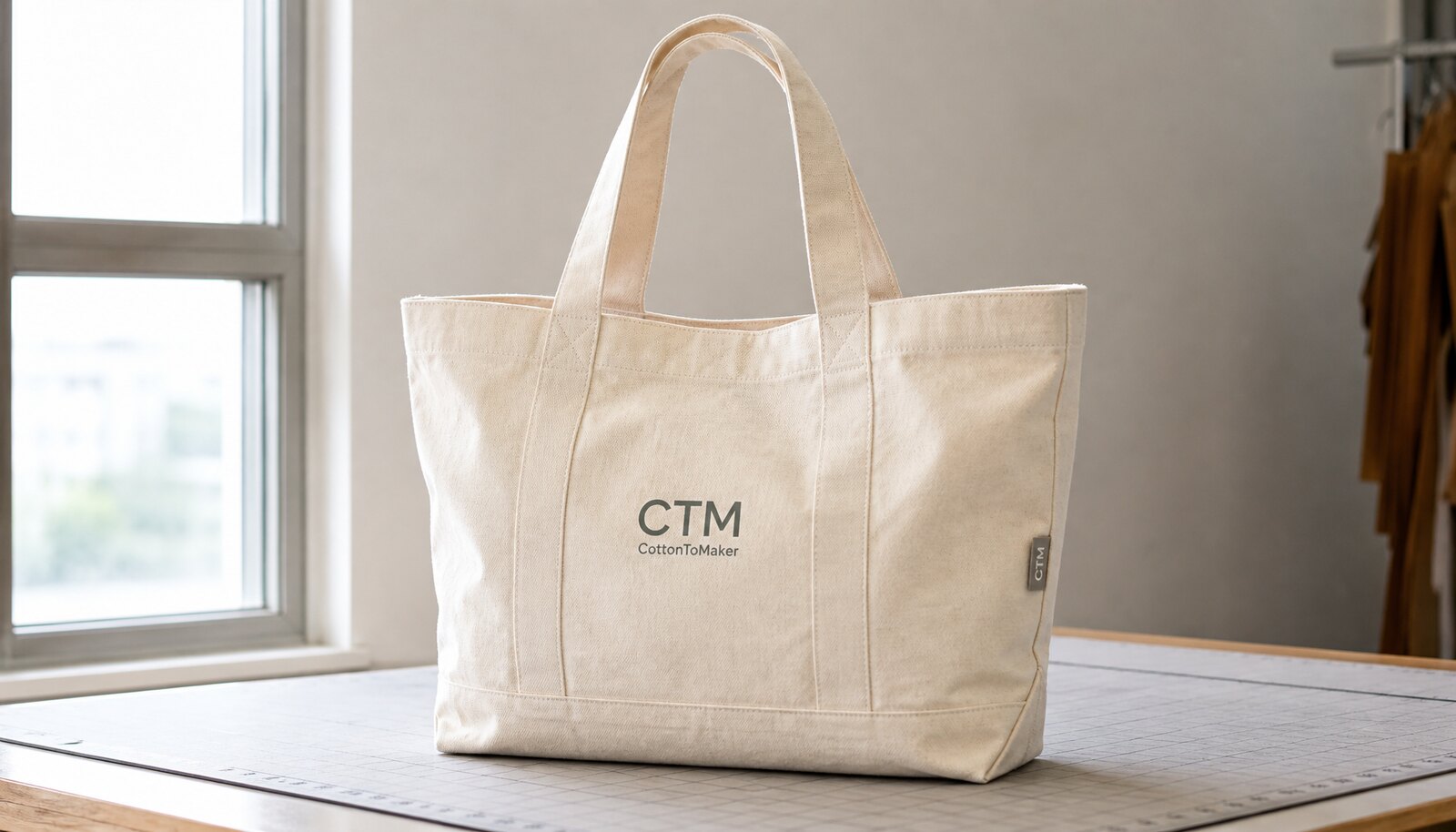
Why apparel brands get canvas conference bags wrong
The common mistake is treating a canvas conference bag like a simple giveaway. For apparel brands, this item often carries folded garments, lookbooks, swatches, hangtags, and launch inserts, so the bag has to look branded and also survive real handling. If the fabric is too light, the bag slumps in retail display. If the handles are underbuilt, the first complaint comes from the distributor, not the factory.
The second mistake is writing the RFQ around only the logo. A useful procurement brief needs the bag body spec, handle construction, print method, packing plan, and quality standard in one place. When those details are missing, factories fill the gaps with their own assumptions. That creates quote noise, sample rounds, and avoidable arguments about what was “included” versus what was “custom.”
This is especially important for apparel buyers because the bag often sits between merchandising and operations. Marketing wants a clean branded look. Operations wants cartons that stack, count, and ship cleanly. Finance wants a landed cost that does not drift after setup fees, packing changes, or freight changes are added. The buying checklist should reconcile all three before you ask for pricing.
- Do not buy on artwork alone; the bag structure and load requirement drive the real cost.
- Apparel buyers should define the in-bag contents, not just the target bag size.
- One vague RFQ can produce three very different quotes from the same supplier base.
- A bag that looks premium in a render may still fail basic carry performance if reinforcement is not specified.
Start with use case, not with decoration
A canvas conference bag for an apparel brand can mean three different things: a trade-show handout, a retail purchase-with-purchase item, or a reusable branded carrier for wholesale buyers. Each use case changes the spec. A trade-show bag may prioritize fast packing and low unit cost. A retail-style bag may need cleaner construction, tighter stitch standards, and better print durability. A wholesale buyer kit may need a zipper, pocket, or internal organization.
Once the use case is clear, define the load profile in plain language. Will the bag hold folded tees and a catalog, a sweatshirt and samples, or only a lookbook and flyers? The answer determines whether you need a flat tote or a gusseted bag, a light handle or a reinforced shoulder-carry handle, and whether open-top is acceptable. If the bag will be reused after the event, then print adhesion, seam strength, and stain resistance become much more important than a low first-cost quote.
It helps to translate the use case into a procurement brief. For example: ‘showroom handout bag, 12 oz canvas, one-color front print, carries up to 2 kg, flat-packed, no inner pocket.’ That single sentence gives a factory enough direction to quote honestly and reduces the chance of a sample that looks good but performs badly in the channel.
- Trade-show bags usually prioritize speed, stacking, and low freight volume.
- Retail or brand-merch bags need better seam finish and cleaner edge alignment.
- If the bag will be resold, insist on more stable print registration and stronger handle reinforcement.
- Write a one-sentence use case summary before you ask for a quote.
Fabric weight and build: where most quote gaps start
For most apparel-brand programs, 12 oz canvas is the middle ground. It gives enough body for a premium feel without pushing the bag into heavy-price territory. If the program is a luxury launch, a sample carrier, or a bag expected to hold catalog packs and product samples, move to 16 oz. Below 10 oz, the bag often loses structure, especially in natural cotton canvas where the weave can open up and show more variation.
Ask the factory for fabric weight in both oz and GSM after finishing. That matters because raw fabric weight and finished fabric weight can differ after dyeing, washing, or shrink control. If the supplier only quotes yarn count or a vague fabric description, the quote is not comparable. A buyer should also ask whether the canvas is washed, enzyme-washed, raw, or pre-shrunk, because those finishing steps affect hand feel, dimensions, and shade.
The other build choice is how the body is assembled. Single-panel construction can save labor on very simple bags, but side and bottom seams with a gusset usually improve usable volume and presentation. If the bag is expected to stand on a showroom table or in a retail setting, ask for a more stable bottom construction and test whether the bag stands upright when partially loaded. That small detail changes perceived quality more than many buyers expect.
- 12 oz canvas is often the best balance for wholesale apparel programs.
- 16 oz is safer when the bag carries heavier inserts or must keep a premium shape.
- Always capture finished GSM, not just raw fabric claims.
- Natural canvas should be reviewed for shade band acceptance, especially across multiple lots.
- Ask whether the canvas is raw, washed, or pre-shrunk before comparing samples.
Dimensions, capacity, and handle geometry: the usability spec buyers forget
The finished size matters, but capacity matters more. A tote that is technically large enough can still be awkward if the gusset is too narrow or the handle drop is wrong. For apparel use, the bag should be sized around the actual contents, not just around a common tote dimension. If the bag is meant to carry a folded sweatshirt or a boxed gift set, the opening width and gusset depth must support that shape without distorting the front panel print.
Handle length is one of the most underestimated specs. A short handle may be fine for hand carry at a conference, but it becomes frustrating if the same bag will be reused for shopping or commuting. A longer shoulder drop improves utility but can make packing less efficient if the handle sits awkwardly in the carton. This is why the RFQ should state not only handle length, but also handle drop and handle attachment distance from the top edge.
Tolerance is also worth stating up front. If your brand cares about presentation, define an acceptable tolerance for width, height, and gusset rather than leaving it to factory judgment. The tighter the spec, the more likely the supplier will price in process control, but that is often cheaper than receiving bags that vary visibly across a run.
- Define capacity against the real contents, not a generic tote size.
- State handle length and handle drop; they are not the same thing.
- Include dimensional tolerance in the spec sheet, especially for retail-facing programs.
- Ask for a packed sample photo showing the bag with your actual inserts if possible.
Print method choice: what survives wholesale handling
For apparel brands, screen print remains the most practical choice for bold logos, clean typography, and medium-to-large runs. It is usually the best value when the design uses one to three solid colors and the logo needs strong visibility on natural canvas. Heat transfer can handle more complex art or smaller MOQ programs, but the buyer should expect more scrutiny on adhesion, edge lift, and rub durability if the bag will be reused often.
Embroidery and woven labels send a premium signal, but they also change the construction and cost structure. Embroidery can distort a light fabric panel if the stitch density is too high, so it is best suited to small brand marks, side accents, or limited decorative areas. Woven labels are strong for side branding or a hangtag-style tab, but they should not be used as a substitute for the main logo when the brand needs a large visible mark on the front panel.
For commercial buying, the right question is not ‘which print looks best?’ but ‘which method is least likely to fail in our channel?’ If the bag is part of a marketing program, a slightly softer print may be acceptable. If the bag is resale merchandise, the buyer should ask for rub tests, wash tests if applicable, and a strike-off on the actual canvas before bulk approval.
- Screen print: best for bold, repeatable branding and cost control on larger volumes.
- Heat transfer: useful for detailed art or shorter runs, but test edge durability.
- Embroidery: premium look, but review fabric puckering and stitch density carefully.
- Woven label: strong for secondary branding, not for replacing the full front logo.
- Ask for the same decoration method on a production-equivalent fabric strike-off.
Supplier route comparison for apparel-brand bag sourcing
Use the table below to compare sourcing routes before you request final samples. The goal is to spot hidden cost and control differences, not only unit price. If two quotes look close, the differences usually sit in setup fees, print method, packing spec, and the level of technical accountability included in the process.
For canvas conference bags, quote structure matters because decoration and packing are often more complex than the base bag itself. A quote that includes only FOB unit price can still become expensive once you add screens, sample shipping, carton changes, remake time, or destination fees. The better sourcing route depends on who can control the full chain from fabric to final carton.
Direct factories are usually strongest when you have a detailed spec sheet and can respond to questions quickly. Trading companies can be useful when you need mixed items, consolidated shipping, or a lower administrative load. Specialist bag factories often sit between those two: they may cost a little more than a general trader, but they usually offer better sewing consistency and more stable QC on recurring orders.
- Compare route type, not only supplier name.
- Keep quotation, sample approval, and inspection notes tied to the same spec version.
- Ask who actually owns the print screens, patterns, and bulk QC sign-off.
- If you cannot identify the accountable party, the route is probably too indirect for a tight commercial program.
What a quote should include: line items procurement buyers should not skip
A clean factory quote should break out the bag body, handle material, print method, packaging, and any one-time setup charges. If the supplier gives only a single unit price, ask how much of that cost is fabric, sewing labor, print setup, and carton packing. This is not about getting factory secrets; it is about knowing which part of the quote can change when you adjust quantity, print colors, or packing format.
The most useful quote for a buyer also shows assumptions. For example: what size carton is used, how many bags per carton, whether polybags are included, whether sampling freight is extra, and whether the price assumes one artwork version or more than one. Without those assumptions, a buyer may compare two quotes that look similar but are built on different packing or trim standards.
This is where procurement discipline pays off. Ask for the price at your target quantity, then ask for the step-up and step-down pricing too. If the supplier’s pricing changes sharply between 1,000, 3,000, and 5,000 pieces, that tells you where the fixed setup costs sit and whether consolidating orders can improve your margin later.
- Separate recurring unit cost from one-time setup charges.
- Compare packing costs by carton count and retail presentation requirement.
- Check if the quote includes print proofing, color matching, and sample freight.
- Ask for tiered pricing at at least three quantities so you can see the breakpoints.
MOQ, overruns, payment terms, and commercial risk
MOQ should be read by decoration complexity, not just by bag style. A simple one-color front print may be acceptable at a lower threshold, while a two-location print, custom zipper pull, or special label often raises the minimum because the factory has extra setup, screening, and sewing coordination. Buyers sometimes accept a low MOQ without noticing that the quote is padded elsewhere, so the real comparison must include all tooling and labor assumptions.
Commercial terms matter just as much. If the supplier allows an overrun or underrun range, write that range into the PO and confirm who absorbs the variance. If payment terms are partial deposit plus balance before shipment, align those milestones to sample approval and bulk production status. For larger programs, ask whether the supplier will accept an inspection hold before final payment. That is not always possible, but it is worth discussing early instead of after production starts.
Incoterms should also be matched across quotes. EXW, FOB, and DDP are not interchangeable. A cheap FOB quote can be more expensive than a slightly higher EXW price if inland freight, export handling, or destination charges are handled differently. The buyer should always compare the same Incoterm, the same payment structure, and the same responsibility for defects or remakes.
- Require written overrun/underrun policy before PO issue.
- Compare payment terms and bank fee assumptions, not only unit price.
- Do not mix EXW, FOB, and DDP in the same quote comparison sheet.
- Ask who pays if a remake is required because the bulk deviates from the sealed sample.
Sample approval workflow: how to prevent rework before bulk starts
Sample approval needs a sequence. A flat artwork proof is not enough. The buyer should review the pre-production sample on actual production fabric, then lock a golden sample with measured dimensions, print position, and trim references. That golden sample should sit in the tech file and be treated as the bulk acceptance standard. If the supplier changes canvas shade, stitch density, or handle length later, you need a reference point for rejection or rework.
The best sample workflow is simple and written. First, confirm the artwork file and Pantone references. Second, approve the material and any trim cards. Third, receive a pre-production sample for fit, finish, and print placement. Fourth, sign a golden sample only after all corrections are completed. If the factory asks to go straight from digital proof to bulk, slow down. That shortcut often creates disputes later over print centering, handle symmetry, or label location.
For repeat orders, keep the golden sample in the technical file with the PO, not just in the buyer’s inbox. Reorders often go wrong because a new team member approves against memory instead of against an archived physical standard. A sealed sample is not bureaucracy; it is the only practical way to control a bag that has multiple soft-material variables.
- Require a pre-production sample on production fabric, not on substitute cloth.
- Seal one golden sample for each colorway and print version.
- Do not move to bulk until logo placement and bag dimensions match the approved reference.
- Archive the golden sample with the spec sheet and the purchase order version.
Inspection and QC: add real acceptance criteria, not just general quality language
QC becomes much more useful when it includes measurable thresholds. Instead of saying ‘good stitching,’ define what good means: straight seams, no skipped stitches on load-bearing areas, no loose thread tails longer than your limit, and no visible seam distortion at the handles. For print, define the acceptable placement window, the number of allowed misprints, and whether slight ink variation on natural canvas is acceptable or not. For a retail-facing bag, a buyer should also define which defects are critical versus minor.
A practical inspection plan should reference an AQL level before production starts. Many apparel buyers use a standard AQL sampling approach for general garment goods, then add product-specific checks for tote bags such as pull tests, handle symmetry, and bag opening alignment. If the bag has a zipper, pocket, or inner label, those items need function checks too. The goal is to inspect the actual failure points, not just count random visual defects.
Carton tests matter more than many teams expect. Ask whether the cartons will be drop-tested or compression-checked if the bags are shipping with insert packs or if the route includes long transit or multiple handoffs. A crushed carton can damage prints, bend zipper pullers, or create a retail-reject look even when the bags themselves are sewn correctly. Include carton mark accuracy as a QC item so SKU, color, and PO references do not drift during shipment.
- Define defect thresholds for stitching, print registration, shade variation, and loose threads.
- Use an AQL plan or another written sampling standard before bulk starts.
- Add pull checks for handles and stress points on the actual production build.
- Ask for carton drop or compression expectations when the shipment is high volume or long haul.
Specification comparison for buyers
| Spec decision | Recommended option | When it fits | Buyer risk to check |
|---|---|---|---|
| Fabric weight | 12 oz canvas for a balanced retail feel; 16 oz if the bag must carry samples, catalogs, or heavier insert packs | Apparel launches, showroom kits, trade shows, and premium wholesale gifting | Lightweight fabric can photograph well but collapse under load; confirm finished GSM after washing and finishing, not only yarn count |
| Canvas construction | Reactive-dyed cotton canvas or cotton-rich canvas with stable shrinkage control | When the bag must hold a branded color standard and print alignment across reorders | Natural canvas shade varies by lot; approve a shade band or lab dip standard if the brand is sensitive to color drift |
| Print method | Screen print for bold logos, heat transfer for complex art in small runs, embroidery or woven label for premium positioning | Brands that want one clear logo panel and repeatable execution | Fine text and thin outlines can break down on low-cost setups; request strike-offs on real fabric, not paper proofs |
| Handle construction | Self-fabric handles with reinforced X-box stitching or cotton webbing handles with bartack reinforcement | Bags expected to be reused and carried over the shoulder | Handle length and reinforcement pattern affect comfort and failure rate; ask for pull-test evidence on the actual seam spec |
| Closure and structure | Open top with optional inner pocket or zip closure depending on use case | Open top for fast event packing; zipper for retail kits, travel, or higher-value inserts | A zipper raises cost and complicates top seam alignment; verify zipper tape color, puller style, and seam allowance before approval |
| MOQ logic | Tiered MOQ by decoration complexity: lower MOQ for single-color print, higher MOQ for multi-location decoration or custom trims | Brands testing a new channel or running a seasonal program | A low MOQ can hide a higher setup fee or inflated carton cost; compare total landed quote, not only unit price |
| Packing method | Flat packed with size-separated master cartons and clear carton marks; polybag only if the retail channel requires it | Wholesale, DTC replenishment, and distributor stocking | Excessive polybagging raises labor and carton volume; weak carton specs create corner crush and print scuffing during transit |
| Sample approval route | Pre-production sample after artwork placement and trim approval, then sealed golden sample before bulk | Any program with repeat orders or multiple colorways | Skipping golden sample approval often causes disputes over logo placement, handle symmetry, or stitch density after bulk starts |
| Supplier route | Direct factory for custom specs; trading company only when you need multi-item consolidation or faster sourcing coordination | Brands with in-house QA or a clear technical spec sheet | Trading quotes may bundle hidden markups or dilute technical accountability; verify who owns pattern, printing screens, and bulk inspection responsibility |
Buyer checklist before sampling
- Define the exact bag use case: retail handout, conference insert bag, showroom kit carrier, or daily reuse tote.
- Lock the target fabric weight in oz or GSM and state whether you want washed, enzyme-washed, or raw canvas finish.
- Specify finished size, gusset, handle length, and acceptable tolerance on each dimension.
- Choose one primary print location and define the maximum ink coverage, PMS target, or embroidery size.
- State whether you need an inner pocket, zipper closure, reinforced bottom, or side label.
- Confirm packing style, carton size limit, carton drop expectation, and whether retail polybags are required.
- Request a pre-production sample, a sealed golden sample, and a bulk inspection standard before shipment.
- Build a landed-cost comparison that includes setup fees, print plates/screens, packing, carton marks, inland freight, and any destination fees.
- Ask every supplier to quote the same Incoterms, payment terms, and overrun/underrun allowance so the comparison is valid.
- Write defect thresholds into the PO: what is acceptable for stitching, print registration, shade variation, and carton damage.
Factory quote questions to send
- What is the exact fabric weight in oz and GSM after finishing, and what is the allowed weight tolerance?
- What is the fiber composition, shrinkage expectation, and shade control method for the base canvas?
- What print method are you pricing, how many colors are included, and what is the setup fee per location?
- What is the MOQ by colorway and by decoration method, and what happens if I split the order across two print designs?
- What are the finished dimensions, seam allowances, handle length, and reinforcement details you will use for mass production?
- What sample types are included before bulk: artwork proof, strike-off, pre-production sample, and sealed golden sample?
- What is your standard packing method, carton quantity, carton dimensions, and gross weight target?
- What lead time applies after sample approval, and what parts of the timeline depend on fabric booking or print screen confirmation?
- What inspection standard do you use for seam quality, print registration, measurement tolerance, and carton packing?
- What are your payment terms, accepted Incoterms, and bank fee assumptions?
Quality-control points to confirm
- Fabric weight matches the approved spec and does not feel noticeably thinner in the bag body or handles.
- Bag measurements stay within the agreed tolerance for width, height, and gusset after pressing and final packing.
- Handle attachments are symmetrical, with reinforcement stitches clean, even, and fully secured at both ends.
- Print position is centered or intentionally off-center within the approved placement window, with no obvious ghosting or smearing.
- Ink opacity is sufficient on natural canvas so the logo does not sink into the weave or show broken edges.
- Seams are straight, no skipped stitches on load-bearing areas, and no loose threads remain inside the bag.
- Zippers, pockets, labels, and trims are aligned, functional, and matched to the approved sample.
- Cartons are packed to the agreed count, with no compression damage, label mismatch, or carton crush risk.
- Finished bag body, handle seams, and stress points pass a pull check aligned to the approved use case.
- Random samples are checked against an AQL plan agreed before production, not only a visual sign-off at shipment.