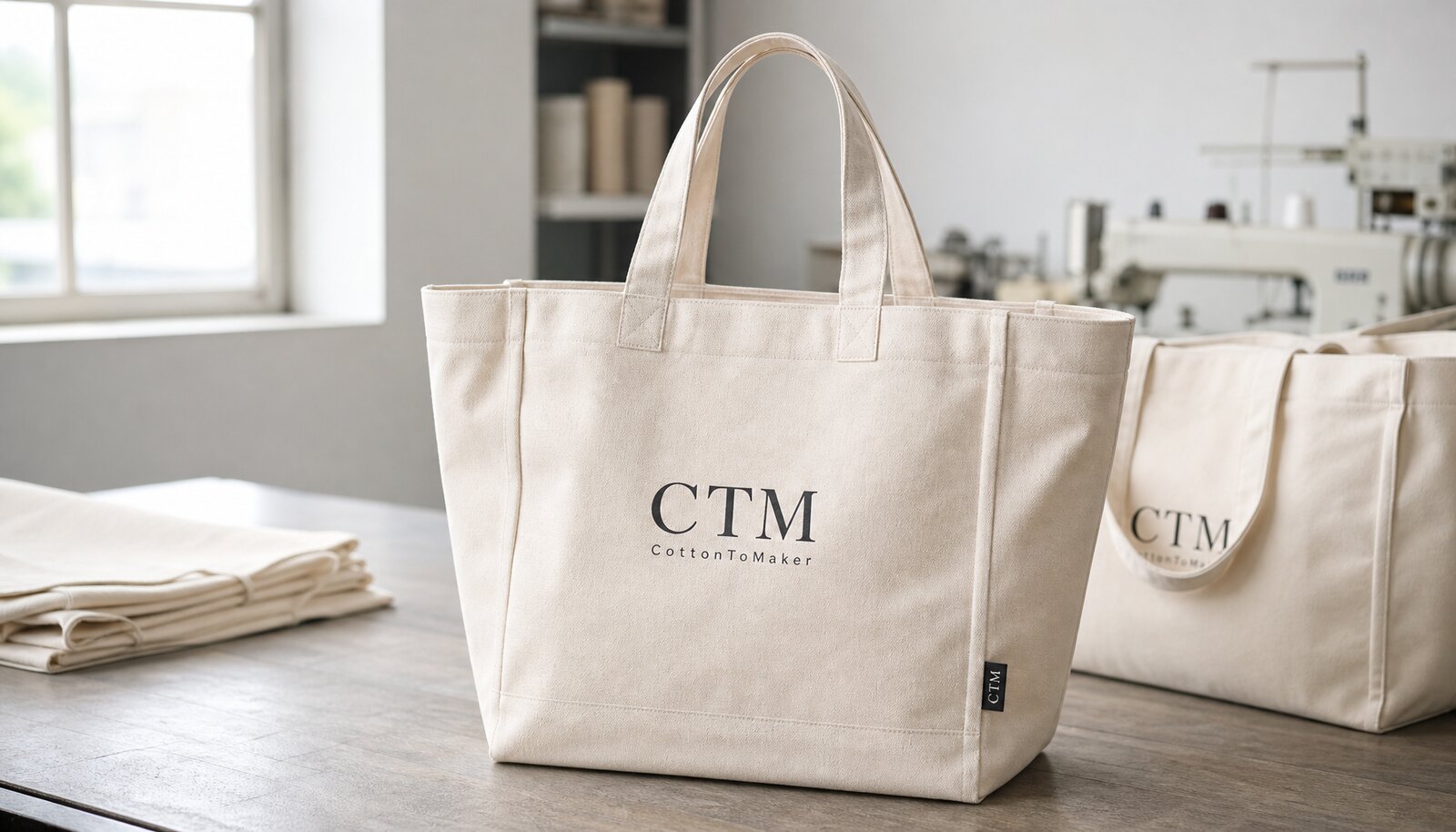
Start With the Real Job the Bag Must Do
Canvas conference bags for ecommerce brands are usually asked to do more than carry papers. They need to support an event kit, reinforce brand presence, and arrive in a packing format that a warehouse team can process quickly. If the bag will be handed out at a conference, bundled with samples, or shipped as part of a promotional kit, the order should be built around that workflow first and the decoration second. That is the difference between a procurement spec and a product wish list.
The fastest way to get noisy quotes is to send a logo file and a broad idea like 'premium canvas tote.' The better approach is to define what goes inside the bag, how far it will be carried, whether it needs to sit flat in a carton, and whether the brand cares more about retail appearance or low-cost utility. Once those choices are clear, the supplier can recommend whether a simple open-top tote is enough or whether the bag needs a gusset, reinforcement, lining, or a closure.
For ecommerce teams, there is also a post-event question. If bags will be reused in fulfillment, store displays, or gift bundles, the tote should survive more handling than a one-time giveaway. That means you should think about shape retention, handle durability, print wear, and carton handling before you request pricing. A bag that looks acceptable in a sample room but collapses after one distribution cycle is not a bargain. It is a rework cost waiting to happen.
- Define the actual contents before you define the tote shape.
- State whether the bag is for event handout, ecommerce promo, retail bundle, or internal kit use.
- Confirm whether the bag must ship flat, folded, or packed into a larger kit.
- Specify whether the brand values low cost, premium feel, or repeat reuse more highly.
Choose Size, Fabric Weight, and Structure as One Spec
For conference bags, the most practical starting point is not a fashion tote but a utility tote. Around 8 oz canvas, roughly 270 gsm, is often enough for light inserts, brochures, and sample cards. Around 10 oz, about 340 gsm, is a better default when the bag needs more body, a cleaner profile, or a more premium hand feel. At 12 oz and above, the bag becomes more structured and durable, but the cost rises and the sewing becomes more labor-sensitive. In other words, the bag should be heavy enough for the job, not heavy just because 'better' sounds safer.
The finished size matters just as much as the weight. A common conference format is roughly 13 by 15 inches with a 3 to 4 inch gusset, but that only works if the contents are documents and light collateral. If your kit includes a notebook, bottle, catalog, or sample box, the gusset and bottom width need to be defined accordingly. If the bag must sit upright on a table or in a warehouse carton, ask whether a base board, bottom reinforcement, or lining is needed. Otherwise the bag can look flat and tired even when the print is correct.
Handle length should be matched to the way the bag will actually be used. Short handles work for hand carry and presentation kits. Longer handles are better if the bag will be worn on the shoulder during a conference or commuting event. Reinforcement at the attachment point matters more than buyers often realize. Even a good canvas can tear early if the handle stitch pattern is weak or the load is concentrated on a small seam area. The right spec is a combination of size, fabric weight, gusset depth, and handle construction, not four separate decisions made in isolation.
- Use 8 oz only for light contents and simple giveaway use.
- Use 10 oz as the default when the bag must keep shape or feel more substantial.
- Use 12 oz when the bag will carry heavier content or needs to survive repeated reuse.
- Write finished size, gusset, handle drop, and reinforcement details into the RFQ, not just the product name.
Map the Sourcing Route Before You Compare Price
A low quote does not mean a comparable quote. Direct factory sourcing gives the buyer the most control, but only when the factory truly controls the core steps: cutting, printing, sewing, inspection, and packing. A trading company can be useful when your team needs export support or multi-SKU consolidation, but the real manufacturing site can change the quality profile if it is not documented. Local decorators using blank bags can be fast and practical for small replenishment runs, but the blank bag quality is fixed by what they can buy, not by your spec. Each route can work; the key is to know what control you are trading away.
When vetting a supplier, ask a simple question: who owns each process step? Who cuts the panels? Who makes the print screens? Who applies the print or label? Who checks the final bags? Who packs the cartons? If the answer is vague, the quote may look complete while the actual production chain is not. That is one of the most useful sourcing checks because it tells you whether the supplier has genuine production capability or is only assembling the order from third parties.
A practical vendor audit does not need to be complicated. Ask for factory floor photos or video that show the cutting area, sewing line, printing station, inspection table, and packing zone. Request a machine list if the supplier claims to control the process in-house. Ask who handles quality approvals and whether the same facility made the approved sample. If the sample came from one site and bulk will come from another, stop and re-verify. Different factories can produce similar-looking samples, but the bulk result is what the buyer pays for.
- Direct factory: strongest when you want stable repeat orders and clear accountability.
- Trading company: useful if you need export help or several items on one shipment.
- Local decorator: workable for small rush orders if the blank bag quality is already proven.
- Ask for evidence that the factory controls the steps it claims to control.
Match the Logo Method to the Artwork, Not the Other Way Around
For most canvas conference bags, screen print remains the most useful starting point because it balances cost, speed, and repeatability. It works well for one- or two-color logos, bold text, and clear brand marks. The main sourcing question is not whether screen print is available, but whether the artwork can survive the texture of canvas without breaking up. Fine lines, small reverse text, tiny legal copy, and gradients can all become hard to read once they are printed onto a woven surface. That is why artwork should be reviewed with the fabric in mind, not just on a white design file.
There are cases where a sewn label, patch, or embroidery is better. A woven label or side label can preserve a cleaner bag surface and create a more retail-like finish. Embroidery can work for a small mark, but it adds stitch density and can distort lightweight canvas if the design is too large or too detailed. Heat transfer can help with short runs or complex art, but the buyer should ask about abrasion, cracking, edge lift, and color stability. A decoration method is only good if it stays legible and intact after handling, folding, and shipping.
Before you lock the print method, ask for a production-sized print sample on the actual canvas weight. A logo that looks fine on a digital proof can sit differently on 8 oz canvas versus 12 oz canvas. Print placement also matters. If the logo must sit above a gusset, align with a seam, or avoid a fold line, the factory should confirm that in the sample. On canvas bags, the decoration is part of the build, not a separate graphic decision.
- Screen print suits simple logos and high repeatability.
- Woven labels and patches are useful when you want cleaner branding and a more premium finish.
- Embroidery only works well when the art is simple enough to convert to stitches.
- Ask the supplier to test the final logo on the actual bag fabric before bulk production.
Build the Quote Around Cost Drivers That Actually Change the Order
MOQ and unit price are not random numbers. They are usually shaped by how efficiently the factory can consume fabric, set up printing, run sewing lines, and pack cartons. A canvas order with a custom size, a special fabric weight, multiple print colors, lining, or a closure needs more setup than a plain tote. That is why two quotes can look similar at first glance but diverge sharply once the real assumptions are exposed. The right buyer move is not to push for the lowest number; it is to identify which cost drivers are being used to get there.
One of the most common procurement mistakes is treating fabric weight as a small detail. It is not. A lighter cloth can make a quote cheaper, but it changes hand feel, strength, print opacity, and how the bag behaves when filled. The same is true for handle reinforcement, lining, and packaging. Even carton count can affect cost because a better fold standard or more efficient carton size may reduce damage and lower inbound handling time. Buyers should compare quotes on the same structural basis, not just on unit price.
It helps to ask for pricing breaks by realistic volume tiers. That shows where the supplier’s real economic threshold sits and whether the quoted MOQ is a technical minimum or just a commercial preference. If the price falls sharply at the next tier, you may be able to adjust the order size or combine SKUs. If the price barely changes, the supplier may be constrained by setup or fabric sourcing. In either case, you want to understand the reason before you approve the PO.
- Ask for price breaks at several realistic order levels.
- Treat each additional color, pocket, zipper, or lining as a cost and risk multiplier.
- If the supplier changes fabric weight to hit your target price, that is a spec change, not a discount.
- Include packaging and carton assumptions when comparing supplier economics.
Use Supplier Vetting to Separate Real Factories from Intermediaries
Many canvas bag quotes are assembled by intermediaries who can source the product, but not all of them can control production. That is not automatically a problem, but the buyer should know what is happening. A real factory can show sewing lines, print stations, inspection tables, and packing zones. A middleman may show a sample and a polished quote while the actual maker remains hidden. For a custom logo order, hidden production is a risk because small changes in fabric, thread, or print setup can affect the final result.
The most useful audit signals are practical ones. Ask where the fabric is cut, who owns the print screens, how the factory checks print color, how many sewing lines are running, and who approves carton packing. If the supplier says everything is in-house, ask for a short video walk-through or time-stamped photos from the current production area, not just marketing images. If the supplier says any step is outsourced, ask how that step is controlled and how the approved sample will be matched during bulk production.
You should also verify consistency between the sample and the production site. The sample room, the bulk factory, and the export office are not always the same place. If the supplier cannot clearly identify where the approved sample was made and where the bulk will run, the order is exposed to substitution risk. That matters because a tote bag can look similar at first glance while still differing in stitch density, canvas texture, or print outcome. Procurement buyers need the maker, not just the messenger.
- Request floor evidence for cutting, printing, sewing, inspection, and packing.
- Confirm whether the sample and bulk orders will come from the same site.
- Ask who owns the screens, inks, thread, and final packing standard.
- Treat vague answers about process ownership as a risk flag.
Approve a Sample That Proves the Production Method
A good sample is one that predicts bulk production, not one that merely looks attractive. The most reliable pre-production sample uses the same canvas, thread, handle construction, logo method, and packing format that will be used in the bulk order. If the bag is being sold or handed out as a branded item, you should also check how it feels in the hand and how it folds. A sample that looks right on a table but behaves badly in packaging is only a partial success.
The approval note should include measurable checkpoints. Record the finished dimensions, handle drop, logo placement from key edges, and any tolerance you will allow for sewing variation. Then define what is unacceptable: crooked seams, loose threads, off-center artwork, inconsistent fold lines, visible fabric defects outside the agreed standard, or a bag that no longer matches the approved sample after a supplier revision. If the tote includes a zipper, pocket, lining, or extra label, inspect every functional area. Small details often cause the most expensive rework later.
A photo proof is useful for early alignment, but it is not enough when material, color, or print coverage matters. Canvas texture affects how ink sits. Folding affects how the bag presents on arrival. Handle reinforcement affects how the bag wears after use. For that reason, the production sample should be treated as a freeze point. Once it is approved, the factory should not change fabric, print method, fold method, or packing without written buyer permission.
- Approve one physical pre-production sample before mass sewing starts.
- Write size tolerance, logo placement tolerance, and fold standard into the approval record.
- Check the sample under similar lighting to the way the buyer or brand team will review it.
- Treat the approved sample as the production reference, not as a loose suggestion.
Pack the Bags for Receiving, Storage, and Event Distribution
Packing is often treated as an export detail, but for ecommerce brands it is part of the product experience. A tote that arrives with uneven folds, crushed corners, or a logo line sitting in the crease creates avoidable work for the receiving team. Decide early whether each bag should be flat-folded, half-folded, tissue-inserted, or polybagged. Then specify that method exactly in the RFQ. If the factory is left to choose, the cartons may look acceptable but still be inefficient for inbound handling.
The packing instruction should also match how the bags move through the supply chain. If they go directly to a conference venue, you may need a very clear inner pack count and carton marking. If they go to a fulfillment center, the carton size, gross weight, barcode format, and separation of SKUs matter more. If the bag is one item in a larger ecommerce kit, check whether the warehouse wants the bag packed separately or nested with the other contents. The wrong packing method can turn a low-cost tote into a labor-heavy receiving problem.
For carton compliance, ask for a carton sample or at least carton dimensions and gross weight before freight is booked. That helps the logistics team avoid surprises, especially if the destination has warehouse limits, shelf constraints, or palletization rules. If the supplier uses polybags, confirm whether the destination accepts them and whether the bags need suffocation warnings or barcode visibility. These details seem small, but they are a common source of receiving delays.
- Choose one fold method and keep it consistent across the order.
- Specify whether polybags are required, optional, or prohibited.
- Confirm inner pack count and carton count before shipment is booked.
- Request carton dimensions and gross weight early for warehouse planning.
Write the Timeline Around the Slowest Risk, Not the Fastest Task
The slowest part of a custom canvas tote order is often not sewing. It is artwork approval, sample sign-off, fabric sourcing, or a packaging revision that arrives after the order is already in motion. If the bag uses a stock canvas and a simple one-color logo, the production window can be fairly short. Once you add custom fabric, multiple labels, or special carton marking, the schedule becomes more fragile. A buyer should plan the timeline around the most likely delay point, not around the factory’s easiest activity.
A workable sequence is straightforward: finalize the spec, approve the sample, release the bulk order, run production, inspect the cartons, and then ship. The problem is that many delays happen because the business side keeps revising details after sample approval. New barcode text, a revised color reference, or a last-minute fold change can all disrupt the batch. When that happens, the factory may proceed with the old version or pause the line. Neither outcome is good if the event date is fixed.
For ecommerce teams, the safest schedule includes buffer time for both revision and inspection. If the order is tied to a launch, conference, or seasonal campaign, add room for artwork correction, sample transit, and any rework found during pre-shipment QC. If the supplier says they can start immediately without a final sample or without confirmed packing data, that should be read as a warning sign. Speed is useful, but only when the spec is stable.
- Plan around artwork, sample, and packing approval delays.
- Add buffer time if the bags are tied to a fixed event or launch date.
- Freeze carton marks and barcode data before bulk production starts.
- Do not let the factory begin bulk before the approved sample is locked.
Normalize Quotes So You Can Compare Landed Cost Properly
A good sourcing comparison starts with the same exact spec sheet. Every supplier should quote the same canvas weight, the same finished size, the same logo method, the same packaging, and the same delivery term. If one quote excludes screen setup, carton labels, inland transport, or export handling, it may look cheaper while actually costing more. The goal is not to collect the lowest number. It is to compare the same order on the same basis.
For landed-cost analysis, split the quote into product cost, setup cost, packing cost, freight assumptions, and any destination charges that are included or excluded. That makes it easier to compare direct factory, trader, and local supply options. It also exposes hidden shortcuts. A lower unit price might reflect a lighter fabric, a smaller print area, or weaker packing that increases the chance of damage or receiving delays. Procurement teams should treat the price as one input and the receiving outcome as the true result.
If you want fewer surprises, ask the supplier to return the quote in a fixed format: spec description, MOQ, unit price at each tier, sample charge, setup charge, packing detail, Incoterm, lead time, and exclusion list. That forces clarity. It also makes it easier to spot where one supplier is relying on assumptions. In a custom logo order, assumptions are where the budget usually leaks.
- Use one spec sheet for all quotes.
- Separate unit price from setup, packing, and freight assumptions.
- Reject any quote that changes fabric weight or decoration method without flagging it.
- Compare quotes on the same Incoterm and destination basis.
Specification comparison for buyers
| Sourcing path | Best fit | Cost and control implications | QC and production checks |
|---|---|---|---|
| Direct factory, in-house cut/print/sew/pack | Best for brands that want repeatable specs and the cleanest quote comparison | Usually the strongest unit economics at scale because setup, sewing, and packing stay under one roof; also easier to hold one team accountable | Ask for proof of in-house work: factory floor photos, machine list, line flow, and the name of the department that does printing, final inspection, and carton packing |
| Factory with outsourced printing | Useful when the bag itself is standard but the artwork is more complex or higher-color | Can lower base bag cost, but print handoff adds risk, extra lead time, and less control over color consistency | Confirm who owns screen making, ink control, curing, and rework; request a print test on the actual canvas weight before bulk |
| Trading company or export agent | Works when the buyer needs one export contact for several SKUs or lacks sourcing staff | More convenient for multi-item orders, but margins and factory switching can hide the real source of quality variation | Ask for the actual maker, not just the exporter; verify that the approved sample and the bulk goods come from the same production site |
| Local decorator using blank bags | Good for very small runs, urgent event needs, or domestic distribution | Fast, but bag quality is limited to the blank inventory on hand and decorating cost often stays high per unit | Check blank bag origin, seam quality, and print adhesion on the specific blank batch before placing the order |
| 8 oz canvas, simple one-color logo | Fits light conference kits and low-cost giveaways | Lower fabric cost and lower freight weight, but the bag may feel soft or collapse under heavier contents | Request finished weight, stitch density, and a load check; verify the print does not bleed through the lighter cloth |
| 10 oz canvas, one- or two-color logo | Usually the safest middle ground for ecommerce brand event bags | Better structure and better perceived value with only a modest cost step-up versus 8 oz | Check handle reinforcement, print placement consistency, and whether the bag can stand upright when packed flat |
| 12 oz or heavier canvas with reinforcement | Best when the tote is part of a premium kit or must survive repeated reuse | Higher fabric and sewing cost, but better shape retention and lower complaint risk if the bag carries heavier contents | Inspect seam finish, strap attachment, and carton weight; heavier fabric can hide sewing issues if QC is not strict |
| Screen print with strict placement control | The default for most logo-led conference bags | Lowest setup complexity for flat art and the easiest way to compare suppliers on the same basis | Ask for screen count, print size, ink type, curing method, and acceptable registration tolerance |
| Woven label, patch, or embroidery | Works when the brand wants a more premium look or a subtle side brand mark | Higher setup and more manual steps; can lift unit cost and increase variation if the art is too detailed | Check stitch density, patch edge finish, label fold quality, and any puckering caused by the application method |
Buyer checklist before sampling
- Final bag size, gusset depth, and handle length are fixed in writing.
- Canvas weight is specified in oz and gsm, and the fabric finish is described clearly.
- Logo file, color reference, print area, and placement tolerance are approved.
- Print method is chosen based on artwork complexity and target order size.
- Sample approval rules, defect limits, and rework approval authority are written down.
- Packing format, inner pack count, polybag use, and carton marking rules are confirmed.
- Incoterm, destination, and freight responsibility are clear before pricing is compared.
- Lead time includes artwork approval, sample sign-off, production, packing, and dispatch.
- Carton labels, barcodes, and fulfillment center requirements are included in the spec.
- The quote separates unit price, setup charges, packaging, testing, and freight assumptions.
Factory quote questions to send
- What exact canvas weight, weave density, and finished bag dimensions are included in this quote?
- Is the bag cut, printed, sewn, and packed in-house, or are any of those steps outsourced?
- What is the exact print method, how many colors are included, and what triggers extra setup or re-screen charges?
- What is the fabric source, and will you use the same fabric lot for the sample and the bulk order?
- Can you confirm whether any fabric substitution would require buyer approval before production starts?
- What is the acceptable tolerance for finished size, handle length, print placement, and logo registration?
- Is the sample a true pre-production sample made with the same fabric, thread, ink, and packing method as bulk?
- What packing format, inner pack count, carton size, and gross weight are assumed in the quoted unit price?
- Which Incoterm is quoted, and which charges are excluded: inland transport, export handling, duty, port fees, or last-mile delivery?
- What carton labels, barcode standards, or warehouse marks can you apply without extra charge?
Quality-control points to confirm
- Write an AQL target into the PO, with separate expectations for critical, major, and minor defects if your supplier accepts that framework.
- Measure finished bag size, gusset depth, and handle drop on a sample of cartons, not only on one hand-picked piece.
- Check stitch quality at the handle attachment, side seams, bottom seams, and reinforcement points for skipped stitches, loose ends, or seam puckering.
- Inspect logo placement against the approved sample using a fixed reference point from the top edge and side seam.
- Verify print coverage, ink cure, registration, and edge sharpness; watch for smudging, pinholes, ghosting, or uneven opacity on textured canvas.
- Look for fabric defects such as oil spots, visible slubs beyond the approved standard, broken yarns, shade variation, or dye streaks.
- If the bag has a zipper, snap, lining, or pocket, open and close every functional part on the inspection sample and check for snagging or misalignment.
- Check fold direction and crease quality because a bad fold can shift the logo, distort the bag shape, or damage the presentation in the warehouse.
- Audit carton marks, carton count, gross weight, and carton dimensions against the booking instructions before dispatch.
- Pull a random carton sample for a carton audit: confirm inner pack count, mixed-SKU separation, polybag status, barcode readability, and that the approved packing method is the one actually used.