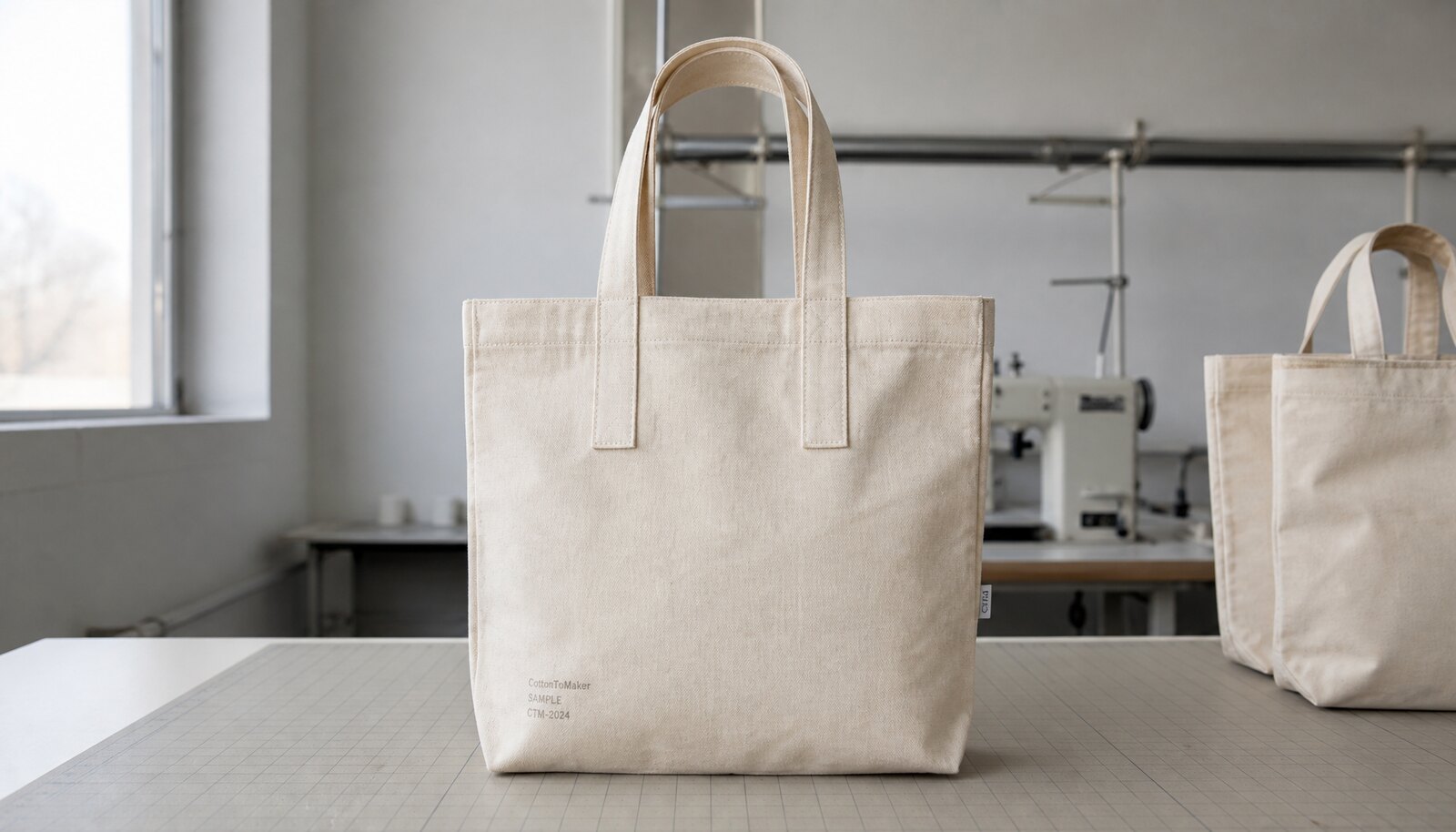
Why this tote is a winery packaging decision, not just a bag buy
For wineries, a canvas book fair tote is rarely just a carry bag. It is outer packaging for tasting-room sales, a reusable carrier for club pickups, a gift set shell, or a handout for events where the brand needs to survive more than one use. That changes the buying logic. A tote that looks cheap on a spec sheet can still be the right commercial choice if it holds bottles safely, stacks well in cartons, prints cleanly, and gets reused often. A tote that feels premium but ships with poor packing or weak seams is the wrong buy, even if the unit price looks attractive.
The first mistake is comparing tote quotes against one another without defining the job. A book fair tote shape is useful because it is flat, rectangular, and easy to stack, but for wineries the real question is whether it supports the weight and presentation you need. If the bag will carry catalogs and a single bottle, the spec can stay light. If it needs to carry a boxed bottle, tasting notes, and small merchandise, the fabric and handle build need to move up. Sustainable packaging only works when the bag survives the actual use case.
- Treat the tote as part of the customer experience and the packaging system.
- Do not use a tote alone as wine transit protection unless the inner pack already controls breakage.
- Choose the spec around the heaviest filled load, not the average contents.
Set the fabric and construction before you compare suppliers
The cleanest baseline for most winery programs is 10 oz canvas, roughly 340 gsm, with a natural or lightly bleached finish. That gives enough body for repeated retail use without pushing freight or labor too high. An 8 oz bag can work for event handouts, paper inserts, or light gifting, but it starts to feel soft once the fill weight rises. A 12 oz bag gives stronger hand feel and a better premium story, but it also adds sewing time, bulk, and shipping volume. If a supplier does not state whether the GSM is finished weight or raw cloth weight, the quote is not comparable.
Construction details decide whether the tote feels reliable or disposable. For wineries, a 15 x 16 inch body with a 4 inch gusset is often more useful than a taller narrow bag because it gives space for brochures, cartons, and retail items without turning the tote into a flimsy sleeve. Handles should be long enough for shoulder carry if the bag will leave the tasting room, and stress points should use bartacks or reinforced box stitching. If the order is for bottles or heavier gift packs, ask the factory to show the seam pattern and the exact handle attachment method, not just a front-view mockup.
- 8 oz / about 270-280 gsm: light event carrier, low-cost handout, minimal fill weight.
- 10 oz / about 340 gsm: default spec for most reusable winery tote programs.
- 12 oz / about 400 gsm: premium retail tote, higher perceived value, heavier freight.
Compare sourcing routes before you argue over unit price
A direct canvas bag factory is the best option when you want one spec, one decoration method, and clear control over sewing and packing. That route usually gives the most useful production feedback because the same team that sews the tote also sees the print placement, handle reinforcement, and carton count. The tradeoff is that you need a supplier who really owns the process. Some sellers call themselves factories but only source blanks and subcontract decoration, which makes quality control harder when a seam or shade issue appears.
A trading company can still be the right choice if your order spans tote bags, tags, cartons, and inserts, or if you need one shipment route across multiple product types. A local decorator with imported blanks makes sense for smaller runs, urgent launches, or market tests where the bag itself is standard and the branding is the only variable. The key is to compare what each supplier actually controls. If one quote includes only blank bags and another includes sewing, printing, packing, and carton labeling, the lowest number is not the cheapest landed option.
- Direct factory: better for repeatable quality and fewer handoffs.
- Trading company: useful for mixed packaging programs, but demand transparency on markup and defect ownership.
- Local decorator: fast and flexible, but blank quality and supply continuity matter more.
Use decoration to support the brand, not to hide a weak spec
For canvas book fair totes, one-color screen print is still the most practical decoration method for most winery buyers. It is durable, cost-effective, and easy to control on natural canvas if the artwork is not too detailed. Two-color screen print can work when the logo needs contrast, but the more ink coverage you add, the higher the risk of stiffness, blocking, or uneven curing. Woven labels, patches, and embroidery fit better when the tote is a merch item rather than a giveaway, because they signal higher value without depending on large print coverage. Heat transfers can look fine at receipt but often become the wrong choice if the tote will be folded, reused, or stored for long periods.
Decoration also changes the quote structure. A clean RFQ should state print size, placement, color count, Pantone target, and whether the supplier is quoting on finished bags or on decoration only. Ask for a strike-off or pre-production sample that uses the same fabric and the same curing process as bulk. If the artwork sits near seams, handles, or the gusset fold, you need the supplier to confirm placement tolerance in millimeters, not by eye. A logo that shifts a little on screen can look fine on a sample and still fail a full lot if the process is not controlled.
- Use screen print for most winery logos and short brand messages.
- Use embroidery or woven labels when the tote itself is part of the premium retail offer.
- Avoid choosing full-coverage decoration just to make a light fabric look more expensive.
Build the RFQ so every supplier is pricing the same bag
An RFQ for this product needs more than a picture and a quantity. Suppliers need finished size, fabric weight, weave type, handle length, gusset depth, print method, print size, color reference, packing method, carton data, and the shipment term. If you leave out any of those fields, every quote will hide a different assumption. That is how buyers end up comparing a low-cost blank tote with a fully decorated, retail-packed version and thinking they found a bargain. The quote should also say whether samples are chargeable, whether overrun is allowed, and what tolerance applies if the factory runs short.
For landed-cost comparison, split the quote into material, sewing, printing, packing, carton, inland move, and export term. A supplier that gives you only one number forces you to guess where the cost sits. That is a problem when you are trying to value freight cube, decoration labor, and rework risk. For a winery program, the biggest hidden costs are usually print setup, carton volume, and packing labor. A bag with a slightly higher unit price can still be cheaper if it packs tighter, needs fewer reprints, and avoids retail damage in transit.
- State the same Incoterm across all quotes: EXW, FOB, CIF, or DDP.
- Separate the bag spec from the retail packaging spec.
- Require suppliers to name any optional charges before sample approval.
Approve the sample like a production part, not a display sample
A proper sample review starts with a pre-production sample made from the same fabric batch, the same print method, and the same packing style that will run in bulk. Do not approve from a beautiful showroom sample that was hand-finished by a different team. Check the dimensions first, then inspect seam consistency, handle symmetry, label placement, and ink curing. Natural canvas can hide a lot in photos, so the bag should be opened flat, folded, and loaded before you sign off. If the winery plan is to carry bottles or a box insert, test the bag with the same filled weight or a realistic dummy load, not just with empty packaging.
A good QC standard is simple and measurable. Finished size should stay within the agreed tolerance, print should stay aligned, and there should be no loose threads, oil stains, or broken yarns on a visible panel. The load test should reflect the real retail use case, and the handles should survive repeated lifting without seam pull or thread pop. If the tote will be handled by customers in a tasting room, the ink also needs a rub check so folded bags do not transfer color to each other. The sample should be approved only after the supplier confirms the final packing method and carton marks, because bulk failures often come from packing, not sewing.
- Measure body width, body height, gusset, and handle drop on the sample.
- Fold and reload the bag several times to see whether the print cracks or blocks.
- Approve carton labels and pack counts before production starts.
Packing details can erase your savings if they are left vague
A tote that is built well but packed badly becomes expensive quickly. For most winery orders, bulk packing in a master carton is the right answer because it keeps freight efficient and avoids unnecessary plastic. If the tote is going to the tasting room, club pickup area, or distributor warehouse before retail use, there is usually no reason to individual polybag every bag. A paper band, barcode sticker, or carton insert is often enough. If the bag must hang on a retail hook, then a paper header or a light retail sleeve may be justified, but the pack-out needs to stay simple and consistent.
Carton data should be part of the approval, not an afterthought. Ask for bag count per carton, carton dimensions, gross weight, and stacking direction so you can judge pallet efficiency and warehouse handling. For ocean freight, moisture protection matters more than most buyers expect, especially with natural canvas. If the route crosses humid ports or long storage windows, the carton structure and inner pack should keep the bags clean and dry. The packing spec is also where sustainability claims can turn weak fast, so do not add plastic just because a supplier says it is standard.
- Use bulk master cartons unless retail display requires a different pack-out.
- Keep carton labels readable with PO, color, quantity, and carton count.
- Avoid extra plastic unless there is a real handling or moisture reason.
Plan lead time around approval gates, not just factory days
A realistic schedule has at least four steps: sample development, sample approval, bulk production, and transit. For a simple one-color canvas tote, the production window is often manageable, but it expands quickly if the fabric is custom dyed, the print has multiple colors, or the packing is retail-ready. The biggest risk is usually not sewing capacity. It is late artwork, late sample sign-off, or a small spec change after the factory has already cut the cloth. Once the cloth is cut, changes cost time and often cost money.
Wineries with seasonal launches should work backward from the actual shelf or event date, not from the ship date the supplier prefers to quote. If a harvest event, holiday offer, or club shipment has a fixed window, leave room for freight, customs, and a replacement run if the first sample misses the mark. It is worth asking the factory to reserve fabric and print screens only after the artwork is frozen. If the order is tied to a trade show or regional event, a split shipment may be smarter than waiting for one perfect full shipment that arrives too late.
- Lock artwork before pre-production sampling.
- Do not treat freight transit as separate from the schedule.
- Keep a contingency buffer for reprint or replacement risk.
Compare the tote against other sustainable packaging choices
Canvas is not automatically the greenest option. It is the better option when reuse is real and the bag carries enough value to justify its material and freight footprint. Paper bags can be the better choice for a one-time handout or a light retail carry with no expectation of reuse. Jute has a rustic premium feel and a strong natural story, but it can be bulkier, rougher to print, and less consistent in appearance. rPET and nonwoven options can be useful for light utility carry, but they are usually weaker on brand perception in a premium tasting-room setting. The buyer should compare the whole system, not just the label on the material.
For wineries, the right answer usually comes down to use pattern. If the tote will be reused many times as a retail bag, club carrier, or gift bag, canvas can make sense even with a higher unit cost because the brand lives longer and the bag itself becomes part of the offer. If the bag is only meant to move one lightweight purchase from counter to car, paper may be the better operational choice. If you are comparing suppliers, be honest about the real reuse rate, the fill weight, and the freight cost. A heavy canvas tote shipped halfway around the world for one event can be a worse decision than a simple local paper bag.
- Canvas fits reuse-heavy programs and premium tasting-room sales.
- Paper fits low-weight, one-time handoff packaging.
- Jute and rPET can work, but only when their look and handling match the brand position.
Use the quote review to force a decision, not to collect more paperwork
Once the quotes arrive, compare them on the same grid: fabric weight, finished size, decoration method, packing, MOQ, sample policy, lead time, and shipment term. If one supplier is dramatically cheaper, look for the missing line item. It is usually a lower fabric weight, a smaller print area, simpler packing, or a less controlled route. That does not mean the quote is wrong, but it does mean the buyer has to understand what has been removed. For a winery buyer, the right question is not which bag is cheapest. It is which quote gives the best total cost for the use case and the least production risk.
A good purchasing decision should leave no ambiguity for the factory floor. The approved spec should tell the supplier exactly what to cut, sew, print, pack, and ship. If the bag is for a tasting room or distributor program, the final PO should also tell the factory what not to do, such as adding unnecessary polybags, changing the handle drop, or substituting a lighter cloth. Clear instructions reduce claims later. The more precise the RFQ, the easier it is to compare suppliers, defend the budget, and avoid a batch that looks acceptable on paper but fails in use.
- Reject quotes that do not list the same spec line by line.
- Treat missing packing data as a cost risk, not a small detail.
- Release the PO only after the sample and carton spec are both approved.
Specification comparison for buyers
| Spec decision | Recommended option | When it fits | Buyer risk to check |
|---|---|---|---|
| Sourcing route: direct canvas bag factory | Best for one tote spec with in-house sewing and printing | Medium to large runs where you want control over seam quality and repeat orders | Verify the factory, not just the salesperson, can show sewing, print, and packing in the same site |
| Sourcing route: trading company or sourcing office | Best when you need mixed packaging items or split-country delivery | Useful for buyers who want one PO for tote, tag, and carton | Confirm markup transparency and who owns sample approval if defects appear |
| Sourcing route: local decorator with imported blanks | Best for smaller runs, urgent seasonal drops, or quick retail tests | Works when fabric spec is standard and decoration is the main value | Check blank stock, shade consistency, and whether the print sits flat after packing |
| Fabric weight: 8 oz / about 270-280 gsm | Lightest acceptable canvas for handouts and low-fill retail bags | Best for flat items, brochures, and one bottle with a light insert | Risk of body collapse and visible stress at handle roots when overloaded |
| Fabric weight: 10 oz / about 340 gsm | Balanced choice for winery retail and gift packs | Best default for reusable totes that still need controlled cost and freight | Make sure the quote uses finished GSM and not a raw fabric spec only |
| Fabric weight: 12 oz / about 400 gsm | Premium feel for tasting rooms and higher-value gift sets | Best when the tote itself is a retail item and will be reused many times | Higher sewing labor, more freight cube, and possible shrink if prewash is skipped |
| Decoration method: one-color screen print | Best for clean winery logos on natural or bleached canvas | Good for medium runs where durability matters more than photographic detail | Check ink opacity, curing, and rub resistance on folded seams |
| Decoration method: woven label, patch, or embroidery | Best for premium positioning and tactile brand cues | Fits limited-color marks and bags sold as merch rather than giveaways | Watch placement tolerance, stitch density, and extra labor time |
| Packing method: bulk pack in master cartons with paper inserts | Best for sustainability and freight efficiency | Fits most B2B winery orders that do not need retail hanging display | Verify count accuracy, carton compression, and moisture protection on ocean freight |
Buyer checklist before sampling
- Finished size, gusset, and handle drop are written in the RFQ, not implied by a reference photo
- Fabric weight is stated as finished GSM or oz, with the weave and finish named clearly
- Print method, print size, ink color, and placement are approved on a strike-off or pre-production sample
- Seam reinforcement, bartack length, and handle attachment detail are part of the spec sheet
- Packing count per carton, carton dimensions, and carton marks are agreed before bulk production
- MOQ, overrun or underrun tolerance, and sample charge policy are included in the quote
- Lead time is split into sample, approval, production, and transit, not just one total number
- The supplier quote shows the same Incoterm, same packing, and same decoration scope for every bidder
Factory quote questions to send
- Is this quote based on direct factory production, or are you buying blank totes and decorating them elsewhere?
- What is the finished fabric weight, and is that number based on greige cloth, washed cloth, or finished bag weight?
- Which print method is included, how many colors are covered, and what is the exact print area?
- What are the handle length, gusset depth, and bartack or box-stitch details at the stress points?
- How many pieces per carton, what are the carton dimensions, and what is the estimated carton weight?
- What sample will you send for approval, and will bulk production match that sample exactly in fabric and decoration?
- What is your MOQ for this exact spec, and how does it change if we adjust print colors or packing?
- What is the production lead time after sample approval, and what shipment term is this quote based on?
Quality-control points to confirm
- Finished size stays within the agreed tolerance, with consistent handle drop and gusset depth across the lot
- Fabric weight matches the approved spec, with no thin panels, obvious slubs, or dye variation that weakens the look
- Handles, side seams, and bartacks hold under a filled load test without popped stitches or seam distortion
- Print is aligned, opaque enough on natural canvas, and free from cracking, smearing, or sticky curing residue
- No oil marks, broken yarns, loose threads, holes, or odor that would make the bag unsuitable for retail presentation
- Carton count, inner pack, label data, and outer marks match the PO and packing list before release