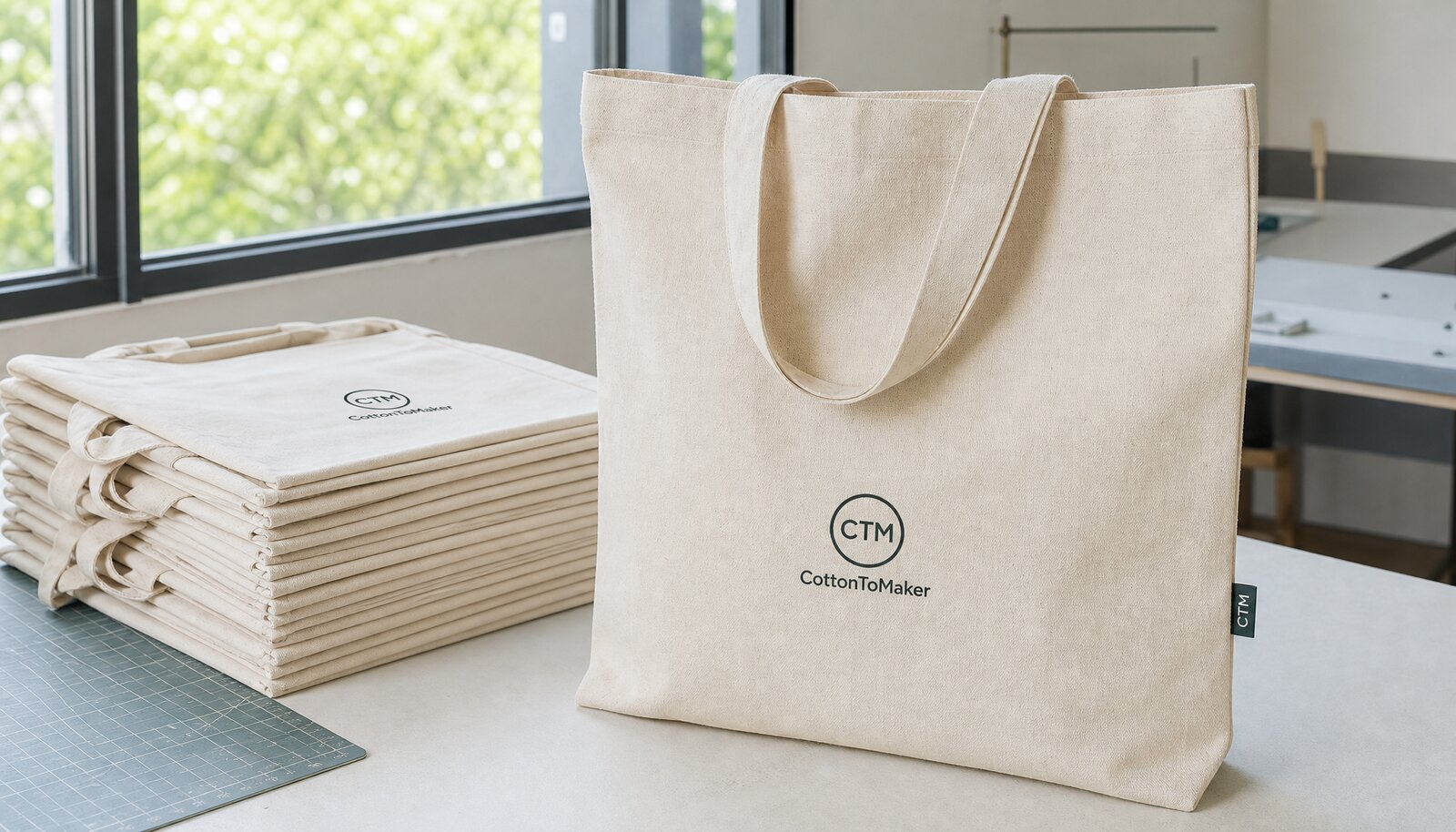
Start with the use case, not the unit price
Canvas book fair totes for schools look simple, but they are not interchangeable across programs. A tote that works for a one-day fair, where the buyer wants a low-cost handout, is not the same tote that needs to survive repeated use by students or district staff. The most common sourcing mistake is comparing only unit price and assuming the cheapest quote is the best commercial result.
For procurement buyers, the first question is not what the bag costs. It is what the bag has to do. If it must hold paperback books, catalogs, activity sheets, and a few heavier items without collapsing, the quote needs enough structure in the body, handles, and packing to support that load. That is why the commercial review should start with the use case, then move to spec, then move to supplier selection.
- Use a different spec for one-off book fairs, reusable student totes, and event kits.
- Write the order around what the tote must carry, not around a marketing description.
- Treat the supplier quote as a production proposal, not a retail listing.
Fabric weight and body shape: the first real cost driver
For school book fair totes, 12 oz to 14 oz natural canvas, or roughly 340 to 420 GSM depending on finishing, is a practical range for most buyers. The lower end keeps the bag lighter and easier to price, while the upper end gives the tote more stand-up shape and better perceived quality. If the bag is too light, it tends to flop open, wrinkle fast, and look underbuilt when filled with books.
Body shape matters almost as much as fabric weight. A flat tote is cheaper and easier to source, but it limits usable volume. A 10 to 12 cm gusset gives the bag more capacity for stacked books and school materials, but it also adds cutting and sewing steps. That extra construction should be locked before quote comparison, because a supplier that quotes a flat body and a gusseted body on the same line item is not giving you a clean comparison.
- Flat body is appropriate for shallow handouts, flyers, and light event materials.
- A gusseted body is better for books, reader packs, and classroom giveaway sets.
- Natural unbleached canvas often prices more predictably than dyed canvas and is easier to keep consistent across batches.
Print method should match the artwork, not the other way around
The safest print choice for most school tote programs is one-color screen print. It gives a clean logo, works well at volume, and usually holds up better than transfer methods on coarse canvas. If the artwork has tiny text, thin lines, gradients, or multiple colors, the buyer should expect either a more expensive print setup or a simplified design before production starts.
Heat transfer can work for short runs and variable names, but it is not the best default for a tote that will be reused. On canvas, the transfer may sit too glossy, crack under repeated folding, or look inconsistent across units. Embroidery can look premium, but it adds time and cost and is generally only worth it when the bag is positioned as a higher-end retail item or a long-life institutional gift.
- Send vector artwork, not a screenshot, when asking for a quote.
- Ask the supplier to confirm print size in millimeters and the exact placement from seam or hem.
- If the logo has more than one color, ask whether the factory needs extra screens, passes, or setup fees.
MOQ is a production rule, not a sales number
MOQ changes when the factory has to alter cutting, print setup, or material sourcing. A stock canvas body with a simple one-color print can often be quoted at a lower MOQ because the factory can use existing fabric and a standard sewing line. Once the order adds a gusset, inside pocket, custom handle length, special dye, or sewn label, the factory needs more setup and usually raises the minimum.
Procurement teams should compare MOQ against the true order structure, not against a single unit price. A lower-unit offer with a much higher MOQ may be more expensive in cash terms than a higher-unit offer with a flexible minimum. The right question is whether the supplier can support your actual demand pattern without forcing excess inventory. For school buyers, that matters because fair calendars, district approvals, and sponsor budgets rarely move on a perfect factory schedule.
- Lower MOQ fits seasonal events, pilot orders, and distributor testing.
- Higher MOQ makes sense when the tote is part of a recurring school program or annual fair calendar.
- Ask whether MOQ is per color, per size, or per shipment, because those are not the same thing.
Supplier selection: route, origin, and export discipline
The country of origin matters, but not in a simplistic lowest-cost way. What matters is whether the supplier has stable canvas sourcing, consistent sewing output, and enough export experience to handle documentation and packing without avoidable errors. A well-run factory in one origin can be a better commercial choice than a cheaper quote from a supplier that is still learning how to manage tote-specific production.
Buyers should also understand the supplier route. Some factories work from stock bodies and add custom print. Others make full cut-and-sew orders from raw fabric. Those routes have different risk profiles. Stock-body suppliers are faster and easier to re-order. Full custom suppliers give more control over dimensions, handles, and finishing, but they usually need a longer lead time and tighter sample approval. If your company imports directly, the route also affects who books freight, who handles customs paperwork, and how much visibility you have into landed cost.
- Use stock-body sourcing when speed and simplicity matter more than custom shaping.
- Use full custom sourcing when the tote must match brand standards or recurring program requirements.
- Ask where the fabric, webbing, and labels come from if the seller is quoting finished goods only.
Incoterms and landed cost: compare bids on the same basis
A real procurement comparison needs the same Incoterm across all quotes. FOB is usually easier for buyers with a forwarder or import team because it isolates product cost from international freight. EXW can look cheap at first but often shifts too much work to the buyer. DDP may be convenient for small teams, but it is only useful when the supplier gives a clear cost breakdown and understands the destination market well enough to avoid customs surprises.
Lead time and landed cost change by route, not just by unit price. A factory quote that excludes export booking, origin charges, or inland pickup may look competitive until freight is added. Sample freight also needs attention. If the buyer wants a pre-production sample shipped quickly, that freight cost should be separated from production because it can distort the apparent margin on a small trial order. For procurement teams, the cleanest process is to ask every supplier to quote the same Incoterm, the same sample path, and the same carton assumptions.
- FOB is usually best when your team controls freight and customs.
- DDP can be useful for low-volume programs, but only if cost components are transparent.
- Never compare one quote on EXW and another on FOB without normalizing the freight and origin charges.
Read the factory quote like a production document
A useful quote should break out product spec, setup cost, packaging, and delivery timing. If a supplier gives only a single unit price, you do not yet have a procurement-ready offer. The hidden charges usually appear in print setup, extra color screens, special folding, labels, carton changes, or freight booking. Those are not edge cases; they are the common reasons a tote order lands above budget.
For canvas book fair totes, a quote should state the fabric weight, bag size, handle type, print method, pack count, and whether the sample is included. It should also note any assumptions that would move the price, such as dyeing, lining, or a change in carton count. If those assumptions are not written down, they become disputes later. A clean quote is one that can be checked against the sample and the final invoice without guessing.
- Separate product price, sample charge, setup charge, and freight.
- Ask whether carton count is fixed or only estimated.
- Confirm whether a woven label, hangtag, or barcode sticker is included if your receiving process needs it.
Sampling: the cheapest way to avoid a wrong bulk order
The sample should be a pre-production sample built from the final fabric, final print method, and final stitch construction. A close-match sample can help with shape review, but it cannot prove the final production behavior. On canvas, small differences in weave density, ink load, and pressing can change how the logo sits on the surface or how the body folds after packing.
Sampling should be judged with a checklist, not a vague approval note. Buyers should verify logo position, handle length, seam tension, top opening shape, and whether the tote still stands correctly when loaded with books. If the product will be distributed at a school event, it should also be folded the way the factory plans to pack it. That catches problems such as print offset, awkward fold lines, or a tote that looks acceptable open but presents badly when stacked in cartons.
- Approve the sample only after checking it in the folded and loaded state.
- Keep one signed sample from both the buyer and supplier if the order is material.
- If the supplier changes ink, handle material, or fabric lot after approval, require a new sample signoff.
Packing and carton planning affect more than freight
Bulk flat packing is usually the right choice for canvas book fair totes for schools because it keeps the shipment efficient and simplifies warehousing. But packing is not only a freight decision. It affects crease depth, carton strength, receiving time, and how quickly a school or distributor can sort the goods on arrival. Overpacked cartons can flatten the tote body and create permanent creases that make the bags look old before they are even distributed.
Ask the supplier to state the pack count, carton dimensions, gross weight, and carton marks before bulk starts. If the tote is humid or dusty, inner poly may be useful. If not, extra inner packaging just adds cost and waste. The better approach is to align packing with the downstream process. A warehouse that breaks cartons for site distribution may want smaller counts. A distributor that palletizes by SKU may prefer a different carton geometry. The factory should not decide that for you by habit.
- Require visible carton marks for style, color, quantity, and carton number.
- Do not let cartons be overstuffed simply to reduce carton count.
- If the bags are for direct school distribution, confirm whether the fold direction supports quick handout by staff.
QC and inspection: define defects before the order ships
For procurement buyers, quality control should be practical and enforceable. AQL inspection is useful because it gives the factory a measurable acceptance standard instead of a subjective one. Set the defect classes in advance: critical for safety or contamination issues, major for function or obvious appearance defects, and minor for small cosmetic issues that do not affect use. The standard should be written before production, not during dispute.
Typical review points for school totes include fabric weight, print alignment, seam quality, handle reinforcement, odor, stains, and carton count. Buyers should also request a pre-shipment photo set that shows at least one open tote, one folded tote, one carton mark, and one packed carton interior. That is not a substitute for inspection, but it often catches mismatched labels, wrong folds, or print shift before the goods leave the factory. If the order is large enough, consider a third-party inspection using your own defect thresholds instead of relying on a generic factory pass/fail note.
- Set an AQL target and defect list before production starts.
- Reject obvious print skew, seam opening, contamination, or missing carton marks.
- Use photo evidence for shipment release, especially if the buyer is not present at packing.
Specification comparison for buyers
| Spec decision | Recommended option | When it fits | Buyer risk to check |
|---|---|---|---|
| Fabric weight / GSM | 12 oz to 14 oz natural canvas, or 340-420 GSM | Best for school book fairs, student handouts, and repeated carry use where the tote must stand up with books inside | If too light, the tote collapses and looks cheap; if too heavy, sewing speed drops and the quote often rises |
| Body construction | Flat body for low-cost programs, 10-12 cm gusset for book capacity | Use flat construction for simple giveaways and gusseted construction when the tote needs to hold stacked books, catalogs, or bundled event kits | Changing gusset depth after sampling usually resets cutting, sewing, and carton assumptions |
| Print method | 1-color screen print for volume, heat transfer only for short runs or variable names | Use screen print when the artwork is simple and the tote will be reused; use transfer only when the run is short or personalization is required | Fine detail, small text, and multicolor art can blur or crack on coarse canvas if the print method is mismatched |
| Handle construction | Cotton webbing handles or self-fabric handles with reinforced bartacks | Choose webbing when load security matters and self-fabric handles when you want a more natural look at lower visual bulk | Short handles and weak top reinforcement create failure at the stress point most buyers notice first |
| Supplier route | Stock body with custom print for speed, full custom cut-and-sew for brand control | Stock-body programs work for school districts, distributors, and seasonal fairs; full custom works for recurring programs or retail resale | A lower unit price can hide a higher MOQ or a longer approval cycle |
| Country-of-origin fit | Source where the factory has stable canvas supply, sewing capacity, and export experience | Use countries with established tote production when the order needs consistency and formal export documentation | Low price is not enough if the route adds delays through fabric sourcing, border clearance, or inconsistent stitching quality |
| Incoterms | FOB for freight control, DDP only when you trust the supplier's landed-cost discipline | FOB fits buyers with their own forwarder or import team; DDP may suit small teams that need one delivered number | DDP can hide weak cost breakdowns, weak customs data, or margin padding if the supplier is not transparent |
| Sampling route | Pre-production sample on final fabric with final print placement | Use this when color, size, handle length, and print position need to be signed off before bulk | A blank or close-match sample can miss ink strike-through, shrinkage, or seam tension issues |
| Inspection standard | AQL-based final inspection plus carton count verification | Use when the order is large enough that a formal acceptance standard prevents dispute at receiving | Without a defined AQL or defect list, the buyer and supplier may disagree on what is acceptable |
Buyer checklist before sampling
- Final tote size with usable internal capacity, not just the flat cut size
- Fabric weight in oz and GSM, plus whether the canvas is natural, bleached, or dyed
- Handle length, handle width, and whether the stress points are bartacked or cross-stitched
- Print artwork in vector format, with print size, placement, and one-color or multi-color approval clearly stated
- Country of origin, supplier route, and Incoterms quoted on the same basis across bids
- Sample approval based on final fabric, final print position, final handle build, and final packing style
- Carton pack count, carton dimensions, gross weight target, and outer mark requirements
- Inspection method, including AQL target, defect categories, and who pays for re-inspection if needed
- Lead time split into sample time, bulk time, booking time, and transit time
- Any school-specific restrictions on odor, loose threads, exposed metal, or sharp accessories
Factory quote questions to send
- What is the fabric weight you are quoting, in oz and GSM, and is that the finished fabric weight after finishing or the raw canvas weight?
- Is this price based on stock canvas bodies or a full cut-and-sew build, and what changes the MOQ?
- Which Incoterm is included in the quote, and what cost items are excluded from that price?
- What is the MOQ for one-color print, and does the MOQ change if we add a gusset, lining, inside pocket, or woven label?
- What sample will you provide before bulk production, and will it use the same fabric, ink, handle material, and stitching method as the final order?
- How many days do you need for sample production, artwork approval, bulk production, carton packing, and handoff to the forwarder?
- What carton pack count and carton size are included in the quote, and what gross weight range should we expect per carton?
- Which print method are you recommending for our artwork, and what is the risk of wash-off, cracking, or ink bleed on this fabric?
- What inspection points do you record before shipment, and can you provide photos of print placement, seam quality, carton marks, and packed cartons?
- Which country of origin is this being produced in, and where are the fabric and trims sourced from if they are not domestic?
Quality-control points to confirm
- Fabric weight should stay within the agreed commercial range, and the buyer should reject material that is visibly thinner than the minimum target
- Handle stitching must be even, with no skipped stitches, loose bartacks, or seam opening at the top stress points where the bag is actually lifted
- Print position should stay within the approved placement window; obvious skew, centering errors, or print smearing should be rejected
- No oil stains, mildew smell, broken needles, heavy lint, or holes should appear on finished totes
- Cut size should support the intended book load without severe shrinkage, twisting, or warped opening after packing and pressing
- Cartons should match the agreed count and should be marked with style, color, quantity, carton number, and country of origin if required by the buyer
- Random carton pulls should show consistent handle length, seam tension, print density, and fold direction
- If a side label or woven mark is specified, it should be sewn straight, aligned to the spec, and consistent across the shipment
- AQL inspection should define critical, major, and minor defects before production starts, not after the shipment is already packed
- If the buyer requested pre-shipment photos, they should include at least one open tote, one folded tote, one carton mark, and one carton interior shot