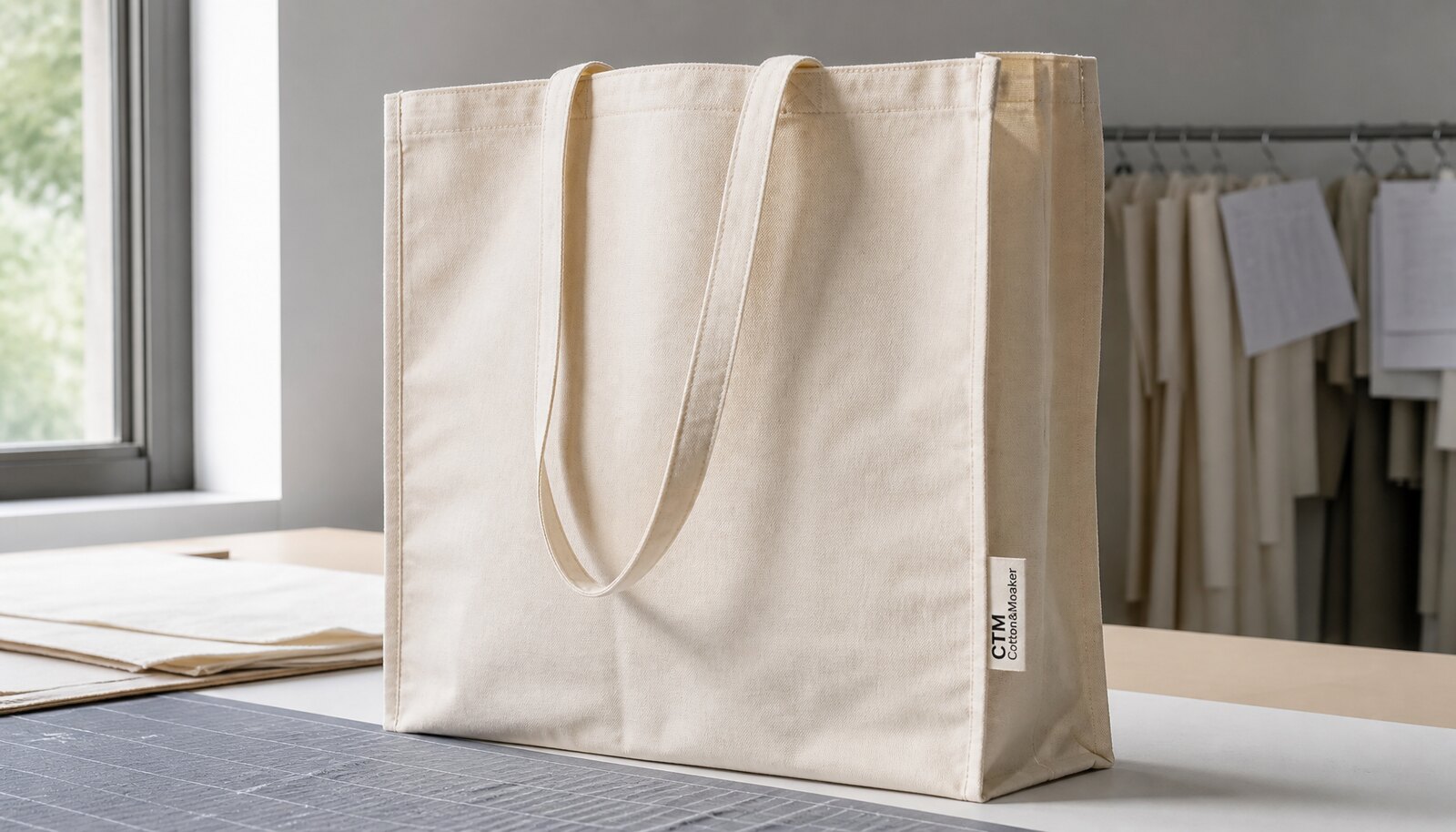
Start With the Bag's Job, Not the Tote Spec
A canvas book fair tote looks straightforward until the buyer has to compare three supplier quotes that are built on different assumptions. The real question is not whether the bag is "canvas". It is whether the tote must carry books all day, serve as a brand giveaway, sit on a retail shelf, or survive customer reuse after the event. Each use case changes the fabric weight, handle build, print method, and packing cost.
For ecommerce brands, the cleanest orders are the ones where the buyer defines the bag's job first and the decoration second. If the tote will be handed out at a book fair, the focus is load capacity, print clarity, and lead time. If the same bag will also be sold or inserted into a premium bundle, you need a better hand feel, cleaner sewing, and packaging that looks retail-ready. That distinction drives the entire RFQ.
- Write the use case in one sentence: giveaway, retail item, customer kit, or fulfillment insert.
- State the expected load in books, kilograms, or pounds.
- Decide whether the bag must look premium enough for a shelf, not just a trade table.
- Tell the factory if repeated reuse matters more than the lowest unit price.
Use Fabric Weight as the First Cost Gate
For most book fair and ecommerce event orders, 10-12 oz canvas is the practical starting point. It gives enough body for a structured tote, holds a screen print well, and does not feel flimsy in hand. Roughly speaking, that lands around 340-410 gsm depending on weave and finish. If the bag is only carrying flyers or lightweight inserts, 8 oz can work, but the buyer should understand the tradeoff: less structure, more show-through, and a shorter useful life.
Higher-weight canvas is not automatically better. Once you move into 12 oz and above, sewing becomes slower, material cost rises, and the bag may become too stiff for folding, shipping, or retail presentation. The right answer is the lightest fabric that still carries the load and supports the print. That is the spec decision that protects margin without creating avoidable quality complaints.
- 8 oz: useful for light event use, lower cost, but easier to distort under load.
- 10 oz: common baseline for practical reuse and decent print results.
- 12 oz: better for premium feel, heavier books, and stronger sell-through perception.
- Washed or softened canvas can improve hand feel, but it changes shrink behavior and color tone.
Lock Dimensions, Handles, and Load Path Before Pricing
A tote can be priced cheaply and still fail because the dimensions were not specified tightly enough. For book fair totes, buyers usually care about enough width for books or catalog mailers, a gusset that keeps the bag standing open, and handles that do not dig into the hand. If the opening is too narrow, the bag feels awkward at the booth. If the gusset is too shallow, hardback books fight the seam line and distort the body.
Handle construction is where many low quotes hide risk. Self-fabric handles are cost-effective, but cotton webbing with proper bar-tacks carries load more reliably. A practical target for retail or event reuse is a handle drop that works on the shoulder without letting the bag swing too low. The factory should know the target load, because the reinforcement pattern changes with the weight you expect the bag to carry.
- For standard book fair use, many buyers start around 14 x 16 inches with a 3-5 inch gusset.
- A 9-11 inch handle drop usually works better than short hand-carry straps.
- Use double stitching or bar-tacks at all stress points, especially where handles meet the body.
- If the tote must stand upright for packing, ask for a reinforced base or denser bottom seam.
Choose the Print Method for the Artwork, Not for Habit
Canvas absorbs print differently from coated paper or knit fabric, so the print method should follow the logo and order size. For most wholesale canvas totes, screen printing is still the default because it gives solid coverage, good durability, and predictable cost for one to three colors. It is the right answer when the artwork is bold, the logo shape is simple, and the order volume is large enough to absorb setup charges.
If the artwork has many colors, fine type, or a gradient, the buyer should compare the real cost of print complexity against a simpler logo layout. Embroidery can work on small marks or side labels, but it is usually slower and heavier than a print. Heat transfer can help with short runs or complex art, but it must be tested on the chosen canvas weight because some transfers crack or sit too plasticky on rough fabric.
- Screen print: best for clean logos, repeat orders, and stable artwork.
- Woven label or sewn patch: good when the brand wants a premium, low-ink look.
- Embroidery: better for small marks than large filled logos on canvas.
- Ask for a strike-off when color accuracy, edge sharpness, or logo placement matters.
MOQs Are Driven by Fabric, Color, and Finishing
The fastest way to misunderstand a tote quote is to treat MOQ as a single number. In practice, the MOQ is driven by how the factory buys fabric, how many body colors you want, how many print screens are needed, and whether the bag needs extra steps such as lining, zipper installation, or retail packing. A quote that looks good on paper can become expensive once the buyer asks for mixed colors or multiple logo versions.
For a first order, the most efficient route is usually one body color, one main print, and one pack format. That lets the factory cut fabric more efficiently, reduce changeovers, and keep the sewing line stable. If the brand wants multiple colors or seasonal art, the buyer should compare the unit cost of separate SKUs against the extra inventory complexity. Sometimes the cheaper per-piece quote is worse overall because it creates stranded stock.
- Ask for MOQ per color, per print version, and per pack style.
- Clarify whether the factory allows overrun or underrun and by how much.
- Check if the quote changes when you combine sizes or colors in one order.
- If your launch is uncertain, prioritize a lower SKU count over the lowest unit price.
Read Supplier Evidence, Not Just the Unit Price
A tote quote is only useful if the supplier can prove they are set up to make the bag you described. A direct factory usually shows better control over sewing, printing, and carton packing, but the buyer still needs evidence that the work is actually done in-house. Trading companies can be useful when the buyer wants consolidated sourcing, but the quote needs to reveal who is making the bag, who controls QC, and where delays are likely to appear.
The practical test is simple: ask for evidence that matches the order type. A factory making canvas totes regularly should be able to show sample-room photos, sewing-line references, print setup examples, carton templates, and a recent order style that is similar in construction. If the supplier cannot explain the stitching process, print process, or packing flow in plain terms, the quote is probably not anchored in real production capacity.
- Request photos of the actual sewing line, print area, and packed cartons.
- Look for similar construction, not just similar fabric.
- Confirm whether labeling, tagging, and packing are performed before shipment or outsourced.
- Verify who owns the final inspection sign-off.
Treat Samples as a Production Contract
The sample stage is where most tote mistakes can still be fixed cheaply. The buyer should not approve a sample just because the logo looks acceptable at first glance. The pre-production sample needs to prove the fabric weight, size, handle length, stitch quality, and print placement. If color accuracy matters, the strike-off or print proof needs to be signed off separately from the sewn sample, because fabric tone and ink tone interact differently in production than they do on screen.
For first orders, a useful sample set is a blank size sample, a printed strike-off, and a pre-production sample made with the final materials. That gives the buyer three different checks: proportion, print behavior, and final construction. Once those are approved, the factory should freeze the spec. Any later change to handle length, thread color, label placement, or packing format should be written into the order confirmation, not left as a casual note.
- Approve size, seam layout, and handle drop on the blank sample.
- Approve logo color, placement, and sharpness on the strike-off.
- Approve final fabric, stitching, and label position on the pre-production sample.
- Keep one signed reference sample on both the buyer and factory side.
Packing and Carton Data Change the Landed Cost
Packing is not a clerical detail. It affects labor, carton size, freight volume, warehouse receiving time, and the chance of damage in transit. Bulk packing is usually the most efficient option for canvas totes that are going straight into ecommerce fulfillment or distributor stock. Retail-ready polybags, inserts, barcode labels, and hangtags improve presentation, but each step adds cost and may increase dimensional weight.
The buyer should ask for carton dimensions and pieces per carton before comparing factory quotes. A slightly higher unit price can still produce a lower landed cost if the cartons are packed more efficiently and the product ships with fewer air gaps. If the order is going by sea, carton optimization matters for container utilization. If it is moving by air, every extra centimeter can cost real money.
- Define whether each tote ships folded flat, stuffed, polybagged, or boxed.
- Request carton count, carton dimensions, gross weight, and net weight.
- State whether barcode labels or carton marks must match the buyer's warehouse standard.
- If retail presentation matters, approve the pack format before bulk sewing starts.
Compare Lead Time and Landed Cost, Not Ex-Factory Only
The cheapest ex-factory quote is often not the cheapest order. Buyers need to compare fabric cost, print setup, packing labor, inland transport, export documents, and freight assumptions on the same basis. If one supplier quotes a lower unit price but forces a slower schedule, the total landed cost may rise because the order misses the event date or needs expensive air freight to recover time.
A realistic first order schedule usually includes sample approval, fabric booking, production, inspection, and export booking. If the supplier promises a very short lead time, the buyer should separate what is actually in stock from what still needs to be cut, sewn, and packed. The better way to manage risk is to hold a small schedule buffer and place the PO only after the sample and carton spec are approved.
- Compare quotes on the same shipping term: EXW, FOB, or DDP.
- Ask what parts of the lead time are fixed and what parts depend on approvals.
- Add a buffer for logo changes, label revisions, and carton artwork corrections.
- Track the cost of rushing freight against the cost of holding a safer production schedule.
Write the RFQ So Quotes Can Be Compared Cleanly
A clean RFQ is the difference between a useful quote and a page full of guesswork. The buyer should send one spec sheet that covers bag size, fabric weight, handle construction, print method, pack format, carton data, target quantity, and destination terms. If the supplier has to infer the fabric finish or decide the pack style on their own, the quote will look low at first and drift later as the missing details get added back in.
The goal is not to over-specify every detail. It is to specify the decisions that affect cost and quality. The buyer can leave room for factory recommendations on seam allowance or thread color, but the commercial items need to be locked. Once the RFQ is consistent across suppliers, the buyer can compare quote structure, not just the headline price.
- Send one reference image or drawing with finished dimensions marked clearly.
- State the target logo size and position in millimeters or inches.
- Include required pack count per carton and whether retail labeling is needed.
- Ask each supplier to quote the same order basis and note exclusions explicitly.
Specification comparison for buyers
| Spec decision | Recommended option | When it fits | Buyer risk to check |
|---|---|---|---|
| Sourcing route | Direct factory with in-house sewing and print | Custom specs, repeat orders, and tighter control over cost and quality | Confirm which steps are subcontracted and who signs off on final QC |
| Fabric weight | 10-12 oz canvas, roughly 340-410 gsm | Book fairs, ecommerce events, and retail use where the bag must feel substantial | Light fabric can show print distortion and wear faster at the corners |
| Handle build | Self-fabric or cotton webbing with double stitching and bar-tacks | Orders that will carry books, catalogs, or packed samples | Weak handle reinforcement fails before the body fabric does |
| Print method | 1-3 color screen print or a woven side label for small logos | Clear branding with medium order volumes and stable artwork | Too many colors raise setup cost and increase registration risk |
| Closure option | Open top for speed or zip top for higher-value contents | Open top for event giveaways; zip top for retail or customer kits | Closures add cost, sewing time, and inspection points |
| MOQ strategy | One fabric, one body color, limited print variants | First orders and test launches where quote control matters | Mixed specs split material lots and push up unit price |
| Packing format | Bulk packed with size labels unless retail presentation is required | Distributor programs and ecommerce fulfillment where warehouse speed matters | Retail polybags add labor, carton volume, and waste handling |
| Sample gate | Pre-production sample plus print strike-off | Any custom logo, fabric shade, or exact size target | Skipping strike-off hides color drift and logo placement errors |
Buyer checklist before sampling
- Define the tote's real use: book fair giveaway, retail item, subscription insert, or ecommerce event pack.
- Specify fabric weight in oz and gsm, not just 'canvas'.
- Set finished dimensions, gusset depth, and handle drop before asking for pricing.
- State whether the logo needs screen print, woven label, embroidery, or heat transfer.
- Confirm the target load in kilograms or pounds so handle and seam reinforcement can be built correctly.
- Lock the color standard with a physical swatch or PMS reference if color accuracy matters.
- Decide on open top, snap, zip, or other closure before sampling.
- Choose bulk pack or retail-ready pack and define carton count, labels, and barcode needs.
- Ask for a pre-production sample, print strike-off, and final carton spec before PO release.
- Compare quotes on the same basis: fabric, print, packing, overage allowance, and shipping term.
Factory quote questions to send
- What canvas weight, weave, and finish are you quoting, and what tolerance do you allow on finished gsm or oz?
- Which steps are done in-house: cutting, sewing, printing, labeling, and packing?
- What is the MOQ per color and per print version, and how does that change if we reduce the number of SKUs?
- Can you provide a pre-production sample and a separate print strike-off before bulk production?
- What handle construction and seam reinforcement do you recommend for the target load we need to carry?
- How many pieces per carton, what are the carton dimensions, and what is the gross weight per carton?
- What is the standard production lead time after sample approval, and what causes delay risk?
- Please quote the same order on EXW, FOB, or DDP if available so we can compare landed cost correctly.
Quality-control points to confirm
- Fabric weight matches the agreed spec within a reasonable tolerance, and the hand feel is consistent across the lot.
- Finished size, gusset, and handle drop stay within the approved sample limits.
- Seams are straight, the stitch count is even, and handle bar-tacks do not pull or pucker the fabric.
- Print registration is clean, ink coverage is even, and the logo sits in the approved position.
- Color on the body fabric and print is consistent across cartons, with no obvious shade drift.
- No loose threads, oil marks, holes, broken stitching, or odor issues on packed goods.
- Carton labels, inner pack counts, and barcode or SKU stickers match the purchase order.
- AQL level and inspection method are agreed before shipment, especially for first orders.