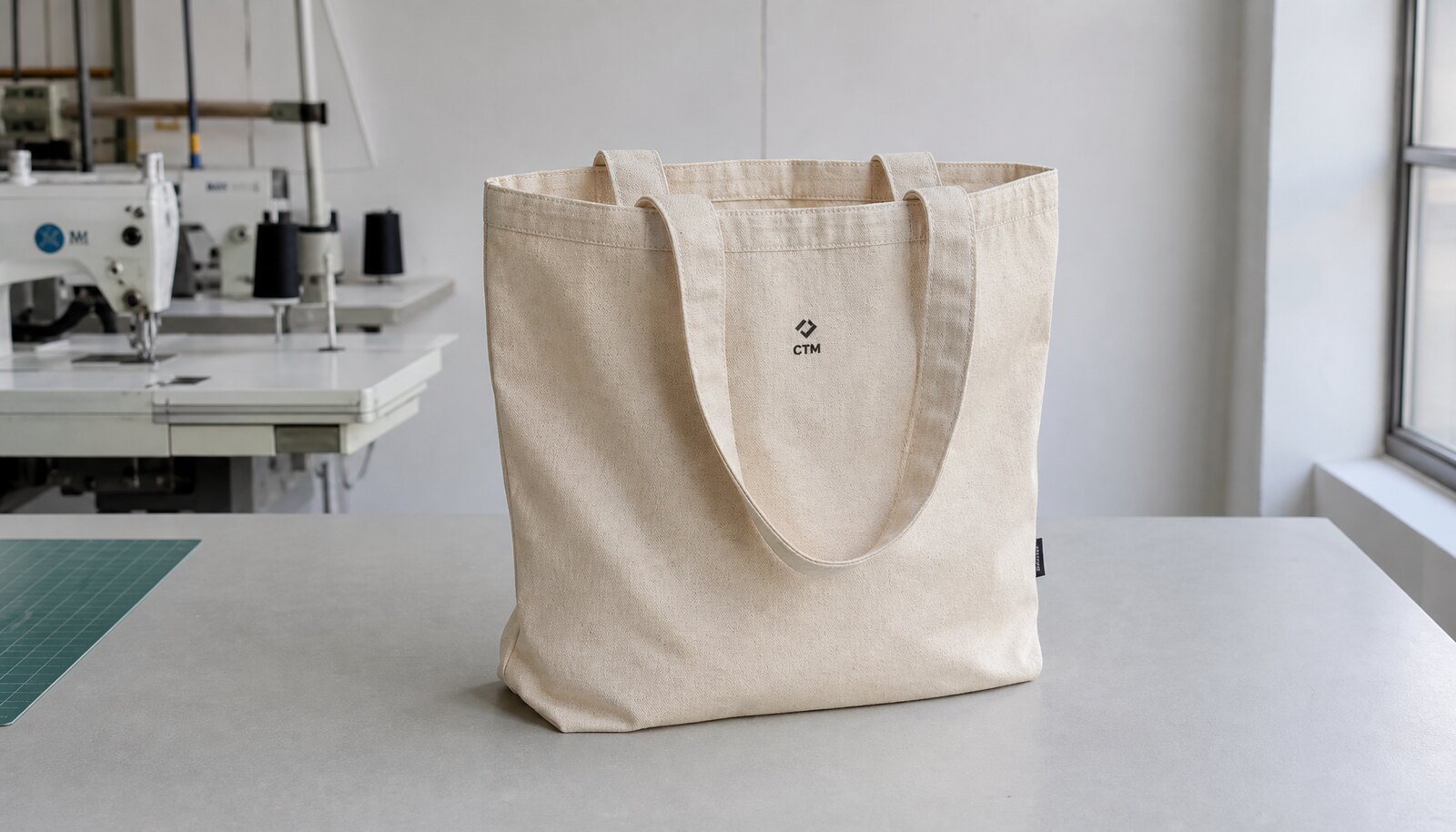
Start With the Use Case, Not the Artwork
For boutique sourcing, the bag is part of the product experience, not just a carrier. A customer notices how it stands on the counter, how the handles feel in the hand, how much the fabric sags when filled, and whether the print looks intentional or generic. That means the buying brief has to start with the tote's role: resale item, event carry bag, seasonal brand accessory, or support packaging for books and gifts.
The main mistake in this category is letting artwork drive the spec. Buyers often approve a logo size and then ask suppliers for a canvas bag around it, which usually produces a weak comparison set. Procurement gets better results by setting the base requirements first: target load, appearance, expected retail price band, acceptable shade family, and whether the tote needs to hold shape on display. Once those points are fixed, the artwork can be adapted to the material rather than forcing the material to carry a poor design decision.
If the tote will sit beside apparel, candles, stationery, or books, it is competing with higher-touch merchandise. That makes texture and build quality more important than broad sustainability language or generic promotional messaging. The bag should look deliberate. The spec should make that possible.
- State the tote's primary use in one sentence before asking for a quote.
- Separate retail sale bags from event giveaway bags, because the build quality and cost target are not the same.
- Decide early whether the tote must stand upright, which affects gusset, fabric weight, and packing.
Choose Fabric Weight Around Performance, Not a Round Number
Canvas weight is useful, but it should not be treated as the entire answer. A 12oz canvas may perform very differently depending on yarn thickness, weave density, finishing, and moisture content. For most boutique programs, 12oz to 14oz is the practical middle ground because it creates enough body to feel retail-ready without making the sewing line sluggish or the freight cube excessive. If the tote is meant to carry heavier books or boxed gifts, 16oz may be justified, but only if the rest of the build supports it.
The supplier should define the fabric in measurable terms. Ask for oz or GSM, yarn count if available, weave pattern, and whether the cloth has been pre-washed, mercerized, or sanforized. Those details matter because they affect shrinkage, drape, and how sharply the print lands on the surface. A heavier fabric that is poorly finished can still look worse than a lighter fabric with better control. Procurement should be comparing finished behavior, not just a fabric label.
Color also sits inside the material decision. Natural canvas can range from cream to beige to a slightly greenish off-white depending on the mill and finish. If the bag is being sold in a boutique context, the shade should be treated as a controlled input, not a casual variation. Ask for a physical standard or reference swatch and make the supplier confirm what counts as acceptable lot drift before bulk begins.
- Use 10oz to 11oz only when the tote is light-duty and price sensitive.
- Use 12oz to 14oz for most boutique retail and book fair use.
- Use 16oz only when the bag needs strong structure and the sewing and freight budget can support it.
Build the Bag for Load, Shape, and Reorder Consistency
The handle join is the first place to scrutinize because that is where customer use concentrates force. A tote that feels fine when empty can fail as soon as it carries catalogs, hardback books, or boxed retail sets. Ask for the exact reinforcement method: X-box stitching, bartacks, folded webbing, or another defined method. If the supplier cannot describe the reinforcement clearly, the quote is not procurement-ready.
Gusset depth should be tied to how the bag will actually be loaded. Flat totes are less expensive and can look cleaner for lightweight retail items, but a gusset improves volume and helps the bag maintain an upright silhouette. For many boutique book fair applications, 10 cm to 15 cm is enough to improve function without making the tote baggy. Deeper gussets are not automatically better because they add sewing complexity and can distort the front panel if the factory's cutting control is weak.
Internal finish matters more on unlined bags because the customer sees the inside every time the tote opens. Visible thread tails, loose seam edges, or uneven trimming are not small defects in a retail program. They signal weak process control. If the bag is unlined, the seam allowance, overlock quality, and thread trimming standard should be written into the approval spec before the order is released.
- Ask for photos of the handle base and inside seams, not just the front view.
- Confirm handle width and drop length so the bag carries comfortably by hand or over the shoulder.
- If the tote must stand on a shelf, test the empty shape after pressing, not just flat on a cutting table.
Match Print Method to Artwork Complexity and Durability
Canvas is forgiving in some ways and difficult in others. The weave can make a simple logo look premium, but it can also break up fine detail if the print process is wrong. Screen printing usually gives the best balance for boutique tote programs because it is durable, opaque, and cost-effective once the artwork and volume justify the setup. It is especially strong when the design is one to three spot colors and the buyer wants a clean retail appearance rather than a highly photographic image.
Digital print and transfer methods are not wrong, but they should be chosen for a reason. If the art includes gradients, small type, or detailed illustration, those methods may be the only practical route. The risk is that they can feel heavier, sit differently on the weave, or show edge lift after repeated handling. For that reason, the buyer should ask for an actual strike-off on the selected canvas rather than accepting a print sample on a smoother test cloth.
The quote needs to define the print area, color count, ink system, curing method, and acceptable alignment tolerance. If the supplier expects a one-sided logo and the buyer assumes a front-and-back print, the order can become expensive or misaligned fast. The same is true for white ink on natural canvas: opacity can require extra passes, and extra passes can stiffen the hand feel. Procurement should compare the tradeoff, not just the decoration cost.
- Use screen print for simple retail logos and higher volume.
- Use digital or transfer only when the artwork needs the extra detail.
- Require a strike-off on the actual base fabric before bulk approval.
Make MOQ Decisions That Protect Unit Cost and Inventory Health
MOQ should be viewed as a production efficiency point, not just a barrier. Once a supplier splits a run across several sizes, colors, or logo versions, cutting waste and setup time increase quickly. Buyers sometimes push for too much variety in the first order because they want to test demand, but that can leave them with high unit cost and weak inventory depth across all variants. For a first boutique program, one base size and one or two controlled colorways is usually the cleaner move.
If a low MOQ is necessary, the buyer should assume some cost penalty. The supplier may need to buy cloth in smaller quantities, charge extra for screen setup, or limit the range of custom options. That is acceptable if the commercial reason is clear, but the quote should make the tradeoff explicit. A low MOQ line without a written explanation often hides a different fabric grade or a stock bag that only loosely matches the intended spec.
For repeat programs, the best procurement path is often to start with one approved standard and scale from there. That lets you verify shrinkage, handle performance, and print durability before introducing a second color or size. It also reduces the chance of carrying dead stock from a speculative launch. In short, MOQ should support the launch plan, not undermine it.
- Keep the first run narrow: one size, one base fabric, one clear print layout.
- Treat multiple colorways as separate production assumptions, not a free add-on.
- Ask whether the MOQ is driven by fabric mill minimums, print setup, or sewing efficiency.
Compare Supplier Quotes on the Same Technical Basis
Quote comparison only works when the bids describe the same product. If one supplier says 12oz pre-washed canvas with reinforced handle bases and another says good quality cotton canvas, the cheaper quote is not directly comparable. Procurement should normalize every response into the same fields: fabric weight, finish, dimensions, handle build, print method, packing route, carton count, and any approved substitutions. That is the only way to see whether the price gap is real or just a spec gap.
Ask suppliers to disclose where the cost sits. Fabric, labor, print setup, packaging, and export prep are distinct drivers, and the supplier who is transparent about them is easier to manage later. If a vendor refuses to itemize anything, you lose visibility into what changes when the market shifts or when you reorder. A clear quote is not just easier to buy from; it is easier to audit when a shipment does not match the approved sample.
This is also where procurement should ask for supplier verification. A credible partner should be able to share recent production photos, a factory profile, relevant test reports, and a sample route that matches actual bulk production. If the factory cannot show that its sample is representative, the buyer should assume the sample is more polished than the line process. That is a common failure mode in tote sourcing and it is avoidable if the quote review is disciplined.
- Standardize the RFQ template before sending to multiple vendors.
- Do not compare prices until the fabric, print, and packing fields are aligned.
- Ask for proof that the sample process and bulk process use the same materials and machines.
Set QC Rules the Factory Can Actually Measure
A good tote spec does not try to control every cosmetic detail. It defines the points that matter in production and in the customer's hands. For canvas bags, those points are usually fabric weight, finished dimensions, handle construction, print quality, and overall assembly. If the supplier knows exactly what is being measured and how the bag will be accepted or rejected, the order is easier to manage and disputes become less likely.
Practical tolerance matters. Finished size should usually sit within plus or minus 1 cm unless the design is unusually sensitive. Print placement should be controlled to a few millimeters rather than loosely centered by eye. Stitching defects should be treated as hard failures when they affect structure: skipped stitches, missing bartacks, loose handle joins, or seam puckering around the top hem. Those issues are visible to a retail customer and are not minor in a paid product.
If the tote is sold through boutiques, ask for a pre-production sample or gold sample that uses the actual bulk materials. Keep one sealed reference copy and label it by version. That sample is your primary reference for color, print tone, seam finish, and fold behavior. A photo alone is not enough, especially for canvas where the weave and ink build affect the final appearance in a way digital images do not capture.
- Measure finished dimensions after sewing and pressing.
- Use the gold sample as the reference for both production and final inspection.
- Reject visible structural defects even when the bag is otherwise attractive.
Test the Sample the Way the Customer Will Use It
The best approval process is closer to a use test than a visual inspection. Load the bag with books, boxed stationery, or the type of retail purchase it is expected to carry. Check whether the handles cut into the hand, whether the opening collapses, and whether the body leans or twists when set down. These are not abstract issues. They are exactly the details that shape whether a boutique tote feels worth buying or reusing.
Ask the factory whether the sample was made on the production line or by a special sample team. If the answer is that the sample was hand-finished or made under different conditions, the buyer should be cautious. A sample that is substantially better than the bulk line is a warning sign, not a comfort. Repeatability matters more than a single perfect piece.
Where the program justifies it, request simple test evidence. For canvas bags, useful checks include seam strength under load, print rub resistance, and shrinkage after light washing or wet handling. You do not need a full lab program for every tote, but you do need enough verification to know whether the bag can survive the retail environment and normal customer use. That is especially important if the tote is sold as a standalone product rather than given away with purchase.
- Load-test the sample with realistic weight instead of judging it empty.
- Confirm whether the sample was made with production methods or hand-finished shortcuts.
- Use simple durability tests when the tote is being sold as a retail item.
Treat Packing and Lead Time as Cost Drivers
Packing decisions change both freight cost and product condition on arrival. Canvas totes are bulky, and the folding method determines how many pieces fit per carton and whether the bags arrive with stubborn creases. Flat packing usually gives the best cube efficiency, but it has to be controlled. If the fold line sits across the logo or handle base, the tote may need re-pressing before it can go on sale. That adds hidden labor that a low FOB quote does not capture.
Lead time should be broken into separate steps: sample approval, fabric sourcing, bulk sewing, print setup, carton production, and export preparation. One supplier may promise fast production but still be waiting on cloth or screen approval. Buyers should ask whether the quoted lead time assumes materials in stock or a fresh replenishment order. That one detail can shift the timeline by weeks, especially if the fabric is custom dyed or the print requires a new setup.
For seasonal programs, build in a buffer for re-approval. If the first sample misses on shade, handle length, or print placement, you need time to correct it without jeopardizing the launch date. The most reliable programs are the ones that treat packing and scheduling as part of the product spec, not an afterthought once the bag is already approved.
- Define the fold method and carton count before production starts.
- Avoid carton overfill, which crushes handles and creates deep creases.
- Separate material lead time from sewing lead time when you build the schedule.
Use a Landed-Cost View for the Final Decision
A tote that looks cheaper at FOB can become more expensive after freight, repacking, duty, and quality loss. Because canvas is a bulky product, freight efficiency is often as important as sewing cost. A slightly higher unit price can still win if the bags pack flatter, use fewer cartons, or need less corrective work when they arrive. For boutique programs, landed cost should be the main comparison, not just a line-item price.
Procurement should compare at least three routes: a direct factory spec-led quote, a trading-layer quote that simplifies communication, and a stock-bag route that reduces customization. Each has a place. The direct factory route is usually the best fit when the tote is sold under a brand and must stay consistent across reorders. A trading-layer route can be useful when consolidation or communication is more important than price control. Stock routes are best when the tote is a short-run support item rather than a core product.
The key is to decide what kind of risk you are paying for. Lower price often means less control over fabric lot, stitching detail, or packing discipline. Higher price may buy repeatability. The right decision is the one that best fits your retail margin, launch timing, and tolerance for variation. That is the procurement lens that keeps a canvas tote program from becoming a series of one-off exceptions.
- Compare landed cost, not just FOB.
- Include repacking, pressing, and defect handling in the total cost view.
- Choose the sourcing route based on repeatability requirements, not only on price.
Specification comparison for buyers
| Spec decision | Recommended target | Why it works for boutiques | Failure case to watch |
|---|---|---|---|
| Fabric weight | 12oz to 14oz cotton canvas for most retail programs; 16oz only when the tote must feel notably structured or carry heavier loads | This range usually gives enough body for shelf presentation, good print opacity, and acceptable carrying strength without making the bag overly stiff or expensive to sew | Below 10oz often slumps, shows the contents more easily, and can look promotional instead of retail-ready |
| Fabric finish | Pre-washed or sanforized natural canvas with documented shrinkage control; bleach only if the brand wants a brighter white base | A controlled finish keeps dimensions and print placement more stable after pressing or light cleaning, which matters when the bag is sold rather than given away | Uncontrolled shrinkage can shorten the handle drop, distort the opening, and shift the print location after first use |
| Handle construction | Self-fabric handles or dense webbing handles, minimum 2.5 cm width, reinforced with X-box stitching or bartacks at the stress point | This reduces the chance of handle pull-out when the bag is filled with books, catalogs, or boxed goods; it also reads as more premium than a loose stitched strap | Short stitch length, weak bartacks, or narrow handles can fail near the top seam even if the bag looks fine in an empty sample |
| Panel structure | Flat body for lightweight retail use; 10 cm to 15 cm gusset when the tote must stand better or carry boxed items | A gusset improves usable volume and makes the bag easier to merchandize in-store or in an event bundle | A very deep gusset can create cut-and-sew drift, warp the front print area, and raise sewing defect risk |
| Print method | Screen print for simple one- to three-color logos; digital or transfer only when the art requires finer detail | Screen print usually gives the best opacity and durability on canvas at scale, which is important for retail items that will be handled repeatedly | Fine text, gradients, or thin rules can fill in, crack, or sit too heavily on coarse weave if the method is mismatched |
| Color target | Use a physical strike-off or lab dip reference and ask for acceptable shade tolerance on the base fabric; define whether off-white, beige, or bright white is acceptable | Canvas has natural lot variation, so the buyer needs a visible standard for the cloth itself before approving bulk | A vague color description can lead to a warmer, duller, or greener shade than the store sample, which is obvious on shelf |
| QC threshold | Finished size tolerance around plus or minus 1 cm, print placement tolerance around plus or minus 5 mm, and zero-tolerance for broken stitches or missing bartacks | These are practical thresholds for mass production and give the buyer a clear pass/fail standard without over-specifying cosmetic noise | If the factory is not measuring the finished bag after sewing and pressing, the same tote may arrive with inconsistent shape or a crooked logo |
| Packing route | Flat-packed cartons with a documented fold method, carton count, outer marks, and, if needed, inner polybag for retail presentation | Flat packing saves freight cube and makes warehouse receiving easier, while a defined fold method reduces the chance of hard creases and handle distortion | Overstuffed cartons crush handles and corners, and uncontrolled folding creates a bag that needs re-pressing before store use |
| Supplier route | Direct factory quote with a written spec sheet, approved sample, and production checklist; use trading layers only when communication or consolidation matters more than cost control | A direct spec-led approach gives procurement better visibility into substitutions, QC points, and repeatability across reorder cycles | If the quote only says 'good quality canvas' or 'similar to sample,' you are exposed to hidden substitutions in fabric, stitching, or print build |
Buyer checklist before sampling
- Define the bag’s end use first: retail sale, event resale, book fair merchandising, or packaging support. That determines fabric weight, structure, and finishing.
- Write the target fabric in measurable terms, including oz or GSM, weave type, finish, color target, and acceptable shrinkage after washing or pressing.
- Specify the bag dimensions, gusset depth, handle length, handle width, and whether the tote must stand upright when empty.
- Send vector artwork and state the print method, print size, print position, ink count, and any minimum line thickness or type size that must remain readable.
- Ask for the factory’s sample route: cut-and-sew sample, print strike-off, or pre-production sample made with the actual bulk materials.
- Confirm sewing details such as top hem width, stitch density, reinforcement method at the handle base, and whether seam allowance is visible inside.
- Request a packing spec that includes folding method, pack quantity per carton, carton size limits, carton markings, and whether barcodes or hang tags are applied.
- Ask for lead time broken into sampling, material sourcing, bulk production, and export preparation so seasonal schedules do not collapse into one vague date.
Factory quote questions to send
- What exact canvas construction are you quoting, including finished oz or GSM, yarn count if available, weave type, and whether the cloth is pre-washed, sanforized, or raw?
- What substitutions are allowed without re-approval, and which items are fixed by spec: fabric lot, handle material, print ink, thread color, or carton type?
- Can you separate the quote into fabric, sewing, print setup, packaging, and export handling so we can compare vendors on the same basis?
- What are the exact MOQ rules by size, fabric color, and print design, and do mixed variants create extra cutting or setup charges?
- What stitching method do you use at the handle join, what is the stitch density, and can you share a close-up photo of the seam build?
- Which print process will be used, what ink system is planned, and what is your control method for registration, opacity, and curing?
- Can you provide a pre-production sample or gold sample made from the same fabric and production line, not a hand-made approximation?
- What packing configuration is included in the price, and how many pieces per carton can you ship without crushing the bag shape?
- Do you have recent test reports or internal QC records for seam strength, colorfastness, or dimensional stability on similar canvas bags?
- What is the production schedule by step, and at what point do we approve fabric, print, and final packaging before bulk release?
Quality-control points to confirm
- Verify the finished fabric weight or GSM against the agreed spec, not just the supplier description, because raw cloth claims can differ from finished bag reality.
- Measure finished dimensions after pressing and folding, since a bag that is correct at cut stage may shift once seams and hems are set.
- Check handle base reinforcement for X-box stitching, bartacks, or another approved method, and confirm the handle does not twist when loaded.
- Inspect seam quality at the side seams, top hem, and gusset corners for skipped stitches, loose threads, seam puckering, or uneven seam allowance.
- Review print opacity, alignment, and edge definition on the actual canvas weave, and ask whether the design was printed in one pass or multiple passes.
- If the bag is meant to be sold, test it with realistic load weight, not just a visual check, because handles often fail under real use rather than at first glance.
- Confirm that the inside finish is acceptable, especially for unlined bags where raw seams, thread tails, and trimming quality are visible to the customer.
- Check carton count, carton labeling, fold consistency, and outer pack integrity so warehouse teams do not have to sort or repack on arrival.
- If washability matters, ask for a simple laundering or rub test outcome and confirm the base fabric does not distort, bleed, or shrink beyond the agreed limit.