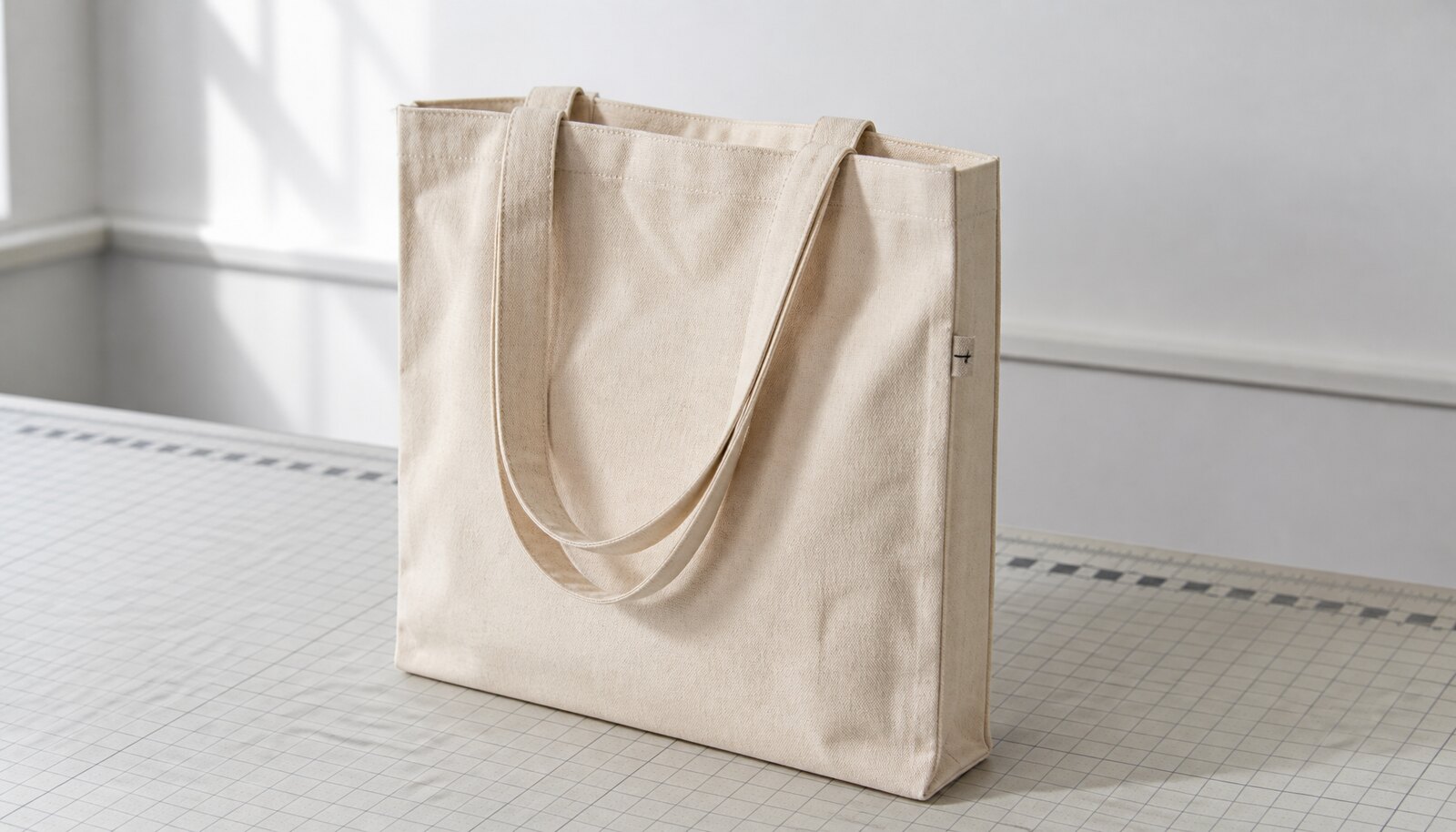
Start With the Event Brief, Not the Tote
Canvas book fair totes for corporate events are not generic giveaways. They are distribution tools that need to carry books, catalogs, notebooks, and sometimes samples without collapsing, twisting at the handle, or looking cheap once they reach the end recipient. If the bag is meant to survive the event and get reused afterward, that changes almost every sourcing decision: fabric weight, seam construction, decoration method, and even the packing method.
Procurement problems usually begin when the buyer asks for price before the use case is fixed. One supplier quotes a light promo tote, another quotes a heavier retail-style bag, and both use the same product name. Without a clear event brief, the quote that looks cheapest may simply be based on thinner canvas, a smaller decoration area, or a less durable finishing method. The first task is to define what the bag has to do in the real event environment.
- State whether the tote is for a one-time handout, a VIP gift, a retail bundle, or a reusable carry bag.
- Write down what will go inside the tote, including approximate book weight or the heaviest load it must hold.
- Name the distribution channel: registration desk, direct mail, warehouse fulfillment, or on-site handoff.
Lock the Tote Spec That Actually Changes Price
For canvas totes, fabric weight is only one part of the spec, but it is the part that most obviously affects feel, print appearance, and freight cost. A practical starting point for corporate event bags is usually 8 oz to 12 oz canvas. Lighter canvas lowers weight and can reduce spend, but it also feels less structured and can show more distortion around heavy inserts. Ten oz is often the middle ground when the buyer wants a credible hand feel without moving into premium retail territory. Twelve oz and above gives a more substantial body and is usually better when the bag must stand up on a table or be reused after the event.
The rest of the spec matters just as much. Handle length changes how the bag is used in the field. Gusset depth changes what the tote can carry and how the print sits on the panel. Seam construction changes whether the bag survives repeated load cycles. If the RFQ does not name these details, suppliers will fill in their own assumptions and you will not be comparing the same product. For book fair totes, the best RFQ is dimensioned, measured, and explicit about construction.
- Specify canvas weight or GSM, not just the word canvas.
- State finished dimensions, gusset depth, handle length, and whether the bag has one main panel or multiple construction pieces.
- Ask for reinforced handle anchors and a visible stitch pattern in the sample, not only a decorative finish.
- Confirm whether the canvas is natural, bleached, dyed, or prewashed, because color and hand feel affect the final look.
- If the bag needs to hold books or catalogs, ask the supplier to confirm seam construction for load-bearing use.
Print Method Comparison: Tradeoffs That Matter to Buyers
Screen printing is still the default method for many canvas book fair tote programs because it handles flat logos well, scales efficiently, and usually holds up better than fast-turn decoration when the cure is done correctly. The strengths are simple: strong color laydown, good repeatability, and low unit cost at volume. The tradeoffs are equally important: each color adds setup work, small text can get muddy, and artwork with gradients or fine internal detail can lose sharpness. Screen print is the right rejection point when the design is still moving, the order is tiny, or the logo needs photographic detail.
Heat transfer and DTF are more flexible on art complexity and often better when the buyer needs names, gradients, or a short run with a narrow deadline. The gain is speed and lower setup friction; the cost is hand feel and the risk of edge lift, cracking, or a more plastic surface after repeated folding. Embroidery can create a premium look, but it is best for small marks and simple shapes. It is the wrong choice when the logo is large, text is tiny, or the buyer expects the print to look flat and graphic rather than stitched. A sewn patch or woven label can improve presentation, but it adds a sewing step, a second artwork review, and another chance for placement error.
- Use screen print when the artwork is stable, the quantity is repeatable, and the bag must feel like a durable event tote.
- Use transfer methods when the art is detailed, personalized, or needed on a short schedule, then confirm the hand feel before approval.
- Use embroidery or sewn branding only when the mark is small enough to survive stitch translation without losing legibility.
- Reject direct decoration methods when the artwork includes very fine type, thin reversed lines, or large solid fills that would look heavy on canvas.
Know Where the Bags Are Actually Being Made
The same tote can come to you through very different supplier routes, and that changes both price and risk. Factory direct means the bag is made and decorated in one place, which is usually the cleanest path for volume and repeat orders. A regional decorator working on blank stock can be faster and more flexible for small or urgent programs. A converter sits in the middle, buying blanks and adding decoration or extras before shipment. These are not interchangeable routes, even if the product photos look identical.
This is where procurement teams can waste the most time if they compare only the headline unit price. A factory quote may include the bag, stitching, print, and packing in a single flow. A decorator quote may only cover decoration on a finished blank. If you do not separate the routes, the supplier with the lowest apparent price may be hiding freight, blank-bag cost, or setup charges somewhere else. Compare the same size, the same canvas weight, the same print method, the same packing, and the same destination term before you decide.
- Ask the supplier if it is a factory, a decorator, or a converter before you compare numbers.
- Do not compare a blank-stock decorated bag against a fully manufactured and printed tote as if they were the same product.
- Use the sourcing route as a decision filter: factory direct for volume, regional decorator for speed, converter for flexibility.
Write an RFQ That Prevents Quote Noise
A good RFQ for canvas book fair totes for corporate events should read like a production brief, not a marketing request. It needs the bag dimensions, fabric weight, decoration method, print size, color count, and packing assumptions. It also needs the event deadline, destination, and whether the bags must be inserted with literature or tags. The more the supplier has to assume, the more likely you are to get a quote that looks low but does not survive production reality.
The artwork file matters too. A screenshot, logo image, or web asset is not enough if the tote has a defined print area. Buyers should send one locked art file, one dimensioned placement drawing, and one note on acceptable color target. If the bag will have variable names, the supplier needs a controlled data file and a clear rule for proofing. The best RFQ makes it hard for the supplier to guess.
- Include finished dimensions, canvas weight, handle length, gusset depth, and intended load.
- Specify print area in millimeters or inches and show where it sits relative to seams and the top hem.
- State the Pantone target or the visual color target if Pantone matching is not required.
- Separate decoration, packing, labeling, and freight so the landed cost can be compared cleanly.
- If inserts are required, state the exact insertion order and whether they are loose, folded, or pre-packed.
Compare MOQ, Lead Time, and Landed Cost Together
MOQ is not just a quantity threshold. It is often the point where the print method and sourcing route become economically reasonable. Screen printing usually gets cheaper as volume rises because setup is spread across more units. Transfer methods can work well at low quantity, but they often lose their cost advantage once the order gets larger. Embroidery tends to sit in the premium zone because the stitch file, machine time, and finishing labor all add to the cost structure. If the buyer wants the wrong method for the run size, the quote will look expensive for reasons that are actually structural, not arbitrary.
Lead time should be treated as a chain of steps, not a single number. Artwork approval, sample production, sample sign-off, bulk production, packing, and shipment each have their own risk. The cheapest quote is often not the cheapest landed cost when it creates a schedule miss, a rush freight charge, or a reprint. Landed cost is the number that matters for procurement: bag cost, decoration, packing, inland handling, export documents, freight, and any likely rework risk. A quote that omits one of those pieces is not cheaper; it is incomplete.
- Ask the supplier to quote MOQ, lead time, and landed cost in one view so the order is not optimized on price alone.
- Treat setup-heavy methods as better for repeat orders and simpler methods as better for short-run or urgent programs.
- Add schedule risk to the commercial comparison if the tote is tied to a fixed event date.
Approve the Sample Like a Buyer, Not Like a Designer
A sample should prove that the tote can be built repeatedly, not only that it looks good in a photo. The sample has to show the actual canvas weight, the actual stitch pattern, the actual print method, and the actual packing method. If the quote says screen print on 10 oz canvas with reinforced handles, then the sample should be checked under those exact assumptions. A loose sample from another bag is not useful for procurement because it does not prove the same build can be repeated on your order.
For a time-sensitive order or a design with fine detail, ask for a physical pre-production sample before bulk release. The sample approval should be tied to a specific file version and a specific approval owner. Once it is signed off, lock the artwork and the placement drawing. If the bulk run is supposed to match the approved sample, the sample itself needs to be clear enough to reject anything that drifts in placement, color, or construction.
- Check the bag flat and filled so you can see how seams and print area behave under load.
- Confirm that the sample uses the same blank bag, same ink or transfer, and same stitch pattern as the bulk plan.
- If names or variable data are involved, verify spelling and file version control before the sample is approved.
- Do not release bulk until the sample, packed carton photo, and artwork version are all signed off.
Set QC Acceptance Criteria That Catch Real Failures
Quality control for canvas totes should be measurable. A vague instruction to make it look good is not enough once the order is in production. Buyers should define placement tolerances, print durability expectations, and seam checks before the job starts. The point is not to over-engineer the tote; it is to make sure the factory knows what will be rejected and why. When the acceptance criteria are clear, the supplier can self-check during production instead of pushing the problem to the end of the line.
The most useful QC structure is split into appearance, construction, durability, and packing. Appearance covers print registration and color. Construction covers handles, seams, and stitch finish. Durability covers rub resistance and, when relevant, wash or fold performance. Packing covers carton count, labels, and damage prevention. If any one of those areas is weak, the event team ends up sorting defects at the venue instead of handing out clean bags.
- Set logo placement tolerance in writing, typically plus or minus 5 mm on the front panel for standard tote artwork.
- Require no visible smear after a 10-pass dry rub test on a cured screen print.
- Define handle reinforcement and seam stitching, such as box-X or bartack, and reject skipped stitches or loose ends longer than 5 mm.
- Ask for a simple hang test on a filled tote, such as 5 kg for 60 seconds, when the bag is meant to carry books or catalogs.
- Compare bulk cartons against the signed pre-production sample, not against a photo or an earlier shipment.
- Use zero tolerance for missing pieces in the sampled cartons and for packing that differs from the approved method.
Plan Packing for Distribution, Not Only for Freight
Canvas totes are often opened immediately after delivery, which means the packing method affects the first impression as much as the bag itself. Flat-packed bags are usually best for freight and keep the canvas cleaner, but over-compression can crease the print panel or crush the edges. If inserts, flyers, or event cards need to go inside the bag, the factory must know the insertion order because that changes labor cost and carton density. Packing details are not back-office noise; they are part of the event execution plan.
The buyer should also think about how the shipment will move once it reaches the destination. Direct-to-venue shipments need accurate carton labels and a clear count per case. Warehouse or 3PL deliveries may need pallet instructions, PO references, and receiving labels. If the tote is going to be handed out at registration, easy-open cartons and clear outer labeling reduce bottlenecks. If the order is distributed in stages, carton configuration matters more than the individual bag photo.
- State whether the tote must be flat-packed, folded with tissue, or pre-filled with inserts.
- Confirm carton count per case and whether the pack density creates a crush risk on the print panel.
- Add carton labels, PO references, and destination instructions if the bags are moving through a warehouse or event team.
- Ask for one packed carton photo from the actual bulk before the shipment is released.
Use a Simple Decision Matrix for the Final Buy
For most corporate buyers, the right answer is not the cheapest tote or the flashiest decoration. It is the tote whose failure mode is easiest to accept. If the event is repeatable and the artwork is stable, factory direct screen print on a midweight canvas is usually the most efficient route. If the order is small, urgent, or personalized, a regional decorator on blank stock may be the safer operational choice even if the unit price is higher. If the brief is premium and the print area is small, embroidery or a sewn label can improve perceived value without overcomplicating the bag.
The same logic applies to canvas book fair totes for corporate events across the whole buying cycle. Choose the method that fits the art, the schedule, the quantity, and the reuse expectation. Then make the supplier prove it with a sample, a packing plan, and acceptance criteria written before production begins. That is the difference between buying a tote and managing a usable event asset.
- Choose screen print when the art is simple and the run is repeatable.
- Choose transfer methods when the artwork is detailed or personalized and the order is small or urgent.
- Choose embroidery or sewn branding when the mark is small and premium perception matters more than the lowest unit price.
- Choose heavier canvas and reinforced seams when the tote must survive reuse after the event.
Specification comparison for buyers
| Scenario | Best route / print method | Typical MOQ | Typical lead time | Landed-cost profile |
|---|---|---|---|---|
| Simple corporate logo, 1 to 2 colors, repeatable artwork | Factory direct screen print on 10 oz to 12 oz canvas | 300 to 1,000+ | 20 to 45 days after sample approval | Low unit cost at scale, moderate setup per color, freight efficient if cartonized well |
| Fine detail, gradients, or mixed names on a short run | Regional decorator on blank stock with DTF or heat transfer | 25 to 250 | 5 to 15 days if blanks are in stock | Higher unit cost, lower setup, faster access to small quantities |
| Premium executive gift or retail-style presentation | Small screen print plus woven label, embroidery, or sewn patch on heavier canvas | 50 to 300 | 10 to 25 days | Medium to high unit cost, extra sewing step, better perceived value |
| Personalized names, tiered VIP sets, or data-driven distribution | Digital transfer through a controlled domestic converter | 1 to 100 | 3 to 10 days | Highest flexibility, usually higher per-unit cost, low setup burden |
| Urgent event with fixed ship date | Blank stock plus nearby decorator, usually transfer-based decoration | 25 to 200 | 3 to 12 days depending on stock | Schedule-friendly, but freight and decoration cost can raise the total landed cost |
| Large recurring rollout with stable artwork | Overseas tote factory with in-line screen print and bundled packing | 500 to 5,000+ | 30 to 60 days | Lowest landed cost at volume when the spec is locked and freight is planned early |
| Reusable tote that will carry books and collateral multiple times | Heavier canvas with cured screen print and reinforced seam construction | 300 to 2,000 | 25 to 50 days | Moderate unit cost, better durability, lower replacement risk |
| Budget handout where price matters more than long reuse | 8 oz canvas or cotton canvas blend with one-color screen print | 500+ | 20 to 40 days | Lowest entry price, but fewer durability reserves and weaker premium perception |
Buyer checklist before sampling
- Define the event use case before asking for price: giveaway, VIP gift, retail bundle, conference carry bag, or book fair handout.
- Lock the tote size, gusset depth, handle length, canvas weight or GSM, and whether the bag is lined or unlined.
- State the exact decoration method you want quoted, plus a backup method if the first choice becomes a timing or MOQ problem.
- Specify logo placement with a dimensioned artwork file, not a screenshot, and include the acceptable Pantone or visual color target.
- Ask suppliers to separate blank bag cost, decoration cost, packing cost, and freight so quotes can be compared on the same basis.
- Confirm the production route: factory direct, blank-stock decorator, or converter buying in blanks and adding decoration.
- Set the approval path in writing: who signs off artwork, who signs off the sample, and who has final release authority for bulk.
- Ask for a physical pre-production sample when the artwork is detailed, the schedule is tight, or the order is the first run with that supplier.
- Write the event deadline as a backward schedule with artwork approval, sample approval, bulk production, packing, and ship window dates.
- Require carton count, carton size, packing method, and whether inserts, tags, or retail labeling are included.
Factory quote questions to send
- What canvas weight or GSM are you quoting, and is it natural, bleached, dyed, or prewashed?
- Which production route are you using: making the bag in-house, decorating blank stock, or sourcing blanks from another factory?
- What is the exact print method, how many colors are included, and what setup charge applies per color, screen, plate, or file?
- What is the minimum order quantity by color, by print method, and by decoration location?
- Does the quote include sampling, strike-off, pre-production sample, and one revision round before bulk production?
- What is the standard production lead time after sample approval, and what parts of that timeline depend on artwork being final?
- How will the bags be packed per carton, and is the carton size optimized for the freight mode you quoted?
- Can you show a close-up of print registration, seam reinforcement, and handle stitching from a previous run of the same build?
- Which incoterm is quoted, and what separate charges apply for inland trucking, export documents, labeling, or destination handling?
- If the bulk run misses color or placement, what is your correction process, and do you remake or rework against the same delivery date?
Quality-control points to confirm
- Finished bag dimensions should stay within an agreed tolerance, typically plus or minus 10 mm on height and width unless the tote is oversized or the insert fit is tight.
- Print placement should stay within plus or minus 5 mm of the approved position and should keep clear of seams, hems, and bartacks by the distance agreed in the spec.
- The approved strike-off and bulk sample should match under neutral indoor light or D65-style lighting; reject if the front panel shows a visible color shift.
- Screen print should pass a 10-pass dry rub test with no visible smear or color transfer to a white cloth when the ink is fully cured.
- For reusable totes, ask for one gentle cold-water wash or spot-clean test when the end use requires repeated handling; reject if the print cracks or delaminates.
- Heat transfer or DTF should show no edge lift after repeated fold and unfold cycles and no lifting at the corners after the rub test.
- Embroidery should have no skipped stitches, no puckering that distorts the panel, and trimmed thread ends under 5 mm.
- Handle anchors and top seams should follow the approved stitch pattern, such as box-X or bartack reinforcement, with no skipped stitches or seam opening.
- If the tote must carry books or catalogs, complete a simple hang test on a filled sample, for example 5 kg for 60 seconds, without seam failure.
- The bulk run should be checked against the signed pre-production sample, not against a photo or an earlier batch from another order.