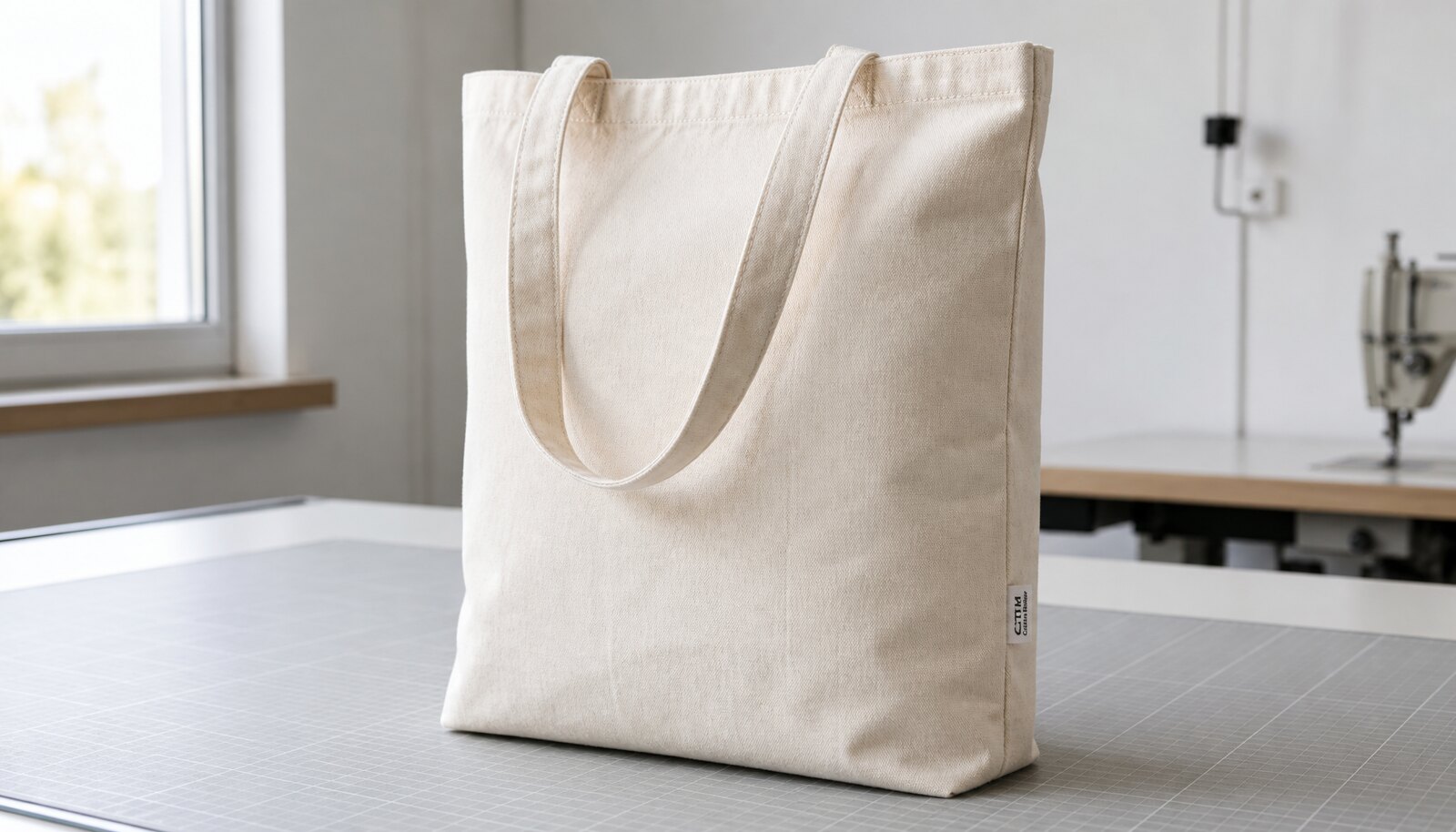
Start with the event use case, not the artwork
For canvas book fair totes for corporate events, the first sourcing decision is not logo placement. It is how the bag will actually be used. A tote that only carries a badge, flyer, and notebook can use a lighter canvas and simpler seam build. A tote that needs to hold hardcovers, catalogs, a sample pack, or a laptop sleeve needs a different construction. Procurement teams get better quotes when the use case is stated in concrete terms instead of generic marketing language.
Define the operational load before you request prices. State the average item weight, the number of pieces each attendee will receive, whether the bag must stand upright on a registration table, and whether the tote is expected to be reused after the event. Those details drive fabric weight, seam reinforcement, handle length, carton count, and freight cube. If a supplier cannot quote against the actual use case, they are not yet quoting a procurement-ready spec.
- One-time giveaway: lighter canvas, simpler print, lower packaging spend
- Book-carrying event tote: stronger body, reinforced handles, better seam control
- Reuse-heavy program: heavier canvas, tighter finishing, more attention to shrinkage and colorfastness
- If the bag must stand upright, ask for a structured base or tighter weave rather than assuming the logo will give it shape
Choose canvas weight by finished performance, not by label
Canvas weight should be treated as finished fabric GSM, not just a shorthand description. For light conference handouts, 280-340 GSM can be enough. For book fairs and reusable corporate totes, 340-400 GSM is a safer baseline because it gives the bag enough body to hold shape without making sewing unnecessarily slow or expensive. Once you move above 400 GSM, ask whether the factory has the needle, thread, and operator experience to sew clean seams without puckering.
Weave and finish matter as much as the weight number. A tighter plain weave or duck canvas generally stands up better than a loose cloth that looks similar in a sample photo. If the tote will be steam pressed, pre-shrunk, or laundered after production, request the expected shrinkage range on the same quote sheet. A sensible procurement target is finished dimensions within +/- 1 cm and shrinkage under 3 percent after the stated treatment, unless your program allows more variation.
- 280-340 GSM: practical for light event handouts and short-use giveaways
- 340-400 GSM: the common starting point for book fair and reusable corporate totes
- 400+ GSM: premium feel, but sewing speed, needle wear, and freight cube become more important
- Ask whether the weight number refers to raw cloth or finished fabric after washing, dyeing, or pressing
Seam and handle construction determine whether the tote survives real use
A tote that fails at the handles is usually a construction problem, not a branding problem. Ask the supplier to spell out the seam plan: side seams, top hem, handle attachment, and whether the factory uses double-needle stitching, lockstitch, or a box-X bartack at the anchor points. For event totes that will carry books, 6-8 stitches per inch on load-bearing seams is a practical starting point. The goal is even tension, no skipped stitches, and no thread break at the stress points.
Handle build affects comfort and tear resistance. Self-fabric handles should be wide enough to spread the load, while webbing handles should be matched to the tote weight so they do not feel like a quick add-on. If the bag is meant to carry hardcovers or sample kits, ask for a simple load or pull test on the approval sample and require no seam opening, no handle creep, and no visible anchor failure. A tote that looks good but tears at the handle is an avoidable sourcing mistake.
- Request 6-8 stitches per inch on load-bearing seams unless the factory proposes a better construction with evidence
- Use bartacks or a box-X at handle anchors so the force is not carried by a single seam line
- Specify handle width and handle drop so the tote can be carried comfortably by hand or shoulder
- Require the sample to survive a buyer-defined load test before bulk approval
Natural, bleached, or dyed canvas changes the entire quote
Natural canvas is the lowest-risk route for most corporate event programs. It is forgiving on cost, widely available, and works well with one-color logos. The tradeoff is lot-to-lot shade variation, which is usually acceptable for event totes but less ideal for a retail-style presentation. Bleached or white canvas gives a cleaner background and stronger contrast for smaller logos, but it adds process steps and can tighten the tolerances on print consistency. Dyed canvas is useful when the brand color or premium look matters more than price.
If you are sourcing a large run, ask for the master swatch, the shade band, and the finish process used on the cloth. The important question is not whether the sample looks good under factory lights, but whether bulk lots will match within a reasonable tolerance in daylight. For destination markets with stricter chemical rules, ask for azo dye, formaldehyde, and colorfastness testing on the fabric itself. If the supplier only offers general quality assurance without documentation, the risk is still unresolved.
- Natural canvas: best for cost control and broad event use
- Bleached or white canvas: cleaner retail look and better contrast for small logos
- Dyed canvas: useful when brand color or premium presentation is the priority
- Require a shade reference and written color tolerance before bulk production
Print method should match artwork complexity and durability requirements
Screen printing remains the default for most canvas book fair totes because it is durable and cost-efficient on simple logos. For procurement teams, the key question is not just the number of colors. It is whether the artwork can survive the factory's print tolerance. Ask for minimum line width, minimum text size, print placement tolerance, and whether the quoted price assumes one hit or multiple passes. A quote based on simplified artwork is not the same as a quote based on your production file.
Transfer print is useful for short runs or complex artwork, but it should be treated as a different product rather than a cheaper version of screen print. If the tote will be folded, handled, and reused, require the supplier to explain abrasion behavior and any expected wash or rub limits. Woven labels and sewn patches are slower and more expensive, but they are often the cleanest choice for premium corporate programs that want durability without a large printed panel. If the logo depends on fine type, the print method becomes a quality risk, not just a decoration choice.
- Screen print: best for simple logos, high volume, and durable event use
- Transfer print: useful for short runs and more detailed artwork, but check abrasion behavior
- Woven label or sewn patch: good for premium programs and subtle branding
- A practical print tolerance to request is +/- 5 mm on placement and a minimum line width the factory can consistently hold
Supplier region and compliance should be part of the RFQ, not an afterthought
The supplier route changes the quote as much as the tote spec. A direct factory usually gives better visibility into fabric sourcing, stitching, and print control. A trading company can be useful if you need multiple categories or a faster commercial response, but you need to know which factory will actually cut, sew, and decorate the bags. A local decorator working from imported blanks can be practical for urgent events, but blank quality issues may not appear until bulk goods arrive. Procurement should ask who owns each step before comparing prices.
Region matters too. China often has the broadest canvas supply base and strong print capacity at scale. Vietnam and India are common alternatives for cut-and-sew programs, while Pakistan is frequently considered for heavier cotton woven goods. Turkey can make sense for Europe-bound replenishment where transit time matters. Whatever region you choose, ask for factory audit evidence such as ISO 9001, BSCI, SEDEX, or SMETA, and request product testing that matches the destination market. Audits are useful, but they do not replace product-level testing.
- Ask who actually cuts, sews, prints, and packs the tote
- For EU-bound programs, request REACH-relevant substance control and supporting test reports where applicable
- For US programs, consider lead-in-print checks and California Prop 65 screening when the route or end user makes it relevant
- OEKO-TEX Standard 100 can be a useful fabric-screening signal, but it is not a substitute for market-specific testing
Compare quotes on the same spec sheet, then sanity-check the price band
A useful quote comparison is built on like-for-like inputs. If one supplier quotes 12 oz natural canvas with one-color screen print and flat packing, while another quotes a dyed 14 oz bag with a sewn label and tissue packing, the unit price is not comparable. Normalize fabric weight, print coverage, packing method, and carton count before you compare numbers. Otherwise the cheapest quote is often just the least complete one. A clean RFQ saves time because it forces the factories to price the same product.
As a sanity check, simple stock-canvas event totes with one-color print often cluster in the low single-digit USD range at common MOQ bands, while heavier, dyed, or embellished styles usually move into the mid-single-digit USD range before freight. These are validation bands, not target prices. If a quote comes in far below that range, check what was excluded: setup, packing, carton marks, or compliance testing. If it is far above, the supplier may be pricing in low yield, custom dyeing, or inefficient cartonization.
- Keep one master spec sheet and send it to every supplier
- Normalize all quotes to the same fabric weight, print method, and packing plan
- Compare landed cost, not just FOB, because freight cube can change the real unit economics
- Record excluded items clearly: sample fee, setup fee, label cost, and export carton surcharge
Sample approval should test function, not only appearance
A sample is only useful if it reflects the final production route. The approval sample should match the agreed canvas, print method, trims, and packing. If the tote is being handed out as part of a book fair kit, test it with actual books or comparable weight before sign-off. The most common mistake is approving appearance and ignoring load behavior, which is exactly what the buyer will be judged on at the event. A tote that looks right on the table but sags or twists under load is not ready for bulk.
Set pass/fail criteria before the sample leaves the factory. Useful thresholds include dimension variance within +/- 1 cm overall, print position within +/- 5 mm, no skipped stitches, and no seam opening after the target load test. For a book fair program, many buyers set a 5-8 kg hold test for several minutes as a practical baseline, then adjust upward or downward based on the event load. If the program has a color requirement, use a master swatch and require daylight review, not only factory light. A Delta E target of <= 2.5 is a reasonable negotiation point when color control matters.
- The sample should use the same fabric weight, print method, and packing method planned for bulk
- Test the tote with the actual event load before approval
- Use daylight inspection for color and print review, not just indoor factory lighting
- If the supplier changes handle length, reinforcement, or print placement after sample approval, treat it as a spec change
Packing and carton details affect receiving, damage, and freight cost
Packing choices affect both damage rate and landed cost. Flat-packed totes minimize cube and usually suit event distribution, but a tight fold can crease the print and make heavier canvas harder to reopen. Folded with tissue or banding looks better for retail-style handout programs, but it adds labor and can raise freight if the carton dimensions grow. If the order uses labels, patches, or side tags, make sure the packing method does not crush them during transit. Packing should be part of the RFQ, not something the factory decides after the order is placed.
Ask for carton dimensions, piece count, gross weight, and pallet pattern before final approval. A practical target is to keep cartons easy to handle and below the carrier's awkward-weight threshold; many teams try to stay under 15-18 kg gross per carton. Also confirm whether the supplier uses moisture protection, outer carton marks, and barcode labeling, because those details matter when the order goes through a third-party warehouse or a multi-site event distribution plan. Receiving teams need accurate pack data to avoid manual rework.
- Flat pack: lower cube and simpler carton loading, but more creasing risk
- Folded with tissue: better presentation, higher packing labor and cube
- Polybagged per piece: useful for retail distribution, not always necessary for event handouts
- Confirm carton dimensions, gross weight, and palletization before freight booking
Turn the RFQ into a decision tool, not a price request
The RFQ should give factories enough detail to quote the same product. Include the exact event use case, target load, fabric weight, seam build, print method, packing method, destination market, and delivery date. If you leave any of those open, the quote will drift toward the supplier's default tote instead of your event tote. That creates false price comparisons and extra revision cycles. The right spec sheet makes the supplier do the work once, not three times.
The fastest way to improve procurement outcomes is to ask for three things in every bid: a clean spec sheet, a pre-production sample schedule, and a compliance document list. If the supplier cannot answer those cleanly, they are not ready for a bulk decision. Use the same list for every supplier so your internal team can compare risk, not just price. That is especially important when the tote is tied to a fixed event date and there is little room for late corrections.
- Send one spec sheet with the same inputs to every supplier
- Require a sample timeline and bulk lead time broken into fabric, print, sewing, packing, and shipment
- Ask for compliance documents before award, not after shipment
- Record every deviation from the spec so stakeholders can compare quotes on equal terms
Specification comparison for buyers
| Spec decision | Recommended option | Operational spec to request | Buyer risk to check |
|---|---|---|---|
| Fabric weight | 12 oz / 340 GSM cotton canvas | Ask for finished GSM, not just raw cloth weight; request shrinkage target and lot tolerance | Too thin for books or repeated reuse; bulk fabric can feel lighter than the sample if the spec is vague |
| Fabric weight | 14-16 oz / 400-540 GSM canvas | Confirm needle size, thread type, seam allowance, and whether the sewing line can hold the weight cleanly | Higher cost and slower sewing; rough stitching and puckering are more likely if the factory is not used to heavy canvas |
| Weave and finish | Tight plain weave or duck canvas with pre-shrink treatment | Request weave description, finish process, and post-treatment shrinkage range | Natural shade variation and post-press shrinkage can change bag dimensions after approval |
| Seam construction | Double-stitched load seams with bartacks at handle anchors | Target 6-8 stitches per inch on load-bearing seams and a 1 cm seam allowance | Weak handle anchors, skipped stitches, and seam opening under load |
| Handle build | 2.5-3 cm wide self-fabric handles or matched webbing handles | Specify handle length, handle drop, reinforcement pattern, and any shoulder carry requirement | Handles that cut into the hand, twist, or tear at the anchor points |
| Print method | 1-color screen print for most corporate events | Request minimum line width, text size, print placement tolerance, and number of print passes | Fine text can fill in and artwork can drift if the factory quotes against simplified art |
| Decoration alternative | Woven label or sewn patch for premium programs | Confirm label size, stitch type, placement, and whether it replaces or supplements the print | Higher unit cost and tighter artwork limits; label placement can interfere with packing |
| Packing method | Flat-packed or neatly folded by event use case | State pieces per carton, carton LxWxH, gross weight, and carton marks | Freight cube, receiving damage, and mismatched carton counts can erase a small unit-price saving |
| Compliance route | Market-specific testing plus factory audit evidence | Ask for REACH, OEKO-TEX Standard 100, azo, formaldehyde, and lead-in-print testing where relevant | Audit reports do not replace product testing; missing documents can delay approval at import or by corporate compliance teams |
Buyer checklist before sampling
- Define the tote's real job: brochure giveaway, book-carrying bag, retail-style reuse bag, or employee event kit.
- Set the target load in kilograms and state whether the bag must stand upright on a table or shelf.
- Lock finished fabric GSM, weave type, and acceptable shrinkage range before asking for quotes.
- Specify seam build: seam allowance, stitches per inch, bartacks at handle anchors, and any top-hem reinforcement.
- Approve artwork limits in writing: number of colors, minimum line width, minimum text size, and print position tolerance.
- Choose a packing format and carton limit, including gross weight target and whether bags are flat-packed or folded.
- Request compliance documents and testing for the destination market before production starts, not after shipment.
Factory quote questions to send
- Which factory, sewing line, and print shop will actually make the bulk order, and do you subcontract any part of the process?
- What is the finished GSM of the canvas, what shrinkage range do you expect, and what tolerance do you allow between sample and bulk?
- What seam construction are you quoting, including seam allowance, stitches per inch, and bartack count at the handle anchors?
- Which print method are you quoting, what is the minimum line width and text size you can hold, and what is the print position tolerance?
- What compliance documents or test reports can you provide for the destination market, including REACH, OEKO-TEX, azo, formaldehyde, or lead-in-print checks where relevant?
- What are the MOQ break points by fabric color, print color, and added trim such as labels, pockets, zippers, or tissue packing?
- What are the sample charge, sample lead time, carton dimensions, pieces per carton, gross weight, and bulk production lead time after approval?
Quality-control points to confirm
- Finished bag dimensions should stay within +/- 1 cm of the approved sample unless the spec sheet says otherwise.
- Handle length, handle drop, and gusset depth should remain within +/- 0.5 cm of the approved sample.
- Load-bearing seams should show no skipped stitches, no open seam greater than 2 mm, and no broken thread at the handle anchors.
- Load-bearing seams should target 6-8 stitches per inch unless a different construction is approved in writing.
- The tote should pass a buyer-defined load test, such as holding the intended event load for 10 minutes without seam failure, handle tear, or visible distortion.
- Print placement should stay within +/- 5 mm of the approved position, with no smearing, bleeding, or misregistration beyond the agreed tolerance.
- Color should match the approved master swatch under daylight review, with a practical target of Delta E <= 2.5 where color control matters.
- Carton count, carton marks, and packing method should match the approved packing list exactly to avoid receiving and distribution errors.