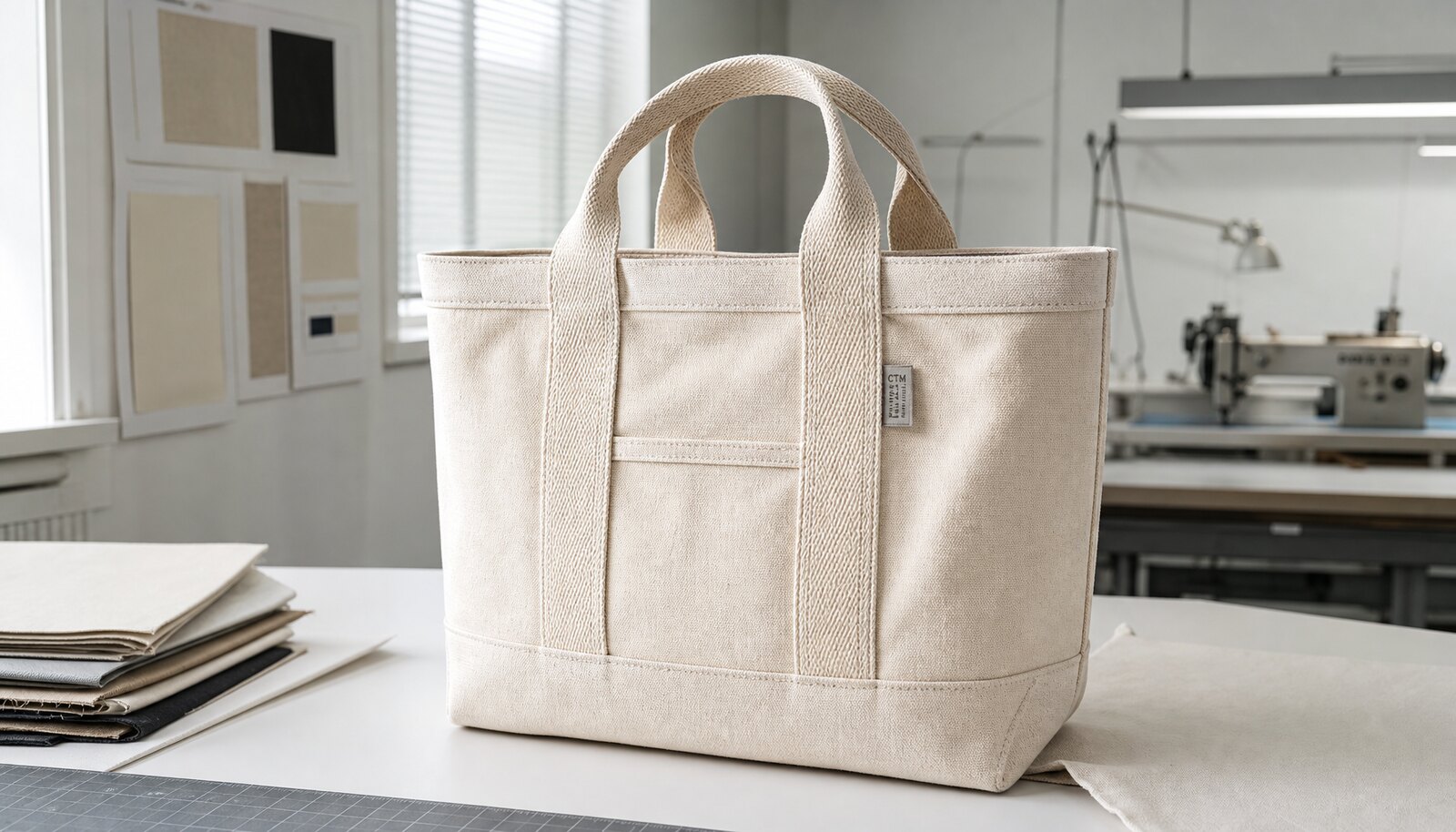
Why coastal gift shops need a tighter tote spec than a generic promo bag
Canvas boat totes for coastal gift shops are not the same buy as a giveaway tote for an event. Retail shelves, tourist traffic, and souvenir pricing all expose quality problems fast. If the bag looks soft, the print sits crooked, or the handles twist under load, the item gets marked down or rejected by the retailer before the season ends. The buying job is to control those risks before bulk production starts.
A good sourcing brief should begin with the tote's commercial role. Is it a premium souvenir, a practical beach carryall, or a lighter impulse gift? That answer drives fabric weight, construction, print durability, and the amount of packaging detail the supplier should include in the quote. For this product, the standard failure mode is not just poor sewing; it is a mismatch between the bag's build and the store's price point.
- For souvenir shops: prioritize appearance, upright shape, and clean logo presentation.
- For resort stores: prioritize durability, handle comfort, and repeatable color matching.
- For multi-store retail: prioritize carton efficiency, barcode readiness, and consistent pack counts.
Fabric weight, body structure, and the handfeel that sells at retail
The most common starting point is 12 oz canvas, which gives a balanced feel for a boat tote without making the bag too heavy before the customer fills it. If the tote is positioned as a premium coastal gift item, 14 oz can justify a higher shelf price and helps the bag hold its shape better. For lower-price programs, 10 oz can work, but only if the print, stitching, and packed presentation still read as retail quality.
Do not let a supplier quote only the word 'canvas' without a named weight. Ask whether the weight is measured before finishing or after washing, because the final feel can change. Also confirm the weave density and shrink behavior if the bag will be prewashed or enzyme-finished. A loose weave can make print edges look soft and can let light-colored bags appear uneven under store lighting.
- 12 oz: common for standard retail and souvenir bags.
- 14 oz: better for structured display, heavier content, and stronger perceived value.
- 10 oz: only if price pressure is high and the print is simple.
Choose the print method before you compare prices
For canvas boat totes, print method affects both unit cost and the approval process. Screen print is usually the best choice for simple coastal artwork, one- or two-color logos, and repeat orders because the ink lays down well on canvas and looks stable after use. Heat transfer can handle more complex art or short-run tests, but it can change the surface feel and may not age as well on a bag that sees abrasion from sand, sunscreen bottles, and repeated folding.
A strong RFQ should state the artwork color count, print size, and print location. If the logo sits close to a seam or gusset, the supplier needs to confirm placement limits before making screens or transfer films. Ask for a strike-off or pre-production print that uses the exact blank, not a paper proof alone. Digital renderings do not tell you how heavy the ink deposit will look against natural canvas.
- Screen print: best for repeat volume and flat, clean artwork.
- Heat transfer: best for short-run, multi-color, or versioned designs.
- Embroidery: usually less common on boat totes and adds cost and bulk.
How to compare supplier quotes without missing hidden costs
Two quotes can look close on unit price and still produce very different landed costs. One supplier may include screen fees, woven label application, and carton packing in the price; another may quote only the bag and add all extras later. Compare on the same base: fabric weight, handle type, print colors, packing method, sample cost, and incoterms. Otherwise, the cheapest quote often becomes the most expensive order once the missing items are added.
For direct-factory sourcing, the quote should identify the body fabric, lining if any, handle webbing width, and whether the bag is sewn or printed in-house. For trading-company sourcing, ask who actually controls the sample and who owns the production line. If the factory is not named, the buyer loses visibility over schedule risk and QC accountability. That matters when the same tote must be replenished for next season with the same artwork and color.
- Compare the same carton count and carton size across all suppliers.
- Separate product cost from setup cost and freight cost.
- Insist on a quote line for each artwork version if you need store-specific runs.
MOQ logic: why tote minimums should follow setup cost, not only unit demand
Boat tote MOQs are usually driven by fabric color, screen setup, and cutting efficiency. A supplier may accept a low total quantity, but if you split the order into many colorways or multiple artworks, each version can carry its own setup cost and small-run penalty. The right question is not simply 'What is your MOQ?' It is 'What is the MOQ per fabric color and per print version?'
For coastal gift shops, this matters because assortments often include several destination phrases or region-specific graphics. A supplier willing to do 300 total units may still require 150 per design, which can destroy margin on slow-moving SKUs. If you need flexibility, consider one blank body with one standardized print position, then vary only the message or hangtag. That keeps setup clean and lowers the chance of a late production change.
- MOQ by color matters when you use natural, navy, or custom dyed bodies.
- MOQ by print version matters when stores want local destination names.
- Lower MOQ often means higher setup cost per piece.
Sample proofing: what a real approval sample must show
A buyer should not approve a canvas boat tote from a PDF alone. The first physical sample must show the actual fabric weight, handle feel, stitch density, print opacity, and bag shape. If the tote uses a boxed bottom, the sample should stand upright on a flat surface without folding inward. If the bag has a side label, the label position and stitching should be visible and consistent with production intent.
Use the sample to settle details that are hard to see in artwork files: print edge crispness, how close the logo sits to seams, whether the handle webbing twists, and whether the bag mouth stays open enough for retail display. If the sample is close but not exact, write the deviation into the approval notes. Otherwise the factory may treat the sample as flexible and ship a 'similar' result later.
- Check one sample with the actual blank fabric, not a substitute.
- Verify handle length on the sample against real user carry comfort.
- Confirm the sample includes the final label, hangtag, and carton marking format.
Print proofing checklist for coastal artwork and logo placement
Coastal gift shop art often looks simple, but simple artwork is where print errors become obvious. Thin anchor lines, small shell details, and text curves can fill in or break up when the screen count or stencil quality is weak. Keep the proofing standard practical: no cropped elements, no unintended color shift, and no logo drift into the seam allowance. If the design sits off-center by a few millimeters, consumers notice immediately on a clean retail shelf.
Set acceptance criteria before the proof is approved. Define the print size, the distance from top edge or side seam, the allowed shift tolerance, and the required Pantone or visual color target. If the bag body is natural canvas, remember that the substrate color changes the apparent print shade. An off-white canvas can make a soft blue look dull, while a bright white body can make the same print look sharper. The buyer should lock the body color and print process together.
- Approved print position should be measured from a fixed seam or top edge.
- Artwork should have a defined safe zone around gussets and stitch lines.
- Color approval should reference a physical standard where possible.
QC thresholds that reduce returns and retail complaints
Retail buyers should not rely on 'good quality' language in the supplier quote. Build measurable thresholds into the order. For canvas tote bags, the most common defects are misaligned prints, inconsistent bag size, loose thread ends, weak handle reinforcement, and carton scuffing. A practical inspection plan checks those areas first because they affect sell-through and resale perception more than minor cosmetic issues elsewhere.
If you inspect by AQL, make sure the supplier knows the defect definitions in advance. A slightly off-center logo may be a major defect for a branded gift shop tote, while a slight shade variation in natural canvas may be acceptable if the weave and structure stay consistent. The key is to define what makes the bag unsellable at retail, not just what passes factory inspection.
- No broken stitches at handle anchor points.
- No visible oil stains, glue marks, or ink smears on the selling side.
- Bag dimensions should stay consistent enough for shelf display and carton fit.
Packing, carton design, and how to protect shape on arrival
Boat totes ship best when they are flat packed, size-counted, and protected from moisture and corner crush. If the bag is meant to stand upright in store, the packing must keep the bottom from deforming. Ask for a carton spec that fits the tote without forcing sharp folds into the canvas. Overstuffed cartons can distort gussets and create permanent crease lines that make the product look older than it is.
For gift shop distribution, inner polybags are often useful if the bags are light-colored or need extra dust protection, but they should not trap moisture in humid shipping lanes. If your retail program uses barcodes, place them on the carton and on the hangtag in a way that the warehouse can scan without opening inner packs. Good packing is part of product quality, not a separate afterthought.
- Use flat pack counts that keep the canvas from creasing badly.
- Request carton markings that identify color, size, and print version clearly.
- Confirm whether the goods need desiccant for humid routes.
Lead time planning and the schedule risks that affect seasonal sell-through
Canvas tote lead time is usually driven by three steps: sample approval, bulk material booking, and production plus packing. If the artwork changes after proof approval, the schedule resets more than most buyers expect. Screen setup, label approval, and carton marking revisions can all add days. For seasonal coastal retail, that delay matters because the shelf window may be shorter than the factory lead time.
Plan backwards from the store date, not from the PO date. Leave time for a physical sample review, a second correction round if needed, and transit plus customs clearance. If the supplier is also handling print and sewing, ask whether production is in one facility or split across subcontractors. Split production adds schedule risk and can weaken accountability if a print issue is discovered late.
- Allow extra time for first orders and new artwork.
- Build a buffer for pre-shipment inspection and document release.
- Treat holiday and summer coastal seasons as fixed deadlines, not flexible targets.
Specification comparison for buyers
| Spec decision | Recommended option | When it fits | Buyer risk to check |
|---|---|---|---|
| Fabric weight | 12 oz canvas for standard retail; 14 oz for premium or heavier fill | Gift shops selling daily-use totes, destination souvenirs, or higher perceived value SKUs | Too-light fabric can wrinkle, show print bleed, and feel low value on shelf |
| Print method | 1-2 color screen print for large runs; heat transfer only for short runs or complex art | Coastal graphics with solid logos, simple text, or one-sided seasonal artwork | Transfers may crack or peel under abrasion; screen print needs tight registration and proof approval |
| Handle construction | Self-fabric or cotton webbing handles stitched with box-X reinforcement | Retail bags expected to carry bottles, snacks, sunscreen, or souvenirs | Weak handle stitch count causes returns; ask for stitch pattern and load test evidence |
| Bottom shape | Gusseted or boxed bottom | Gift shops needing display-friendly bags that stand upright and hold beach items | Flat bottoms can collapse on shelves and reduce perceived quality |
| Supplier route | Direct factory if you need print control and repeat SKUs; trading company if you need mixed categories or lower admin load | Buyers managing ongoing replenishment or multiple bag styles in one PO | Trading quotes can hide factory MOQs, extra handoffs, or slower sample turnaround |
| Sample stage | Pre-production sample with actual fabric, print, label, and packing spec | Any first order, artwork change, or new supplier approval | Digital proofs alone do not show hand-feel, print density, or seam alignment |
| Packing method | Flat packed with moisture barrier and size-counted master cartons | Wholesale retail distribution, export shipment, or seasonal inventory planning | Loose packing can distort the tote shape and raise carton damage or warehouse handling costs |
| MOQ logic | Set MOQ by fabric color plus print setup, not only by total units | Programs with multiple artwork versions or store-specific assortments | Low total MOQ may still create expensive per-SKU setup charges and slow replenishment |
| Lead time | Allow time for sample approval, bulk material booking, production, and carton packing | Holiday, spring travel, or coastal tourist season launches | Compressed schedules lead to print substitutions, partial shipments, or missed planograms |
Buyer checklist before sampling
- Lock the tote dimensions, gusset depth, handle length, and target fabric weight before artwork proofing.
- Approve one physical pre-production sample with actual print method, not only a PDF or mockup.
- Specify acceptable print position tolerance, color match target, and any unprinted safe margin around seams.
- Confirm stitch pattern at handles, side seams, and bottom corners, including reinforcement details.
- State flat-pack carton count, inner polybag rules, and barcode placement if the gift shop uses retail scanning.
- Compare quotes on the same basis: fabric weight, print colors, included sampling, carton spec, and incoterms.
Factory quote questions to send
- What fabric weight do you quote for the main body, and is that finished weight before or after washing/finishing?
- Which print method is included in the quote, and what are the setup charges per color or per artwork?
- Can you show a pre-production sample made with the actual fabric, handles, label, and carton spec?
- What is your MOQ by color, print version, and total order quantity?
- What tolerance do you hold for print placement, stitching, and size variation, and how do you inspect it?
- How are the totes packed per carton, and what carton dimensions and gross weight do you expect?
- What is the lead time for sample approval, bulk production, and export cartons after deposit?
- Which charges are excluded from the unit price, such as screen fees, labels, polybags, or freight to port?
Quality-control points to confirm
- Fabric weight should match the agreed spec within a practical commercial tolerance; avoid quotes that do not name GSM or oz.
- Print registration should stay centered and aligned to seams, with no visible smearing, pinholes, or bleed on the reverse side where not intended.
- Handle stitching should use reinforced box-X or equivalent bar-tack strength at stress points.
- Seam allowance should be consistent, with no loose threads, skipped stitches, or puckering at corners and gussets.
- Bag opening, body width, and gusset depth should stay within the approved sample pattern, not only within a loose commercial estimate.
- Cartons should pass drop and compression handling without crushing corners or creating dirty marks on light-colored canvas.
- Barcode and hangtag placement should be legible and scannable if the goods will pass through retail distribution systems.