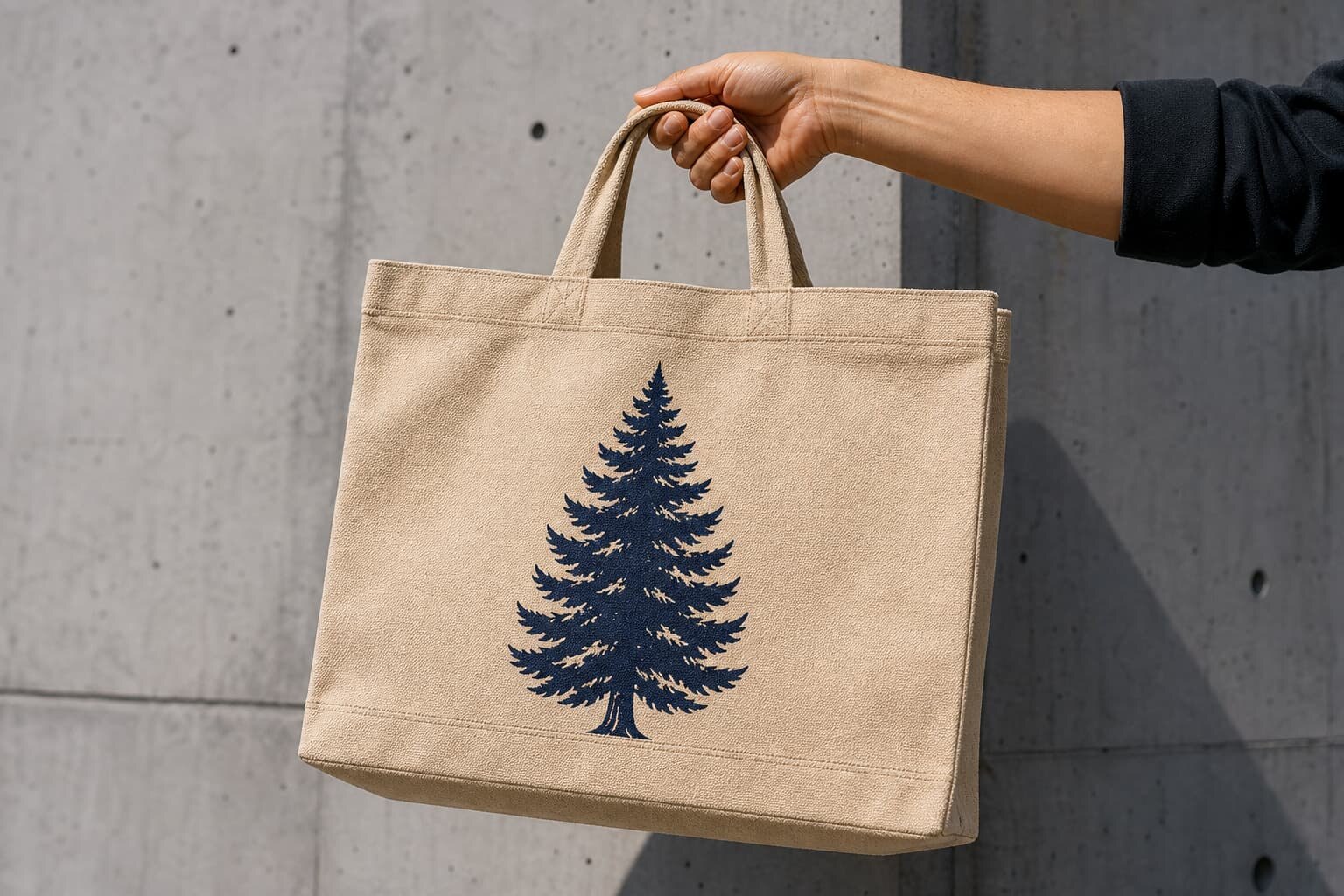
Why Stitch Inspection Matters for Beach Tote Procurement
A canvas beach tote bag is usually judged by buyers on fabric weight, size, and logo quality. In real use, the first failure is often stitching. Beach totes carry wet towels, sunscreen bottles, shoes, books, and sometimes groceries after the trip. The handle seam and bottom gusset carry more stress than a standard flat shopping bag, so stitch inspection should be part of the RFQ, not only a final QC activity.
For procurement teams comparing supplier quotes, stitching is also where low prices can hide. Two factories may quote the same 16 oz canvas beach tote, but one may use wider seam allowance, stronger thread, reinforced handle boxes, and a cleaner inside finish. The other may use low stitch density and raw internal seams to save minutes per bag. Both look similar in a front photo. They do not perform the same after repeated loading.
- Treat stitching as a functional specification, not a cosmetic detail.
- Ask for close-up seam photos with a ruler during sampling.
- Compare handle reinforcement methods before comparing unit price.
- Include seam defects in your inspection checklist and AQL report.
- Keep the approved sample available for final inspection comparison.
Start With the Right Canvas Weight Before Judging Stitches
Stitch quality cannot be separated from fabric weight. A light 8 oz canvas promotional tote can use a different stitch setup than a 16 oz beach tote made for retail. For beach use, many buyers consider 12 oz to 16 oz canvas, roughly in the 380 to 540 GSM range depending on the weave and finishing. Heavier fabric gives better structure and perceived value, but it also creates thicker seam intersections that require the correct needle, thread, and machine setting.
When the canvas is too heavy for the factory setup, you may see skipped stitches at the bottom corners, broken thread at the handle box, or puckering around the top hem. When the fabric is too light for the intended use, the stitches may remain intact but the fabric tears near the needle holes. Your RFQ should therefore connect fabric GSM, seam construction, and load expectation in one specification.
- For light promotional beach totes, specify 10 oz to 12 oz canvas and moderate load use.
- For resort retail or brand merchandise, specify 12 oz to 16 oz canvas with reinforced handles.
- For washed canvas styles, ask whether GSM is measured before or after washing.
- For colored canvas, ask about shrinkage and colorfastness because finishing can affect seam appearance.
- For very heavy canvas, confirm the factory has suitable machines for thick layer intersections.
Define the Critical Stitch Zones on the Bag
A good stitch inspection guide separates high-risk zones from low-risk zones. On a canvas beach tote, the main risk areas are handle attachment, top hem, side seams, bottom seam, gusset corners, and any pocket or label seams. The front panel print area is important for branding, but it is not the only area to inspect. A clean front panel with weak handles is still a failed product.
For buyers, the practical method is to mark these zones in your tech pack or RFQ drawing. Do not simply write “strong stitching.” Specify the seam type, the visible stitch appearance, the reinforcement area, and the defect tolerance. If your brand requires a minimalist look, confirm how the factory can maintain strength without making the reinforcement look bulky.
- Handle attachment: check box stitch, X stitch, bar tack, or reinforcement patch.
- Top hem: check straightness, stitch tension, and even folding around the bag opening.
- Side seams: check seam allowance and whether internal edges are overlocked or bound.
- Bottom gusset: check skipped stitches where fabric layers become thick.
- Label seam: check that woven labels do not weaken side seams or create puckering.
Set Practical Acceptance Criteria for Stitching
Inspection criteria should be measurable enough for a factory QC team and a third-party inspector to use. “No bad stitching” is not useful. Better criteria include stitch density range, allowed loose thread length, no open seams, no skipped stitches in stress areas, no broken thread, and handle positions within tolerance. If you sell through retail, visible crooked stitching on the top hem can also be a major defect because the bag is displayed upright.
Stitch density depends on fabric thickness and product style, so the exact value should be confirmed with your factory sample. As a working reference, many canvas tote constructions use a medium stitch density that balances strength and appearance. Too few stitches can create seam gapping. Too many stitches can perforate the fabric, especially near stress points. The approved pre-production sample should become the real acceptance standard.
- No open seam or broken stitch in handle, bottom, or side seam areas.
- No skipped stitch cluster in any load-bearing seam.
- Loose thread ends trimmed to the agreed tolerance, commonly short enough not to affect retail presentation.
- Handle placement measured from side seam and top edge within the approved tolerance.
- Stitch tension balanced, with no severe puckering or loose loops.
- Inside seam finish consistent with approved sample: overlocked, bound, or neatly turned.
Handle Reinforcement Is the Main Load-Bearing Decision
For a beach tote, handle failure is the defect most likely to create complaints. Long shoulder handles increase leverage on the attachment point, especially when the bag is loaded with wet towels or bottles. A simple single-row stitch across the handle end may be acceptable for a light giveaway bag, but it is usually not enough for a retail beach tote. Buyers should request a clear reinforcement method before quote comparison.
Common options include box stitch with an X, multiple parallel rows, bar tacks, or a hidden reinforcement patch. A box-X stitch is easy to inspect visually and gives a strong buyer-friendly specification. Bar tacks can be strong but require correct machine setup and can look more technical. If the bag has a clean premium design, the factory may suggest a back patch or internal reinforcement to maintain appearance while improving strength.
- Confirm handle material: self-fabric canvas, cotton webbing, rope, or contrast tape.
- Specify handle width and finished drop length, not only total strap length.
- Ask whether handle ends are folded, raw tucked, or hidden inside the top hem.
- Require close-up photos of handle stitching from front and inside.
- For heavier beach totes, consider a pull test requirement during sample approval.
Print Method Can Affect Stitch and Seam Quality
Beach totes often carry large front graphics, resort logos, or retail artwork. The print method must be planned together with sewing. Screen printing is usually suitable for solid logos and bold artwork on cotton canvas. Digital printing can support detailed graphics but may change fabric hand feel or require different pre-treatment. Heat transfer can work for complex designs, but it should be tested for flexing, washing, and heat exposure in packed cartons.
The main production mistake is placing artwork too close to seam lines or handle reinforcement. If the bag is printed before sewing, seam folding can reduce the visible print area. If printed after sewing, bulky seams and handles can prevent a flat print surface. Heavy ink layers may crack where the fabric is folded during packing. Your RFQ should include artwork position from top edge, side seam, and bottom seam, plus a note that the factory must confirm print feasibility on the actual construction.
- Use screen print for simple CTM-style logos, solid brand marks, and economical bulk orders.
- Keep print away from handle box stitching unless the sample proves alignment is stable.
- Ask for ink curing details before mass packing.
- Check print hand feel on heavy canvas; thick ink can feel stiff on retail beach totes.
- Approve the print on final fabric color, because natural, dyed, and washed canvas absorb ink differently.
MOQ Logic: What Really Drives the Minimum Order
MOQ for canvas beach tote bags is not only a factory preference. It is affected by fabric sourcing, dyeing, cutting efficiency, print setup, label production, and packing materials. A natural canvas tote with one-color screen print can often be easier to produce at a lower quantity than a custom dyed canvas tote with woven label, special handle, retail belly band, and individual polybag. When buyers ask for a lower MOQ, they should know which specification is creating the limit.
Stitching can also influence MOQ when the construction requires special tooling, extra operations, or slower machines. A fully bound internal seam, contrast stitching, or complex handle reinforcement takes more labor time than a standard overlocked seam. If you need a trial order, ask the factory to quote the standard construction and the upgraded construction separately. This helps your team decide whether the extra durability is worth the minimum quantity and price impact.
- Fabric MOQ: driven by natural stock fabric, dyed fabric, or custom woven canvas.
- Print MOQ: affected by screen setup, number of colors, and print size.
- Label MOQ: woven labels and custom trims may have separate minimums.
- Packing MOQ: custom cartons, hangtags, belly bands, and barcode labels add constraints.
- Construction MOQ: special seam binding or reinforced sewing can increase labor planning needs.
Sample Checks Before You Release Bulk Production
A pre-production sample should not be treated as a decoration sample only. For a canvas beach tote bag, the sample must prove that fabric, print, stitching, handle comfort, packing fold, and dimensions all work together. Ask for the sample made with final fabric weight, final thread color, final handle material, final logo method, and final seam construction. If any element is substituted, mark the sample as partial approval, not final approval.
When the sample arrives, inspect it like a small production lot. Load it with realistic weight, hang it from the handles, check the bottom corners, and compare left and right handle alignment. Turn it inside out to inspect seam finish. Fold it as it will be packed and leave it compressed overnight if possible, then check whether the print marks or the canvas creases too strongly. These checks are simple, but they prevent many avoidable mass production claims.
- Measure finished width, height, gusset, handle drop, and top opening.
- Count stitches in a defined length on handle box, side seam, and top hem.
- Check whether thread color matches the approved design standard.
- Look inside the bag for raw edges, loose loops, and uneven overlock.
- Perform a practical load check based on expected use, not an unrealistic promise.
- Photograph approved seam details and attach them to the purchase order.
Packing and Lead Time Risks Connected to Stitch Quality
Packing is often discussed after the unit price is agreed, but it can affect the final appearance of a canvas beach tote. Heavy canvas holds fold marks. Fresh screen prints can transfer if packed before full curing. Long handles can create pressure marks across the front panel if folded carelessly. If a bag has thick reinforced stitching, the fold plan should avoid stacking the handle box directly against the printed logo.
Lead time should include material preparation, sampling, print approval, sewing, trimming, inspection, packing, and export carton preparation. If a factory compresses the schedule too much, trimming and inspection are often the steps that suffer. Buyers should ask for a production timeline with quality gates, not only a shipping date. A realistic schedule is especially important before peak summer, resort season, or retail launch windows.
- Confirm whether bags are shipped flat, half-folded, or quarter-folded.
- Ask how many pieces go into each inner pack or carton.
- Check whether individual polybags are required by your market or retailer.
- Use tissue or protective paper if print transfer is a known risk.
- Confirm carton dimensions and gross weight for warehouse handling.
- Build time for sample approval before starting bulk fabric cutting.
Quote Data Buyers Should Request for Fair Supplier Comparison
A useful quotation should show more than one unit price. For canvas beach tote bags, ask the factory to separate the main cost drivers: canvas weight, size, handle style, stitching upgrade, print method, label, packing, sample fee if any, MOQ, and lead time. This does not mean every factory will reveal its internal cost sheet, but it should explain which choices change the price.
When quotes are vague, buyers tend to compare the lowest number and discover later that one supplier included reinforced stitching while another included only basic sewing. Ask for a written construction description and sample photos with the quotation. If you are buying for retail or distribution, also ask whether the factory price includes trimming, internal QC, metal detection if relevant to your retailer, carton labeling, and export packing.
- Request separate pricing for 12 oz, 14 oz, and 16 oz canvas if you are undecided.
- Ask for the price impact of box-X handle stitching versus basic handle sewing.
- Confirm whether inside seams are raw, overlocked, or bound.
- Separate one-color, two-color, and full-color print quotations.
- List retail packing items separately: hangtag, barcode sticker, belly band, polybag, carton mark.
- Ask for sample lead time, bulk lead time, and the point when changes are no longer possible.
Specification comparison for buyers
| Spec decision | Recommended option | When it fits | Buyer risk to check |
|---|---|---|---|
| Body fabric weight | 12 oz to 16 oz cotton canvas, usually 380-540 GSM depending on weave | Retail beach totes, resort merchandise, promotional bags expected to hold towels and bottles | If GSM is quoted without weave and finish, two suppliers may offer very different stiffness and shrinkage |
| Main seam construction | Lockstitch with overlock or bound internal seams | Most export orders where durability and neat inside finish both matter | Raw inside seams can fray after washing or sand abrasion, especially on unlined bags |
| Handle attachment | Box stitch with X reinforcement or multi-row bar tack plus back patch | Beach bags with long shoulder handles and load above light giveaway use | Decorative top stitching alone may look clean but fail during handle pull testing |
| Thread choice | Polyester thread matched to canvas weight, Tex size confirmed by factory | Orders needing better wet strength, color consistency, and abrasion resistance | Cotton thread may match natural fabric visually but can weaken faster in damp beach use |
| Print method | Screen print for solid logos; heat transfer only when artwork detail requires it | Brand logos, resort graphics, and simple retail designs on flat panels | Heavy ink across seam zones can crack or distort if printed after sewing without enough flat area |
| Sample approval | Pre-production sample with final fabric, handle length, stitch density, and print placement | Any order with retail packaging, branded trim, or higher load expectation | Approving a photo sample only hides stitch density, seam allowance, and handle reinforcement problems |
| Packing method | Flat pack or half-fold with tissue where print face needs protection | Retail delivery, distributor cartons, and ecommerce-ready replenishment | Tight compression can crease heavy canvas and mark fresh prints if curing time is rushed |
Buyer checklist before sampling
- Confirm canvas weight in oz and GSM, plus whether the value is before or after washing or finishing.
- Specify bag dimensions, gusset depth, handle length, seam allowance, and whether internal seams are overlocked, bound, or raw.
- Ask for stitch density per inch or per centimeter on main seams, top hems, and handle reinforcement areas.
- Require handle attachment photos from inside and outside, not only a front beauty image.
- Check whether print is applied before or after sewing, and keep artwork away from bulky seams unless approved by sample.
- Approve one pre-production sample made with final fabric, final thread, final print, and final packing method.
- Define inspection levels for skipped stitches, loose thread ends, seam slippage, crooked handles, stains, and print damage.
- Confirm carton quantity, folding method, polybag choice, moisture control, and carton weight before mass packing.
- Request quote data in separated lines for fabric weight, printing, label, packing, sampling, MOQ, and lead time.
- Keep an approved sealed sample or signed sample report for comparison during inline and final inspection.
Factory quote questions to send
- What is the actual canvas specification: oz, GSM, yarn count if available, weave type, shrinkage range, and finishing method?
- Which stitch type and stitch density will be used for body seams, top hem, gusset corners, and handle attachment?
- Will the handle be self-fabric canvas, cotton webbing, or another material, and what is the width, length, and reinforcement method?
- Can you provide close-up sample photos of the inside seam, bottom corner, top hem, and handle box stitch before bulk approval?
- Is the print screen printed, pigment printed, discharge printed, digital printed, heat transferred, or embroidered, and what curing or colorfastness checks are included?
- What MOQ applies to the fabric color, custom size, print color count, label, and retail packing separately?
- What is the estimated sample lead time and bulk lead time after artwork, fabric, and packing approval?
- How will bags be folded and packed, how many pieces per carton, and what carton weight and dimensions do you estimate?
- What defects are treated as critical, major, and minor during your internal inspection for beach tote bag stitching?
- Can the quotation separate unit price factors for fabric weight upgrade, reinforced stitching, print method, labeling, and packing?
Quality-control points to confirm
- Measure stitch density on actual samples, because low SPI on heavy canvas can cause seam gapping under load.
- Pull handles by hand and by a defined load test to check whether stitches tear, fabric puckers, or reinforcement patches shift.
- Inspect bottom gusset corners where several layers meet; skipped stitches often appear where the machine climbs over thickness.
- Check top hem alignment around side seams so the bag opening does not twist or look uneven on a retail shelf.
- Look for loose threads longer than the agreed tolerance, especially near handles and inside corners.
- Compare left and right handle positions from the side seam and top edge to prevent a tilted carry feel.
- Confirm print curing before packing; ink transfer between folded bags is a common preventable defect.
- Check needle holes and stitch tension on dyed or washed canvas, where wrong tension can leave visible puckering.
- Review carton packing after compression to make sure handle folds do not leave permanent marks on the front print.
- Use the approved pre-production sample as the standard for seam finish, thread color, print hand feel, and packing fold.