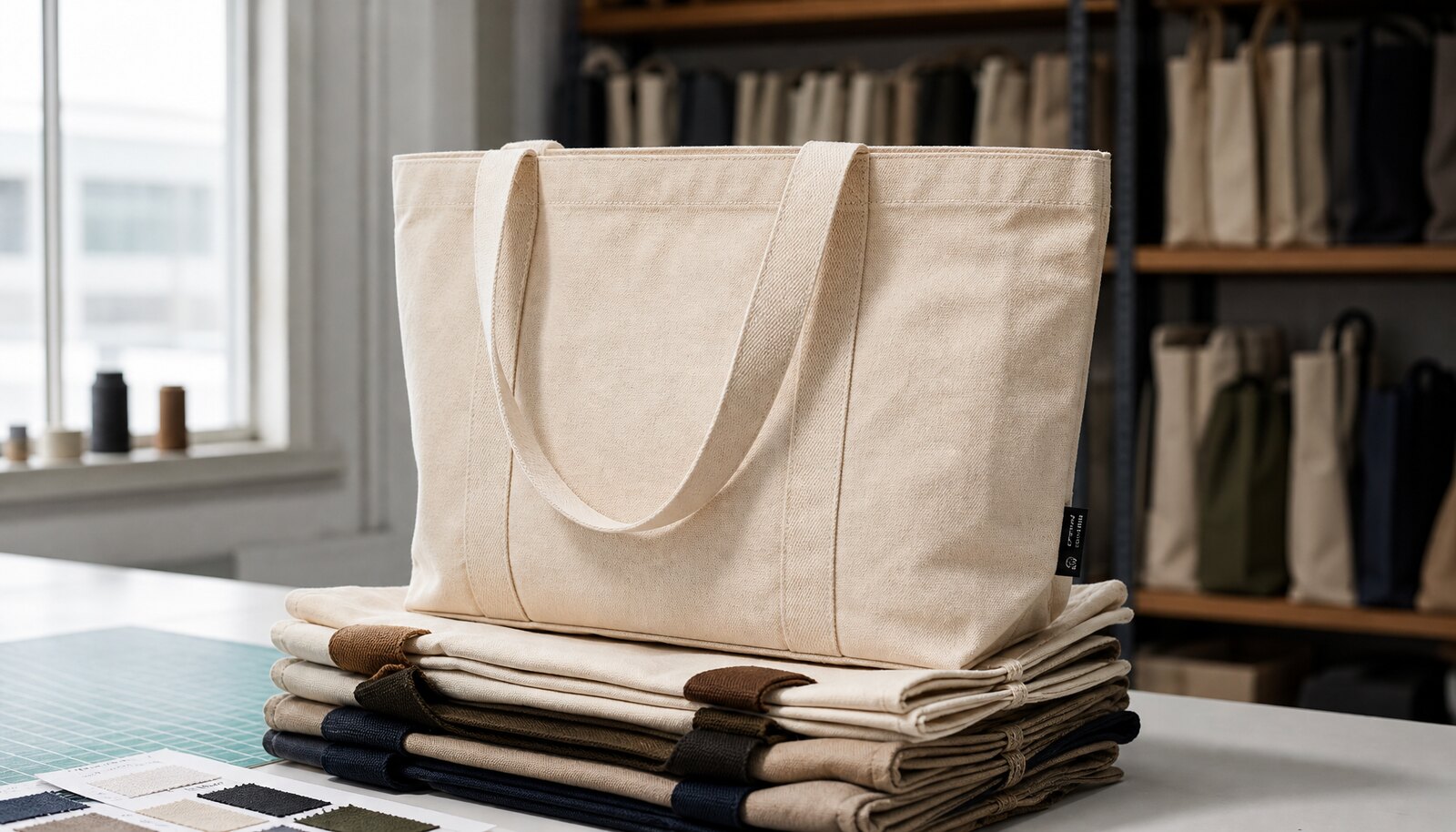
Why canvas bags made to order are a procurement decision, not just a print job
Canvas bags made to order can look simple from a distance: choose a size, add a logo, and issue the purchase order. In practice, the final product is shaped by three separate decisions that must be coordinated early: the fabric base, the construction standard, and the decoration method. If any of those are vague, suppliers will quote different assumptions and the comparison becomes unreliable.
That is why procurement buyers should treat the tote as a controlled product, not a generic commodity. A bag that looks fine in a mockup can still fail the program if the fabric stretches too much, the handles are not reinforced, or the packing format wastes freight volume. The goal is not to write a long spec for its own sake. The goal is to make every supplier price the same product and to create a repeatable standard for replenishment.
- A logo does not define the product if the fabric, seam build, and packing format are still open.
- Two bags with the same artwork can land at very different costs because of fabric weight, setup charges, and freight cube.
- The buyer's job is to eliminate ambiguity before quotation, not to negotiate around it after the order is placed.
Start with the use case, then write the spec sheet around it
The best sourcing teams start with the bag's actual use. A bookstore tote, a trade-show giveaway, a grocery-style reusable bag, and a premium retail carry bag do not need the same build. If the use case is not defined, the supplier will make sensible guesses that may not match the brand's cost target or durability expectation.
Write the spec sheet in functional language. State what will go inside the bag, how often it is likely to be reused, whether the bag must stand upright on shelf, and whether the artwork has to stay flat and clean. That context lets a supplier choose fabric, handle construction, and print method intelligently instead of defaulting to the cheapest option.
A useful spec sheet usually has six parts: finished size, fabric weight and finish, handle details, artwork details, packing details, and QC criteria. When those six areas are clear, quotes become comparable and sample approval becomes meaningful.
- If the bag carries heavy books or bottles, durability should lead the spec, not print cost.
- If the order is a seasonal promo, lead time and setup simplicity may matter more than premium finishing.
- If the bags will retail individually, shelf presentation and packing cleanliness matter as much as unit price.
Choose fabric weight, weave, and finish before comparing prices
Fabric weight is the first choice that changes both performance and landed cost. For many standard retail programs, 10oz to 12oz canvas is a practical middle ground. It usually gives enough structure for a clean shape, accepts print well, and keeps the tote price within range for day-to-day retail or promotion use. If the bag is expected to handle heavier contents, or if the brand wants a more substantial hand-feel, 14oz or heavier may be the better starting point.
Do not rely on the word 'thick' in a quote. Ask for the actual weight in oz or GSM, plus whether that number refers to unfinished fabric or finished fabric after washing or coating. Also ask for the weave density and finish. A tighter weave with controlled shrinkage can outperform a heavier but looser cloth when it comes to print sharpness, shape retention, and repeat sizing.
Finish matters because it changes both touch and stability. Greige canvas is often cheaper and useful for simple promo programs, but it can vary more in tone and may need more control around shrinkage. Bleached or prewashed canvas usually gives a cleaner appearance and a more predictable final size. If the bag size is tight or the retail presentation is strict, that extra control can be worth more than the fabric savings on paper.
- 10oz-12oz is a common starting range for standard retail totes and event bags.
- 14oz+ is usually better when the bag is sold as a premium reusable item or must hold heavier contents.
- Prewashed or pre-shrunk fabric is worth considering when size consistency after finishing matters.
Construction details separate a retail tote from a cheap promo bag
The body fabric may get the quote started, but construction determines whether the bag feels trustworthy in use. Handle width, handle length, gusset depth, bottom shape, seam type, and reinforcement all influence whether the tote stands up to repeated carrying. Buyers often approve a sample that looks fine empty, then find that the bag sags, twists, or fails once it is loaded and packed for shipping.
A practical retail spec should define the exact handle build and stress points. Cotton webbing handles usually cost more than self-fabric handles, but they can improve comfort and perceived quality. If the bag will be carried on the shoulder or loaded with heavier items, wider webbing and reinforced attachment points are worth the extra cost. Self-fabric handles can still work for lower-cost programs, but the buyer should be clear that the tradeoff is comfort and durability, not just price.
Stitching should be called out, not assumed. Box-X reinforcement or a bar-tack at the handle anchor is a sensible starting point for load-bearing totes. For medium-weight canvas, a consistent stitch density and clean seam finish matter more than decorative complexity. If the supplier is not required to match the approved seam on bulk production, the factory may quietly simplify the build to reduce labor.
- Define handle width, finished length, and the attachment method in the RFQ.
- Require reinforcement at the load points, especially where the handles meet the body.
- If a gusset is included, confirm that it does not distort the print area or create a carton-size problem.
Artwork method should follow the design, not the supplier's default process
A quote that says 'printing included' is not enough for a custom tote. The print method has to match the design and the business case. Screen print is usually the most efficient choice for simple logos, solid shapes, and repeat orders with one to three colors. It produces a clean look when the artwork is bold and the production run is large enough to amortize setup.
Heat transfer can be useful when the artwork is more detailed, when the run is smaller, or when the buyer needs a short-run launch before committing to a larger replenishment order. The tradeoff is that the buyer should ask how the transfer will wear, whether it can crack or lift, and whether the hand-feel is acceptable for the target market. Do not approve a sample because the image looks sharp if the film feels cheap on a retail tote.
Embroidery, woven labels, and sewn patches are better when the brand wants a quieter, higher-end presentation. They can add labor, setup, and coordination, but they also reduce the risk of a large front print being misaligned or overexposed. If the bag should feel premium and understated, a small woven label on the side seam can be a smarter use of budget than a full-front graphic.
- Screen print is usually best for simple logos and stable reorders.
- Transfer print is more flexible for detail, but the buyer should check durability and surface feel.
- Woven labels and embroidery work well when the bag itself should stay clean and understated.
How to compare supplier routes and make the quote actually comparable
Not all suppliers are quoting the same thing. A factory direct quote often gives the best visibility into fabric, sewing, and line capacity, which makes it stronger for repeat programs and controlled reorders. A trading route can be useful when the buyer needs multiple product types in one shipment or has a very small, urgent order. The tradeoff is that factory accountability, process transparency, and rework control may be weaker.
A hybrid approach can work for launch programs. The buyer may use a trader to move quickly on the first order, then shift to direct factory sourcing once the product and demand are stable. That can be practical, but only if the approval sample, pack standard, and QC rules are documented in a way that survives supplier changes. Otherwise, the re-order will become a new product instead of a repeat of the first order.
The quote itself should be itemized. Ask for a separate line for bag body, handles, reinforcement, print, label, packing, cartons, and any tooling or plate charges. The goal is to expose where the cost really sits. A low bag price with hidden setup charges can be more expensive than a cleaner, more honest quote with a slightly higher unit price.
- Factory direct is usually better when consistency and reorders matter.
- Trading routes can help with speed or consolidation, but require tighter documentation.
- Insist on an itemized quote so setup, tooling, and packing costs are visible.
Use MOQ as a planning tool, not a number to accept blindly
MOQ is rarely one clean number. A supplier may offer a low MOQ for the bag body but require a different minimum for fabric color, print setup, woven labels, or custom cartons. If the buyer compares only the bag count, the quote can look much cheaper than it really is. That is why MOQ needs to be broken down by component.
For procurement planning, separate the commercial minimum from the production minimum. A supplier may be able to sew 500 bags, but a custom-dyed fabric or a new print plate may only make sense at a higher volume. That does not mean the supplier is being difficult. It means the buyer should decide whether the program is a small launch, a limited test, or a repeat production line. Each one justifies a different cost structure.
If the order will have multiple SKUs, ask whether they can share the same fabric base, same handle spec, or same carton format. Shared components reduce complexity and usually make the MOQ easier to manage. A multi-color or multi-size program is often more efficient when the core build stays constant and only the artwork or labeling changes.
- Ask for the MOQ by bag body, by artwork method, and by packaging component.
- Do not treat a low bag MOQ as a low total program MOQ until the full quote is split out.
- Shared fabric, shared handle spec, and shared cartons often make multi-SKU sourcing more efficient.
Sampling should lock the whole build, not just the logo
Sample approval is where many tote programs either get disciplined or drift. A buyer should not approve a sample only because the print looks good. The sample also needs to confirm the fabric tone, the finished size, the handle length, the seam quality, and the way the bag folds into the carton. If the sample is too soft, too stiff, too tall, or too narrow, that difference will show up in bulk even if the logo is perfect.
A sensible sequence is material swatch first, then print strike-off if the artwork is non-trivial, then a pre-production sample built with final bulk materials. For important retail programs, it is worth keeping a sealed golden sample. That gives both sides one physical reference for future reorders and helps reduce disputes about what was approved.
The approval process should also note what is and is not allowed to vary. Small natural variation in canvas texture is normal. Changes in fabric weight, handle length, logo placement, or seam structure should not be treated as normal unless the buyer has explicitly allowed them. A good sample file includes photographs, measurements, approved color references, and the version number of the spec sheet used to approve the sample.
- Approve a full pre-production sample built from final bulk materials.
- Keep one sealed golden sample for repeat orders if the program will reorder.
- Record the exact spec version, not just a photo, so future lots can be judged consistently.
Packing, cartons, and freight can change the landed cost more than the bag itself
Canvas is bulky. That makes packing efficiency a real cost variable, not an afterthought. The quote should state how the bags are folded, how many go into each inner bundle or polybag, how many go into a master carton, and what the carton dimensions and gross weight are. A slight change in fold method can alter cube efficiency enough to affect ocean or air freight materially.
Packing also affects retail readiness. If the bags will be sold individually, a clear polybag, barcode, and tidy fold may be required. That adds labor and material but can save warehouse labor and reduce dirty or creased stock. If the bags are going straight into distribution, a looser bulk pack may be cheaper, but the buyer needs to make sure the print surface and shape are still protected.
Ask the supplier to quote the carton spec before finalizing the freight plan. Carton size, gross weight, and units per carton should line up with pallet limits, warehouse receiving rules, and any retail carton mark requirement. A bag that is cheap at the factory gate can become expensive if the packing spec forces inefficient freight or rework in the warehouse.
- Ask for carton dimensions, gross weight, and units per carton with the quote.
- Decide whether individual polybags are required or optional before sampling.
- Confirm whether the pack format is retail-ready, warehouse-ready, or export-only.
QC needs acceptance criteria, not just a list of checkpoints
Quality control becomes useful only when it is measurable. Saying that the supplier will check AQL, load bearing, and carton condition is not enough. The buyer needs a defect definition, an inspection method, and a release rule. A practical starting point is to use a standard lot-sampling system such as ANSI/ASQ Z1.4 or ISO 2859-1, then define which defects are critical, major, and minor. The supplier should not improvise the rule after production is complete.
Load testing should also be tied to a condition, not a vague promise. If the bag is sold as a reusable tote for daily use, set a declared working load and have the factory or inspector test units against that load for a fixed time with no seam failure or obvious distortion beyond the agreed limit. If the bag is meant to be a premium retail item rather than a utility carrier, the acceptable distortion and seam finish may need to be tighter than on a promo bag.
The inspection should cover the details that drive customer complaints: size consistency, handle strength, stitch quality, print alignment, color consistency, stains, odors, loose threads, and packing accuracy. For export orders, the carton check matters as much as the bag check. Wrong carton count or bad carton strength can create receiving delays, even when the bags themselves are acceptable.
- Attach the sampling standard and defect classes to the PO.
- Define the load test condition in writing, including the declared working load and duration.
- Inspect the first production lot against the approved sample, not against memory or photos.
Specification comparison for buyers
| Spec decision | Practical starting point | When it changes the economics | Buyer check |
|---|---|---|---|
| Fabric sourcing | Greige, bleached, or prewashed canvas from the same mill lot for one program | Repeat orders, retail color consistency, or size-sensitive bags | Ask for mill name, fabric width, finished weight, and shrinkage after finishing |
| Fabric weight | 10oz-12oz for standard retail totes, 14oz+ for premium or heavier carry use | When the bag must hold books, bottles, or daily grocery loads | Request oz or GSM, plus whether the weight is before or after washing or coating |
| Stitching standard | Single or double needle seams with box-X or bar-tack reinforcement at handles | When the bag is sold as reusable, not promotional disposable | Confirm stitches per inch, seam type, and reinforcement at all stress points |
| Handle build | Cotton webbing for comfort and strength, self-fabric handles for lower cost | When handle comfort, shoulder carry, or load retention matters | Specify handle width, finished length, attachment method, and pull-test target |
| Artwork method | Screen print for simple logos, transfer for small-run detail, woven label or embroidery for premium branding | When artwork complexity, hand-feel, or reorders affect cost | Ask what artwork detail, color count, and curing method the supplier is pricing |
| Defect threshold | Critical defects 0, major AQL 2.5, minor AQL 4.0 as a starting point | Any export or retail order where returns are expensive | Define defect classes, inspection level, and who signs the final release report |
| Packing format | Flat-packed, cartonized by SKU, with master carton dimensions locked early | When freight cost, warehouse receiving, or shelf readiness matters | Ask for units per carton, carton size, gross weight, and moisture protection |
| Supplier route | Factory direct for repeat programs, trading route for mixed categories or urgent small lots | When you need either direct process control or fast consolidation | Require the actual producer name, sample ownership, and who is responsible for rework |
Buyer checklist before sampling
- State the finished size, gusset depth, handle length, and seam allowance in the RFQ, not just a reference photo.
- Specify fabric weight in oz or GSM, whether it is greige, bleached, washed, or pre-shrunk, and the allowed tolerance.
- Define the artwork method by design type: number of colors, print area, and whether the hand-feel can be slightly raised or must stay flat.
- Lock packaging requirements up front: individual polybag or not, fold method, barcode or hangtag needs, and master carton size.
- Request a material swatch, a print strike-off, and a pre-production sample built from final bulk materials before approving production.
- Attach a QC plan to the PO: defect definitions, inspection level, AQL target, and load test conditions.
- Ask the supplier to break out the quote by body fabric, handles, print, label, packing, and cartons so hidden setup costs are visible.
- Confirm lead time by phase: fabric readiness, sample approval, print setup, bulk sewing, packing, and export documentation.
Factory quote questions to send
- What is the exact finished fabric weight, fabric width, and finishing process for the canvas you are quoting?
- Please separate the price by bag body, handle construction, reinforcement, print method, label, packing, and cartons.
- What are the MOQ and price breakpoints for fabric color, artwork method, woven label, and custom cartons?
- What shrinkage range should we expect after finishing, and how will you hold size tolerance in bulk production?
- What sample stages do you offer before bulk production, and which sample becomes the approval standard?
- What QC checks do you run on stitch density, seam strength, print registration, stain control, and carton integrity?
- What is the normal lead time after sample approval, and which steps can extend it, such as custom-dyed fabric or printed cartons?
- Who is the actual manufacturing site, and how do you handle rework if the bulk goods fail the approved standard?
Quality-control points to confirm
- Set the inspection method before production starts. A practical buyer starting point is ANSI/ASQ Z1.4 or ISO 2859-1, with critical defects at 0, major defects at AQL 2.5, and minor defects at AQL 4.0. Do not let the supplier choose the sampling rule after the lot is finished.
- Define defect classes in writing. Typical critical defects include wrong size that prevents use, broken load-bearing seams, or severe contamination; major defects include wrong logo placement, open stitches, or missing reinforcement; minor defects include loose threads, small print misalignment, or light carton scuffing.
- Run a load test on production units using the buyer's declared working load, then hold for at least 60 seconds with no seam pop, handle tear, or visible distortion beyond the agreed limit. If the bag is intended for repeated use, repeat the test across multiple units rather than approving one lucky sample.
- Check finished dimensions on a random sample after pressing or folding, not only on a raw sample. Set a practical tolerance band before sampling, commonly about +/-0.5 cm to +/-1.0 cm depending on bag size and construction complexity.
- Inspect stitch quality at the handle anchors, side seams, and bottom seam. A useful buyer rule is consistent stitch density, no skipped stitches, no loose loops, and no exposed thread tails longer than the agreed limit.
- Verify print quality under standard light against the approved sample. Check registration, ink coverage, color consistency, and curing. If the bag will be used outdoors or washed, ask for adhesion or rub-resistance evidence rather than accepting a visual-only check.
- Review carton control before shipment release. Confirm carton count, carton dimensions, gross weight, SKU separation, and whether the bags are protected against dust or moisture. A tidy carton spec often saves more in freight and receiving time than it costs in material.
- Record one sealed golden sample for repeat orders when color, logo placement, or handle construction must remain stable across reorders. Without a retained standard, disputes usually turn into opinions instead of measurable comparisons.