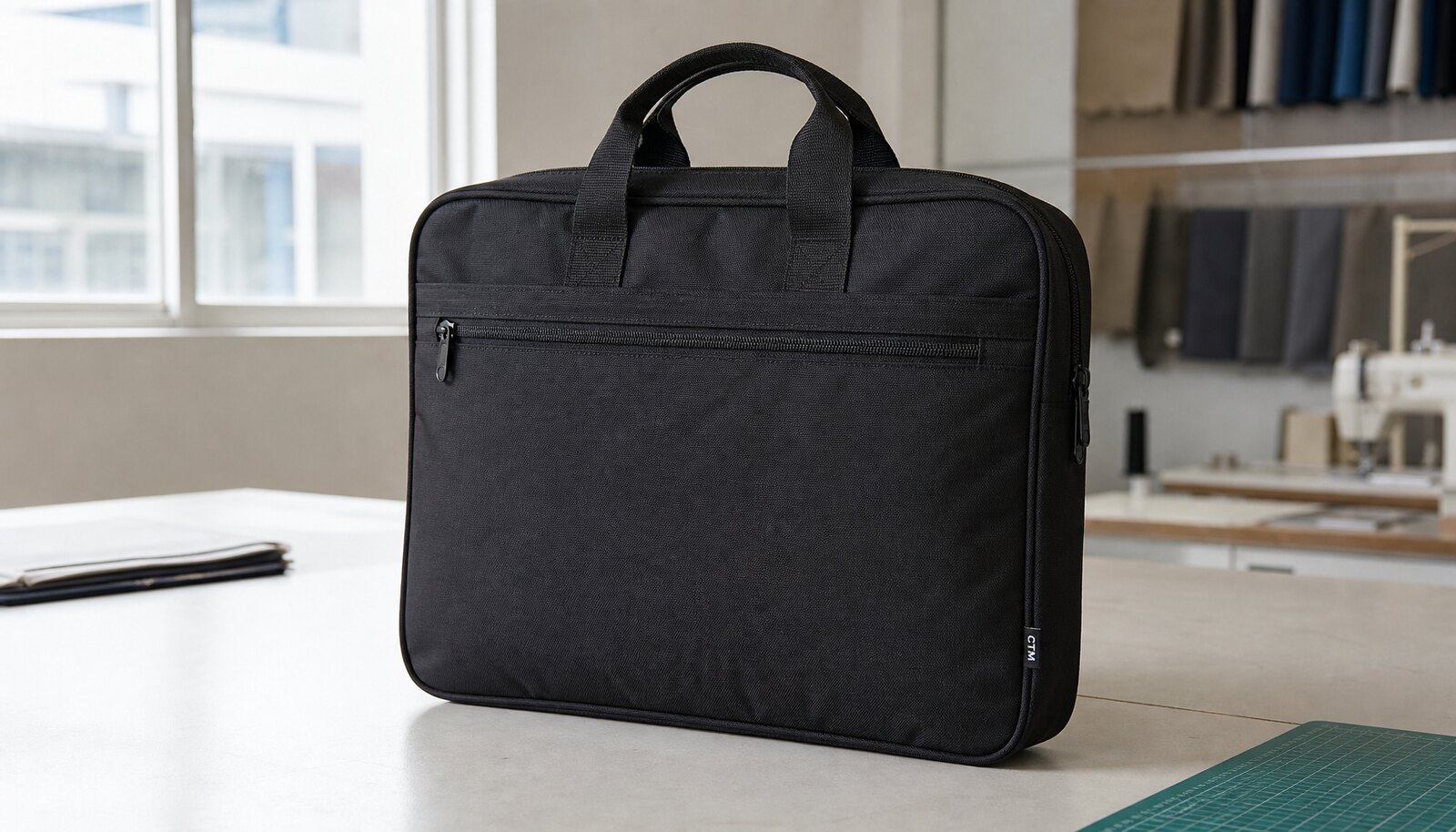
Define the Hotel Use Case First
A hotel document bag is not a generic promo pouch. It may hold guest registration papers, welcome letters, room key sleeves, conference handouts, invoices, tablets, or a mix of all four. The first decision is what the bag must carry on day one, because the construction that works for a flat document stack is usually too weak or too small for a fuller hotel kit.
Procurement teams should treat this as an operating item, not a novelty item. If the bag sits at the front desk, gets opened by staff, and moves through several hands before it reaches the guest, the build has to survive repeated handling and still look neat on arrival. That means clean edges, stable shape, and a zipper that closes smoothly without catching the fabric.
- Guest-room welcome pack: slim A4 or letter format with a restrained logo and low-profile zip.
- Conference folder: shallow gusset, pocket for name card, and a format that lies flat on a table.
- Admin carrier: slightly thicker body, handle, and a sturdier base if staff move it repeatedly.
- VIP presentation pack: premium surface, tight stitching, and a branding method that reads as quiet and deliberate.
Size the Contents Before You Size the Bag
Measure the actual insert stack, not just the paper size. A4 paper may fit alone, but once you add a room key sleeve, brochure, booklet, or tablet, the clear internal dimensions need extra room. Ask the factory for internal dimensions, outer dimensions, and seam allowance so you are comparing the same thing across quotes.
For hotel use, a bag that is too tight creates wrinkled corners and stressed zipper ends; a bag that is too large looks sloppy and wastes carton space. The right answer is often a modest margin around the inserts, with a gusset only as deep as the contents require. If the bag will be stacked in cartons, avoid a deep gusset unless the presentation value justifies the freight penalty.
- A4 sets usually need internal clear size around 245 x 335 mm or larger, depending on the insert stack.
- US letter sets need enough clearance for the shorter width plus a little extra for easy insertion.
- Tablet programs need thickness control, not just width and height, so confirm the device profile.
- If the bag must lie flat in a drawer or tray, keep the gusset shallow and the panels stable.
Pick Materials That Match Hotel Handling
Most hotel buyers can narrow material choice to four practical families: 300D rPET, 600D polyester, 12 oz canvas, or PU-faced construction. 300D rPET works for light programs that need a cleaner sustainability story and a softer hand. 600D polyester gives better abrasion resistance and body. 12 oz canvas looks more premium and is useful when the hotel wants a warmer, more tactile finish. PU or coated fabric is better when the bag must be wipe-clean and more resistant to desk spills.
The quoted fabric name is only part of the story. Ask how the fabric is backed, how much body it has, and whether the supplier is using lining, foam, or board inserts. A good exterior with poor reinforcement at the zipper end or handle anchor will still fail early. For business document bags for hotels, the most common complaint is not fabric wear; it is sloppy shape retention and weak stress points.
- 300D rPET is usually suitable for lighter, flatter hotel programs where weight control matters.
- 600D polyester is a safer all-round option for daily handling and repeat use.
- 12 oz canvas often suits premium guest-room or conference branding when a natural surface is preferred.
- Use #5 nylon coil zippers for routine hotel use; #3 zippers are only suitable for very light pouches.
Choose Branding That Looks Right at Check-In
Hotel branding should look like part of the property experience, not a trade-show giveaway. Small woven labels, tone-on-tone screen print, subtle embroidery, or an embossed PU patch usually feel more appropriate than a large bright logo. The right method depends on the fabric, the logo complexity, and how much repeat order consistency the brand needs.
Keep the art simple and controlled. Fine text, crowded crests, and thin strokes lose clarity on textured materials and create avoidable approval loops. If the group has multiple properties, fix the logo placement now and keep it standard across all sizes. That reduces rework when the same design is reordered six months later in a different batch.
- Screen print suits flat polyester or canvas when the logo uses one to three colors.
- Embroidery works well on thicker materials, but it adds bulk and can distort small text.
- Woven labels are stable for repeat orders and are often cleaner than a large printed block.
- Embossed or debossed PU gives a quieter premium look when the brand wants less visual noise.
Compare Supplier Routes Before You Compare Prices
The lowest quote is often missing something. A direct factory, a trading company, and a domestic converter will not expose the same risks or the same pricing structure. One may quote an attractive unit price but hide sample charges, decoration setup, or bulky packing. Another may be faster but offer fewer material choices. Compare the route first, then the number.
For hotel programs, a direct OEM factory usually makes the most sense when the design will repeat across properties or seasons. A local converter or trading company can be the right answer for a pilot, an opening, or a rush replacement, but only if they can prove that the same fabric, zipper, and print method will be used every time. If they cannot show a clear production path, the initial convenience can turn into a reorder problem.
- Ask who owns cutting, sewing, printing, and final packing before you approve the quote.
- Ask whether the sample came from the same line or the same material batch that will run bulk.
- Ask for a finished product photo with the actual logo method, not a plain shell photo.
- Ask whether the supplier can keep a duplicate spec file for repeat orders without rework.
Read a Quote Line by Line
A useful quote separates product cost from logistics. At minimum, it should show material, sewing labor, decoration, packing, sample charge, and freight or export terms. If the supplier sends only one all-in number, the comparison is not ready. Normalize every offer to the same size, the same logo method, the same pack count, and the same incoterm before you judge the price.
MOQ logic matters as much as the unit number. A factory may quote a better price at 1,000 pieces because fabric waste, setup time, and cutting loss are spread over more units. But if the real need is 300 pieces across multiple hotels, the cheaper unit price can become the more expensive program once you include dead inventory, extra sample rounds, and the risk of leftover stock that does not match the next reorder.
- Separate ex-works price from packing and freight so the landed cost can be compared fairly.
- Check whether print setup, screen charges, embossing plates, or woven label tooling are one-time or recurring.
- Verify whether MOQ changes when the color count, lining, zipper puller, or pocket layout changes.
- Request carton dimensions and pack count because volumetric freight can be higher than expected.
Approve the Sample Before You Approve the Run
The sample must prove fit, appearance, and repeatability. A pre-production sample is not only about color. It should show zipper alignment, seam symmetry, logo position, handle length, pocket depth, and how the document stack fits inside the finished bag. If the sample already shows uneven binding or a crooked front panel, the bulk order will usually repeat that problem at scale.
Use a golden sample and a written deviation list. That gives the factory one reference point and gives procurement a clear basis for acceptance or rejection. If the hotel group has more than one property or colorway, approve each one separately instead of assuming the entire range will track from one approval. Dye lots, print screens, and material batches can drift enough to matter on a visible guest item.
- Insert the actual documents or inserts during sampling and make sure the zipper closes without forcing.
- Cycle the zipper several times to catch rough spots, snagging, or misaligned tape.
- Inspect the logo from arm's length and close range so the sample can be judged like a guest would see it.
- Measure the sample against the spec sheet, not against memory or a previous supplier's pattern.
- Keep one sealed golden sample with the PO or style file for future reorders.
Pack for Hotels, Not for a Fashion Store
Packing changes the product more than many buyers expect. A cleanly made bag can still arrive with visible creasing if cartons are overfilled or if soft panels are stacked without support. For hotel programs, flat packing in an inner polybag is usually the safest option unless the bag has a structured surface or a coating that can scuff during transport. If the presentation is more important than the lowest pack cost, add a paper insert or light board to keep the face panel flat.
Labeling should make warehouse receiving simple. Every master carton should show style code, color, quantity, PO number, and country of origin, plus gross weight if freight or customs processing requires it. If the bags are being distributed to multiple properties, pack by property code or room set so operations does not have to sort cartons after delivery.
- Use inner polybags only when the fabric attracts dust or is vulnerable to abrasion in transit.
- Add a paper insert or board if the bag needs shape retention and crease control.
- Keep carton compression low for PU or coated materials so the surface does not imprint.
- For multi-property rollouts, pack by property code and carton sequence to reduce warehouse handling.
Lead Time and Landed Cost Decide the Real Winner
The right supplier is the one that fits your schedule and landed cost, not just the one with the lowest ex-works quote. Real lead-time risk usually sits in artwork approval, fabric sourcing, zipper booking, and carton confirmation. If you are buying for a hotel opening, conference cycle, or seasonal occupancy peak, each of those steps needs buffer time. Tight schedules punish vague specs.
Landed cost should include customs duty, handling, inland transport, and the cost of any reserve stock you need for the first reorder. A slightly higher factory quote can still be the better buy if the packing is more efficient, the material is more stable, and the reorder path is cleaner. Buyers should compare the full program, not just the first invoice.
- Budget time for strike-off approval before bulk cutting starts.
- Keep a repeat-order spec file so the next PO does not restart the design from zero.
- Compare quote validity dates because fabric and freight move faster than most sourcing calendars.
- Hold a small reserve stock if the bags are used for VIP, conference, or guest-room presentation programs.
Specification comparison for buyers
| Spec decision | Recommended option | When it fits | Buyer risk to check |
|---|---|---|---|
| Pilot order route | Domestic converter or trading company using a stock base bag | 100-300 pcs for one hotel opening, event, or proof of concept | Reorder color and zipper consistency can drift if the base bag is not reserved |
| Repeat chain rollout | Direct OEM factory with hotel bag experience | 500 pcs and up with scheduled replenishment | Confirm that the same factory owns cutting, sewing, and final packing |
| Premium guest presentation | Factory that can combine canvas, PU, woven label, or embroidery | Welcome packs, VIP folders, and meeting kits | Decoration can distort if the logo is too small or the base fabric is too soft |
| Emergency opening or replacement | Local stock decorator or domestic converter | Short deadlines where freight matters more than ex-works cost | Higher landed cost and limited material choice |
| Lowest landed cost on repeat runs | Direct factory with a simplified build and one print method | Same hotel group reordering the same style several times | Hidden freight, carton volume, or tooling can erase the unit saving |
| Mixed A4, letter, and tablet sizes | Factory with in-house pattern making and sample room | One brand standard across multiple room kits or properties | Size drift between patterns if grades are not controlled |
| Artwork-sensitive logo | Supplier offering strike-off and pre-production proof | Fine text, metallic ink, or tone-on-tone branding | Bulk can start before artwork is truly approved if sign-off rules are vague |
| Freight-sensitive program | Exporter that quotes carton count, carton size, and pack qty clearly | Sea freight or consolidated hotel supply programs | Bulky packing can increase volumetric cost more than the bag itself |
Buyer checklist before sampling
- Final internal size based on the actual document stack, not just paper size.
- Fabric weight, backing, and zipper grade locked before sampling.
- Logo method, artwork file, and placement confirmed on the sample sheet.
- MOQ, sample charge, and repeat-order rules written into the quote.
- Packing method, carton count, and carton dimensions approved.
- Incoterm and freight assumptions normalized across suppliers.
- Golden sample retained and linked to the PO or style code.
Factory quote questions to send
- What are the exact internal and outer dimensions, including gusset and tolerance?
- What fabric, backing, and approximate gsm or oz weight are you quoting?
- Which zipper size, tape type, and puller style are included?
- Which decoration method are you pricing, and how many colors or setup charges apply?
- What is the MOQ by color, by logo, and by material option?
- What sample types can you provide, and what are the charges and timelines?
- How many pieces per carton, and what are the carton dimensions and gross weight?
- What is the production lead time after sample approval, and what changes reset the clock?
Quality-control points to confirm
- Check internal size against the approved insert stack and allow no more than 5 mm variance on critical dimensions.
- Verify zipper alignment, smooth pull, and end stops; reject snagging, split teeth, or wavy tape.
- Inspect logo placement, color match, and edge sharpness against the approved strike-off or golden sample.
- Review seam density, bartacks, and binding at corners, handle anchors, and zipper ends.
- Compare panel shade and texture across the full order; reject obvious dye-lot mismatch or visible banding.
- Inspect flatness, crease marks, and scuffing after packing and carton compression.
- Confirm carton labels, PO reference, quantity, and pack count before shipment.
- For coated or PU materials, check rub marks, peeling, and surface stickiness after storage simulation.