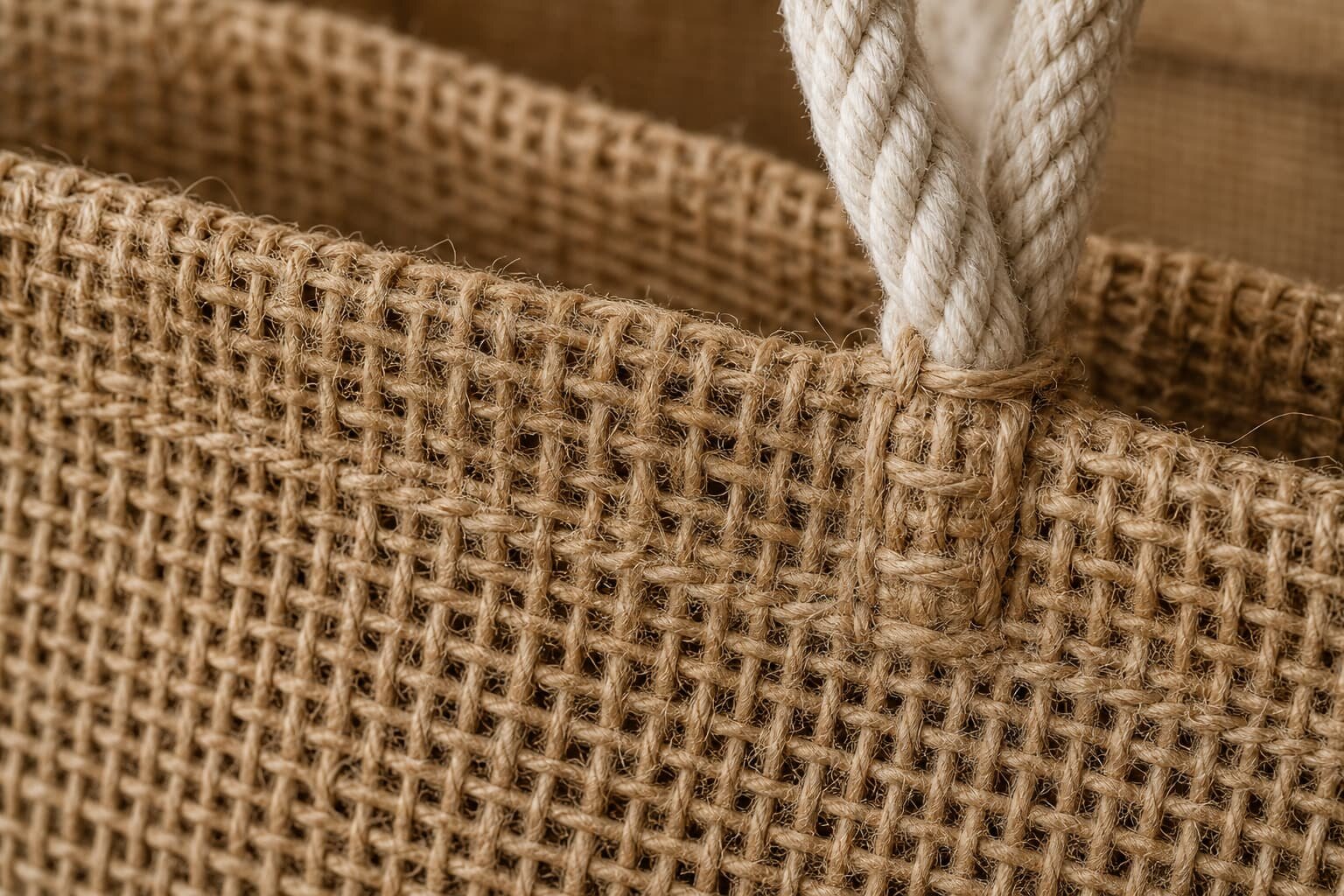
Why Burlap Tote Bag Unit Cost Is Easy to Misread
A burlap tote bag looks simple on a line sheet, but the unit cost can move sharply when one quote includes stronger fabric, reinforced handles, clean screen printing, and export packing while another quote only covers a basic sewn shell. Procurement teams often compare the final unit price first and only later discover that the cheaper offer used lighter jute, weaker stitching, smaller dimensions, or a packing method that does not fit warehouse intake.
The buying problem is not only finding the lowest price. It is making sure every supplier is quoting the same bag. A proper burlap tote bag cost breakdown separates fabric, cutting loss, handle construction, printing, sewing labor, packing, sample work, and MOQ logic. When those items are visible, a buyer can decide where to reduce cost without damaging the bag's function or brand presentation.
- A 300 GSM laminated burlap tote and a 220 GSM unlaminated burlap tote should not be compared as equal bags.
- A bag with cotton webbing handles and box-X stitching costs more than a bag with narrow jute tape and single-line stitching, but it also carries better.
- A one-color bold logo on burlap is easier to control than small multi-color artwork with fine text.
- Carton packing, moisture protection, and barcode labeling can change landed cost even if the factory unit price looks low.
Start With the Bag Function Before Chasing a Target Price
The most useful RFQ starts with the bag's job. A burlap tote for wine gifting, a reusable grocery bag, a cosmetic gift set, and a retail merchandise tote all need different structure. If the buyer only sends width, height, and logo, the factory may quote the thinnest acceptable version to win the price comparison. That usually creates problems later in sampling.
For a retail brand, the bag may need a cleaner shape, less fiber shedding, and a more controlled logo. For an event giveaway, the acceptable finish may be simpler, but handle comfort and print visibility still matter. For distributor stock, repeatability and carton efficiency become more important than a decorative detail. Cost decisions should match the use case, not a generic burlap tote description.
- Gift packaging: prioritize appearance, consistent shade, clean print, and neat folding.
- Reusable shopper: prioritize GSM, handle strength, seam allowance, and gusset shape.
- Retail merchandise: prioritize surface cleanliness, label placement, and presentation packing.
- Distributor stock: prioritize standard sizes, stable MOQ, repeatable material, and carton cube efficiency.
- Wine or bottle tote: prioritize bottom structure, vertical seam strength, and divider or no-divider decision.
Fabric Weight, Weave, and Lamination Drive the Base Cost
Burlap cost starts with the jute fabric. Common tote bag specifications often sit around 220-360 GSM depending on size, use, and whether the fabric is laminated. A small gift tote can sometimes use lighter burlap, but a larger shopping tote usually needs better body. If the bag must stand upright, hold heavier products, or carry a premium retail impression, the fabric weight and structure should be chosen before negotiating pennies from sewing labor.
Buyers should also ask how the factory measures GSM. Some quotes use fabric weight before lamination; others quote finished laminated fabric. This matters because lamination adds body and can reduce fiber shedding, but it also changes hand feel, fold behavior, and sustainability claims. Unlaminated burlap feels more natural but may shed more fibers and show a rougher print edge.
- 220-260 GSM: suitable for small promotional or light gift bags if load is limited.
- 260-320 GSM: common range for many branded burlap tote bags with moderate structure.
- 320-360 GSM: better for heavier use, larger gussets, or premium presentation, but raises material and freight weight.
- Laminated burlap: improves shape and reduces shedding, but needs crease control in packing.
- Unlaminated burlap: more natural look, but requires realistic expectations for weave irregularity and print edge softness.
A Practical Unit Cost Breakdown for RFQ Comparison
A factory may not disclose every internal cost, but a serious supplier should be able to explain what is included in the unit price. For buyer comparison, the useful breakdown is not confidential margin detail; it is specification coverage. You need to know whether the quote includes correct fabric, handles, printing, labels, packing, sample charges, and export carton assumptions.
A common mistake is asking for one number and then adding requirements after the quote is issued. Each new detail can change cost: wider handles increase webbing consumption, bigger print size increases ink and screen work, individual polybags increase labor and material, and carton quantity changes packing time. A clean RFQ avoids this drip-feed quoting problem.
- Material cost: burlap fabric, lamination or lining, handle tape, label, thread, and reinforcement pieces.
- Processing cost: cutting, sewing, trimming, turning, pressing or shaping, and in-line inspection.
- Decoration cost: screen setup, ink, print labor, curing or drying time, and print reject allowance.
- Packing cost: folding method, inner bags, carton, carton marks, barcode labels, and moisture protection.
- Commercial cost: MOQ allocation, sample development, wastage allowance, payment terms, and order complexity.
- Logistics effect: carton cube, gross weight, pallet plan, and whether the bag ships flat or shaped.
Printing on Burlap Needs Different Artwork Rules
Burlap is a coarse woven surface, not a smooth cotton canvas. Fine serif text, thin lines, small QR codes, gradients, and tight registration between colors are risky. A logo that looks sharp on a PDF can break across the jute weave. For most burlap tote bags, one-color or two-color screen printing with bold shapes is more reliable and cost-effective.
The buyer should ask the factory to review artwork before pricing is locked. If the print area is large, ink coverage and drying time may affect production speed. If the artwork uses a light color on natural burlap, the factory may recommend a stronger ink deposit or an underbase test. For brand buyers, the right acceptance standard is not perfect paper-like printing; it is consistent, readable printing within the limits of burlap texture.
- Avoid reversed text under 6 mm high unless the factory tests it on the actual burlap.
- Use Pantone references, but allow a realistic shade tolerance due to the natural base color.
- Keep registration simple for two-color logos because burlap can shift during printing.
- Confirm print placement tolerance, for example plus or minus 5-8 mm depending on bag size and fixture.
- Request a rub test after drying to check whether the ink sits properly on the rough surface.
Handles, Stitching, and Load Capacity Are Not Minor Details
Handle specification can be the difference between a usable burlap tote and a complaint. Cotton webbing, jute webbing, rope, or self-fabric handles all have different costs and user experience. Cotton webbing is often chosen when comfort and strength matter. Jute webbing gives a more natural look but can feel rougher. Rope handles may work for gift bags but need secure anchoring.
The stitching pattern should be part of the RFQ, not left to factory habit. A box-X stitch or reinforced bar tack costs more than a short single-line stitch, but it improves load performance. For a larger tote, handle drop also affects cost because longer handles consume more material. If the bag will carry groceries, bottles, catalogs, or retail products, ask for a load test standard before bulk production.
- Handle width of 2.5-3.8 cm is common for tote use; narrower handles may cut into the hand.
- Handle drop should match use: hand carry, shoulder carry, or both.
- Box-X stitching is recommended for reusable totes and heavier content.
- Reinforcement patches can help on loose weave burlap or larger bag formats.
- Define expected load, test duration, and whether failure at stitch, fabric tear, or handle break is unacceptable.
MOQ Logic: Why Small Changes Increase the Unit Cost
MOQ is not only a factory policy. It comes from material purchasing, cutting efficiency, printing setup, sewing line arrangement, and packing preparation. A buyer asking for five sizes, four logos, and three packing styles may see a much higher unit cost than a buyer ordering the same total quantity in one standard version. Burlap fabric may be bought by roll, while printing screens and cutting dies or templates need setup time.
To control cost, group variants intelligently. If several distributors need different logos, consider keeping the same bag size, fabric, handle, and packing while changing only print artwork. If a campaign needs multiple sizes, ask whether they can share the same handle tape, label, carton style, and print color. Simplification does not always reduce brand value; it often improves production consistency.
- MOQ may apply separately by fabric color, size, artwork, handle type, and packing method.
- Changing print color can trigger separate ink setup and cleaning time.
- Changing bag size affects cutting layout and fabric yield.
- Changing handle material affects purchasing MOQ for webbing or rope.
- Changing packing style affects line speed and carton planning.
Samples Should Prove the Cost Assumptions
A sample is not only for appearance approval. It should confirm the cost structure quoted by the factory. If the quote is based on 300 GSM laminated burlap, cotton webbing handles, one-color screen print, and flat export packing, the sample should represent those assumptions. An existing sample from the showroom can be useful for direction, but it cannot replace a pre-production sample when artwork, fabric, or structure is customized.
Procurement teams should write sample approval notes in measurable terms. Record finished size, fabric hand feel, handle drop, print size, print position, seam quality, and packing fold. Photos help, but physical approval is better for burlap because texture, smell, stiffness, and shedding are difficult to judge on screen. If the sample uses substitute material, the factory should state that clearly.
- Existing sample: good for checking factory capability and general workmanship.
- Custom development sample: useful for confirming dimensions, handle choice, and print feasibility.
- Pre-production sample: should be made with bulk-like material and final artwork before mass production.
- Packing sample: important when laminated burlap may crease or retail presentation matters.
- Approval record: include photos, measurements, comments, and signed or emailed confirmation.
Packing and Freight Can Change the Real Unit Cost
Burlap tote bags are often quoted ex-works or FOB, but the buyer's real unit cost includes carton cube, gross weight, repacking needs, and warehouse handling. A bag that is cheap to sew but packed inefficiently can become expensive in freight. A laminated burlap bag that is folded too tightly may arrive with permanent creases. A natural burlap bag packed without moisture control can develop odor or mildew risk during long transit.
Packing should be specified before final quote approval. Some buyers want no individual polybag for sustainability reasons, while others need each bag protected for retail or distributor handling. Carton count should balance compression and freight efficiency. If the bag has a front logo, confirm whether the fold hides or rubs the printed area. Export carton marks, barcodes, and pallet requirements should also be included in the RFQ.
- Flat packing reduces carton volume but may create fold lines on laminated material.
- Individual polybags protect bags but add cost, plastic use, and packing labor.
- Master cartons need enough strength for ocean freight stacking.
- Moisture protection is important for jute, especially during humid seasons.
- Retail labels, hangtags, and barcodes should be quoted as separate visible line items if required.
Lead Time Depends on Approval Speed and Material Readiness
A realistic lead time starts after approvals, not simply after deposit. Burlap fabric availability, lamination, handle webbing, print screens, sample approval, and packing materials all affect the schedule. If the buyer delays artwork approval or changes the logo after sampling, the production clock resets in practical terms even if the purchase order was issued earlier.
For urgent orders, reduce complexity before asking the factory to compress time. Use stock burlap color, standard GSM, existing handle tape, simple one-color artwork, and standard export packing. If the launch date is fixed, ask the supplier to show the schedule by milestone: material purchase, sample, printing, sewing, inspection, packing, and shipment handover. This is more useful than a general promise.
- Artwork approval should include print size, placement, color, and file format.
- Material approval should confirm GSM, shade, lamination, and hand feel.
- Pre-production sample approval should happen before bulk cutting whenever possible.
- Inspection booking should be planned before final packing is complete.
- Shipment handover date should be separated from vessel departure or courier pickup estimates.
Specification comparison for buyers
| Spec decision | Recommended option | When it fits | Buyer risk to check |
|---|---|---|---|
| Burlap fabric weight | 260-320 GSM laminated or unlaminated jute burlap | Retail gift bags, trade show totes, natural packaging programs | Ask whether GSM is before or after lamination; low GSM can sag and shed fibers |
| Handle construction | Cotton webbing or jute webbing, 2.5-3.8 cm width, box-X stitched | Reusable shopping, wine promotions, grocery or brand merchandise | Thin rope or single-line stitching can fail during load testing |
| Printing method | 1-2 color screen print with underbase test on coarse weave | Logo bags with simple brand marks and solid graphics | Fine lines and small reversed text may break on burlap texture |
| Inner structure | PE lamination or cotton lining depending on use | Lamination for shape and dust control; lining for premium retail feel | Lamination affects recyclability claims and may crack if folded tightly |
| MOQ planning | Consolidate sizes and artwork where possible | Seasonal campaigns, distributor stock, private-label replenishment | Many small variants raise setup, cutting, printing, and packing cost per unit |
| Packing method | Flat packed in export carton with moisture protection | Ocean freight, warehouse intake, retail repacking | Over-compression can crease laminated burlap and deform gussets |
| Sample approval | Pre-production sample using bulk-like burlap lot | Any order with print, handles, gusset, lining, or retail packing | A sample made from smoother substitute fabric will not predict bulk print quality |
Buyer checklist before sampling
- Confirm target use: gift packaging, retail tote, grocery bag, event giveaway, wine carrier, or reusable shopper.
- Specify burlap fabric GSM, weave openness, lamination requirement, color tone, and acceptable fiber shedding level.
- Define finished size by width, height, gusset, handle drop, and measurement tolerance after sewing.
- State handle material, width, length, stitching pattern, and expected carrying weight.
- Send print artwork with Pantone references, print size, placement, and minimum line thickness.
- Ask the factory to separate material, printing, sewing, packing, and freight-related quote assumptions.
- Confirm MOQ by size, color, artwork, and packing style rather than accepting one blended MOQ.
- Request sample checks for print adhesion, seam strength, handle pull, odor, moisture, and carton packing.
- Define packing count per carton, carton size target, polybag or no-polybag policy, and barcode or label needs.
- Agree lead time by sample approval date, not only by deposit date.
Factory quote questions to send
- What burlap GSM and fabric width are you quoting, and is the material laminated or unlaminated?
- Is the quoted GSM measured before lamination, after lamination, or from finished fabric stock?
- What is the fabric consumption per bag based on our finished size and gusset?
- Which handle material, width, and stitching pattern are included in the unit price?
- How many print colors and screens are included, and what is the screen setup charge if separated?
- Can you print our artwork cleanly on this burlap weave, or do you recommend adjusting line thickness?
- What MOQ applies per size, per artwork, per fabric color, and per packing method?
- What sample type will you provide: existing sample, custom sample, or pre-production sample from bulk material?
- What packing method and carton quantity are included in the quote?
- What is the lead time after artwork approval, material approval, and pre-production sample approval?
Quality-control points to confirm
- Check finished bag dimensions against approved tolerance, including gusset depth and handle drop.
- Measure fabric GSM from bulk material and compare shade, weave openness, and lamination to the approved sample.
- Inspect print clarity on coarse burlap, especially logo edges, small text, ink coverage, and rubbing resistance.
- Run handle pull and seam strength checks using the buyer's expected load weight plus a safety margin.
- Check stitching density, skipped stitches, loose threads, seam allowance, and box-X reinforcement consistency.
- Review odor and moisture condition before packing, especially for laminated burlap and ocean freight orders.
- Confirm carton packing quantity, carton strength, barcode placement, and whether bags are folded without permanent creases.
- Separate major defects such as broken handles, heavy stains, wrong print, open seams, mold, and wrong packing from minor natural fiber variation.