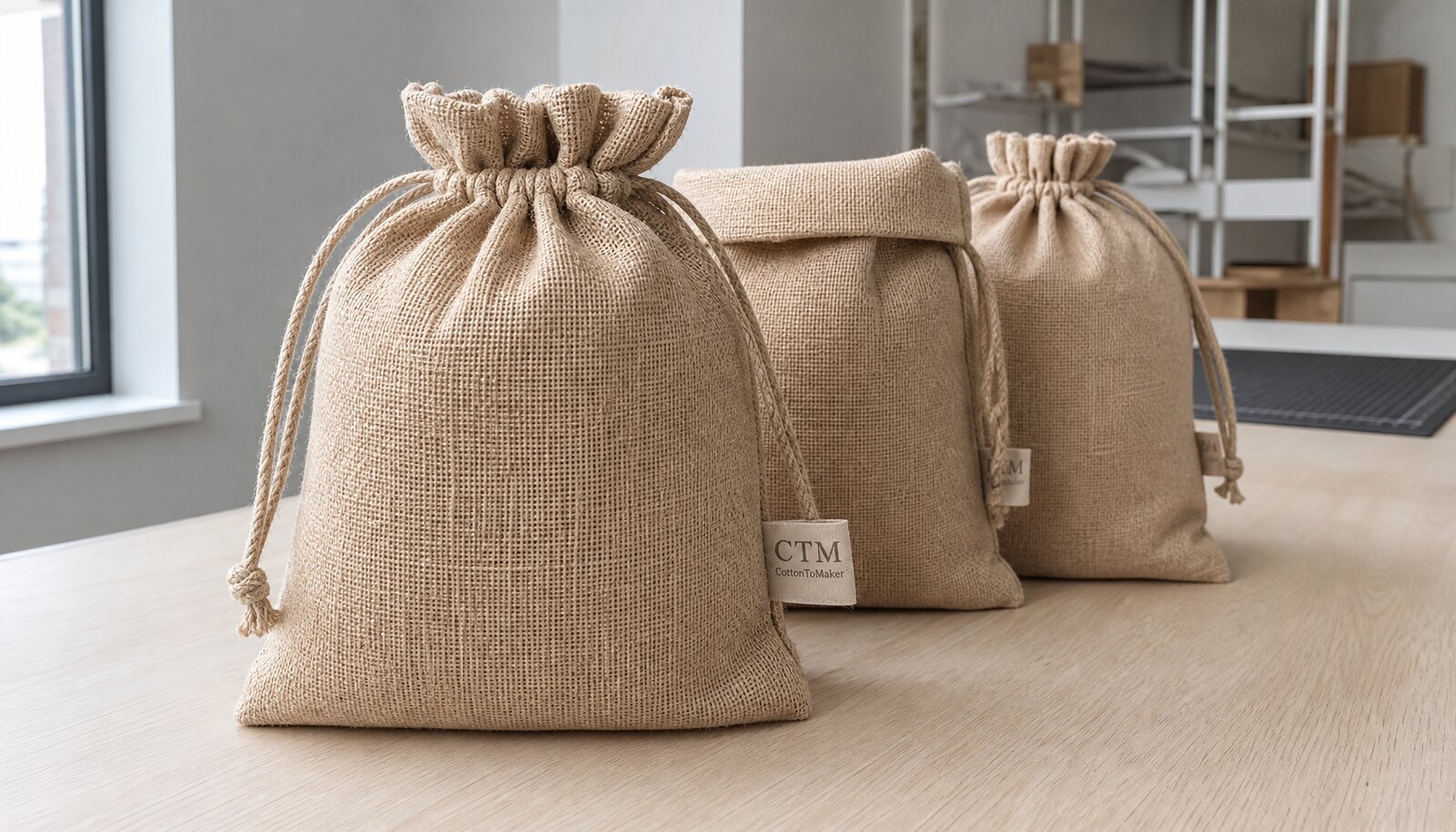
Why Ecommerce Buyers Use Burlap Gift Bags
Burlap gift bags work in ecommerce when the product needs a natural look, a low-plastic presentation, or a simple premium feel without moving into rigid gift packaging. They are useful for candles, soaps, dried goods, seasonal gifts, wedding favors, small apparel accessories, and bundled promos. The buyer problem is not whether the bag looks rustic. The real issue is whether it can survive storage, picking, packing, and shipping without shedding fibers, splitting at the seam, or making the product look cheap on arrival.
A good ecommerce program starts by matching the bag to the channel. If the item will sit in a warehouse, travel through carton handling, and be opened by a consumer, the bag needs a cleaner finish than a one-off event pouch. That usually means tighter weave control, a predictable closure, a stable print method, and carton packing that keeps dust off the product.
- Use burlap when the visual story matters and the packaging is part of the product experience.
- Avoid it for very delicate items unless you specify lining, surface control, or inner wrap.
- Treat the bag as a shipping component, not only a decorative accessory.
Choose the Right Fabric and Construction
Burlap and jute are often used interchangeably in sourcing conversations, but the buyer should not rely on the label alone. What matters is the weave openness, fabric weight, hand feel, and whether the bag is lined or coated. For ecommerce gift bags, a practical working range is usually around 200 to 320 GSM, or roughly 7 to 10 oz depending on construction. Lighter fabric is cheaper and folds better, but it can look thin, show more weave irregularity, and lose shape faster. Heavier fabric gives better structure, but it can feel rougher and increase freight weight.
Construction details drive whether the bag feels retail-ready. A lined interior improves appearance and helps contain loose fibers. A reinforced bottom improves stacking and reduces split seams. If the bag needs to close securely, choose a drawstring, ribbon tie, or fold-over flap early, because each closure changes labor, material use, and the cutting pattern. Small design changes can shift the quote more than buyers expect.
- Specify finished size, fabric weight, lining status, and seam allowance in the RFQ.
- If the item has dust-sensitive contents, require a lining or a clean inner wrap.
- If the bag must hold shape on a shelf, ask for heavier GSM and reinforced corners.
Print and Branding Choices That Survive Handling
Burlap is not a forgiving print surface. The weave texture can break fine details, and heavy ink can make the bag stiff or uneven. For most ecommerce gift bags, simple one-color screen print is the safest starting point. It is readable, relatively cost-efficient, and more tolerant of the texture than small text or dense gradients. If the brand mark is detailed, a woven label, sewn patch, or stitched side label may give a cleaner result than direct print.
The buyer should not pick branding by habit. Heat transfer can work for short runs, but on rough burlap it can crack or sit awkwardly on the weave. Embroidery adds texture and perceived value, yet it can pucker lighter fabric and increase unit cost. For recurring SKUs, a sewn label or a small printed logo panel often gives the best balance of durability, visual control, and cost.
- Use one-color print when the logo must remain legible across rough weave.
- Use a sewn or woven label when small type or fine lines matter.
- Ask for print location measured from the seam or top edge, not only a mockup image.
MOQ Logic and the Cost Drivers Behind the Quote
MOQ on burlap gift bags is not random. It is usually tied to fabric sourcing, cutting efficiency, print setup, and sewing line changeover. If the supplier keeps standard burlap in stock and only changes the size or print, MOQ can stay relatively low. Once you request custom dyeing, a special lining, a nonstandard cord, or a complex closure, the supplier has to spread more setup cost across the run. That is why two bags that look similar on a product page can have very different factory economics.
When comparing quotes, look at the cost drivers separately rather than only the unit price. The important items are fabric weight, number of print colors, label or patch work, lining, cord or tie material, carton packing, and export documents. The cleanest quote is one that breaks out the base bag, decoration, and pack-out extras. If a supplier hides those items in one lump sum, you will struggle to compare options or negotiate a later reorder.
- Standardize size, color count, and closure before asking for pricing.
- Separate decoration cost from bag cost so you can compare reorders accurately.
- Use the same incoterm and destination for every quote you review.
How to Compare Supplier Routes Without Mixing Apples and Oranges
For ecommerce buyers, the right supplier route depends on how much control you need and how quickly you need stock. A direct factory is usually the best fit when you want repeatable quality, custom size work, and proper bulk packing. A trading company can be useful when they manage multiple factories and can shift capacity, but the buyer must verify that sample quality and bulk quality come from the same production system. A local decorator or converter may cost more, but it can be the right answer for launch windows or replenishment with lower inventory risk.
The mistake is comparing only the quoted unit price. A stock reseller may look cheap until you add rework, mixed lots, or extra labeling. A full-service packaging supplier may quote higher but save time if they can handle inserts, UPC labels, and carton marks without a second vendor. The comparison should include consistency, packing readiness, and whether the supplier can support the same spec on reorder.
- Ask whether the same factory will make the sample and the bulk order.
- Check if the supplier can show a similar burlap bag order with a current inspection record.
- Compare not only cost, but also lead time stability and packing capability.
What to Put in the RFQ So Quotes Stay Comparable
A burlap bag RFQ should be short enough to understand and detailed enough to remove guesswork. Start with the target use case, then define the finished size, fabric weight, lining or no lining, closure type, print method, logo placement, packing format, and destination. Add the order quantity by SKU and by colorway, because MOQ and pricing often change by version. If the supplier needs artwork, send a clean vector file and tell them whether fine text is allowed or should be simplified for the weave.
The best RFQs also define the acceptance criteria. State tolerances for size, print position, and stitch quality. Say whether the bags must be odor-free, dust-controlled, or retail-ready. If you are selling through ecommerce, include the exact carton and label requirements. That saves time later and prevents the supplier from making assumptions that look acceptable in a factory photo but fail in fulfillment.
- Include a clear reference sample or approved photo if the line already exists.
- Specify whether the bags are for direct-to-consumer shipping, shelf display, or gift set assembly.
- State any no-go items such as loose lint, uneven print, or exposed raw edges.
Sample Approval: What Buyers Should Actually Inspect
A sample is not approved just because the logo looks correct. For burlap gift bags, the buyer should inspect the full user experience: opening the bag, loading the item, closing it, and handling it through packing. Check whether the bag stands or collapses the way you need, whether the seam twists under load, and whether the fabric sheds onto the product. A good sample should show the actual construction route you plan to buy, not a best-case prototype built by a different team.
Use the sample stage to remove ambiguity. Measure the finished dimensions, compare the fabric hand feel against the approved reference, and look closely at the print edges and closure stitching. If the supplier sends photos only, request a physical pre-production sample before bulk. One of the fastest ways to reduce later disputes is to approve the sample with notes that become the working standard for bulk inspection.
- Measure width, height, gusset, and tie or cord length.
- Rub the print area and check for cracking, smudge, or heavy ink buildup.
- Open and close the bag repeatedly to see whether the closure stays functional.
- Check the inside for loose threads, dust, or visible glue spots.
Packing for Ecommerce Fulfillment and Retail Replenishment
Packing matters more with burlap than with smoother packaging materials because the fabric can shed, snag, or pick up warehouse dust. If the bags go straight into ecommerce fulfillment, bulk packing is usually better than individual retail polybags unless the customer experience requires one bag per retail sleeve. The supplier should tell you how many pieces go in each master carton, what the gross weight is, and whether the cartons are lined or protected against fiber dust.
Labeling is part of the product specification, not an afterthought. If a third-party fulfillment center will receive the bags, the carton marks, SKU labels, and barcode placement must match their receiving rules. When bags are sold as part of a gift set, prepacking the bag with inserts or tags may be worth the added labor because it reduces downstream handling. If the supplier cannot pack to your warehouse standard, the savings on unit price often disappear in repacking labor.
- Decide whether bags ship bulk packed, unit packed, or pre-packed with inserts.
- Lock carton size and carton count early to protect warehouse efficiency.
- Ask for photo evidence of carton labels, interior packing, and closure method before shipment.
Lead Time, Schedule Risk, and How to Avoid Late Stock
Burlap gift bag lead time is usually driven by material availability, print setup, sewing capacity, and packing complexity. A simple stock-fabric, one-color order can move faster than a lined bag with sewn labels and special carton requirements. Sample timing is often separate from bulk timing, and buyers should not assume the bulk clock starts until the sample is approved in writing. If your launch date is fixed, add a buffer for artwork revisions, sample freight, and any correction round.
The highest schedule risk usually comes from late spec changes. A small change to print position, label type, or closure length can force the factory to recut or reset the line. Another common issue is approving a sample that was made from a slightly better material than the bulk run. To avoid that, ask the supplier to confirm the exact fabric lot, trim spec, and packing method before production starts.
- Build time for artwork cleanup, sample approval, and production sign-off into the launch plan.
- Use one written spec sheet and one approved sample to control change requests.
- Ask the supplier to flag any material or trim substitution before bulk starts.
QC Thresholds and Landed-Cost Mistakes Buyers Miss
Quality control for burlap gift bags should focus on appearance, function, and packing integrity. Appearance means the weave, print, and label finish match the approved sample. Function means the bag opens, closes, and carries the intended load without tearing or deforming. Packing integrity means the cartons arrive clean, dry, and correctly labeled. Because burlap is naturally textured, some variation is normal, but buyers need to define which variation is acceptable and which is not.
Landed-cost mistakes usually come from details outside the unit price. Extra costs appear when the bags need repacking, a second inspection, carton relabeling, or destination compliance work. A slightly cheaper quote can become the more expensive option if the supplier uses weak cartons, overpacks the cartons, or ships with inconsistent counts. For ecommerce, the real cost is not only the bag itself. It is the cost to receive it, store it, pick it, and deliver it to the customer in the right condition.
- Set defect limits for loose threads, print misalignment, and missing labels.
- Confirm carton strength and moisture protection for ocean or cross-country transit.
- Review the full landed cost, including packing, inspection, warehousing, and any rework.
Specification comparison for buyers
| Spec decision | Recommended option | When it fits | Buyer risk to check |
|---|---|---|---|
| Direct factory in a burlap or jute-producing region | Best for custom sizes, custom print, and repeat programs | You need control over weave, lining, trim, and carton packing | Confirm they actually own the sewing and print capacity, not only a sales office |
| Trading company with two or three audited factories | Useful when your forecast is unstable or you need backup capacity | You want one RFQ contact but still need custom work | Check whether samples and bulk come from the same plant and whether quote terms stay consistent |
| Stock bag reseller with private label service | Good for speed and low design complexity | You can accept standard sizes, standard burlap weight, and simple branding | Risk of uneven stock lots, mixed closures, and no control over fiber quality or carton spec |
| Domestic decorator or packager | Works for short runs, urgent retail launches, or regional fulfillment | You need local turnaround more than lowest unit cost | Verify material origin, print durability, and whether the base bag is imported stock or made to order |
| Small-run local converter | Fits test launches, marketplace trials, and seasonal kits | You are validating demand before placing a larger factory order | Lower MOQ often comes with weaker consistency and less stable lead time |
| Full-service packaging supplier | Best if the bag must ship with tags, inserts, and retail-ready packing | You want one supplier to manage bag, label, barcode, and carton prep | Check whether they can hold final pack tolerances and provide clear QC photos before shipment |
| Nearshore converter for fast replenishment | Good for high-velocity ecommerce SKUs with frequent reorders | You need shorter transit time and less inventory on water | Usually higher unit cost, so compare against inventory carrying cost and stockout risk |
| Single-source factory with in-house print and stitching | Strongest option for repeat orders with a stable specification | You need controlled color, consistent seam quality, and fewer handoffs | Ask for proof that print, sewing, and packing happen under one QA system |
Buyer checklist before sampling
- Lock the bag size in finished dimensions, not cut size, and allow tolerance for seam take-up.
- Define the burlap or jute basis weight, weave openness, and whether the bag needs a lining.
- State the closure type clearly: drawstring, ribbon tie, button, zipper, fold-over flap, or open top.
- Choose one branding method and one logo placement before you request samples.
- Decide whether the bags will ship retail-ready, bulk packed, or pre-packed with inserts and barcodes.
- Match the quote to one incoterm, one currency, and one sample reference so suppliers are comparable.
- Ask for seam, print, and closure standards in writing, not only a product photo.
- Confirm carton dimensions, gross weight, and pallet rules if the bags will move through ecommerce fulfillment.
- Review whether any inner lining, coating, or lamination changes the hand feel or recyclability position.
- Set an acceptance plan for loose fibers, print smudge, odor, and stitching defects before bulk approval.
Factory quote questions to send
- What is the finished size, fabric GSM or ounce weight, and whether the bag is unlined, lined, or laminated?
- Which print method do you recommend for this artwork, and how many colors or screens are included in the setup?
- What is the MOQ by size and by print version, and what changes the MOQ upward?
- Are sample, tooling, plate, and courier charges separate from the bulk unit price?
- What is the standard bulk packing format, carton size, carton quantity, and gross weight?
- Can you share seam allowance, stitch density, and closure material specifications?
- What is your normal production lead time after sample approval, and what can delay it?
- Which part of the process is in-house: cutting, printing, sewing, inspection, and packing?
- Can you provide photos or a video of a current production line or a recent similar order?
- What defect standard do you use for fiber shedding, print registration, uneven seam, and damaged cartons?
Quality-control points to confirm
- Finished dimensions within the agreed tolerance on length, width, gusset, and drawstring or tie length.
- Fabric weight consistent with the approved sample and no obvious loose weave gaps that change bag strength.
- Seams secure at stress points, especially side seams, bottom corners, handles, and cord exits.
- Print registration correct, with no bleeding, cracking, or heavy ink buildup that stiffens the fabric.
- Closure action smooth and repeatable, with cords or ties not fraying, slipping, or twisting.
- No unacceptable odor, oily spots, mold, or dampness in the fabric or cartons.
- Loose fibers and surface dust within a buyer-defined limit so the bags do not create cleanup issues in fulfillment.
- Cartons closed, labeled, and packed to survive transit without crushing the bag shape or distorting the print.
- Barcode, SKU label, and carton mark matching the PO and packing list exactly.
- A clear photo record of pre-shipment inspection for the first bulk run or any new supplier.