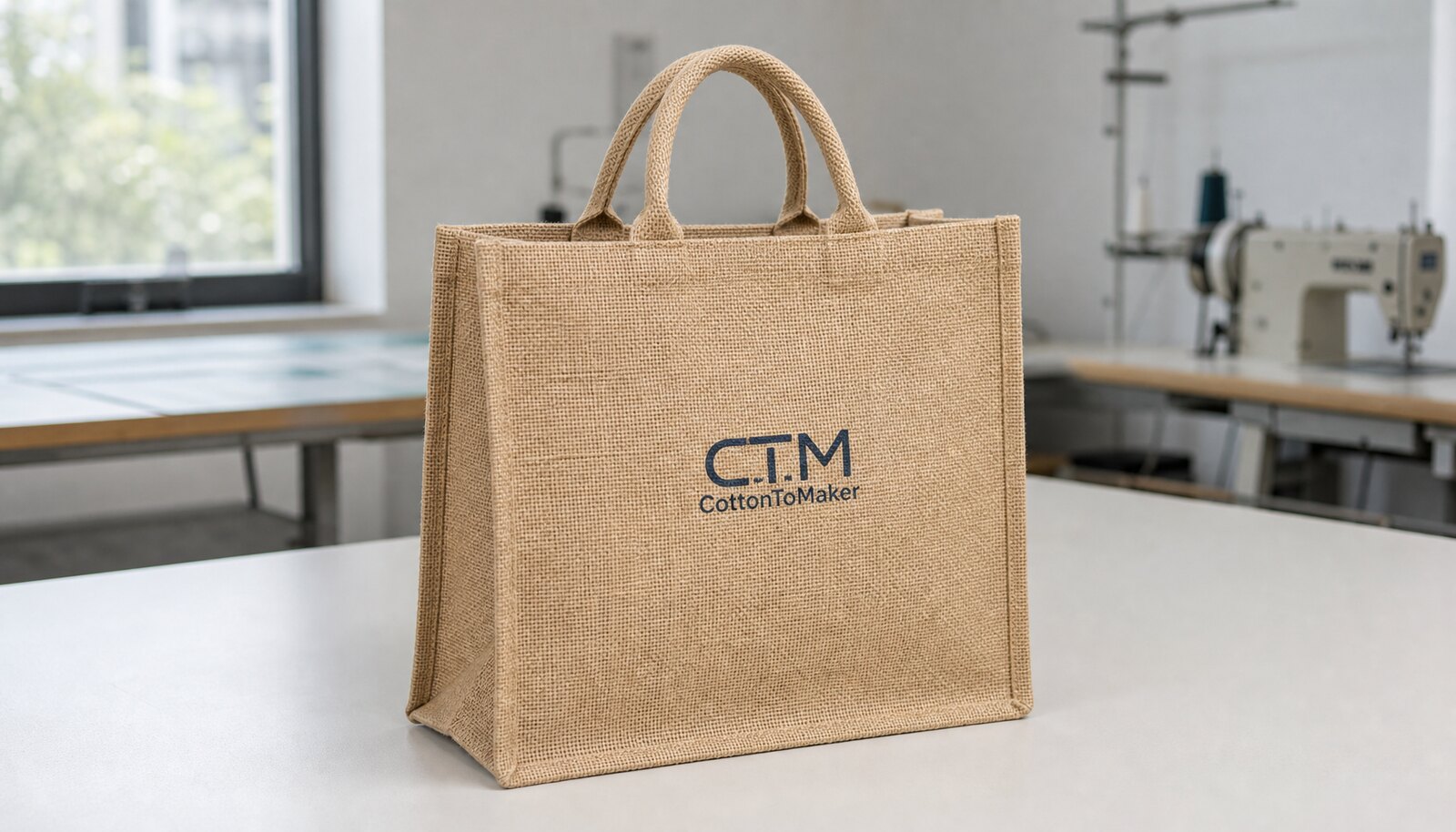
Why burlap bag printing fails when the fabric spec is vague
Most problems in burlap bag printing start before the first screen is made. If the buyer only says “natural jute bag with logo,” the factory has too much freedom on fabric weight, weave openness, and finishing. That freedom usually becomes quote noise: one supplier quotes a light, coarse body fabric, another quotes a denser retail-grade jute, and the print result looks completely different even when the artwork is identical.
For procurement teams, the real buying problem is not whether the logo can be printed. It is whether the finished bag will look consistent across the whole order and still hold up after packing, transit, and shelf handling. The correct RFQ should separate bag body spec, decoration method, packing format, and acceptance criteria. When those pieces are combined in one vague line item, you invite price variance and supplier disputes later.
- State fabric type: burlap, jute, or jute-cotton blend, not just “eco bag.”
- Give a target GSM range and acceptable tolerance.
- Define whether the bag is for retail, events, gifting, or light carry use.
- Fix the print area and logo colors before requesting pricing.
Choosing the right burlap body: GSM, weave, and finish
For burlap bag printing, fabric weight matters because the weave changes how ink sits on the surface. A 280–320 gsm burlap body works for most retail and promotional tote programs. It keeps the price controlled and still gives enough structure for standard screen printing. Once you move into 320–400 gsm, the bag feels more premium, but sewing time rises and the quote should rise with it.
Open weave looks rustic, but very open burlap can cause print breaks, fuzzy edges, and uneven coverage, especially on small text. If the bag must carry a clean brand mark, ask the factory to quote the same artwork on two fabric options: one natural coarse burlap and one tighter weave. That comparison usually shows whether the logo is suitable for the chosen material or needs simplification.
- 280–320 gsm: common retail, promo, and budget reusable bags.
- 320–400 gsm: heavier, more premium, better body but higher sewing cost.
- Natural burlap: strongest rustic look, but print edges can be rougher.
- Bleached or dyed burlap: cleaner branding surface, but color consistency must be controlled.
Printing methods that actually work on burlap
Screen printing is usually the default for burlap bag printing because it handles simple logos well and keeps unit cost reasonable. For one- or two-color artwork, it is still the most practical choice. It can produce strong coverage, but buyers need to specify whether the print should be soft hand-feel or higher opacity. On dark natural burlap, a white underbase or extra pass may be needed to stop the logo from disappearing into the weave.
Transfer printing can be useful when the logo includes gradients, thin lines, or multiple colors. The downside is durability on rough jute. A transfer that looks clean on a sample can still crack or lift after repeated folding if the adhesive bond is weak. Embroidery, woven labels, or foil should be treated as premium options, not default choices, because they add cost and may not suit coarse burlap texture.
- Screen print: best for bold, simple artwork and repeat orders.
- Heat/digital transfer: better for complex art, but verify rub resistance.
- Embroidery: premium look, but can distort on coarse fabric.
- Foil: only for carefully controlled premium runs, not rough-use bags.
What drives quote spread between suppliers
Two factories can quote very different prices for what appears to be the same burlap bag. The spread usually comes from hidden variables: fabric GSM, stitching density, handle construction, print setup, internal QC level, and packing method. If one supplier quotes a lower number, it may simply mean a lighter fabric or a print process with fewer passes and less durability. That is not automatically wrong, but it must be visible in the quote.
The buyer should compare supplier offers on a landed-cost basis, not just ex-factory unit price. Add print setup, sample fees, carton charges, inner packing, and domestic freight to the quote before comparison. For imported orders, also account for carton loading efficiency; a heavier burlap bag with thick cartons can reduce container utilization and raise the real cost per sellable unit.
- Compare setup charge per color and per artwork revision.
- Separate bag body cost from print cost if the supplier can do that.
- Ask whether the quoted price includes inside packing, polybag, and barcode label.
- Check whether a heavier fabric increases carton cube and freight cost.
Supplier options: direct factory, trading company, or hybrid route
For burlap bag printing, the best sourcing route depends on how tightly you need to control print quality and how much product variety you manage. Direct factory sourcing is usually stronger for repeat programs because the same team handles sewing, printing, and packing. That reduces back-and-forth and gives you clearer ownership when there is a problem. It also tends to work better when artwork needs careful alignment on an uneven fabric surface.
A trading company or hybrid route may suit buyers who need multiple bag constructions, short-term sourcing, or lower coordination effort. The tradeoff is that print responsibility can become blurry if the printer is outside the core factory. If you go this route, the supplier must show which step is in-house and which step is subcontracted. Without that clarity, sample approval can be meaningless because the production line may not match the sample source.
- Direct factory: best control, easier corrective action, strong for repeat programs.
- Trading company: easier to coordinate mixed styles, but verify the real printer.
- Hybrid route: useful for portfolio buying, but needs stronger documentation.
- If print quality matters more than the lowest quote, prioritize the route with fewer handoffs.
Comparison table: which sourcing route fits your bag program
Use the table below to compare sourcing routes before issuing an RFQ. The goal is not to pick the cheapest source; it is to match the route to the risk profile of the order. A simple promotional run can tolerate more variation than a retail program with shelf standards and barcode labels. That difference should drive supplier selection.
If your team manages recurring replenishment, choose the option that gives you the clearest process evidence: sample traceability, in-line inspection, and repeatable packing. The more your brand relies on color accuracy and logo consistency, the less attractive it becomes to save a small amount on a loosely managed quote.
- Write decisions in measurable language, not only descriptive wording.
- Ask for sample photos plus one physical approval sample for important orders.
- Keep quotation, sample approval, and inspection notes tied to the same spec version.
Sample approval: the stage that prevents the most expensive mistakes
A burlap print sample should never be approved on appearance alone. The weave can hide weak coverage, and a logo that looks acceptable at arm’s length may still fail once folded, packed, and shipped. The buyer should request at least one pre-production sample or strike-off and compare it against a simple approval sheet that covers fabric shade, logo placement, print opacity, seam finish, and overall hand-feel.
The best sample review includes a practical use check. Fold the bag several times, press the print area, and inspect the corners of the artwork. If the design includes fine text, verify it under normal retail viewing distance, not only from one meter away. If the bag is going into wholesale or export channels, keep one signed sample at procurement and one at quality control so the factory cannot work from memory later.
- Approve artwork position with actual measurement from top edge and side seam.
- Test print on the final fabric shade, not on a substitute cloth.
- Record the signed sample date and the person who approved it.
- Keep the approved sample as the master reference for production and dispute resolution.
QC thresholds that matter in production, not just on paper
For burlap bag printing, inspection should focus on the combination of fabric and decoration. A bag can pass on size yet fail on print clarity or handle strength. A practical QC standard should include panel dimensions, logo position, print consistency, seam strength, and carton accuracy. If the bag is expected to carry weight, test at a realistic load, not a symbolic light fill.
The acceptance threshold should be written in a way the factory can actually measure. Instead of saying “good quality print,” define what defects are unacceptable: broken letters, patchy solid areas, misaligned multi-color layers, sticky ink, or severe smell from finishing chemicals. For export orders, also define what is acceptable in natural jute variation, because some fiber slub and shade variation are normal and should not become a dispute later.
- Reject visible print gaps in solid logo areas.
- Reject severe misregistration on multi-color artwork.
- Reject loose stitching at handles and gusset seams.
- Allow minor natural fiber variation if the sample already shows it.
Packing, labeling, and warehouse handling
Packing can change the delivered cost of burlap bag printing more than many buyers expect. A compressed burlap bag in a tight bundle may save carton volume, but it can also crease the print or distort the bag shape if packed too aggressively. For retail-ready goods, ask for a packing method that keeps the front panel reasonably flat and protects the printed area from rubbing against cardboard edges or other bags.
Inner bundle count should match the downstream receiving process. If your DC prefers 10 or 20 pieces per bundle, write that into the quote request. Also define the carton marking language, SKU, quantity, and gross/net weight. Small errors here slow receiving and create avoidable chargebacks. If the bags are meant for shelf display, include barcode label position and outer carton marking expectations before production starts.
- Specify inner bundle count by warehouse or retailer preference.
- Use carton liners when print abrasion is a concern.
- Keep the print face from direct contact with rough corrugated edges.
- State any barcode, lot code, or SKU label requirement in the RFQ.
Lead time planning and risk points that delay shipment
A realistic lead time for burlap bag printing depends on artwork approval, fabric availability, print setup, sewing capacity, and final packing. The factory may quote a short production window, but that usually starts only after sample approval and deposit receipt. Buyers should separate pre-production time from mass production time when planning launch calendars, because the sample stage is where many delays begin.
The most common delay points are artwork revisions, fabric color mismatch, and first-print rejection. If the buyer changes the logo after strike-off approval, the whole schedule can move. If the fabric lot is inconsistent, the printer may need to tune ink density again. For time-sensitive retail programs, keep one backup artwork version and lock the fabric spec before the order enters production.
- Plan for sample development before the mass run clock starts.
- Lock artwork, fabric shade, and print placement before approval.
- Ask the supplier to identify the longest-risk step in the schedule.
- Build in buffer time if the order needs export cartons, barcodes, or third-party inspection.
Specification comparison for buyers
| Spec decision | Recommended option | When it fits | Buyer risk to check |
|---|---|---|---|
| Supplier route | Direct factory with in-house printing | Best for repeat programs, tighter color control, and fewer handoffs | Confirm whether printing, cutting, sewing, and packing are all done in one site or split out to subcontractors |
| Supplier route | Trading company with approved print partner | Useful if you need mixed bag styles or lower initial order complexity | Watch for vague ownership of print quality and slower issue resolution if the printer is off-site |
| Fabric weight | 280–320 gsm burlap/jute body fabric | Suitable for retail carry bags, promo totes, and moderate load use | Check weave consistency; very open weave can cause fuzzy print edges and uneven ink coverage |
| Fabric weight | 320–400 gsm burlap/jute body fabric | Better for premium retail, wine, or reusable shopping bags | Heavier fabric raises unit cost and may need stronger needles, better seam allowance, and longer sewing time |
| Print method | 1–2 color screen print | Most cost-effective for bold logos, short runs, and simple artwork | Confirm print registration tolerance, ink hand-feel, and whether dark burlap needs underbase or extra passes |
| Print method | Heat transfer or digital transfer | Good for multi-color art, gradients, or small logos with fine detail | Check adhesion after fold testing and friction; some transfers crack or lift on coarse burlap |
| Print method | Foil, embroidery, or woven label add-on | Appropriate for premium branding or gift programs | Verify whether the decoration suits rough jute texture and whether it affects lead time or MOQ |
| MOQ structure | Per color/artwork MOQ with shared bag body | Works when one bag style carries several seasonal prints | Ensure the factory does not hide setup costs inside inflated unit pricing for low-volume runs |
| Packing route | Bulk packed with carton liners and labeled inner bundles | Best for wholesale, distribution, and warehouse receiving | Confirm carton strength, piece count per bundle, and whether bags are compressed before shipment |
Buyer checklist before sampling
- Final artwork in vector format with Pantone references and a clear note on print placement size
- Confirmed burlap/jute fabric GSM and whether the fabric is bleached, natural, or laminated
- Bag dimensions, handle length, seam allowance, and target load requirement
- Print method, number of colors, and whether the logo needs a white underbase or edge border
- Target MOQ per color and total order quantity by style
- Sample approval standard for color, print sharpness, seam strength, and smell/moisture
- Packing spec for inner bundle count, carton size, and label language
- Required lead time, split shipment need, and destination port or delivery terms
Factory quote questions to send
- What is the exact fabric GSM, weave type, and jute grade used for this bag?
- Which print method is included in the quote, and what are the setup charges per color or artwork?
- What is the MOQ per design, per color, and per size, and how does the price change at higher quantity tiers?
- Is the quoted price based on sewn-in handles, reinforced stitching, and edge finishing, or are those extra?
- What sample type can you provide first, and how long does it take to approve a pre-production sample?
- How many pieces per carton, what carton strength, and what outer marking format do you use?
- What lead time applies after sample approval, and what parts of the order can delay shipment?
- Can you share recent production photos, inspection records, or a specification sheet for a similar burlap print job?
Quality-control points to confirm
- Print registration within a practical tolerance so logos do not drift across the weave
- Color consistency against the approved strike-off or pre-production sample
- No pinholes, heavy ink pooling, cracking, or obvious gaps in the print field
- Seam strength at handles and side gussets under realistic bag load
- Fabric GSM within the approved tolerance and no major weave holes, oil spots, or odor issues
- Panel size and finished dimensions within agreed tolerance, especially for retail shelf fit
- Carton count and bundle count matching the packing list
- Label accuracy for SKU, carton marks, barcode, and destination details