Start with a procurement plan, not a cheap unit price
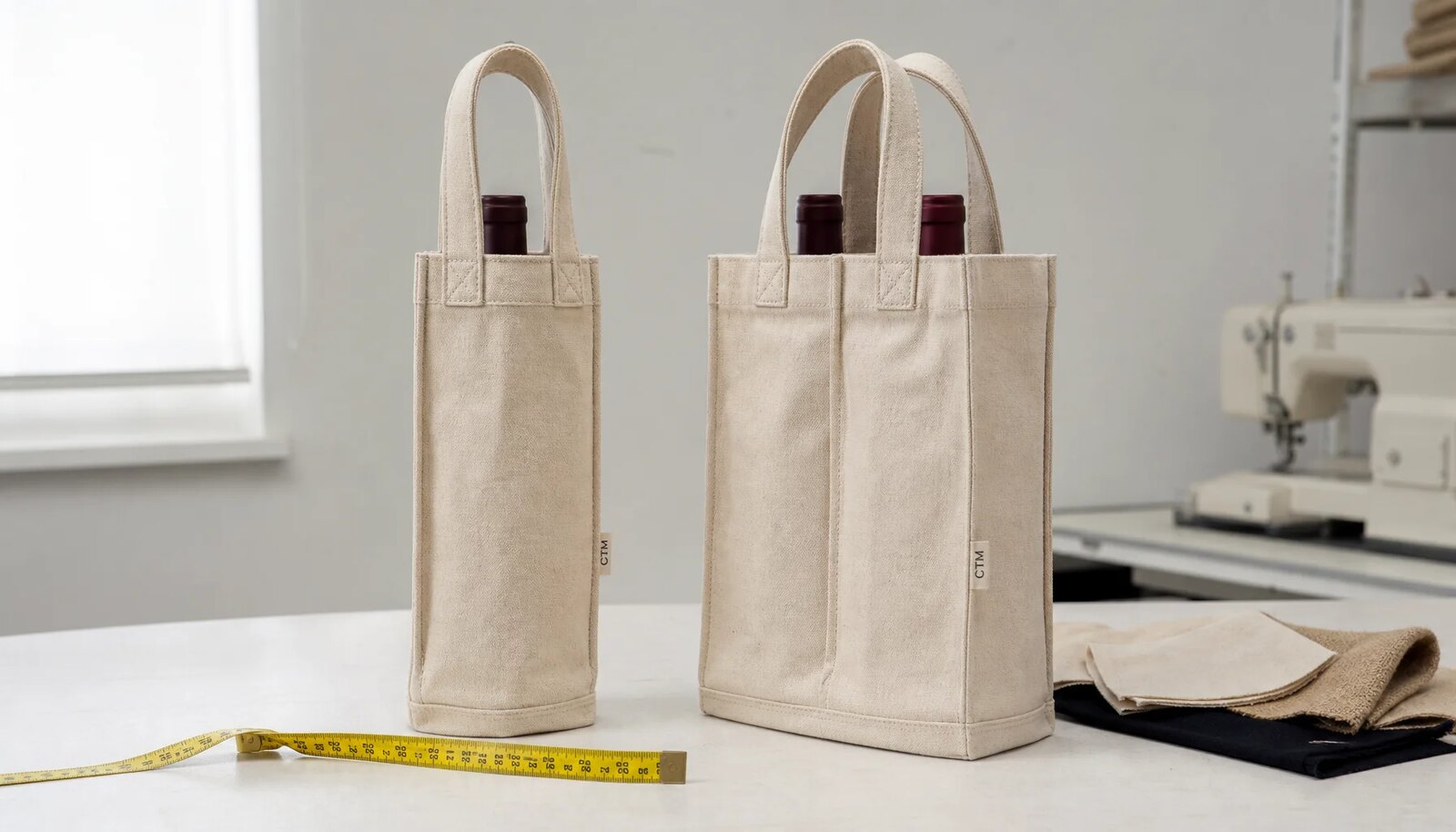
Wholesale canvas wine carriers for event planners look simple at first glance. They are small, familiar, and easy to photograph. In a live event, however, they have to do much more than look acceptable on a quote sheet. A carrier may be handed to VIP guests, wedding attendees, sponsors, conference speakers, winery customers, or retail gift buyers. It must hold the bottle securely, show the logo cleanly, arrive before the event date, and be simple for staff to count, unpack, and distribute.
The lowest unit price often hides the real risk. Weak handle stitching, poor print curing, undersized gussets, mixed cartons, or missing barcode labels can turn a small promotional item into an operations problem. Event buyers rarely have the luxury of waiting for a remake once the goods reach the venue. The safer approach is to build the order backward from the event use case and the delivery deadline.
A useful bulk pricing plan separates the real cost drivers: canvas weight, finish, bottle fit, decoration, sewing construction, packing, sampling, inspection, freight, and terms. Once those lines are visible, procurement can negotiate without removing the features that protect the event experience. A 10 oz natural canvas bag with a one-color logo is not the same purchase as a 14 oz dyed carrier with reinforced handles, divider, woven label, and individual packing. Treat them as different specifications, then compare supplier offers on equal terms.
- Use unit price as one input, not the full decision.
- Build the production schedule backward from the fixed event date.
- Compare suppliers against the same written specification sheet.
- Review landed cost per usable piece, not only EXW or FOB unit price.
Define the bottle fit before discussing the logo
The most important technical question is not where the logo goes. It is what bottle the carrier must hold. A standard 750 ml Bordeaux bottle is a common reference, but event programs often include Burgundy bottles, Champagne or sparkling wine, spirits, olive oil, or mixed sponsor products. These bottles vary in height, base diameter, shoulder shape, and filled weight. A narrow carrier may reject a wider bottle. An oversized carrier may let the bottle lean, rattle, or look sloppy when presented to guests.
For an RFQ, give the supplier the actual bottle dimensions whenever possible: total height, maximum body diameter, base diameter, neck diameter if relevant, and approximate filled weight. If one carrier must work across a range of products, state the largest diameter and tallest bottle that must fit. Do not assume the factory will design around the same bottle you have in mind. A supplier may use a local sample bottle that differs from your event bottle.
Two-bottle carriers need extra attention. The divider should be high and stable enough to reduce glass-to-glass contact during normal handling. The base should sit flat when loaded. If the program includes sparkling wine, heavier bottles, or a gift set with two different products, test with the real items before approving bulk production. External size alone is not enough; ask for internal usable height, internal width, gusset depth, base shape, divider height, and handle drop.
- Request fit confirmation with your bottle or a measured dummy bottle.
- For two-bottle carriers, confirm divider height, divider attachment, and base stability.
- For Champagne, sparkling, or Burgundy bottles, do not assume a standard 750 ml carrier will fit.
- Clarify whether dimensions are measured flat, filled, internal, or external.
Choose canvas by weight, finish, shrinkage, and shade control
Canvas weight is a major pricing driver, but the language has to be precise. Cotton canvas is often quoted in ounces per square yard, while some suppliers use GSM. As a rough conversion, 1 oz per square yard is about 33.9 GSM, so 12 oz canvas is approximately 407 GSM and 14 oz canvas is approximately 475 GSM. That conversion helps buyers compare quotes, but it does not replace a written supplier specification. Ask how the supplier measures fabric weight and what tolerance applies.
For many event-planner wine carriers, 12 oz to 14 oz cotton canvas is a practical range. It gives more structure than lightweight promotional cotton without making the bag too bulky or expensive to ship. A 10 oz option may suit budget giveaways with lighter bottles and simple construction. A 16 oz option can feel more premium, but it increases material cost, sewing difficulty, carton weight, and seam bulk. The right choice depends on the bottle, the audience, and the expected reuse, not on a generic rule.
Finish changes both appearance and cost. Natural greige canvas can show flecks, slubs, and shade variation; some brands like that organic texture, while others need a cleaner bleached or dyed surface. Washed or enzyme-washed canvas can feel softer and less stiff, yet it adds processing steps and may require closer shade control. Pre-shrunk fabric can improve dimensional stability when the logo placement and finished size need tighter control. If brand color matters, request a fabric swatch, lab dip, or production-lot approval before bulk cutting.
- State canvas as oz per square yard and/or GSM to avoid quote confusion.
- For many event programs, 12 oz to 14 oz is the practical middle range.
- Define whether natural flecks, slubs, and shade variation are acceptable features or defects.
- Confirm fabric weight tolerance, shrinkage expectation, and bulk-lot approval process.
Specify construction details that protect durability
A wine carrier carries concentrated weight. One filled glass bottle can stress the base, side seams, handle attachment points, and divider. That is why construction should be written into the RFQ instead of left to factory habit. The buyer should define seam allowance, stitch density, thread color, handle type, reinforcement, divider material, and bottom support. Small sewing choices have a direct effect on both durability and price.
Handles deserve particular scrutiny. Self-fabric handles can match the body and look clean, but they must be folded and stitched properly to avoid fraying, twisting, or uneven thickness. Cotton webbing handles can be efficient and strong, though they may look more casual depending on width and color. Premium gift programs often need bartacks, box-stitching, or reinforcement patches at stress points. Do not write only “strong handle” in the purchase order; specify handle drop, handle width, attachment position, and reinforcement method.
The base is another cost and quality variable. Some styles use folded canvas only. Others add extra fabric layers, a reinforced panel, or an insert made from PE board or cardboard. Inserts can improve structure, especially for two-bottle carriers, but they may affect recyclability, washing, and packing. Decide early whether the carrier is meant as a one-event giveaway, a premium reusable gift, or a retail-style product. The construction should match that purpose.
- Specify seam allowance and reinforcement method, not only finished size.
- Use bartacks or box-stitching at handle stress points when bottles are heavy.
- Confirm stitch density and thread color on the approved sample.
- Do a loaded lift check with the actual bottle before approving production.
Match decoration method to canvas texture, quantity, and brand detail
Decoration is the most visible feature, but canvas is not a smooth paper surface. Its weave can affect ink coverage, edge sharpness, small text, and fine lines. For bulk event orders with bold logos, one-color or two-color screen printing is often practical because setup costs are spread across volume. Still, buyers should approve a print on actual canvas, not only a digital mockup. What looks crisp on a screen may soften on textured fabric.
Heat transfer can reproduce more detail or gradients, and it can be useful for smaller batches or complex artwork. It may sit more visibly on top of the fabric, so ask about rub performance and reuse expectations. DTG can support short runs or personalization, but it may not be the most efficient choice for large wholesale quantities. Embroidery gives a premium look, yet stitch count drives cost, and dense embroidery can pucker lighter canvas. If embroidery is specified, ask about backing, thread color, stitch count, and how the panel behaves after folding and loading.
Branding can also be subtle. A woven side label, paper belly band, small patch, hang tag, or neck tag loop may look more refined than an oversized front logo. These trims create their own tooling, placement, and QC requirements. Define print size, label size, artwork file type, Pantone or brand color reference, and placement tolerance. A tolerance such as +/-5 mm or +/-10 mm may be reasonable depending on artwork and production method, but it should be agreed before production begins.
- Send vector artwork for logos and line art whenever possible.
- Approve decoration on actual canvas, not only a paper proof or digital mockup.
- Define Pantone or brand color targets, while recognizing that natural canvas can affect perceived color.
- Set placement tolerances for front print, back print, woven labels, patches, and tags.
Build a bulk pricing plan with clear breaks and no hidden add-ons
A strong bulk pricing plan shows how the unit cost changes as order volume rises. Ask every supplier to quote the same quantity levels, such as 500, 1,000, 3,000, 5,000, and 10,000 pieces if those quantities are realistic for your event pipeline. The pattern tells you where setup costs are being absorbed and where material or labor efficiencies actually begin. It also helps planners decide whether to combine several events into one production run or order blank stock for later decoration.
MOQ language needs to be exact. A factory may quote 1,000 pieces per style, per color, per logo version, or per purchase order. Those are very different terms. If your program has four sponsor logos, a 1,000-piece MOQ may not mean 250 pieces of each version. Ask whether sewing production can be combined while changing print screens, and ask what surcharge applies for each artwork, colorway, or packing version.
Request a quote structure that separates the base carrier price from decoration, setup, sampling, packaging, label tooling, carton marks, inspection, courier, and freight estimates. This prevents misleading comparisons. A supplier with a low unit price may exclude individual polybags, barcode labeling, or setup fees that another supplier has already included. Also ask how long the pricing is valid, because cotton fabric, freight, and currency assumptions can change before purchase order approval.
- Request identical price breaks from all suppliers.
- Clarify MOQ by SKU, color, logo version, and total order quantity.
- Separate setup fees from unit pricing.
- Ask how pricing changes if the same blank carrier is used with multiple print versions.
Compare supplier routes: factory direct, trading company, or decorated blanks
The supplier route affects control. A direct manufacturer can usually answer more detailed questions about fabric sourcing, cutting, sewing tolerances, in-line inspection, and packing. This matters for custom sizes, reinforced dividers, special canvas weights, and repeat programs where consistency is important. Direct factories may ask for clearer specifications from the buyer, but that discipline usually improves quote accuracy.
A trading company can be useful when the buyer needs a broader product range, smaller order coordination, or consolidated sourcing across several promotional items. The risk is reduced visibility into the actual sewing line and material lot. If you work through a trader, ask who performs incoming fabric inspection, who approves print strike-offs, who controls the final QC checklist, and whether you can receive factory photos or inspection reports. A trader quote should still include technical detail, not just a catalog image and price.
A decoration-only route can work when blank carriers are already available and the event timeline is tight. It is also useful for low-volume logo changes. The trade-off is limited specification control: stock blanks may restrict size, canvas weight, handle style, packing, and shade consistency. For a true wholesale canvas wine carriers for event planners bulk pricing plan, the best supplier route is the one that matches your quality risk and deadline. When the event date cannot move, transparent production control may be worth more than a small unit-price saving.
- Use direct manufacturing when size, canvas weight, construction, and QC control are important.
- Use trading support when technical accountability remains clear.
- Use blank-stock decoration for rush or small versioning needs, but understand the limits.
- Ask who owns final inspection and corrective action if defects appear.
Use sampling to prove fit, decoration, and packing before mass production
A sample should answer practical questions, not simply show that a bag can be made. A blank sample can confirm size and sewing. It cannot confirm ink behavior, logo color, print placement, or packing abrasion. A digital mockup helps with layout discussions, but it cannot show how a logo prints on textured canvas. For a custom bulk order, request a pre-production sample made with final or production-equivalent fabric, final construction, final decoration, and representative packing.
A controlled approval sequence reduces confusion. First approve the technical drawing or measurement sheet. Then approve fabric swatches or lab dips if color matters. Next review a print strike-off or decorated panel when artwork includes fine details. Finally, approve the finished pre-production sample. Keep one signed, labeled, or photographed reference sample with the buyer and one with the factory. Production should match that sample unless both sides approve a written change.
When reviewing the sample, load it with the intended bottle. Lift it several times, set it down, check whether the base collapses, and look for strain at the handles. For two-bottle carriers, check whether the divider stays in position and prevents contact. Rub and fold the printed area gently to look for obvious ink transfer, cracking, or surface damage. If packing is included, confirm whether the polybag, paper wrap, or interleaving protects the print. Document corrections before bulk cutting starts; verbal comments are easy to lose once the order moves to the line.
- Do not approve mass production from a blank sample if the final order is printed.
- Keep an approved reference sample for inspection comparison.
- Use a measurement sheet with tolerances rather than subjective comments.
- Confirm each sample deviation as either accepted or corrected before production.
Set a QC plan with tolerances, defect classes, and inspection photos
Quality control should be specific enough that the factory, buyer, and any third-party inspector can reach the same decision. Start with measurement tolerances for finished height, width, gusset, handle drop, handle width, divider position, base shape, and print location. Sewn canvas naturally varies more than molded goods, so tolerances must be practical. But leaving them undefined invites disputes at the worst possible time.
Defect classification gives the inspection real authority. Critical defects may include sharp contamination, mold, severe odor, or handle failure under normal use. Major defects include wrong artwork, wrong canvas color, open seams, severe stains, visibly off-center print, incorrect packing, or mixed logo versions. Minor defects might include a limited loose thread or a small natural canvas slub within the approved standard. Many buyers reference AQL sampling, such as 0 critical, 2.5 major, and 4.0 minor, when suitable for the order and buyer policy.
A final inspection should include quantity audit, workmanship review, measurement checks, bottle-fit test, handle-load review, print inspection, packing verification, and carton mark confirmation. Carton accuracy is especially important for event planners. If cartons are mixed by logo version or mislabeled, venue distribution can slow down quickly. Ask for inspection photos showing the approved sample beside random production units, close-ups of handles and print, carton labels, and packed cartons. If defects are found, agree whether the factory will repair, sort, remake, discount, or hold shipment for buyer decision.
- Create the defect list before production, not after a dispute.
- Use actual bottles or approved bottle dummies for fit and load checks.
- Verify carton quantities and logo-version separation.
- Require photo records for rework, sorting, and final packing.
Control packing, cartons, freight, and landed cost
Packing is not just presentation. It affects cost, protection, counting, and freight volume. Individual polybags protect printed panels and simplify distribution, but they add material, labor, and sometimes carton volume. Bulk packing can reduce packaging cost, yet printed surfaces may scuff if carriers rub together during transport. Paper belly bands, insert cards, barcode labels, hang tags, and retail packaging can improve the handoff experience, but each step adds a QC point.
Carton planning belongs in the RFQ. Ask for units per carton, carton dimensions, net weight, gross weight, and total CBM. Small canvas wine carriers can still become expensive when packed inefficiently, especially for air freight or LCL shipments. Over-compression can deform handles, create hard creases, or cause ink transfer if prints are not fully cured. Cartons also need to be practical for the people receiving them. A carton that is too heavy or poorly marked slows warehouse and venue teams.
Landed cost is the number procurement should use for decisions. It includes product price, setup charges, samples, courier fees, packing, inspection, freight, duty or import taxes, customs brokerage, domestic delivery, and any internal receiving or repacking labor. A quote that looks cheaper at EXW may cost more once carton CBM, packing rework, or defect sorting is included. Before approving the purchase order, ask your forwarder to review carton data and shipping terms. For fixed-date events, compare sea, air, and hybrid routing early enough to avoid last-minute emergency freight.
- Request carton dimensions and CBM before purchase order approval.
- Protect printed surfaces from abrasion, especially dark ink on natural canvas.
- Check whether carton weight is practical for warehouse and venue staff.
- Compare landed cost per usable piece, not only quoted cost per produced piece.
Specification comparison for buyers
| Spec or cost driver | Typical B2B range to request | Why it changes bulk price | Tolerance or QC point to confirm |
|---|---|---|---|
| Canvas weight | 10 oz, 12 oz, 14 oz, or 16 oz cotton canvas; many event orders use 12 oz to 14 oz | Heavier canvas raises material cost, cutting resistance, sewing time, carton weight, and sometimes needle/thread requirements | Confirm stated oz is per square yard or convert to GSM; allow fabric weight tolerance, often around +/-5%, only if agreed in writing |
| Fabric finish | Natural greige, bleached, dyed, pre-shrunk, washed, or enzyme-washed canvas | Pre-shrinking, dyeing, and washing add processing cost but can improve hand feel and reduce post-production dimensional movement | Check shade lot consistency, shrinkage test result, odor, surface slubs, stains, and whether the bulk fabric lot matches the approved sample |
| Bottle fit | Single 750 ml, two-bottle carrier, or oversized bottle fit for Burgundy, Champagne, sparkling wine, or spirits | Larger gussets, dividers, and reinforced bases increase fabric consumption and labor minutes per unit | Measure internal width, gusset, usable height, base diameter fit, and divider height against actual bottle dimensions |
| Handle construction | Self-fabric handles, cotton webbing handles, or reinforced cut-in handles; bartacks or box-stitch at stress points | Stronger handle attachment requires added sewing operations and sometimes extra reinforcement patches | Pull test with filled bottle weight; inspect bartack density, loose threads, handle symmetry, and seam allowance |
| Print method | 1-2 color screen print, heat transfer, DTG for small/detail runs, embroidery, woven label, or hang tag | Screens, films, setup, ink curing, thread count, and label tooling all change unit cost and setup charges | Approve production artwork size, placement tolerance, color standard, rubbing resistance, and print edge clarity on actual canvas |
| MOQ basis | Common custom-factory starting point: 500-1,000 pcs per style/color; price breaks often requested at 1,000 / 3,000 / 5,000 pcs | Low quantities carry high setup cost per piece; higher quantities spread print screens, sampling, and line setup across more units | Confirm whether MOQ is per SKU, per color, per print version, or total order quantity |
| Packing format | Bulk packed, individual polybag, paper belly band, retail insert card, barcode label, or master carton only | Individual packing protects print but adds material, labor, and carton volume; retail packaging adds handling steps | Confirm units per inner pack, master carton count, carton dimensions, gross weight, carton marks, and barcode placement |
| Inspection level | Internal factory QC, buyer inspection, or third-party final random inspection using AQL | Higher inspection rigor may add cost or time but reduces receiving surprises for fixed-date events | Define critical, major, and minor defects; common AQL reference levels are 0 critical, 2.5 major, 4.0 minor, if suitable for the order |
| Lead time | Sampling often 5-12 working days after artwork; production often 30-45 days after sample approval for standard custom work | Dyed fabric, washed finish, complex artwork, and peak-season capacity can extend the schedule | Break timeline into material booking, sample approval, bulk cutting, printing, sewing, packing, final inspection, and shipment |
Buyer checklist before sampling
- Define the bottle program before quoting: standard 750 ml Bordeaux, Burgundy, Champagne/sparkling, liquor bottle, olive oil bottle, or a mixed sponsor set.
- Give target internal dimensions, not just outside bag size: usable height, base width, gusset depth, neck clearance, and divider position for multi-bottle carriers.
- Specify canvas weight in oz per square yard or GSM, fabric finish, color, acceptable shade variation, and whether pre-shrinking or washing is required.
- Write construction details into the RFQ: seam allowance, handle type, handle drop, reinforcement patches, bartacks, divider material, bottom support, and thread color.
- Send artwork as vector files and define print size, print location, number of colors, Pantone or brand color reference, and placement tolerance.
- Ask suppliers to quote the same price breaks: 500, 1,000, 3,000, 5,000, and 10,000 pcs if those quantities match your event pipeline.
- Separate charges for sampling, screen setup, embroidery digitizing, woven-label tooling, special packaging, carton marks, and courier costs.
- Require a pre-production sample made with final fabric, final decoration, final construction, and representative packing before mass production.
- Define QC acceptance criteria: measurement tolerance, fabric defects, print alignment, color variation, stitching defects, handle pull performance, stains, odor, and packing errors.
- Request carton data in the quote: units per carton, carton dimensions, net weight, gross weight, CBM, carton material, and carton mark layout.
Factory quote questions to send
- What exact canvas are you quoting: oz per square yard, GSM equivalent, yarn count or weave description if available, finish, color process, and expected fabric weight tolerance?
- Is the fabric natural, bleached, dyed, washed, enzyme-washed, or pre-shrunk, and can you provide shrinkage and colorfastness test information if requested?
- What bottle dimensions did you design the carrier around, and what are the internal usable height, internal width, gusset depth, and divider height?
- Is the MOQ per style, per fabric color, per logo version, per print colorway, or per total purchase order? What are price breaks at 500, 1,000, 3,000, 5,000, and 10,000 pcs?
- Which decoration method is included in the quoted price, how many print colors are included, what setup fees apply, and what is the maximum print area?
- For screen printing, what ink type and curing process will you use on canvas, and what placement tolerance do you hold for front print and double-sided print?
- For embroidery, what stitch count is assumed, what digitizing fee applies, and will you use backing to prevent puckering or distortion?
- What seam allowance, stitch density, thread type, bartack count, and handle reinforcement method are included in the quote?
- Do you perform any handle pull test or load test for wine carriers, and if so, what weight, hold time, and failure criteria do you use?
- How many development samples and pre-production samples are included, what is the sample lead time, and will bulk production use the same material lot as the approved sample?
Quality-control points to confirm
- Verify fabric weight against the approved specification, using agreed tolerance such as +/-5% only if accepted by the buyer; record whether measurement is in oz per square yard or GSM.
- Check fabric appearance under consistent lighting for stains, oil marks, excessive slubs, weaving defects, shade variation, odor, and unacceptable creasing.
- Measure finished carrier dimensions: height, width, gusset, base, handle drop, handle width, divider height, and print location against the approved sample and tolerance sheet.
- Test bottle fit using the actual bottle size or approved bottle dummy; confirm the base sits flat, the neck does not lean excessively, and the divider prevents bottle contact in multi-bottle styles.
- Inspect handle attachment: bartacks or box-stitches must be complete, centered, and secure, with no skipped stitches, open seams, broken thread, or loose thread tails at stress points.
- Check seams and top openings for even stitch density, adequate seam allowance, clean corner turning, symmetrical panels, and no puckering that distorts the carrier shape.
- Confirm print quality: correct artwork, correct color reference, clear edges, no smearing, no pinholes beyond the approved standard, no cracking after gentle folding, and placement within tolerance.
- Perform basic rub checks on printed panels when appropriate: dry rub and light handling simulation should not cause obvious ink transfer or surface damage.
- Confirm woven labels, hang tags, belly bands, barcodes, and care labels match the purchase order and are placed consistently.
- Review packing: individual polybags or protective interleaving should prevent print abrasion; cartons should not over-compress handles or deform the base.