What buyers are actually solving
When procurement teams buy wholesale canvas wine carriers for tech startups, the real question is not whether the bag can hold a bottle. It is whether the carrier can be sourced at a stable bulk price, delivered on time, and presented in a way that fits the brand use case. For startup gifting, conference giveaways, employee onboarding, wine club fulfillment, and retail resale, the same item can need very different construction and finish levels.
That is why the cost problem usually hides inside the spec. One supplier may quote a lightweight promotional carrier with a simple one-color logo. Another may price a heavier retail-ready version with stronger handles, cleaner finishing, and more careful packing. If the RFQ does not lock the spec, the buyer ends up comparing numbers that look close but do not mean the same thing.
For B2B procurement, a good buying plan starts by defining the business role of the carrier. Is it a one-time launch gift, a recurring customer bundle, or a resale item that needs to survive repeated handling? That answer drives fabric weight, seam reinforcement, print method, packaging, and the level of QC the factory should build into the order.
A useful mindset is to treat the wine carrier as a branded supply item, not just a pouch. Procurement teams need a repeatable unit, a clear quote structure, and a production plan that protects margin. The more the supplier has to guess, the more the quote will absorb uncertainty.
The fastest way to improve pricing is to reduce ambiguity. Standardize the bottle size, confirm the finished dimensions, define the print location, and tell the supplier whether the carrier must arrive retail-ready or flat-packed for internal assembly. Those details narrow the quote spread and make side-by-side comparison realistic.
For tech startups, there is also a presentation factor. Many buyers want a clean, modern look that feels premium enough for investor gifts or launch events, but still fits a bulk budget. That balance usually comes from simple construction, disciplined logo treatment, and packaging that looks polished without adding unnecessary cost.
If the carrier is part of a broader onboarding or gifting kit, it also needs to play well with the rest of the pack. That means the bag should be easy to count, easy to warehouse, and easy to insert into a larger box or mailer. Procurement should optimize for the full program, not just the isolated unit price.
- Use one target bottle size across every supplier quote.
- Separate promotional giveaways from retail resale requirements.
- Treat carton efficiency and freight cube as part of the product decision.
- Decide early whether the carrier must feel premium, utilitarian, or both.
Choose the right canvas weight before asking for price
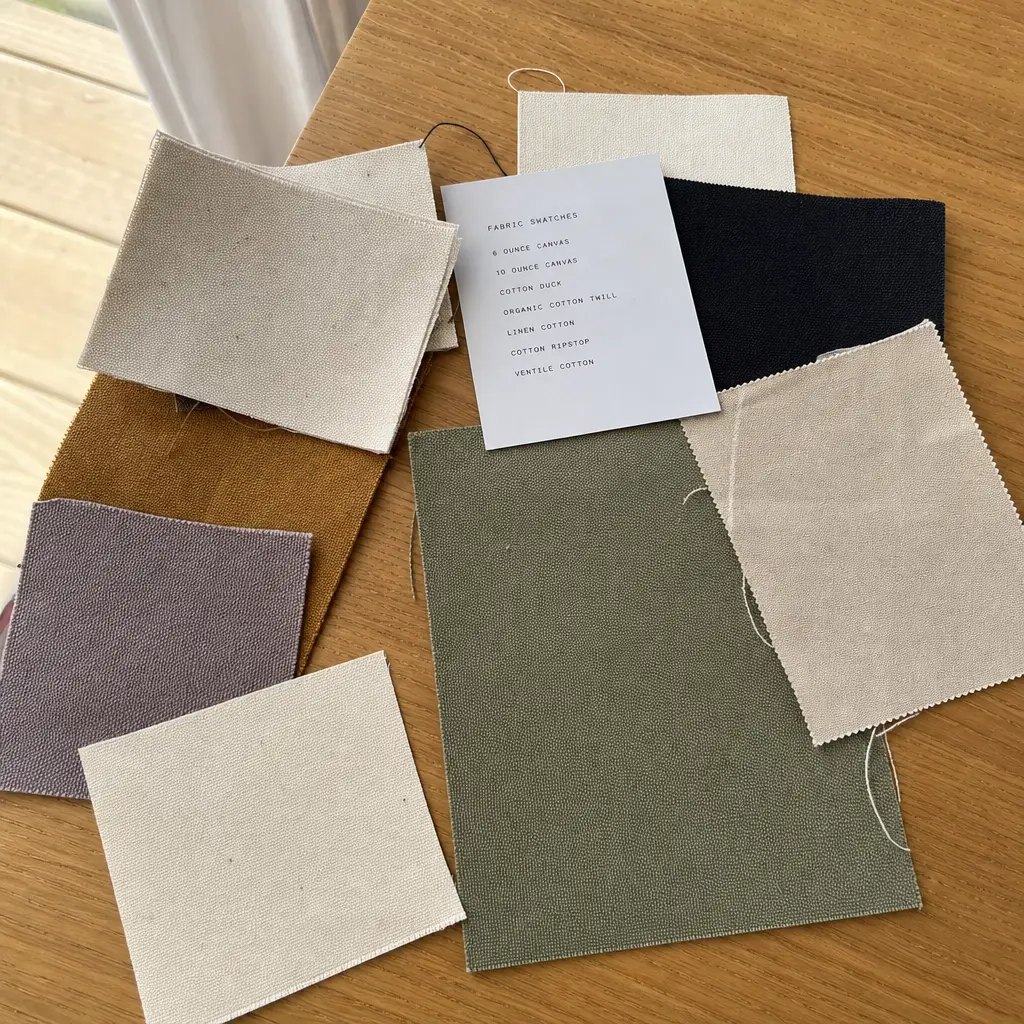
Canvas wine carriers are typically quoted at 8 oz, 10 oz, 12 oz, or heavier. For most wholesale orders, 10 oz to 12 oz canvas, roughly 340 to 410 GSM, is the most practical range because it provides structure without making the carrier too expensive or too stiff. It is usually strong enough for one standard bottle, presents well in photos, and has enough body to stand upright on a table or in a retail display.
Lighter canvas can work when the carrier is used for a short-lived promotional campaign or an internal event kit. The tradeoff is that thin material tends to crease easily, show the bottle shape more clearly, and lose the crisp look buyers expect from a giftable item. Heavy canvas improves visual authority and durability, but it can also increase cutting waste, sewing difficulty, and carton weight.
The buyer should decide what the carrier is supposed to communicate. If the goal is to support a startup’s premium brand image, the product should feel substantial and well finished. If the goal is to hit a sharp giveaway price point, the buyer may accept a softer construction as long as it still looks tidy and carries one bottle safely.
Fabric finish matters almost as much as fabric weight. A washed or softened canvas can feel more refined, but it may also reduce the crisp retail appearance that some buyers want. A stiffer finish can help the bag stand upright, yet it may fold less neatly. Ask the supplier to confirm whether the quoted fabric is raw, dyed, washed, pre-shrunk, or coated, because those treatments affect both performance and price.
Buyers should also ask about shrinkage and color consistency. Natural canvas can vary from batch to batch, and dyed canvas can shift slightly depending on dye lot and washing process. If your brand requires a close shade match or repeated replenishment, lock the acceptable variation before the first bulk run starts.
If the carrier includes a divider or insert, weight matters even more. Heavier canvas can stabilize the bottle and reduce collapse around the divider, but the total finished package becomes bulkier. That affects carton count, freight, and warehouse handling. In other words, the right fabric weight is not just a product choice; it is a logistics choice too.
A practical rule for buyers is simple: only move up in canvas weight when the program benefits from it. If the carrier is being used for a premium gifting campaign, the visual gain may justify the cost. If it is being used for a large, repeatable promo order, a midweight fabric may deliver better value and easier packing.
- 8 oz to 9 oz canvas: lower cost, softer hand feel, better for simple promo use.
- 10 oz to 12 oz canvas: balanced choice for retail and wine club programs.
- 13 oz and above: stronger body, but expect higher material cost and tighter sewing control.
- Ask whether the canvas is raw, washed, pre-shrunk, or coated before comparing quotes.
Where bulk pricing really comes from
Bulk pricing for canvas wine carriers is usually built from five buckets: fabric, cutting and sewing, print or decoration, packing, and cartonization. The headline quote may look simple, but every one of those buckets changes when the spec changes. A carrier with reinforced handles, a divider, and a logo in two colors is not a small variation; it is a materially different sewing and finishing job.
Fabric cost changes with weight, weave quality, finish, color, and whether the mill must produce a special run. Natural stock canvas is usually easier to source and cheaper to quote than custom-dyed or treated fabric. If a buyer wants a very specific shade, the supplier may need to reserve more material, and that can change both MOQ and lead time.
Labor cost rises when construction gets more complex. Extra seams, lining, base inserts, top flaps, bound edges, and reinforced stress points each add minutes to the sewing process. Those minutes add up quickly at scale, especially when the bag must also pass inspection and be folded in a specific way for packing.
Decoration is another major cost driver. A one-color screen print is usually the simplest bulk choice. More colors, more locations, or fine registration requirements increase setup time and risk. A woven label or small sewn patch can be cost-effective for some brands, but it still requires placement control and quality checks. Buyers should not assume all decoration methods are interchangeable just because they look similar in a photo.
Packing and cartonization affect both cost and logistics. A flat-packed bag in a polybag is usually efficient, while pre-shaped or pre-filled packaging takes more space and can increase shipping cost. If the order needs barcode stickers, hangtags, silica gel, or retail inserts, those items should be quoted separately or at least clearly named in the offer. Otherwise, the buyer may discover the real cost only when the invoice arrives.
The most useful comparison is not the unit price alone. Procurement should ask for the breakdown behind the unit price so they can see which assumptions are driving the number. When the quote is transparent, it becomes possible to compare suppliers on the same basis instead of guessing what each factory included.
For internal approval, that breakdown also helps finance teams understand why one offer is higher. A quote that includes better packing, tighter QC, and cleaner print may be easier to justify than a lower number with more hidden risk. In wholesale sourcing, the cheapest-looking offer is not always the lowest-risk offer.
- Material cost rises with GSM, dyed fabric, coated finishes, and lining.
- Sewing cost rises with reinforcements, inserts, dividers, and flap closures.
- Print cost rises with color count, placement, and art prep.
- Packing cost rises when individual polybags, barcode labels, or retail inserts are required.
- Carton cost rises when the bag is not optimized for flat packing.
How to structure the RFQ so quotes are comparable
A useful RFQ for wholesale canvas wine carriers should be short, but it must remove ambiguity. Start with the bottle type, finished bag dimensions, canvas weight, handle construction, logo placement, print method, and packing format. If the carrier has a divider, insert, flap, or special closure, those details should be written into the RFQ so the supplier does not have to guess the build.
The RFQ should also define what cannot change. Specify seam allowance, acceptable tolerance on width and height, handle drop, and the minimum acceptable load performance. If you are using natural canvas, state whether some shade variation is acceptable. If you are using a dyed color, name the target shade reference and whether matching tolerance is strict or general. The more clearly the buyer defines the boundary, the less the factory can interpret the order in a way that changes cost later.
For artwork, send a vector file and tell the supplier exactly where the logo belongs. A small logo centered on the body is not the same as a full-size front print or a woven patch near the hem. The logo area, print size, and print color count can each change the quote. If your brand requires a very clean corporate look, include that requirement in writing so the sample stage aligns with the expected finish.
It also helps to state what should be included in the quote: sample cost, production cost, packing, export cartons, and shipment marks. Some factories assume the buyer already knows those items will be separate, while others bundle them. A good RFQ eliminates those assumptions up front.
For startup gifting programs, the buyer should also state whether the order is for internal use, client gifting, or resale. This matters because a bag that works well for an employee welcome kit may not be robust enough for a retail shelf. Similarly, a retail-ready item may be overbuilt and overpriced for a short-term event giveaway.
If the program is likely to repeat, add a reorder note in the RFQ. Ask the supplier to quote both first-run pricing and repeat-run pricing when the spec stays unchanged. That makes later procurement easier and gives you a more realistic view of long-term spend.
A clear RFQ is the easiest way to reduce revision cycles. It saves time, helps factories quote honestly, and prevents the procurement team from spending days comparing offers that do not match the same build.
- Include one approved reference image and one dimensioned technical sketch.
- State whether the first sample is a hand sample, digital mock, or production sample.
- Specify whether the quote must include export cartons, master labels, and inner polybags.
- Name the target bottle type and whether the carrier must fit one or multiple bottles.
Supplier routes and what each one changes
Most buyers sourcing this category will compare a direct factory, a trading company, and sometimes a local reseller or converter. Each route changes how transparent the quote is, how flexible the order can be, and how quickly the buyer can get samples or revisions. For repeat wholesale programs, transparency often matters more than the lowest initial number.
A direct factory is usually the best route when the spec is stable and the order is likely to repeat. It gives the buyer better visibility into fabric source, sewing method, and how MOQ is actually calculated. If the project needs custom construction, a direct factory is also more likely to give precise feedback on what will and will not scale efficiently.
A trading company can be useful when the buyer needs multiple branded items shipped together, or when the internal procurement team wants a single point of contact. The tradeoff is that some pricing details may be less visible. That does not make the quote invalid, but it does mean the buyer should be extra careful about comparing finished specs and packing assumptions.
A local reseller or converter may help with urgent small orders, especially when the buyer needs a short lead time or already knows the product style. However, the cost is often higher and the detail on materials may be thinner. For B2B procurement, that route usually makes sense only when speed is more important than margin.
When evaluating route options, do not ask only who is cheapest. Ask who can repeat the same carrier without changing the spec, who can hold consistent lead time, and who can explain the build in enough detail to support procurement approval. Those answers matter more than a small difference in the first quote.
For tech startup buyers, the best route often depends on program maturity. A first-time promotional run may be fine through a reseller or trading partner if the timeline is short. But once the startup moves into recurring onboarding packs, customer gifts, or retail sales, the direct factory route usually becomes more efficient.
A good sourcing plan often starts with one low-risk pilot order and then moves to a direct, repeatable factory relationship once the product spec is stable. That path reduces the risk of locking into a quote structure that works only for the first shipment.
- Direct factory: best for cost clarity, custom construction, and repeat replenishment.
- Trading company: useful for mixed-category sourcing and short procurement cycles.
- Local reseller: suitable for urgent small buys, but margin and spec transparency are weaker.
- Choose the route based on repeatability, not just first-order speed.
MOQ logic: how factories decide the floor price
MOQ is usually not arbitrary. It reflects fabric minimums, print setup, sewing efficiency, and packing flow. A factory may be happy to quote a low price at 3,000 pieces because the fabric and print setup are spread across enough units. The same product at 500 pieces may need stock fabric, a simplified decoration method, or a higher unit cost because the labor and setup cannot be spread as efficiently.
Factories also care about cutting yield and color consistency. If the carrier uses custom-dyed canvas, the mill may require a larger dye run than the buyer expects. If the logo print requires a lot of setup or multiple screens, the factory may need a higher order count to justify the preparation work. That is why MOQ often changes when a buyer requests custom color, special packaging, or multiple placements.
For smaller pilot runs, the most cost-effective strategy is to simplify the specification. Standard dimensions, natural or stock canvas, one-color print, and flat packing tend to reduce both the MOQ and the risk of delays. If the startup is testing the market or validating the gifting concept, that is usually the right starting point.
The opposite approach is to ask for a very low MOQ while also requesting custom dyeing, premium reinforcement, and a complicated print layout. That usually creates hidden setup charges, longer lead times, or quote comparisons that are difficult to trust. Buyers should be realistic about how much customization they need before pushing on MOQ.
One practical way to manage MOQ is to split the program. A buyer can run a simpler base version for the first order and keep the more premium version for a later release after demand is proven. That makes it easier to secure a competitive quote and lowers the risk of overcommitting inventory.
The most useful question is not just “What is your MOQ?” It is “What exact spec allows you to reach that MOQ at this price?” The answer will tell you whether the low minimum is genuine or whether the supplier is depending on hidden tradeoffs.
Procurement teams should also ask whether the MOQ is driven by the factory or by a material supplier. If the limit comes from fabric or print setup, the factory may have more flexibility on repeat orders than on first runs. That distinction matters when you are planning replenishment across a quarter or a full year.
- Simple stock-fabric programs can support lower MOQ.
- Custom dyeing, special trims, and multiple print colors usually increase MOQ.
- Retail-ready packaging often has its own minimum because it adds labor and materials.
- Ask what spec changes would increase or decrease the MOQ.
Sample approval should test function, not just appearance
A sample is only useful if it proves the carrier works in the real use case. For canvas wine carriers, that means loading the intended bottle, checking seam behavior, confirming handle comfort, and making sure the carrier holds its shape under normal handling. A bag can look fine hanging on a hook and still be weak, awkward, or off-center once a bottle is inside.
The sample should be evaluated in stages. First, compare dimensions against the tech pack and confirm the logo position. Next, check the stitching, edges, and finish quality under daylight or neutral light. Finally, test it with the actual bottle type and confirm that the carrier closes, carries, and packs correctly. If the carrier includes a divider or insert, inspect the internal clearance so the bottle does not rub, tilt, or force the seams apart.
Procurement teams should not approve bulk production based on visuals alone. A good sample approval needs measurable checkpoints: width, height, handle drop, bottle fit, reinforcement quality, and carton fit. If the sample deviates from any of those points, the buyer should ask for a corrected sample before releasing bulk.
When a carrier includes print, color control matters. A logo can look acceptable on a digital proof but appear too light, too dark, or slightly misaligned on the physical sample. The buyer should check the print under natural light, note whether edges are sharp enough, and verify whether the color matches the intended branding standard well enough for the program.
If the order is being bought for startup gifts or branded events, ask whether the production sample will be identical to the bulk run. Some suppliers provide a hand sample or a near-match sample that is not truly final. That is not necessarily wrong, but it should be disclosed so the buyer understands what still may change in mass production.
Good sample approval reduces production surprises. It also gives the procurement team something objective to attach to the purchase order, which makes disputes much easier to avoid later.
For repeat programs, keep one approved master sample and one approval record with photos, measurements, and sign-off notes. That archive becomes the reference point when you reorder months later and need to confirm that the supplier is quoting the same build.
- Measure actual sample width, height, and handle drop.
- Check print color, alignment, and edge clarity under daylight.
- Load-test the handle with the intended bottle weight plus a safety margin.
- Approve carton dimensions only after the folded sample is packed.
- Confirm whether the sample is hand-made, pre-production, or final production match.
Packing, cartonization, and export handling
Packing affects both damage risk and freight cost, so it should be treated as part of the spec. A flat-packed canvas wine carrier in a simple polybag is usually the most export-friendly format because it keeps volume down and reduces handling complexity. If the design includes a board insert, base support, or a stiff divider, the folded shape changes and the carton dimensions can grow quickly.
Procurement teams should ask for unit pack method, carton count, master carton dimensions, gross weight, and pallet assumptions if the order will be warehoused. A carton that looks efficient on paper can still be awkward if it is too heavy for manual handling or too large for a standard shelf location. The buyer wants a package that survives transit and also works smoothly in receiving.
Moisture protection matters on long sea routes or in humid storage environments. Canvas can absorb moisture, and printed areas or inserts can be affected if the package sits in poor conditions. Ask whether the factory can add an inner polybag, desiccant, or extra carton protection if the route requires it. Those details may not be necessary for every order, but they should be considered before production starts.
The buyer should also think about how the product will be unpacked at the destination. If the startup is using the carriers in internal kits, the pack-out team may need a format that is easy to count and distribute. If the product is retail-bound, the packaging must be consistent enough to look organized on shelves and survive customer handling.
Carton count and packing density affect landed cost more than many buyers expect. Fewer pieces per carton can improve protection, but it also increases handling and shipping volume. More pieces per carton lowers carton count, yet it can increase compression risk. The right answer depends on the fabric weight, insert type, and route conditions.
Ask the supplier for a carton photo or packing sample whenever the build is new. That one step often reveals whether the quoted pack-out is practical or only theoretical.
If the carrier is part of a gift set, it is also worth testing the pack-out with the secondary packaging. A carrier that ships perfectly on its own may be too bulky once it sits inside a larger kit box or mailer. That is one of the most common places where a promising spec turns expensive.
- Confirm whether the product ships flat or semi-formed.
- Request master carton dimensions, gross weight, and units per carton.
- Use moisture protection if the route involves long sea transit or humid storage.
- Check that the carton count fits warehouse receiving and pallet plans.
Landed-cost comparison for bulk buyers
The best quote is the one with the best landed cost, not the lowest ex-factory price. A slightly higher unit price can still be the better option if the bag packs more efficiently, damages less often, or arrives with fewer inspection issues. For canvas wine carriers, the relationship between product shape and freight cube can make a real difference to the final cost.
To compare suppliers fairly, build the total cost from the same components: unit price, sample cost, print setup, carton cost, inland handling, freight impact, and any destination-side receiving cost that the buyer controls. If one supplier quotes a low price but uses bulkier packing, that supplier may lose once shipping is included. If another supplier prices slightly higher but fits more units per carton, they may win the landed-cost comparison.
This is especially important for startups with strict budget control. A marketing team may think in terms of item cost, but procurement has to think in terms of program cost. The difference matters when the carrier is part of an event pack, onboarding gift, or customer thank-you bundle that must hit a budget ceiling.
It also matters when the buyer plans a repeat order. The first shipment may look acceptable, but a poorly packed carrier can create extra receiving labor, more damage, or more inspection time on every future replenishment. Those are real costs even if they do not show up in the supplier’s unit price.
When the product has a print, ask whether the supplier can repeat the same setup on reorder without new tooling or artwork charges. Stable repeat pricing is a major advantage for procurement teams that want to forecast spend across quarters.
The key question is simple: which offer gives the lowest fully loaded cost for the same approved spec? Once the spec is locked, landed cost becomes the real decision metric.
If your team uses a sourcing spreadsheet, keep the assumptions visible. Note the fabric weight, pack method, carton count, and freight basis on the same line as the unit price. That makes it easier for finance and operations to understand why one offer wins.
- Compare cost per usable unit, not only cost per sewn bag.
- Include carton count per pallet or per cubic meter when available.
- Recheck landed cost after adding retail packaging or inserts.
- Use the same approved spec when comparing repeat-order pricing.
Quality control, inspection, and acceptance criteria
Quality control should be written into the order before production starts, not discussed after the shipment arrives. For canvas wine carriers, the most common issues are uneven stitching, weak handle reinforcement, print defects, dirty fabric, size drift, and carton count mistakes. Most of those problems are preventable if the buyer and supplier agree on checkpoints in advance.
The factory should confirm a measurable tolerance for fabric weight and finished dimensions. Buyers often allow a moderate variation in GSM or oz weight, but the range should be stated explicitly. The same applies to bag width, height, handle drop, and bottle fit. If the carrier includes a divider or insert, the internal dimensions need to be checked too.
Stitching deserves special attention because it affects both appearance and function. Handle stress points should show secure back-tacks, clean thread trimming, and no skipped stitches. If the design uses a reinforcement patch or bar-tack, that area should be examined carefully because it is usually where failure starts under load.
Print quality should be checked in daylight, not only under factory lighting. Logos can look acceptable in one light source and inconsistent in another. The buyer should confirm the print position, color balance, edge sharpness, and whether the logo size matches the approved sample. If the carrier includes small text, that text needs a higher inspection standard because it is more likely to blur or fill in during production.
Carton inspection is just as important. Each carton should match the agreed unit count, labels should be legible, and the pack should protect the product from moisture and crushing. If the buyer is shipping internationally, carton stackability and compression resistance matter because weak cartons can distort during transit even if the bags inside are fine.
For larger orders, the acceptance process should include sampling from different cartons, not just the first carton off the line. That is the best way to confirm the production run is consistent from start to finish. The goal is not perfection; it is repeatable conformity to the approved sample and purchase order.
If the startup has a strict brand standard, ask for a final QC photo set before shipment. Photos of the stitching, print, folded pack, and carton label can catch issues early and reduce disputes at receiving.
A simple inspection plan also helps teams that do not visit the factory. It gives the procurement team a written basis for acceptance, which matters when production is happening offshore and the order needs to clear quickly.
- Fabric weight tolerance should stay within an agreed range, commonly plus or minus 5% to 8% of target GSM depending on the fabric source.
- Finished dimensions should be checked against the approved sample and held to a written tolerance, commonly plus or minus 3 mm to 5 mm for width and height on simple bags, unless the factory can support tighter control.
- Handle stitching should show even tension, secure back-tacks, and no skipped stitches at stress points.
- A pull test should be defined in advance, including the load, hold time, and sample count, so the result is repeatable rather than subjective.
- Print registration should stay within an agreed visual tolerance, especially on logo edges, small type, and repeated placements.
- Ink or print curing should be checked so the decoration does not crack, smear, or transfer when rubbed after pack-out.
- Carrier opening, seam symmetry, and bottle fit should be verified against the approved sample, not only against the tech pack.
- Cartons should be checked for count accuracy, moisture protection, label legibility, and compression resistance for export stacking.
- Natural canvas should be checked for slubs, woven streaks, and shade variation before cutting bulk panels.
- If the bag has a divider, the divider height, seam binding, and bottle clearance should be inspected against the approved sample.
- If an insert is included, verify board thickness, fit, edge wrapping, and whether it causes the carrier to bow or print to crack.
- Confirm the final folded dimensions so the bag fits the agreed carton without forcing bends that damage print or seams.
Specification comparison for buyers
| Spec decision | Recommended option | When it fits | Buyer risk to check |
|---|---|---|---|
| Fabric weight | 10 oz to 12 oz canvas, usually 340 to 410 GSM | Best for repeat retail use, startup gifting, wine club kits, and resale-ready packs | Ask for finished GSM tolerance, shrinkage range, and whether the cloth is raw, washed, or pre-shrunk |
| Handle build | Reinforced self-fabric handles with bar-tack stitching | Works for standard bottle carriers and moderate carrying distances | Check handle width, stitch count, bar-tack length, and pull-test method |
| Print method | 1-color screen print or woven label for volume orders | Fits bulk promotions, startup brand programs, and low-artwork complexity | Confirm screen setup, repeat-order charge, print position tolerance, and ink cure method |
| Closure style | Open-top with bottle divider or top flap for premium sets | Use open-top for simple pack-out; flap for premium gifting | Verify flap seam allowance, magnetic or tie closure details, and added sewing time |
| Base insert | E-flute insert or board insert for structure | Useful when bottles are heavy or retail presentation matters | Check board thickness, edge wrap, and whether the insert affects fold-flat packing |
| MOQ route | Stock fabric + standard size + simple print | Best for first orders, pilot runs, and fast replenishment | Make sure the low MOQ is not offset by hidden setup or tooling fees |
| Packing method | Flat-packed with polybag + master carton | Good for import efficiency and warehouse receiving | Confirm units per carton, carton size, gross weight, and moisture protection |
| Supply route | Direct factory sourcing instead of trading layer when specs are stable | Best for repeat buyers who need quote transparency | Ask who owns the fabric source, sewing line, and final QC sign-off |
| Landed-cost focus | Quote by unit, carton, and container utilization | Required when comparing suppliers across regions | Compare freight cube, carton count, and destination-side receiving effort |
Buyer checklist before sampling
- Confirm final bag size, gusset, handle drop, and usable loading weight.
- State the bottle format the carrier must fit: 750 ml standard, magnum, or a specific diameter.
- Specify fabric type, target GSM/oz weight, dye method, color tolerance, and shrinkage expectations.
- Send vector artwork and define logo size, print position, Pantone reference, and minimum text height.
- Ask for a physical pre-production sample, not only a digital mockup or photo proof.
- Agree carton packing, barcode or hangtag needs, shipment marks, and whether the units ship flat or semi-formed.
- Record inspection checkpoints for stitching, bar-tacks, print adhesion, stains, count accuracy, and carton condition.
- Confirm whether the order is for internal gifting, reseller stock, wine club fulfillment, or event giveaways, because use case changes the build.
- Ask for a line-item quote that separates material, sewing, printing, packing, inserts, and cartons.
- Lock acceptable shade variation for natural canvas or dyed canvas before the first fabric cut.
Factory quote questions to send
- What exact canvas weight, yarn count, weave type, and finishing process are you quoting for this carrier?
- Is the quoted price based on stock fabric, reserved fabric, or newly woven fabric, and how does that change MOQ and lead time?
- What is included in the print charge: screen setup, plate cost, color count, repeat-order cost, and Pantone matching?
- Can you confirm stitching spec, handle width, seam allowance, bar-tack count, and target pull-test method before bulk production?
- What are the standard carton pack quantities, carton dimensions, gross weight per carton, and units per inner polybag?
- How many days are needed for sample approval, bulk fabric reservation, and final production after deposit?
- Is the quote based on flat-packed or pre-shaped packing, and what does that do to carton cube and freight?
- Do you source the fabric in-house or from an outside mill, and can you share the fabric consistency controls?
- What defect rate or inspection standard do you use for stitching, print, stains, count accuracy, and packaging?
- Are labels, hangtags, desiccant, and polybags included or quoted separately?
Quality-control points to confirm
- Fabric weight tolerance should stay within an agreed range, commonly plus or minus 5% to 8% of target GSM depending on the fabric source.
- Finished dimensions should be checked against the approved sample and held to a written tolerance, commonly plus or minus 3 mm to 5 mm for width and height on simple bags, unless the factory can support tighter control.
- Handle stitching should show even tension, secure back-tacks, and no skipped stitches at stress points.
- A pull test should be defined in advance, including the load, hold time, and sample count, so the result is repeatable rather than subjective.
- Print registration should stay within an agreed visual tolerance, especially on logo edges, small type, and repeated placements.
- Ink or print curing should be checked so the decoration does not crack, smear, or transfer when rubbed after pack-out.
- Carrier opening, seam symmetry, and bottle fit should be verified against the approved sample, not only against the tech pack.
- Cartons should be checked for count accuracy, moisture protection, label legibility, and compression resistance for export stacking.
- Natural canvas should be checked for slubs, woven streaks, and shade variation before cutting bulk panels.
- If the bag has a divider, the divider height, seam binding, and bottle clearance should be inspected against the approved sample.