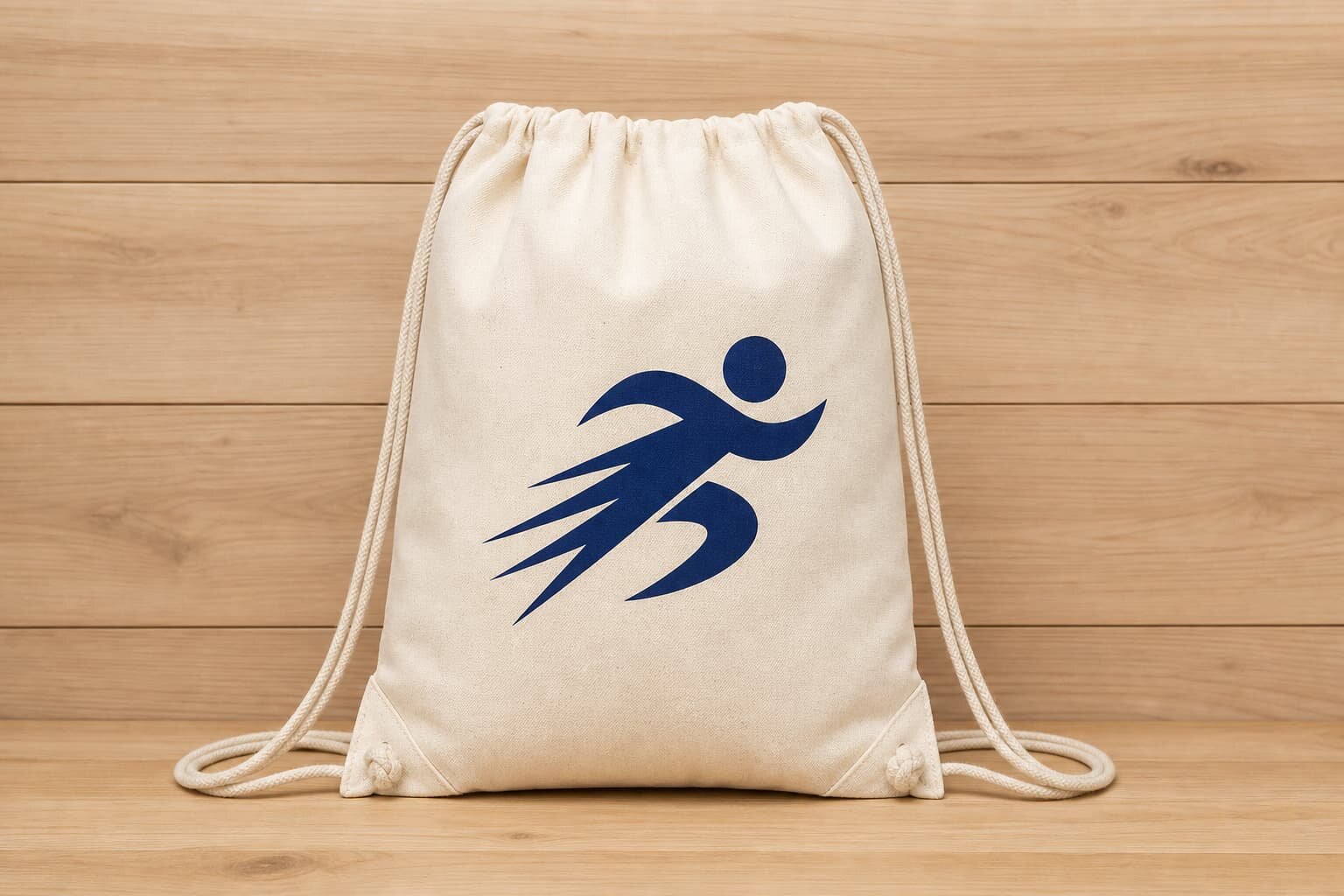
The real buying problem: conference bags fail when the spec stays too generic
Most conference gift bag issues start long before production. The buyer sends an RFQ for a custom drawstring backpack, gets five low-looking quotes back, then discovers later that one supplier priced 210D polyester, another priced 70 GSM non-woven, and a third excluded corner reinforcement and packing. On paper the item sounds the same. In production and at the event table, it is not the same product.
For conference use, the bag usually has to carry a badge kit, brochure set, small gift items, and sometimes a bottle or charger. That means the main job is to match the bag construction to the expected load while keeping decoration clean enough for brand visibility. If you define the bag only by size and logo, the factory fills in the rest with whatever matches the cheapest interpretation.
- Weak RFQs create three expensive problems: bad quote comparison, delayed approvals, and avoidable quality disputes.
- Conference bags are deadline-driven, so a late correction costs more than a slightly higher but correct first quote.
- Your RFQ should define use case first, then material, print, reinforcement, and packing.
Start with usage load, not just bag size
A 34 x 42 cm bag can be completely acceptable for one conference and completely wrong for another. If attendees only carry a leaflet, pen, and badge, a light non-woven bag may be enough. If the organizer adds a notebook, stainless bottle, power bank, and sponsor inserts, the same bag size needs stronger body fabric and better lower-corner construction.
This is why importers and distributors should estimate content weight before writing the RFQ. A factory can suggest material more accurately when it knows the bag will carry under 1 kg, around 1-2 kg, or more. That estimate also helps determine whether to use eyelets, self-fabric reinforcement patches, or a simpler corner seam.
- Light conference handout load: non-woven 80-100 GSM may be acceptable.
- Medium giveaway load: 210D polyester is usually the safest volume option.
- Premium reusable conference gift: 140-180 GSM cotton or 8 oz canvas gives better hand feel.
- Heavier contents need reinforced corners and a cord that does not cut into the fabric.
Choose material by event purpose, not by the cheapest sample on hand
For most large conference giveaways, 210D polyester is the practical baseline. It is lightweight, takes silkscreen print well for simple artwork, folds compactly for carton efficiency, and has better tear resistance than many low-cost non-woven options. It also handles bright bag colors more consistently when your event theme uses strong brand colors.
Cotton and canvas work when the event gift is meant to feel more reusable and less disposable. A cotton drawstring backpack in 140-180 GSM or around 8 oz canvas usually feels more substantial in hand, which matters for premium registration kits or brand launches. The tradeoff is higher unit weight, more carton volume, and more visible natural variation in fabric shade and print penetration. Non-woven still has a place, but buyers should use it intentionally for short-use promotional volume, not assume it is equivalent to polyester because the silhouette looks similar.
- 210D polyester: good cost-to-performance ratio, strong print base, efficient packing.
- 80-100 GSM non-woven: budget-focused, acceptable for lighter contents, higher tear risk if overloaded.
- 140-180 GSM cotton or 8 oz canvas: better retail-style perception, higher freight volume, more natural variation.
- Ask the supplier whether the quoted fabric spec is the actual production spec or a quote placeholder.
Logo method should follow artwork complexity and order quantity
Many conference gift programs overcomplicate the decoration stage. If the logo is one solid color with simple lines, silkscreen is usually the best production choice. It is scalable, stable, and easier to control on bulk runs than multi-step transfer processes. For polyester drawstring backpacks, a one-color screen print usually gives the cleanest cost structure when the order size is comfortably above the print setup threshold.
Heat transfer or digital transfer becomes useful when the artwork contains gradients, several colors, or fine detail that would make screen printing expensive or visually unstable. That said, buyers need to know the tradeoff. Transfers can look sharper on complex graphics, but they may feel heavier on the fabric, show edge definition on close inspection, or behave differently during rub testing. The correct question is not which print method is more premium in theory. It is which method fits this artwork, this fabric, and this quantity with the least production risk.
- Silkscreen fits simple logos, strong color blocks, and larger runs.
- Heat transfer fits complex art, gradients, and smaller mixed designs.
- Large ink coverage on thin fabric can stiffen the panel and affect hand feel.
- Always approve print size and print location with a physical sample if the logo sits close to seams or cord channels.
Corner reinforcement and cord details change actual usability
Procurement teams often focus on front-panel appearance and overlook the lower corners, even though that is where failure usually starts. A conference bag loaded with printed materials puts stress on the drawcord exit points and lower seam area. If the supplier omits reinforcement or uses a weak patch, the bag may survive a basic inspection but fail during real event use. That is the kind of problem end users notice immediately.
For standard event volume, specify whether you want self-fabric reinforcement, PU patch, metal eyelet, or bartack reinforcement. Each option has cost and appearance implications. Self-fabric corners keep the look simple and avoid metal hardware. Eyelets can improve wear resistance but must be set correctly to avoid cutting the fabric. Cord diameter matters too. Very thin cord reduces cost but feels cheap and can bite into the shoulder more quickly.
- A practical conference spec is often 8-10 mm PP cord with reinforced corners.
- Ask if the quoted eyelet is iron or another metal if corrosion is a concern in storage or transit.
- Check that both cords are equal length and the bag closes symmetrically.
- Request close-up sample photos of corner construction before approving bulk.
MOQ logic is usually driven by material color and print setup
Buyers sometimes treat MOQ as one number, but factories calculate it in layers. There may be one MOQ for the bag style, another for each fabric color, and another for each logo setup. A supplier can say the MOQ is 1,000 pieces, but if you need four colorways with two different sponsor logos, the real economical break point may be much higher. This is why quote comparison without MOQ detail is misleading.
Conference programs often need mixed departments, sponsor tiers, or event tracks. If that applies, ask the factory to show how cost changes when the quantity is split. In some cases, keeping one base bag color and changing only the print is more efficient. In other cases, a woven side label or hangtag can separate sub-programs without creating multiple front-panel print setups.
- Ask MOQ by total order, by bag color, and by artwork version.
- Low MOQ quotes may exclude custom fabric color and use stock material only.
- Multiple small logo versions can add more setup cost than buyers expect.
- If you need split branding, test whether a side label solves the problem better than a full additional print run.
Build a quote sheet that exposes cost drivers instead of hiding them
A usable supplier quote for bulk drawstring backpacks should separate the main cost elements. When a factory gives only one all-in unit price, you cannot tell whether differences come from fabric weight, print method, packing, or simply omission of a required step. That makes it hard to negotiate and even harder to compare two factories fairly.
You do not need the supplier's internal margin structure. You do need a breakdown that shows what changes if you change the fabric, decoration, or packing. For conference projects, this is especially useful because event quantities can move quickly. If the registration forecast changes, you can see which cost parts are fixed and which scale with volume.
- Request a line-item structure such as: bag body, print, sample charge, packing, carton marks, and optional add-ons.
- Ask whether the quote assumes stock fabric color or custom-dyed fabric.
- Confirm whether export carton cost and moisture protection are included.
- Use example quantity tiers such as 1,000, 3,000, and 5,000 pieces to compare the slope, not just one price point.
- If ocean freight carton efficiency matters, ask for pieces per carton and cubic meter data with the quote.
Sample approval should test the final combination, not just the logo
Many buyers approve too early by signing off a digital layout or a pre-existing sample body with similar print. That is risky because conference bags are often simple products with tight margins. If something is off, it is usually in the interaction between material, print, cord, and stitching. A correct sample approval should show the real fabric, real color, real print method, and real corner construction together.
If timing allows, ask for a pre-production sample made from production-intended components. If timing is tight, at least require a sample approval package that includes fabric swatch, cord sample, print strike-off, and construction photos. This matters most when the bag uses natural cotton, dark fabrics with light prints, or large logos that sit near the seams.
- Check logo size, placement, and color against approved artwork reference.
- Check finished bag dimensions with tolerance noted on the sample approval form.
- Rub the print lightly and inspect whether ink cracks, lifts, or transfers.
- Load the sample with realistic conference contents to feel how the corners and cords behave.
- Approve carton marks and bundle method if the bags must feed directly into event kitting.
Packing decisions affect both event handling and total landed cost
Packing is usually treated as an afterthought, but for conference gifts it affects inbound labor, repacking speed, carton count, and final presentation. A simple bulk-packed bag may be perfectly correct if the organizer will preload inserts at a kitting center. On the other hand, individual polybags, barcode labels, or bundle counts may be necessary if the bags pass through retail-style distribution or multiple local handlers.
The best packing format depends on how the product will be received and used. Importers should ask the event team whether bags arrive empty for local filling, arrive pre-packed with inserts, or go directly to distributor stock. That answer determines whether to optimize for low carton volume, cleaner individual handling, or easier counting.
- Bulk pack is cheaper and more space-efficient, but requires clean handling at destination.
- Individual polybag adds labor and carton volume; use it only when cleanliness or resale requires it.
- Specify pieces per carton and maximum gross weight if warehouse rules apply.
- Ask whether mixed-color cartons are allowed or if each color needs separate carton marking.
- If the bag is folded, define fold method so the logo is not creased across the most visible area.
Lead time planning should work backward from the event date
Conference projects often fail because buyers ask for lead time too late and in the wrong format. The useful question is not only how many production days the factory needs. The useful question is what date the factory needs approved artwork, approved sample, and deposit in order to hit the shipment window. For a fixed event, work backward from the in-warehouse date, then add transit, customs, and any local kitting time.
A realistic sourcing schedule includes buffer for print approval changes, carton confirmation, and inspection booking. Even for a straightforward drawstring backpack, the schedule can tighten fast if fabric color has to be matched or if multiple logo versions are involved. Treat pre-production sample approval as part of the critical path, not an optional formality.
- Ask for timeline stages: sample days, bulk production days, inspection readiness, and ex-factory date.
- Clarify whether lead time starts from deposit, artwork approval, or pre-production sample approval.
- If the event date is immovable, tell the supplier your latest acceptable ship date in the RFQ.
- Build internal time for legal logo approval and sponsor sign-off before production starts.
Specification comparison for buyers
| Spec decision | Recommended option | When it fits | Buyer risk to check |
|---|---|---|---|
| Body material | 210D polyester | Best balance for large conference giveaways where print clarity, light weight, and low unit cost matter | Some quotes use lighter actual denier or loose weave that feels thin; request fabric swatch and finished weight tolerance |
| Premium natural look | 8 oz cotton canvas or 140-180 GSM cotton | Brand programs that want a reusable look and better hand feel than non-woven | Cotton shade variation, shrinkage after printing, and higher freight volume than thin polyester |
| Budget event volume | 80-100 GSM non-woven polypropylene | Short-use event bags for literature, badge kits, and light merchandise | Tearing at cord channel and corners if overfilled; confirm reinforcement patch or bartack method |
| Logo printing | 1-color silkscreen | Simple logos at 1,000 plus units where repeatable print placement and low setup cost are needed | Large solids can crack or feel heavy on thin fabric; ask for print size limit and ink coverage advice |
| Multi-color branding | Heat transfer on polyester or digital transfer for small runs | Artwork with gradients, fine detail, or more colors than screen printing handles economically | Color shift from approved artwork, edge lifting on textured fabric, and lower wash durability than direct screen print |
| Cord construction | 8-10 mm PP cord with reinforced corners | Conference gifts expected to carry catalogs, water bottles, and chargers | Cord fraying, uneven length, weak knot hiding, and grommet pull-out if corners are not reinforced |
| Packing format | Individual polybag only if resale or clean delivery is required; otherwise bulk packed by carton | Most conference projects where lower packing cost and faster inbound handling matter | Retail-style packing adds labor and carton volume; if omitted, specify bundle count and carton moisture protection |
Buyer checklist before sampling
- State the event use clearly: registration giveaway, sponsor gift, VIP kit, or retail resale, because material and packing should match the real use case.
- Specify body material by exact type and weight, such as 210D polyester, 80 GSM non-woven, or 8 oz cotton canvas, instead of asking for a generic drawstring bag.
- Give finished bag size with tolerance, for example 35 x 42 cm +/- 1 cm, and confirm whether size is measured before or after sewing.
- Define cord material, diameter, color, and whether corners need PU patch, self-fabric reinforcement, eyelets, or bartacks.
- Provide final print artwork in vector format and call out print size, print position, color reference, and whether slight placement tolerance is acceptable.
- Ask for quote separation by unit price, printing, sampling, packing, carton marks, and any destination testing or inspection cost.
- Confirm MOQ by colorway and by artwork, because a low overall MOQ can still hide a higher MOQ per print setup.
- Request pre-production sample approval against the final fabric, final cord, and final print method, not just a digital mockup.
- Define packing method, carton size limit, carton gross weight limit, and whether mixed color packing is allowed.
- Lock ex-factory date, inspection timing, and ship mode decision before print approval if the event date is fixed.
Factory quote questions to send
- What exact material and weight are included in this quote, and what finished weight tolerance do you allow per bag?
- Is the quoted fabric virgin material, recycled content, or mixed stock, and does that affect color consistency or print adhesion?
- Which print method is included for this artwork, what is the maximum print area, and how many print colors are covered in the unit price?
- Are corner reinforcements included, and if yes, are they self-fabric patches, PU patches, eyelets, or bartack reinforcement only?
- What is the MOQ by color, by artwork, and by size, and what surcharge applies if the order is split across multiple colorways?
- Does the sample cost include final fabric and final print, and is the sample charge refundable after bulk order confirmation?
- What is your standard production lead time after sample approval and deposit, and what parts of the schedule are most likely to move?
- How many pieces per carton, what is the carton size and gross weight, and can you work to a maximum carton weight requirement?
- What AQL level or internal inspection standard do you normally follow for print defects, stitching defects, and measurement tolerance?
- Which items are excluded from the quote, such as individual polybags, barcode stickers, hangtags, desiccants, drop test cartons, or third-party inspection?
Quality-control points to confirm
- Check finished size against approved spec with random measurement across top width and height after sewing.
- Verify fabric weight or fabric specification matches approved sample; do not rely on visual appearance alone.
- Inspect print position, print color match, edge sharpness, and ink adhesion on a reasonable sample size from each production lot.
- Test both cords for equal length, secure knotting, and smooth draw action without channel blockage.
- Pull-test corner reinforcements and eyelets where applicable, especially on bags intended to hold catalogs or bottles.
- Review stitching density, skipped stitches, seam opening, and loose thread at top channel and lower corners.
- Confirm carton quantity, carton marks, mixed-color ratio, and gross weight before shipment release.
- Check odor, moisture exposure, and basic cleanliness if bags are packed directly into export cartons without individual polybags.